Loading...
J. B. M. Hertzog vs Sengge Rinchen
Sengge Rinchen leads by 0.8 pts · 2 figures compared
…
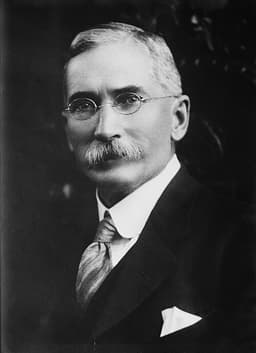
J. B. M. Hertzog
General · Modern
56.1Total
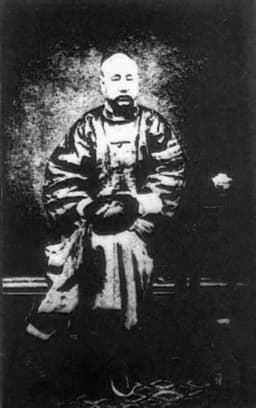
Sengge Rinchen
General · Modern
56.9Total
Basic Information
Born
1866
1811
Died
1942
1865
Era
Modern
Modern
Nationality
South Africa
China
Occupation
General
General
Civilization
Other
Eastern
Score Comparison
Military (10%)
25.0
70.0
Political (20%)
60.0
43.7
Influence (20%)
56.7
55.0
Legacy (20%)
50.0
54.0
Leadership (15%)
79.8
67.0
Strategy (15%)
60.0
60.7
TOTAL
56.1
56.9
J. B. M. Hertzog — Complete Timeline
1899 AD
Boer War GeneralWar◆ Major
Hertzog served as a Boer general in the Second Boer War, commanding forces in the Orange Free State. He participated in several battles and became a prominent Afrikaner military leader.
Second Boer WarGeneralMilitary
Impact: regional
1914 AD
Founded the National PartyPolitical Action
Hertzog broke away from the South African Party and founded the National Party, which championed Afrikaner nationalism and opposed British imperial influence. The party would later implement apartheid.
National PartyAfrikaner NationalismFounding
Impact: nationalconstructive
1924 AD
Prime Minister of South AfricaPolitical Action◆ Major
Hertzog became Prime Minister after his National Party won the general election in coalition with the Labour Party. His government implemented policies to protect white workers and promote Afrikaner interests, including the 'civilized labour' policy.
Prime MinisterAfrikaner RightsLabour Policy
Impact: national
1934 AD
Merged with Smuts to Form United PartyPolitical Action◆ Major
Hertzog merged his National Party with Jan Smuts' South African Party to form the United Party. The coalition aimed to address the economic crisis of the Great Depression and promote national unity, but it alienated hardline Afrikaner nationalists.
United PartyCoalitionNational Unity
Impact: nationalconstructive
1936 AD
Passed the Representation of Natives ActReform◆ Major
Hertzog's government passed the Representation of Natives Act, which removed Black voters from the common voters' roll in the Cape Province and allowed them to elect white representatives instead. This further entrenched racial segregation.
SegregationDisenfranchisementLegislation
Impact: nationaldestructive
1939 AD
Resigned Over Neutrality in WWIIPolitical Action◆ Major
Hertzog advocated for South African neutrality in World War II, but his cabinet voted to enter the war on the Allied side. He resigned as Prime Minister and was succeeded by Jan Smuts, splitting the United Party.
World War IINeutralityResignation
Impact: national
Sengge Rinchen — Complete Timeline
1859 AD
Battle of Dagu FortsWar◆ Major
Sengge Rinchen commanded Qing forces defending the Dagu Forts against a British and French naval attack. His forces repelled the assault, sinking several enemy ships and inflicting heavy casualties, a rare Qing victory in the Second Opium War.
Second Opium WarBattleVictory
Impact: regional
1860 AD
Battle of PalikaoWar◆ Major
Sengge Rinchen commanded Qing cavalry at the Battle of Palikao against Anglo-French forces. His forces were decisively defeated by superior firepower, leading to the fall of Beijing and the burning of the Old Summer Palace.
Second Opium WarBattleDefeat
Impact: regionaltragic
1863 AD
Suppression of the Nian RebellionWar◆ Major
Sengge Rinchen led Qing forces against the Nian rebels in northern China. He achieved several victories but was ultimately killed in battle against the Nian in 1865, marking a turning point in the rebellion.
Nian RebellionCampaignDeath
Impact: regionaltragic
Expert Analysis
J. B. M. Hertzog vs Sengge Rinchen
# The General and the Statesman: Two Paths from the Battlefield
In the summer of 1860, a Mongol prince named Sengge Rinchen watched his cavalry charge into the guns of the Anglo-French expeditionary force at Palikao. Within hours, his finest horsemen were shredded by rifle fire and artillery. Five years later, he would be dead, killed by the very rebels he had spent years suppressing. Half a world away and half a century later, another general—J. B. M. Hertzog of South Africa—faced a similar moment of defeat in the Second Boer War, but he would survive to trade his sword for a ballot box, becoming his nation’s prime minister and reshaping its laws for decades. Why did one warrior die in the dust while the other died in office? The answer lies not in their courage, but in the worlds they inhabited.
Origins
Sengge Rinchen was born in 1811 into the Mongol aristocracy of Inner Mongolia, a world still bound to the Qing Empire by ancient loyalties and nomadic tradition. The Manchu rulers had long relied on Mongol princes to guard the northern frontiers, and Sengge Rinchen inherited a warrior’s ethos: honor came from the saddle, and the empire was a living thing that demanded blood sacrifice. By contrast, Hertzog was born in 1866 on a farm in the Cape Colony, a child of the Boer frontier where Dutch-speaking farmers had spent generations fighting British encroachment and African kingdoms. His father was a commandant in the Boer forces, and young Hertzog grew up believing that his people’s language, faith, and land were under siege. Both men were shaped by defeat—the Mongols had lost their empire to the Manchus, the Boers their republics to the British—but Sengge Rinchen’s loyalty was to an existing dynasty, while Hertzog’s was to a people who had never fully submitted.
Rise to Power
Sengge Rinchen’s path was that of a loyal servant. He rose through the Qing military hierarchy by demonstrating competence in border campaigns, and by the 1850s he was one of the few Mongol generals trusted to defend the capital region. His great moment came in 1859 at the Battle of Dagu Forts, where his forces repelled a British and French naval assault—a rare Qing victory in an era of humiliations. The emperor rewarded him with high command, but the victory was a trap: it convinced Beijing that traditional tactics could still work. Hertzog’s rise was entirely different. He studied law in the Netherlands, returned to South Africa, and became a judge before the Second Boer War erupted in 1899. As a Boer general, he fought a guerrilla campaign against overwhelming British forces, learning firsthand that courage could not defeat industrial firepower. After defeat, he entered politics, and in 1914 he founded the National Party, explicitly built to protect Afrikaner identity. Where Sengge Rinchen climbed a military ladder, Hertzog built a political one.
Leadership & Governance
As a commander, Sengge Rinchen was brave but rigid. He led from the front, inspiring his Mongol cavalry with personal example, but he could not adapt to modern warfare. At Palikao, he tried to repeat the Dagu formula—massed cavalry charges—against an enemy with rifled muskets and field guns. The result was a massacre that opened the road to Beijing. His later campaign against the Nian Rebellion showed better strategic sense, but he was ultimately ambushed and killed in 1865. His leadership score of 72.0 reflects a competent traditional general, not a revolutionary. Hertzog, by contrast, scored 79.9 in leadership—not because he was a better soldier, but because he understood that power in the modern era flowed through institutions, not horse archers. As prime minister from 1924 to 1939, he passed laws that entrenched Afrikaner economic power, protected white farmers, and, in 1936, removed Black voters from the common roll. His governance was effective, but it was built on racial exclusion. He was a statesman of his time, and his time was cruel.
Triumph & Tragedy
Sengge Rinchen’s triumph was Dagu—a single day when the old empire struck back. His tragedy was that he could not repeat it. He died not in a glorious last stand against foreigners, but cut down by Chinese rebels, his body lost, his name fading. Hertzog’s triumph was becoming prime minister and forging a unified Afrikaner political identity. His tragedy came in 1939, when he argued for South African neutrality in World War II, only to be voted down by his own cabinet. He resigned, his coalition shattered, and died in 1942 a bitter man. Both men saw their life’s work undone in their final years—Sengge Rinchen by bullets, Hertzog by ballots.
Character & Destiny
Sengge Rinchen was a man of the saddle, not the council chamber. He believed in loyalty, honor, and the charge. His world was dying, and he died with it. Hertzog was a man of the courtroom and the parliament, who understood that the pen could be mightier than the lance—but also that the pen could write laws that oppressed millions. His personality was stubborn, legalistic, and proud, traits that served him well in politics but blinded him to the moral catastrophe of apartheid. One man’s destiny was to be the last roar of a dying empire; the other’s was to be the architect of a system that would later be condemned by the world.
Legacy
Today, Sengge Rinchen is a footnote in Chinese history, remembered mainly as a symbol of doomed resistance. His legacy score of 65.9 reflects a figure who is respected but not celebrated. Hertzog’s legacy is far more complex. He is honored by some Afrikaners as a father of their nation, but his racial policies place him on the wrong side of history. Statues of him have been defaced and removed. His influence score of 74.8 acknowledges that he shaped South Africa profoundly, but in ways that now shame it.
Conclusion
The difference between these two generals is not one of talent or courage. Both were brave, both were skilled, both believed in their cause. The difference is that Sengge Rinchen lived in a world where the old rules still held—until they didn’t. Hertzog lived in a world where the rules were being rewritten, and he learned to write them himself. One charged into the future with a lance; the other walked into it with a law book. The future, as always, had its own verdict.
Rankings
🥇
Sengge RinchenLeader
Mil: 70.0Pol: 43.7Inf: 55.0
56.9
🥈
J. B. M. Hertzog
Mil: 25.0Pol: 60.0Inf: 56.7
56.1
+0.8 behind
How This Comparison Works
Algorithm
Each figure is scored on 6 dimensions (0—100 scale) based on structured historical data: Military (10%), Political (20%), Influence (20%), Legacy (20%), Leadership (15%), Strategy (15%). The weighted total produces the final ranking.
Data Sources
Scores are computed from structured sub-indicators in the database. Scale factors adjust for era (Ancient ×0.85, Modern ×1.0) and civilization size (Eastern ×1.05, Other ×0.80) to account for differences in population and military scale.
Maximum 3 Figures
Comparisons are limited to 2—3 figures to ensure readability and statistical meaningfulness.
Error Margins
±5 points per dimension — Sub-scores are derived from historical records with inherent uncertainty. Two figures within 5 points on a dimension should be considered roughly equivalent in that area.
Total Score Accuracy
±3 points overall — The weighted combination of 6 dimensions produces a total score with approximately ±3 points of uncertainty. Differences of less than 3 points are not statistically significant— the figures are effectively tied.
Known Limitations
- Historical records are incomplete and uneven across civilizations
- Figures from oral-tradition societies may be underrepresented
- Occupation labels can misclassify multi-role figures
- Scores measure capability and impact, not moral character
- Quantitative scoring is a comparison tool, not absolute truth
Capability Radar
Military (10%) — Battles & Warfare
Battles
45
75
Win Rate
40
60
Expansion
20
20
Political (20%) — Governance & Reform
Reform
60
20
Diplomacy
55
50
Economy
50
20
Influence (20%) — Cultural & Global Reach
Cultural
50
40
Global
45
35
Legacy (20%) — Historical Impact
Historical
55
55
Longevity
40
30
Leadership (15%) — Power & Stability
Tenure
65
40
Stability
45
30
Strategy (15%) — Tactics & Innovation
Strategy
50
70
Tactics
45
80
Reform
30
30
Similar Comparisons
Comments & Discussion
No comments yet. Be the first to share your thoughts!