Loading...
Francisco Morazan vs Sengge Rinchen
Francisco Morazan leads by 1.1 pts · 2 figures compared
…
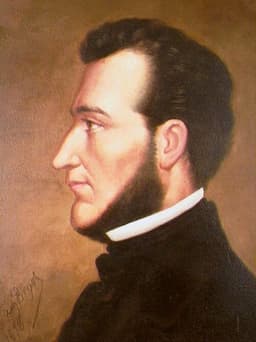
Francisco Morazan
General · Modern
58.0Total
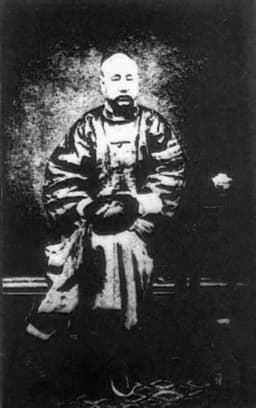
Sengge Rinchen
General · Modern
56.9Total
Basic Information
Born
1792
1811
Died
1842
1865
Era
Modern
Modern
Nationality
Honduras
China
Occupation
General
General
Civilization
Western
Eastern
Score Comparison
Military (10%)
52.5
70.0
Political (20%)
60.0
43.7
Influence (20%)
62.0
55.0
Legacy (20%)
50.0
54.0
Leadership (15%)
68.0
67.0
Strategy (15%)
55.0
60.7
TOTAL
58.0
56.9
Francisco Morazan — Complete Timeline
1824 AD
Abolition of slavery in Central AmericaReform◆ Major
As a key leader in the liberal movement, Moraz
AbolitionSlaveryLiberal Reform
Impact: regionalprogressive
1827 AD
Battle of La TrinidadWar◆ Major
Morazán led a liberal army to victory against conservative forces at La Trinidad, Honduras. This battle was a key turning point in the Central American civil war, allowing Morazán to consolidate power and eventually become president of the federation.
BattleLiberal VictoryCivil War
Impact: regional
1830 AD
Presidency of the Federal Republic of Central AmericaPolitical Action
Morazán was elected president of the Federal Republic of Central America, a union of Guatemala, El Salvador, Honduras, Nicaragua, and Costa Rica. He pursued liberal reforms including separation of church and state, free trade, and land reform, facing opposition from conservatives.
Federal RepublicLiberal ReformsCentral America
Impact: regionalconstructive
1842 AD
Execution by firing squadPolitical Action
After a failed attempt to restore the Federal Republic, Moraz
ExecutionEnd of FederationLiberal Defeat
Impact: regionaltragic
Sengge Rinchen — Complete Timeline
1859 AD
Battle of Dagu FortsWar◆ Major
Sengge Rinchen commanded Qing forces defending the Dagu Forts against a British and French naval attack. His forces repelled the assault, sinking several enemy ships and inflicting heavy casualties, a rare Qing victory in the Second Opium War.
Second Opium WarBattleVictory
Impact: regional
1860 AD
Battle of PalikaoWar◆ Major
Sengge Rinchen commanded Qing cavalry at the Battle of Palikao against Anglo-French forces. His forces were decisively defeated by superior firepower, leading to the fall of Beijing and the burning of the Old Summer Palace.
Second Opium WarBattleDefeat
Impact: regionaltragic
1863 AD
Suppression of the Nian RebellionWar◆ Major
Sengge Rinchen led Qing forces against the Nian rebels in northern China. He achieved several victories but was ultimately killed in battle against the Nian in 1865, marking a turning point in the rebellion.
Nian RebellionCampaignDeath
Impact: regionaltragic
Expert Analysis
Francisco Morazan vs Sengge Rinchen
The General and the Dreamer: Two Paths to Ruin
On a summer morning in 1860, a Mongol prince named Sengge Rinchen watched his cavalry charge across the plains of Palikao, toward the gleaming bayonets of an Anglo-French army. It was a scene of terrible beauty—thousands of horsemen, heirs to Genghis Khan’s legacy, thundering into the teeth of modern rifle fire. Hours later, the field was littered with the bodies of his men. Across the Atlantic, twenty-two years earlier, a Honduran general named Francisco Morazán had ridden into Guatemala City at the head of a liberal army, cheered by crowds who believed he would unite Central America into a single, enlightened republic. Both men fought for grand causes. Both were destroyed by forces they could not control. But their stories reveal how character, circumstance, and timing can turn a general into a hero or a cautionary tale.
Origins
Sengge Rinchen was born in 1811 into the Mongol aristocracy of the Qing Empire, a world of horsemen, banners, and hereditary loyalty to the Manchu throne. The Qing dynasty was then in its long decline, battered by the Opium Wars and internal rebellions. Sengge grew up in a culture that prized cavalry tactics and personal bravery—skills that would serve him well in the chaos ahead. He was a prince of the Borjigin clan, descendants of Genghis Khan, and his identity was inseparable from the empire he served.
Francisco Morazán, born in 1792 in Tegucigalpa, Honduras, came from a different world entirely. His family was Creole—of Spanish descent but born in the Americas—and he inherited the Enlightenment ideals of the French Revolution. He read Rousseau and Voltaire, believed in reason and progress, and saw the old Spanish colonial order as a tyranny to be swept away. Where Sengge was a defender of an ancient imperial system, Morazán was a revolutionary, dreaming of a new nation.
Rise to Power
Sengge Rinchen’s ascent was typical of a Qing military aristocrat: he proved himself in battle against Muslim rebels in Xinjiang and later against the Taiping Rebellion in the Yangtze valley. By 1859, he was the commander of the Dagu Forts, the key defensive works guarding the approach to Beijing. His moment came in June of that year, when a British and French fleet attempted to force the Hai River. Sengge’s artillerymen held their fire until the enemy ships were within range, then unleashed a devastating barrage. The result was a rare Qing victory: the Battle of Dagu Forts (1859) saw the Anglo-French force repulsed with heavy losses. For a brief moment, Sengge seemed to have turned the tide.
Morazán’s rise was more political. In 1824, he supported the abolition of slavery in Central America, a radical move that aligned him with the liberal faction seeking to break the power of the Catholic Church and the landed aristocracy. His military breakthrough came at the Battle of La Trinidad in 1827, where he led a small liberal army to victory against conservative forces. He was elected president of the Federal Republic of Central America in 1830, at the age of thirty-eight. He was not merely a general but a statesman, determined to forge a unified nation from the fractious provinces of Guatemala, El Salvador, Honduras, Nicaragua, and Costa Rica.
Leadership & Governance
Sengge Rinchen was a commander of the old school: brave, charismatic, and utterly loyal to his emperor. He led from the front, sharing the hardships of his men. But his military thinking was rooted in the eighteenth century. At Palikao in 1860, he ordered his cavalry to charge into the face of concentrated rifle and artillery fire—a tactic that had worked against the Taiping but was suicidal against a modern European army. His political wisdom was equally limited: he had no vision beyond defending the Qing order. He was a hammer, and every problem looked like a nail.
Morazán was a different breed. He was a reformer who used his presidency to enact secular education, freedom of the press, and land redistribution. He sought to break the power of the clergy and the old colonial elite. But his liberal idealism was his weakness: he believed that reason and good laws could overcome centuries of regional rivalry and ethnic division. He tried to impose unity from above, ignoring the deep local loyalties that made Central Americans think of themselves as Guatemalans or Salvadorans first. His military strategy was competent but not brilliant—his score of 55.6 in strategy reflects a man who won battles through determination rather than genius.
Triumph & Tragedy
Sengge Rinchen’s greatest hour was the defense of Dagu in 1859. It was a triumph of courage and positioning, a moment when the old empire proved it could still fight. But it was a temporary victory. The British and French returned in 1860 with a larger force, landed north of the forts, and marched on Beijing. Sengge’s cavalry was shattered at Palikao, and the emperor fled. The Qing Empire was humiliated, and Sengge’s reputation was stained.
His final tragedy came in the north. In 1863, he was sent to suppress the Nian Rebellion, a massive peasant uprising. He achieved several victories, but the rebels were elusive, and the war dragged on. In 1865, he was ambushed and killed in battle. His body was recovered, but his death marked the end of an era: the last great Mongol general of the Qing had fallen.
Morazán’s tragedy was more drawn out. His Federal Republic collapsed in the late 1830s under the weight of civil war and conservative rebellion. He was driven into exile, but he could not let go of his dream. In 1842, he invaded Costa Rica with a small force, hoping to rekindle the union. He was captured, tried, and sentenced to death. On the morning of his execution, he is said to have told his guards: “I am not ashamed of my ideals. I die for the unity of Central America.” He faced the firing squad with calm dignity.
Character & Destiny
Sengge Rinchen was a man of the past, fighting for a dying empire. His courage was real, but his vision was narrow. He could win a battle but not a war, because he could not adapt to the changing nature of warfare and politics. He was a product of his world—a world of horsemen and honor—and when that world crumbled, he crumbled with it.
Morazán was a man of the future, fighting for a dream that was ahead of its time. He believed in liberty, equality, and unity in a region that was not ready for them. His idealism was his strength and his fatal flaw. He could inspire men to follow him, but he could not persuade them to stay united. He was executed not by his enemies but by the very people he had tried to liberate.
Legacy
Today, Sengge Rinchen is a footnote in Chinese history, remembered mostly by scholars of the Qing dynasty. In Mongolia, he is honored as a national hero, a symbol of resistance against foreign invasion. But his legacy is ambiguous: he fought for an empire that was collapsing, and his methods were obsolete.
Morazán is a different story. In Honduras, El Salvador, and Costa Rica, he is a founding father, a symbol of liberal reform and Central American unity. His face appears on currency, his name adorns streets and schools. But his dream of a united Central America remains unfulfilled. His legacy is a reminder of what might have been—and of the cost of dreaming too boldly.
Conclusion
Two generals, two centuries, two worlds. Sengge Rinchen died with his boots on, fighting for an empire that would soon vanish. Francisco Morazán died before a firing squad, fighting for a nation that never was. Both were brave, both were flawed, and both were destroyed by the forces of history. But their stories remind us that greatness is not measured by victory alone. Sometimes the most memorable figures are those who lose—because in their defeat, we see the shape of the world that defeated them.
Rankings
🥇
Francisco MorazanLeader
Mil: 52.5Pol: 60.0Inf: 62.0
58.0
🥈
Sengge Rinchen
Mil: 70.0Pol: 43.7Inf: 55.0
56.9
+1.1 behind
How This Comparison Works
Algorithm
Each figure is scored on 6 dimensions (0—100 scale) based on structured historical data: Military (10%), Political (20%), Influence (20%), Legacy (20%), Leadership (15%), Strategy (15%). The weighted total produces the final ranking.
Data Sources
Scores are computed from structured sub-indicators in the database. Scale factors adjust for era (Ancient ×0.85, Modern ×1.0) and civilization size (Eastern ×1.05, Other ×0.80) to account for differences in population and military scale.
Maximum 3 Figures
Comparisons are limited to 2—3 figures to ensure readability and statistical meaningfulness.
Error Margins
±5 points per dimension — Sub-scores are derived from historical records with inherent uncertainty. Two figures within 5 points on a dimension should be considered roughly equivalent in that area.
Total Score Accuracy
±3 points overall — The weighted combination of 6 dimensions produces a total score with approximately ±3 points of uncertainty. Differences of less than 3 points are not statistically significant— the figures are effectively tied.
Known Limitations
- Historical records are incomplete and uneven across civilizations
- Figures from oral-tradition societies may be underrepresented
- Occupation labels can misclassify multi-role figures
- Scores measure capability and impact, not moral character
- Quantitative scoring is a comparison tool, not absolute truth
Capability Radar
Military (10%) — Battles & Warfare
Battles
55
75
Win Rate
60
60
Expansion
40
20
Political (20%) — Governance & Reform
Reform
70
20
Diplomacy
45
50
Economy
50
20
Influence (20%) — Cultural & Global Reach
Cultural
45
40
Global
35
35
Legacy (20%) — Historical Impact
Historical
50
55
Longevity
40
30
Leadership (15%) — Power & Stability
Tenure
55
40
Stability
30
30
Strategy (15%) — Tactics & Innovation
Strategy
55
70
Tactics
50
80
Reform
45
30
Similar Comparisons
Comments & Discussion
SaberMetrics6/16/2026
This comparison is deeply flawed because it ignores that Sengge Rinchen was fighting a technologically asymmetric war, while Morazán faced peer adversaries. Sengge's cavalry charges at Palikao weren't tactical blunders—they were the only option against breech-loading rifles. Morazán's mistake was political, not military: he united Central America through force but failed to build lasting institutions. A horse archer cannot be judged by infantry standards.
草原弓手6/16/2026
把森格和林沁比作莫拉桑,就像把蒙古摔跤手和西班牙斗牛士放在一起比较。森格是末代游牧战士的象征,他的失败源于大清的腐朽,而非个人战略失误。1860年八里桥战役中,他带领的蒙古骑兵面对英法联军的现代化武器,战死率高达80%。莫拉桑至少懂得在失败后流亡重组,而森格只能被时代碾碎。
MontanaMongol6/16/2026
As someone who's ridden through the Mongolian steppe, I can tell you these two generals couldn't be more different. Sengge Rinchen's cavalry was fighting for survival of a 2000-year-old nomadic tradition against industrial warfare. Morazán was fighting for ideas—liberalism, federalism, modernity. When your enemy is progress itself, you lose before the first shot. Sengge knew this; his final stand was defiance, not strategy.
联邦之梦6/16/2026
莫拉桑的悲剧在于他太超前于时代,而森格的悲剧在于他太落后于时代。1842年莫拉桑被流放时,中美洲联邦已经分裂,但他坚持联邦理想直至被处决。森格则在1855年镇压太平天国时展现出可怕的军事才能,但1860年八里桥战役成为游牧骑兵最后的绝唱。一个死于自己的梦想,一个死于敌人的子弹。
CavalryCritic6/16/2026
Stop mythologizing Sengge's defeat. The man was a brilliant commander who defeated the Taiping rebels using innovative combined arms tactics in the 1850s. At Palikao, he was betrayed by the Qing court's refusal to modernize. Give him modern rifles and he'd have rewritten Chinese history. Meanwhile, Morazán's liberal reforms actually provoked the conservative backlash that destroyed his federation. These are stories of betrayal by their own systems.