Loading...
Samori Toure vs Sitiveni Rabuka
Samori Toure leads by 18.8 pts · 2 figures compared
…
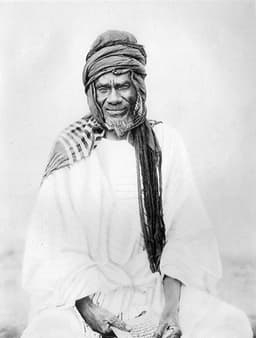
Samori Toure
General · Modern
70.5Total
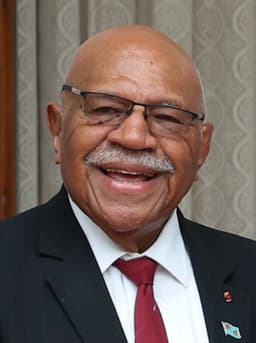
Sitiveni Rabuka
General · Modern
51.7Total
Basic Information
Born
1830
1948
Died
1900
—
Era
Modern
Modern
Nationality
Wassoulou Empire
Fiji
Occupation
General
General
Civilization
Other
Other
Score Comparison
Military (10%)
60.0
10.2
Political (20%)
78.0
60.0
Influence (20%)
68.0
53.3
Legacy (20%)
72.0
46.7
Leadership (15%)
72.0
85.0
Strategy (15%)
70.0
39.6
TOTAL
70.5
51.7
Samori Toure — Complete Timeline
1878 AD
Establishment of the Wassoulou EmpirePolitical Action
Samori Toure founded the Wassoulou Empire in West Africa, uniting various Mandinka states under his rule. He established a centralized administration and a professional army, creating a powerful state that resisted French expansion.
EmpireWassoulouUnification
Impact: regionalconstructive
1880 AD
Military Reforms and ModernizationReform◆ Major
Samori Toure modernized his army by importing firearms from European traders and establishing a standing army of up to 35,000 men. He organized his forces into regular units and introduced new tactics, making them effective against French troops.
Military ReformFirearmsArmy
Impact: regionalconstructive
1882 AD
First Franco-Wassoulou WarWar◆ Major
Samori Toure's forces fought the French army in the first major conflict between the Wassoulou Empire and France. The war ended with a treaty in 1886, recognizing Samori's control over the Niger River region.
WarFranceTreaty
Impact: regional
1891 AD
Second Franco-Wassoulou WarWar◆ Major
The French resumed hostilities, forcing Samori to retreat eastward. He employed a scorched-earth strategy, destroying villages and crops to deny resources to the French, prolonging the conflict for years.
WarScorched EarthRetreat
Impact: regionaltragic
1898 AD
Capture and ExileWar
Samori Toure was captured by French forces after a long campaign. He was exiled to Gabon, where he died in 1900. His capture ended the Wassoulou Empire and marked the completion of French conquest in West Africa.
CaptureExileEnd of Empire
Impact: regionaltragic
Sitiveni Rabuka — Complete Timeline
1987 AD
1987 Fijian Coup d'étatPolitical Action
Rabuka, as a colonel in the Fijian military, led a coup overthrowing the elected government of Timoci Bavadra. The coup was motivated by ethnic Fijian opposition to Indo-Fijian political influence. Rabuka declared Fiji a republic.
CoupMilitary InterventionEthnic Tension
Impact: nationaldestructive
1992 AD
1992 Election as Prime MinisterPolitical Action◆ Major
Rabuka transitioned from military leader to civilian politician, winning the 1992 general election as leader of the Fijian Political Party. He became Prime Minister, serving until 1999.
ElectionCivilian GovernmentPolitical Transition
Impact: national
1997 AD
1997 Constitution ReformReform◆ Major
Rabuka's government oversaw the adoption of a new constitution that removed ethnic-based voting and provided for a multi-ethnic government. The constitution aimed to reduce ethnic tensions and promote national unity.
ConstitutionReformEthnic Reconciliation
Impact: nationalconstructive
1999 AD
1999 General Election DefeatPolitical Action◆ Major
Rabuka's government was defeated in the general election by the Labour Party led by Mahendra Chaudhry. Rabuka stepped down as Prime Minister, marking the end of his first period in power.
Election DefeatGovernment ChangeChaudhry
Impact: national
2022 AD
2022 Return as Prime MinisterPolitical Action◆ Major
Rabuka led the People's Alliance to victory in the 2022 general election, forming a coalition government. He became Prime Minister again, 23 years after his previous tenure, promising democratic reforms.
ElectionReturn to PowerCoalition Government
Impact: national
Expert Analysis
Sitiveni Rabuka vs Samori Toure
# The General’s Two Paths: Samori Toure and Sitiveni Rabuka
In the cool morning of 1898, a French column closed in on a ragged camp in the forests of western Ivory Coast. Inside, an aging warrior sat with his remaining officers, his empire reduced to ash and memory. Samori Toure, who had defied France for nearly two decades, knew the end had come. Just over a century later, in the tropical heat of Suva, Fiji, another general stood before a different kind of surrender. Sitiveni Rabuka, who had seized power by force in 1987, was about to hand it back—voluntarily, to the ballot box. What made one man fight until the world collapsed around him, while the other chose to trade his uniform for a constitution?
Origins
Samori Toure was born around 1830 into a world of small kingdoms and slave-raiding chaos in what is now Guinea. He began as a trader, learning the routes and languages of the savanna, but when his mother was captured in a raid, he threw himself into the brutal politics of the region. By the 1860s, he had built a following of warriors, and by 1878, he declared himself ruler of the Wassoulou Empire. His world was one of competing empires—the crumbling Mali, the rising French, the British on the coast—where power meant the difference between freedom and chains.
Sitiveni Rabuka was born in 1948, a century later and a world away. Fiji was a British colony, a patchwork of indigenous Fijians and Indo-Fijian descendants of indentured laborers. Rabuka grew up in a village, trained as a soldier, and rose through the ranks of a small, professional army. He was a product of the post-colonial era, when the British had left behind not just independence but a fragile democracy built on ethnic compromise. His world was one of parliaments and elections, where power meant the difference between majority rule and indigenous rights.
Rise to Power
Samori’s rise was forged in fire. By 1880, he commanded a standing army of up to 30,000 men, armed with modern rifles bought from British and German traders. He built a centralized state with a bureaucracy, a tax system, and a network of forts. But the French were advancing from Senegal, and in 1882, the First Franco-Wassoulou War erupted. Samori held them off, negotiating a treaty that bought him time. He used it to modernize further, even establishing a factory to repair firearms. His power came from the gun, the horse, and the sheer force of his will.
Rabuka’s rise was quicker and quieter. In 1987, Fiji elected its first government led by an Indo-Fijian, Timoci Bavadra. To many indigenous Fijians, this felt like a loss of their birthright. Rabuka, then a colonel, led a coup on May 14, 1987, with just a few dozen soldiers. He suspended the constitution, declared martial law, and installed a government friendly to indigenous interests. It was a coup without bloodshed, but it shattered Fiji’s democratic order. Unlike Samori, Rabuka seized power not from an external enemy but from his own countrymen.
Leadership & Governance
Samori Toure was a military genius in the classical sense. He understood terrain, logistics, and morale. When the French resumed war in 1891, he retreated eastward, burning villages and crops behind him—a scorched-earth strategy that denied the enemy supplies. He moved his entire state, thousands of people, across hundreds of miles of hostile country. But his political wisdom was limited. He ruled as a conqueror, demanding loyalty through force, and his empire never developed the institutions to survive without him. His reforms were tactical, not structural.
Rabuka was the opposite. After his coup, he faced international isolation and internal division. In 1992, he won election as prime minister, but he had learned that power based on a gun is brittle. In 1997, he oversaw a new constitution that removed ethnic-based voting and created a multiracial democracy. It was a remarkable reversal: the man who had broken democracy now helped rebuild it. He lost the 1999 election and stepped down peacefully, a rare act of humility for a coup leader. His leadership evolved from military command to political compromise.
Triumph & Tragedy
Samori’s greatest triumph was his resistance itself—holding off the French Empire for seventeen years, longer than any other West African leader. His tragedy was that resistance could only end one way. In 1898, betrayed by a guide, he was captured and exiled to Gabon, where he died in 1900. His empire vanished, his people scattered, his name nearly erased by colonial history.
Rabuka’s triumph came in 2022, when he returned as prime minister at age 74, leading a coalition that promised unity. His tragedy was the decades of instability his coup unleashed—another coup in 2000, a military takeover in 2006, a cycle of ethnic tension that still haunts Fiji. He could not undo what he had begun.
Character & Destiny
Samori was a man of iron will, shaped by a world where surrender meant slavery. He could not imagine a negotiated end, only victory or death. His personality drove him to fight beyond all reason, and history remembers him as a hero of resistance—but also as a king without a kingdom.
Rabuka was more pragmatic, perhaps because his world was less desperate. He saw that power could be regained through politics, not just rifles. His willingness to change, to admit error, gave him a second chance. But it also made him a figure of controversy: a traitor to democracy who later became its defender.
Legacy
Samori Toure is remembered across West Africa as a symbol of anti-colonial struggle. His name adorns streets, schools, and stadiums. His score of 73.9 in legacy reflects a man who failed in his own time but triumphed in memory. He gave his people a story of defiance.
Sitiveni Rabuka has a legacy score of 61.2, lower but more complex. He is both villain and statesman, the man who broke Fiji and the man who tried to fix it. His story is unfinished, a lesson in how power can corrupt—and how it can redeem.
Conclusion
Samori Toure and Sitiveni Rabuka lived in different centuries, on different continents, facing different enemies. One fought an empire, the other fought an idea. Yet both were generals who had to choose what kind of leader they would be. Samori chose the path of resistance, and it cost him everything. Rabuka chose the path of adaptation, and it gave him a second act. Their stories remind us that history judges not just by victory or defeat, but by the courage to face one’s own choices—and the wisdom to change.
Rankings
🥇
Samori ToureLeader
Mil: 60.0Pol: 78.0Inf: 68.0
70.5
🥈
Sitiveni Rabuka
Mil: 10.2Pol: 60.0Inf: 53.3
51.7
+18.8 behind
How This Comparison Works
Algorithm
Each figure is scored on 6 dimensions (0—100 scale) based on structured historical data: Military (10%), Political (20%), Influence (20%), Legacy (20%), Leadership (15%), Strategy (15%). The weighted total produces the final ranking.
Data Sources
Scores are computed from structured sub-indicators in the database. Scale factors adjust for era (Ancient ×0.85, Modern ×1.0) and civilization size (Eastern ×1.05, Other ×0.80) to account for differences in population and military scale.
Maximum 3 Figures
Comparisons are limited to 2—3 figures to ensure readability and statistical meaningfulness.
Error Margins
±5 points per dimension — Sub-scores are derived from historical records with inherent uncertainty. Two figures within 5 points on a dimension should be considered roughly equivalent in that area.
Total Score Accuracy
±3 points overall — The weighted combination of 6 dimensions produces a total score with approximately ±3 points of uncertainty. Differences of less than 3 points are not statistically significant— the figures are effectively tied.
Known Limitations
- Historical records are incomplete and uneven across civilizations
- Figures from oral-tradition societies may be underrepresented
- Occupation labels can misclassify multi-role figures
- Scores measure capability and impact, not moral character
- Quantitative scoring is a comparison tool, not absolute truth
Capability Radar
Military (10%) — Battles & Warfare
Battles
75
5
Win Rate
65
5
Expansion
60
5
Political (20%) — Governance & Reform
Reform
75
50
Diplomacy
80
45
Economy
60
40
Influence (20%) — Cultural & Global Reach
Cultural
65
30
Global
55
20
Legacy (20%) — Historical Impact
Historical
70
40
Longevity
60
30
Leadership (15%) — Power & Stability
Tenure
70
55
Stability
55
35
Strategy (15%) — Tactics & Innovation
Strategy
85
10
Tactics
80
10
Reform
70
5
Similar Comparisons
Comments & Discussion
The Chain-Breaker6/16/2026
Rabuka’s surrender of power proves something Samori never grasped: survival of the nation matters more than personal glory. Samori’s scorched-earth retreat cost 100,000+ civilian lives in his final campaign alone. Rabuka saved Fiji by putting down the gun and picking up the ballot. That’s not weakness—that’s wisdom forged from seeing what happens when generals won’t let go. History remembers builders, not body counts.
边疆老炮6/16/2026
Samori Toure用十六年耗死了法军三个总督,而Rabuka三年就被自己的政变吓软了。非洲硬汉vs太平洋软蛋,这对比简直侮辱西非军人传统。Samori连机关枪都不怕,Rabuka连民意都不敢面对。革命不是请客吃饭,这道理南太平洋的大佬永远不懂。
Data-Junkie6/16/2026
Let’s talk numbers. Samori commanded a 35,000-man army with 4,000 modern rifles; his empire mobilized 200,000 tons of grain annually. Rabuka’s 1987 coup involved maybe 300 soldiers and zero agricultural logistics. Apples and copra. The comparison breaks down because Rabuka inherited a functioning British-legal state. Samori built his from scratch while fighting. Comparing their “governance” is like comparing a skyscraper to a thatched hut because both have roofs.
维基战士6/16/2026
你们都在美化Samori却忘了他贩过奴隶!1886年他把战俘卖给英国人在塞拉利昂换武器,这也能叫民族英雄?Rabuka至少1997年主动交出政权后老老实实当了十年牧师。Samori手上沾着黑奴的血,Rabuka手上只有选票。要论道德底线,太平洋岛民完胜西非军阀。
Classical Strategist6/16/2026
From a Clausewitzian perspective, Rabuka understood that policy must continue through other means, then back again. He used coup as negotiation, not conquest. Samori had no exit strategy; his jihad against France became existential, not strategic. By 1895 he could have negotiated a protectorate like many lesser chiefs did, but pride demanded annihilation. Rabuka knew when the art of war becomes the art of compromise.
煮酒论史6/16/2026
如果生在1890年代,Rabuka活不过三章。Samori面对的是工业化种族灭绝机器法军,依然坚持了十七年—他的移动首都Almamy Samori要塞被攻陷时,法军死伤三千人。Rabuka的对手只是几个印度裔律师和报社编辑。把斐济宫廷政变和西非反殖民战争放在一起,就像拿火柴比火山。时代不同,但胆量差得更远。