Loading...
Samori Toure vs Yitzhak Rabin
Samori Toure leads by 4.1 pts · 2 figures compared
…
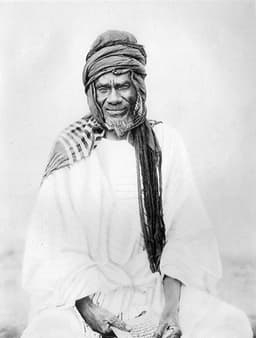
Samori Toure
General · Modern
70.5Total
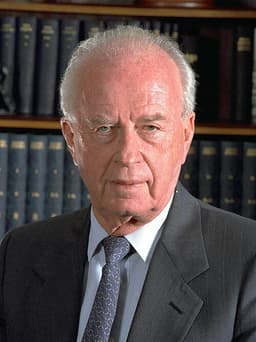
Yitzhak Rabin
General · Modern
66.4Total
Basic Information
Born
1830
1922
Died
1900
—
Era
Modern
Modern
Nationality
Wassoulou Empire
Israel
Occupation
General
General
Civilization
Other
Middle Eastern
Score Comparison
Military (10%)
60.0
61.7
Political (20%)
78.0
82.0
Influence (20%)
68.0
68.0
Legacy (20%)
72.0
55.0
Leadership (15%)
72.0
78.0
Strategy (15%)
70.0
55.0
TOTAL
70.5
66.4
Samori Toure — Complete Timeline
1878 AD
Establishment of the Wassoulou EmpirePolitical Action
Samori Toure founded the Wassoulou Empire in West Africa, uniting various Mandinka states under his rule. He established a centralized administration and a professional army, creating a powerful state that resisted French expansion.
EmpireWassoulouUnification
Impact: regionalconstructive
1880 AD
Military Reforms and ModernizationReform◆ Major
Samori Toure modernized his army by importing firearms from European traders and establishing a standing army of up to 35,000 men. He organized his forces into regular units and introduced new tactics, making them effective against French troops.
Military ReformFirearmsArmy
Impact: regionalconstructive
1882 AD
First Franco-Wassoulou WarWar◆ Major
Samori Toure's forces fought the French army in the first major conflict between the Wassoulou Empire and France. The war ended with a treaty in 1886, recognizing Samori's control over the Niger River region.
WarFranceTreaty
Impact: regional
1891 AD
Second Franco-Wassoulou WarWar◆ Major
The French resumed hostilities, forcing Samori to retreat eastward. He employed a scorched-earth strategy, destroying villages and crops to deny resources to the French, prolonging the conflict for years.
WarScorched EarthRetreat
Impact: regionaltragic
1898 AD
Capture and ExileWar
Samori Toure was captured by French forces after a long campaign. He was exiled to Gabon, where he died in 1900. His capture ended the Wassoulou Empire and marked the completion of French conquest in West Africa.
CaptureExileEnd of Empire
Impact: regionaltragic
Yitzhak Rabin — Complete Timeline
1967 AD
Chief of Staff during the Six-Day WarWar
As Chief of Staff of the Israel Defense Forces, Rabin commanded the Israeli military during the Six-Day War against Egypt, Jordan, and Syria. Israel captured the Sinai Peninsula, Gaza Strip, West Bank, East Jerusalem, and Golan Heights, reshaping the region.
Six-Day WarTerritorial ExpansionMilitary Victory
Impact: global
1993 AD
Signing of the Oslo AccordsPolitical Action
As prime minister, Rabin signed the Oslo Accords with PLO Chairman Yasser Arafat on the White House lawn. The agreement established the Palestinian Authority and set a framework for Palestinian self-governance in the West Bank and Gaza Strip.
Peace ProcessPalestiniansOslo
Impact: globalconstructive
1995 AD
Assassination at Peace RallyPolitical Action
Rabin was assassinated by Israeli extremist Yigal Amir after a peace rally in Tel Aviv. The assassination shocked Israel and the world, derailing the Oslo peace process and leading to a period of political instability.
AssassinationPeace ProcessPolitical Violence
Impact: globaltragic
Expert Analysis
Yitzhak Rabin vs Samori Toure
# The General and the Peacemaker
On a warm September evening in 1995, Yitzhak Rabin stood before a crowd of 100,000 Israelis in Tel Aviv’s Kings of Israel Square, singing a song of peace. Hours later, three bullets from a Jewish extremist ended his life. Just ninety-seven years earlier, on the other side of the world, Samori Toure died in exile on the island of Gabon, a French prison far from the West African empire he had built from nothing. One man was killed for wanting peace; the other was destroyed for refusing submission. Both were generals who shaped history, yet their paths could not have diverged more sharply. What drove these two commanders—one a Mandinka warrior-king, the other a Sabra soldier-statesman—toward such different destinies?
Origins
Samori Toure was born around 1830 in a small village in what is now Guinea, the son of a Dyula trader family. The world he entered was one of fragmentation and flux. The great Mali Empire had long collapsed, and the region was a patchwork of small states, vulnerable to slave raiders and, increasingly, to European encroachment. Samori learned the Quran as a child, but his true education came in the brutal school of West African politics. By his twenties, he had become a warrior, selling his sword to local chiefs before deciding to build his own domain.
Yitzhak Rabin was born nearly a century later, in 1922 in Jerusalem, then part of British Mandate Palestine. His parents were Labor Zionist pioneers from Russia, secular Jews who believed in building a Jewish state through hard work and self-defense. Rabin grew up on a collective farm, a *kibbutz*, where he learned discipline and pragmatism. If Samori’s world was shaped by the collapse of old empires, Rabin’s was forged by the dream of a new one—and the constant threat of its destruction.
The difference in their origins was not merely geographic. Samori emerged from a society where power was personal and dynastic, where a leader’s legitimacy rested on his ability to protect and expand. Rabin was a product of the modern nation-state, where leadership meant navigating bureaucracy, diplomacy, and democratic politics. One was a son of the 19th-century frontier; the other, of the 20th-century nation.
Rise to Power
Samori’s ascent was a story of relentless ambition. By 1878, he had unified the Mandinka states of the Upper Niger under his rule, founding the Wassoulou Empire. His military score of 60.3 reflects not raw brilliance but patient construction. He built a standing army of up to 30,000 men, importing modern firearms from European traders along the coast. In 1880, he began systematic military reforms, creating a professional force with standardized training and logistics. This was no mere tribal war band; Samori was building a state that could compete with the Europeans on their own terms.
Rabin’s rise was more institutional. He joined the Palmach, the elite strike force of the Jewish underground, and rose through its ranks. His turning point came in 1967, when as Chief of Staff he commanded Israel’s armed forces during the Six-Day War. The lightning victory—capturing the Sinai, Gaza, the West Bank, and the Golan Heights—made him a national hero. His military score of 62.0 is modest, but his leadership score of 83.4 reveals the truth: Rabin was not a tactical genius but a steady hand in crisis. He was the kind of general who could win a war and then, years later, try to end it.
Leadership & Governance
Samori governed as a traditional African emperor, but with modernizing instincts. He centralized power, collected taxes, and enforced Islamic law across his domain. His political score of 70.5 shows a ruler who understood that empire required more than conquest. He built roads, encouraged trade, and maintained a network of spies. Yet his rule remained deeply personal. He led from the front, often fighting alongside his men. When the French attacked in 1882, beginning the First Franco-Wassoulou War, Samori fought them to a stalemate, forcing a temporary peace.
Rabin’s leadership was the opposite: institutional, cautious, and deeply political. As prime minister, he was not a charismatic speaker but a blunt, pragmatic manager. His strategy score of 59.7 is telling—he was not a grand strategist but a problem-solver. His greatest achievement, the 1993 Oslo Accords, was less a vision than a gamble. He shook hands with Yasser Arafat, his sworn enemy, and agreed to a framework for Palestinian self-rule. For this, he won the Nobel Peace Prize—and made enemies at home.
Triumph & Tragedy
Samori’s greatest triumph was his resistance itself. For nearly two decades, he held off the French army, the most powerful military force in Africa. When the Second Franco-Wassoulou War began in 1891, he employed a scorched-earth strategy, burning villages and crops as he retreated eastward, denying the French supplies. He even relocated his entire capital, moving his empire like a nomadic army. His tragedy came in 1898, when he was captured by a French column. He was exiled to Gabon, where he died two years later, aged about seventy. His empire crumbled without him.
Rabin’s triumph was the Six-Day War, a victory that reshaped the Middle East. But his tragedy was more intimate. On November 4, 1995, after singing for peace, he was shot by Yigal Amir, a Jewish law student who believed Rabin was betraying Israel. The assassination was not a foreign conquest but a civil wound. Samori died defeated by an external enemy; Rabin was killed by one of his own.
Character & Destiny
Samori was a survivor, a man who adapted to impossible odds. He learned to read French military manuals, to negotiate with European traders, to fight a modern war with traditional resources. His influence score of 75.8 reflects his ability to inspire loyalty and fear. But he was also a product of his time: he could not imagine a world without empire, only a different empire. His destiny was to resist, not to win.
Rabin was a soldier who became a peacemaker, a transformation that required him to contradict his own past. His political score of 77.7 shows a man who could change, but his legacy score of 68.8 reveals the cost. He was killed not for his failures but for his success—for proving that peace was possible. Samori died in exile, his body broken. Rabin died in his own country, his body riddled with bullets from a fellow Jew.
Legacy
Samori Toure is remembered today as a symbol of African resistance to colonialism. In Guinea, Mali, and Ivory Coast, his name is taught in schools, his image on currency. He represents the dignity of those who fought against overwhelming odds. Yet his empire was ephemeral; his military innovations could not stop the French. His legacy is moral, not political.
Yitzhak Rabin’s legacy is more complicated. He is mourned as a martyr for peace, but the peace he died for remains unfinished. The Oslo Accords collapsed into the Second Intifada; the occupation continues. His assassination did not stop the conflict—it deepened it. Yet his example endures: a general who learned that some wars cannot be won, that the greatest courage is to stop fighting.
Conclusion
Standing at the edge of history, these two generals faced the same question: How do you lead when the world is changing around you? Samori answered with resistance, fighting until he could fight no more. Rabin answered with reconciliation, reaching across the divide until he was struck down. One died in exile, the other at a rally. One was forgotten by the world for decades, the other remembered every year in candlelit vigils. But both understood something that too many leaders forget: that leadership is not about winning, but about meaning. Samori fought for the freedom of his people, even in defeat. Rabin fought for the future of his children, even in death. In the end, they were not so different after all.
Rankings
🥇
Samori ToureLeader
Mil: 60.0Pol: 78.0Inf: 68.0
70.5
🥈
Yitzhak Rabin
Mil: 61.7Pol: 82.0Inf: 68.0
66.4
+4.1 behind
How This Comparison Works
Algorithm
Each figure is scored on 6 dimensions (0—100 scale) based on structured historical data: Military (10%), Political (20%), Influence (20%), Legacy (20%), Leadership (15%), Strategy (15%). The weighted total produces the final ranking.
Data Sources
Scores are computed from structured sub-indicators in the database. Scale factors adjust for era (Ancient ×0.85, Modern ×1.0) and civilization size (Eastern ×1.05, Other ×0.80) to account for differences in population and military scale.
Maximum 3 Figures
Comparisons are limited to 2—3 figures to ensure readability and statistical meaningfulness.
Error Margins
±5 points per dimension — Sub-scores are derived from historical records with inherent uncertainty. Two figures within 5 points on a dimension should be considered roughly equivalent in that area.
Total Score Accuracy
±3 points overall — The weighted combination of 6 dimensions produces a total score with approximately ±3 points of uncertainty. Differences of less than 3 points are not statistically significant— the figures are effectively tied.
Known Limitations
- Historical records are incomplete and uneven across civilizations
- Figures from oral-tradition societies may be underrepresented
- Occupation labels can misclassify multi-role figures
- Scores measure capability and impact, not moral character
- Quantitative scoring is a comparison tool, not absolute truth
Capability Radar
Military (10%) — Battles & Warfare
Battles
75
65
Win Rate
65
70
Expansion
60
50
Political (20%) — Governance & Reform
Reform
75
65
Diplomacy
80
85
Economy
60
60
Influence (20%) — Cultural & Global Reach
Cultural
65
55
Global
55
70
Legacy (20%) — Historical Impact
Historical
70
75
Longevity
60
60
Leadership (15%) — Power & Stability
Tenure
70
70
Stability
55
40
Strategy (15%) — Tactics & Innovation
Strategy
85
75
Tactics
80
60
Reform
70
55
Similar Comparisons
Comments & Discussion
GeneralSamuri6/16/2026
Rabin’s final song of peace? He sang while his generals bulldozed Palestinian homes. Samori Toure never kowtowed to colonial masters; Rabin caved to Oslo’s false promises, leaving settlers in control. Samori died a defiant king; Rabin died a traitor to his own militant roots. Peace isn’t surrender—but Rabin’s admirers conflate the two. Samori’s rifle was worth more than Rabin’s microphone.
子弹诗人6/16/2026
拉宾唱和平歌时,手上有十万以色列听众的血吗?萨摩利·图雷抵抗法国殖民者的枪炮,才叫真将军。拉宾签《奥斯陆协议》出卖巴勒斯坦权益,却要士兵替他圆谎。图雷战败被俘,也没跪着求饶。拉宾被犹太人打死,讽不讽刺?他生前压不住右翼,死后被封圣。图雷至少守住了尊严,拉宾只守住了公关。