Loading...
Saddam Hussein vs Themistocles
Themistocles leads by 18.7 pts · 2 figures compared
…
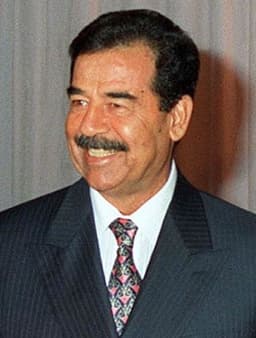
Saddam Hussein
Politician · Modern
49.7Total
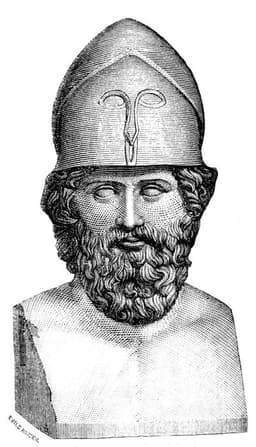
Themistocles
Politician · Ancient
68.4Total
Basic Information
Born
1937
-524
Died
—
-459
Era
Modern
Ancient
Nationality
Iraq
Greece
Occupation
Politician
Politician
Civilization
Middle Eastern
Western
Score Comparison
Military (10%)
52.5
80.0
Political (20%)
43.7
72.0
Influence (20%)
58.0
40.0
Legacy (20%)
47.5
80.0
Leadership (15%)
40.0
79.8
Strategy (15%)
55.0
76.0
TOTAL
49.7
68.4
Saddam Hussein — Complete Timeline
1979 AD
Became President of IraqPolitical Action
Saddam Hussein forced President Ahmed Hassan al-Bakr to resign on July 16, 1979, and assumed the presidency. He immediately purged the Ba'ath Party, executing 68 senior members in a televised purge. This consolidated his absolute control over Iraq's government and security apparatus.
Power ConsolidationPurgeBa'ath Party
Impact: nationaldestructive
1980 AD
Invaded IranWar
Saddam launched a full-scale invasion of Iran on September 22, 1980, aiming to seize the oil-rich Khuzestan province and overthrow the new Islamic regime. The war lasted eight years, resulting in hundreds of thousands of casualties and massive economic destruction for both countries, ending in a stalemate.
Iran-Iraq WarInvasionStalemate
Impact: regionaldestructive
1988 AD
Used chemical weapons against Kurds at HalabjaWar◆ Major
During the Anfal campaign, Iraqi forces under Saddam's orders attacked the Kurdish town of Halabja with mustard gas and nerve agents on March 16, 1988. An estimated 5,000 civilians were killed instantly. The attack is considered one of the worst chemical weapons attacks against a civilian population.
Chemical WeaponsWar CrimeKurds
Impact: nationaldestructive
1990 AD
Invaded KuwaitWar
Saddam ordered the invasion and annexation of Kuwait on August 2, 1990, claiming it was historically part of Iraq. The invasion was condemned internationally and led to the Gulf War. A US-led coalition expelled Iraqi forces in February 1991, and Iraq faced severe UN sanctions.
Gulf WarInvasionSanctions
Impact: globaldestructive
2003 AD
Captured by US forces and executedPolitical Action
After the US-led invasion of Iraq in March 2003, Saddam went into hiding. He was captured by US forces on December 13, 2003, near Tikrit. Tried by the Iraqi Special Tribunal for crimes against humanity, he was sentenced to death and executed by hanging on December 30, 2006.
CaptureTrialExecution
Impact: globaltragic
Themistocles — Complete Timeline
483 BC
Construction of the Athenian FleetReform◆ Major
Themistocles persuaded the Athenian assembly to use silver from the Laurion mines to build a fleet of 200 triremes. This naval expansion transformed Athens into a major maritime power and was crucial for the victory at Salamis.
AthensNaval PowerReform
Impact: nationalconstructive
480 BC
Battle of SalamisWar
Themistocles commanded the Greek navy against the Persian fleet at Salamis. He lured the Persians into the narrow straits, where the Greek ships destroyed the larger Persian fleet. This victory ended the Persian threat to Greece and preserved Greek independence.
Greco-Persian WarsNaval BattleAthens
Impact: regionalconstructive
472 BC
Ostracism from AthensPolitical Action◆ Major
Themistocles was ostracized by the Athenian assembly, likely due to political rivalries and accusations of arrogance. He went into exile, first to Argos, then to Persia, where he was received by King Artaxerxes I.
AthensExileOstracism
Impact: nationaltragic
465 BC
Service under the Persian KingPolitical Action
After his ostracism, Themistocles fled to Persia and offered his services to King Artaxerxes I. He was granted governorship of Magnesia and other cities in Asia Minor, where he lived until his death. This act was seen as treason by many Athenians.
PersiaExileTreason
Impact: regional
Expert Analysis
Themistocles vs Saddam Hussein
# The Specter and the Savior
On a sun-scorched morning in December 2003, a bearded, disheveled man was pulled from a hole in the ground near Tikrit, Iraq. His captors, American soldiers, found him clutching a pistol he never fired. Half a world away and two and a half millennia earlier, another man stood on the deck of a trireme, watching the Persian fleet crumple into the narrow waters of Salamis. One ended his days in a spider hole, the other in the court of his former enemy. How did two men of such ambition—both politicians, both warriors, both masters of survival—arrive at such different fates? The answer lies not in their goals, but in the soil from which they grew.
Origins
Saddam Hussein was born in 1937 into poverty in the village of Al-Awja, near Tikrit. His father disappeared before his birth; his mother, a peasant woman, reportedly tried to abort him. He was raised by an uncle who steeped him in Arab nationalism and a visceral hatred of foreign domination. Iraq was a brittle construct—a British-made kingdom of Sunnis, Shias, and Kurds, held together by oil and force. Saddam learned early that power was the only currency that mattered, and that trust was a weakness.
Themistocles came from a different world. Born around 524 BCE in Athens, he was the son of a minor nobleman and a mother from Thrace—a mixed heritage that marked him in the gossipy democracy of the city-state. Athens was a fledgling experiment in self-rule, perpetually menaced by the Persian Empire. Where Saddam saw a world of tribes and plots, Themistocles saw a world of cities and ideas. Both men were outsiders, but one grew up in a land where fear was the engine of politics, the other in a land where persuasion was the fuel.
Rise to Power
Saddam’s ascent was a study in brutality. He joined the Ba'ath Party in his teens, and by 1968 he was the enforcer of the new regime—head of internal security. He built a network of informants, eliminated rivals, and staged a purge of his own party in 1979, forcing senior members to confess on television before they were executed. On July 16 of that year, he forced President Ahmed Hassan al-Bakr to resign and seized the presidency. He was 42. His power was absolute, but it rested on fear.
Themistocles rose through speech. In the Athenian assembly, he argued that Athens’ future lay not in its army but in its navy. In 483 BCE, he persuaded the citizens to spend a windfall of silver from the Laurion mines on building 200 triremes—warships that would become the backbone of Greek defense. He was a master of the democratic game, but his success bred envy. He was not a king; he was a politician who had to win every argument, every day.
Leadership & Governance
Saddam ruled Iraq as a personal fiefdom. He built schools, hospitals, and highways—literacy rates rose, and women gained rights uncommon in the region. But the price was total submission. He crushed the Shia uprising in 1991, drained the marshes of the Marsh Arabs, and in 1988, during the Anfal campaign, he ordered chemical weapons used on the Kurdish town of Halabja. Thousands died in minutes. His leadership was a paradox: a modernizer who used medieval methods.
Themistocles governed through vision and deception. At the Battle of Salamis in 480 BCE, he lured the Persian fleet into the narrow strait, where the Greeks’ heavy triremes could ram and sink the lighter Persian ships. It was a gamble that saved Greece. But his political wisdom was less durable. He was arrogant, boastful, and increasingly isolated. In 472 BCE, the Athenians ostracized him—a democratic procedure that exiled him for ten years. He had no army to enforce his will, only the memory of his victory.
Triumph & Tragedy
Saddam’s greatest moment was surviving the Iran-Iraq War (1980–1988), a brutal, eight-year stalemate that he had started. He emerged as the strongman of the Arab world, courted by the West. His tragedy was hubris: in 1990, he invaded Kuwait, believing the world would accept the fait accompli. Instead, a US-led coalition crushed his army in 1991, and years of sanctions followed. By 2003, when American forces invaded again, his regime crumbled in weeks.
Themistocles’ triumph was Salamis, a victory that preserved Greek civilization and checked Persian expansion. His tragedy was exile. After his ostracism, he fled to the court of his former enemy, King Artaxerxes I of Persia. There, he was granted governorships and lived out his days in comfort—but as a servant of the very empire he had defeated. He died around 459 BCE, reportedly by suicide, unable to return home.
Character & Destiny
Saddam was a creature of paranoia. He trusted no one, and his decisions—from the invasion of Iran to the gassing of his own people—reflected a mind that saw enemies everywhere. He believed that violence was the only language the world understood. His personality shaped a regime that was efficient, brutal, and ultimately brittle. When the fear evaporated, so did his power.
Themistocles was a creature of ambition. He wanted glory, not tyranny. But his brilliance made him dangerous to a democracy that valued equality. He could not bend to the assembly’s whims, and so the assembly broke him. His character—proud, cunning, restless—led him to serve the Persians, a choice that tarnished his legacy. Yet it also showed a pragmatism that Saddam never possessed: the ability to adapt, even in defeat.
Legacy
Saddam Hussein is remembered as a tyrant who brought ruin to Iraq. His total score of 62.4 reflects a leader of moderate influence but devastating judgment. The Halabja massacre, the Kuwait invasion, the torture chambers—these define him more than any road or school. He is a cautionary tale of what happens when power is unmoored from humanity.
Themistocles, with a total score of 76.2, is remembered as the architect of Greek freedom. His naval strategy at Salamis is still studied in war colleges. But his legacy is complicated: he saved Athens, then served its enemy. He is a reminder that even the greatest victories can be undone by the flaws of the victor.
Conclusion
Two men, two worlds, two fates. Saddam built a kingdom of fear and watched it collapse. Themistocles built a fleet that saved a civilization, then lost his place within it. One died in a cage, the other in a palace. Yet both were driven by the same hunger—to matter, to control, to be remembered. The difference was not in their ambition, but in their anchors. Saddam was anchored to nothing but himself. Themistocles, for all his flaws, was anchored to an idea: that a free people could choose their own destiny. In the end, that idea outlasted the Persian Empire, the Ba'ath Party, and the spider hole in Tikrit. It still does.
Rankings
🥇
ThemistoclesLeader
Mil: 80.0Pol: 72.0Inf: 40.0
68.4
🥈
Saddam Hussein
Mil: 52.5Pol: 43.7Inf: 58.0
49.7
+18.7 behind
How This Comparison Works
Algorithm
Each figure is scored on 6 dimensions (0—100 scale) based on structured historical data: Military (10%), Political (20%), Influence (20%), Legacy (20%), Leadership (15%), Strategy (15%). The weighted total produces the final ranking.
Data Sources
Scores are computed from structured sub-indicators in the database. Scale factors adjust for era (Ancient ×0.85, Modern ×1.0) and civilization size (Eastern ×1.05, Other ×0.80) to account for differences in population and military scale.
Maximum 3 Figures
Comparisons are limited to 2—3 figures to ensure readability and statistical meaningfulness.
Error Margins
±5 points per dimension — Sub-scores are derived from historical records with inherent uncertainty. Two figures within 5 points on a dimension should be considered roughly equivalent in that area.
Total Score Accuracy
±3 points overall — The weighted combination of 6 dimensions produces a total score with approximately ±3 points of uncertainty. Differences of less than 3 points are not statistically significant— the figures are effectively tied.
Known Limitations
- Historical records are incomplete and uneven across civilizations
- Figures from oral-tradition societies may be underrepresented
- Occupation labels can misclassify multi-role figures
- Scores measure capability and impact, not moral character
- Quantitative scoring is a comparison tool, not absolute truth
Capability Radar
Military (10%) — Battles & Warfare
Battles
65
75
Win Rate
40
85
Expansion
60
60
Political (20%) — Governance & Reform
Reform
40
75
Diplomacy
35
85
Economy
30
65
Influence (20%) — Cultural & Global Reach
Cultural
30
70
Global
50
75
Legacy (20%) — Historical Impact
Historical
55
85
Longevity
20
80
Leadership (15%) — Power & Stability
Tenure
75
70
Stability
20
60
Strategy (15%) — Tactics & Innovation
Strategy
50
90
Tactics
55
95
Reform
45
80
Similar Comparisons
Comments & Discussion
SalamisOracle6/16/2026
Themisto-who? Let's be real—Themistocles is the OG underdog strategist. He convinced the Athenians to bet everything on wooden walls (their fleet) when Persia was the superpower. Imagine telling a city to abandon their homes and fight at sea. That's not just tactics; that's insane audacity. Saddam hid in a hole. Themistocles outsmarted Xerxes, then charmed the Persians enough to become a governor in exile. One built a legacy; the other built bunkers. Case closed.|Themistocles是真正的战略天才。他让雅典人孤注一掷,把
数字考古员6/16/2026
史书都是赢家写的,别急着吹。萨达姆统治了伊拉克24年,在中东乱局中稳住了政权。你告诉我Themistocles活了多久?他在雅典掌权不过十几年,就被陶片放逐了。一个是从零建立独裁帝国,一个是被民主政体踢走的政客。比战术?萨达姆在油井上放火阻碍入侵,算不算巧思?别双标。|Let's not pretend Themistocles was a saint. He manipulated Athenian democracy, took bribes, and ended up cozy with the Persians he fought. Saddam was a brutal dictator, sure, but he also built schools and hospitals. Two autocrats, different flavors.
盐野七生门下6/16/2026
你们啊,拿古雅典和现代独裁者比,太不讲究了。Themistocles活在城邦政治里,权力来自辩论和投票。萨达姆活在部落和复兴党里,权力来自枪和石油。一个是让平民当水手,一个是让平民当人盾。灵魂差别不在于野心,而在于制度容器。Themistocles的雅典给了公民尊严,萨达
Chronicler82916/16/2026
Military historians love the "brilliant victory" narrative, but let's talk logistics. Themistocles won at Salamis because the Persians outnumbered him—paradoxically—and their ships couldn't maneuver in that narrow channel. He used geography, sure. Saddam used geography too: the Tigris and Euphrates, marshes, desert terrain. Two generals exploiting local conditions. The difference? Themistocles got lucky that the Persian command couldn't coordinate. Saddam got unlucky that the US had satellites a