Loading...
Chen Qun vs Saddam Hussein
Chen Qun leads by 6.2 pts · 2 figures compared
…
Chen Qun
Politician · Ancient
55.9Total
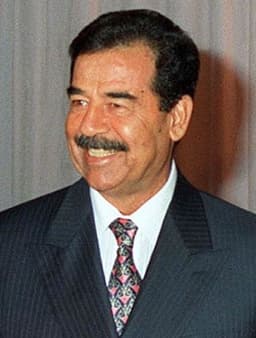
Saddam Hussein
Politician · Modern
49.7Total
Basic Information
Born
160
1937
Died
237
—
Era
Ancient
Modern
Nationality
China
Iraq
Occupation
Politician
Politician
Civilization
Eastern
Middle Eastern
Score Comparison
Military (10%)
10.0
52.5
Political (20%)
72.0
43.7
Influence (20%)
40.0
58.0
Legacy (20%)
75.0
47.5
Leadership (15%)
72.0
40.0
Strategy (15%)
45.5
55.0
TOTAL
55.9
49.7
Chen Qun — Complete Timeline
220 AD
Proposed the Nine-rank SystemReform◆ Major
Chen Qun proposed the Nine-rank system for civil service appointments to Cao Pi, the first emperor of Wei. This system ranked candidates based on family background and personal merit, replacing the earlier recommendation system and becoming the standard for official selection in China for centuries.
Civil Service ReformWei DynastyBureaucracy
Impact: nationalconstructive
Advised Cao Pi on Legal CodeReform
Chen Qun assisted Cao Pi in drafting the new legal code for the Wei dynasty. He advocated for clearer laws and more consistent punishments, contributing to the legal framework that helped stabilize Wei's early rule.
Legal ReformWei DynastyLaw
Impact: nationalconstructive
226 AD
Served as Minister over the MassesPolitical Action
Chen Qun was appointed Minister over the Masses (Sikong) under Emperor Cao Rui of Wei. In this high-ranking position, he oversaw civil administration and continued to refine the implementation of the Nine-rank system, solidifying its role in Wei governance.
AppointmentWei DynastyGovernment
Impact: nationalconstructive
Saddam Hussein — Complete Timeline
1979 AD
Became President of IraqPolitical Action
Saddam Hussein forced President Ahmed Hassan al-Bakr to resign on July 16, 1979, and assumed the presidency. He immediately purged the Ba'ath Party, executing 68 senior members in a televised purge. This consolidated his absolute control over Iraq's government and security apparatus.
Power ConsolidationPurgeBa'ath Party
Impact: nationaldestructive
1980 AD
Invaded IranWar
Saddam launched a full-scale invasion of Iran on September 22, 1980, aiming to seize the oil-rich Khuzestan province and overthrow the new Islamic regime. The war lasted eight years, resulting in hundreds of thousands of casualties and massive economic destruction for both countries, ending in a stalemate.
Iran-Iraq WarInvasionStalemate
Impact: regionaldestructive
1988 AD
Used chemical weapons against Kurds at HalabjaWar◆ Major
During the Anfal campaign, Iraqi forces under Saddam's orders attacked the Kurdish town of Halabja with mustard gas and nerve agents on March 16, 1988. An estimated 5,000 civilians were killed instantly. The attack is considered one of the worst chemical weapons attacks against a civilian population.
Chemical WeaponsWar CrimeKurds
Impact: nationaldestructive
1990 AD
Invaded KuwaitWar
Saddam ordered the invasion and annexation of Kuwait on August 2, 1990, claiming it was historically part of Iraq. The invasion was condemned internationally and led to the Gulf War. A US-led coalition expelled Iraqi forces in February 1991, and Iraq faced severe UN sanctions.
Gulf WarInvasionSanctions
Impact: globaldestructive
2003 AD
Captured by US forces and executedPolitical Action
After the US-led invasion of Iraq in March 2003, Saddam went into hiding. He was captured by US forces on December 13, 2003, near Tikrit. Tried by the Iraqi Special Tribunal for crimes against humanity, he was sentenced to death and executed by hanging on December 30, 2006.
CaptureTrialExecution
Impact: globaltragic
Expert Analysis
Chen Qun vs Saddam Hussein
# The Iron Fist and the Inscribed Scroll
In the summer of 1979, Saddam Hussein stood before a hall of his own Ba'ath Party members in Baghdad, reading out names from a list. Each name was a death sentence. The men were dragged away, and some were shot on the spot. Eighteen centuries earlier, in the court of Cao Wei in northern China, a different kind of list was being composed. Chen Qun, a quiet bureaucrat with ink-stained fingers, was drafting the Nine-rank System—a method to judge men not by their loyalty to a ruler, but by their talent and virtue. One man built his power on fear and blood. The other built a system that would outlast dynasties. Both were architects of order, but the orders they built could not have been more different.
Origins
Saddam Hussein was born in 1937 in the village of Al-Awja, near Tikrit, into a land of poverty and clan loyalty. His father died before he was born, and his mother, unable to care for him, sent him to live with an uncle. That uncle, a fervent nationalist, filled the boy's head with tales of Arab glory and humiliations. Saddam grew up in a world where strength was the only currency and betrayal was a constant shadow. He learned early that to rule, one must be feared.
Chen Qun was born in 160 AD, near the end of the Han Dynasty, a time when China was collapsing into chaos. His family were scholar-officials, men who had served the empire for generations. From childhood, Chen was immersed in the Confucian classics, the study of law, and the art of administration. Where Saddam learned to grip a gun, Chen learned to grip a brush. His world was one of precedent, hierarchy, and the belief that good governance was a craft, not a conquest.
Rise to Power
Saddam’s path to power was a ladder of violence. He joined the Ba'ath Party as a young man, participated in a failed assassination attempt on a general, and fled into exile. He returned, rose through the party’s security apparatus, and became the enforcer behind President Ahmed Hassan al-Bakr. By 1979, he was ready. On July 16, he forced al-Bakr to resign and assumed the presidency. Within days, he convened a party meeting, named his “traitors,” and executed them. His rise was a coup, a purge, and a coronation all at once.
Chen Qun’s rise was gradual and institutional. He served under the warlord Cao Cao, then under his son Cao Pi. He was not a general; he was a counselor, a drafter of edicts, a man who understood that power in a bureaucracy flows through paper. In 220 AD, when Cao Pi forced the last Han emperor to abdicate and founded the Wei dynasty, Chen Qun was there—not with a sword, but with a proposal. That proposal was the Nine-rank System, a way to recruit officials by ranking them into nine grades of talent and moral character. It was a quiet revolution, written in ink.
Leadership & Governance
Saddam ruled Iraq as a personal fiefdom. He built a vast security state, with informants on every street and torture in every basement. He crushed the Kurds with chemical weapons at Halabja in 1988, gassing thousands in a single day. He fought a ruinous eight-year war with Iran that bled his country dry, then invaded Kuwait in 1990, believing he could defy the world. His military score of 52.7 reflects a man who was a tactical gambler but a strategic disaster. His political score of 59.2 shows a ruler who could manipulate fear but could not build trust. He was a master of survival, but not of statecraft.
Chen Qun governed through systems. As Minister over the Masses under Emperor Cao Rui, he advised on legal codes, advocated for clearer laws, and insisted that punishments be consistent and appeals be heard. His Nine-rank System was not perfect—it eventually became a tool of aristocratic privilege—but in its time, it was a radical attempt to replace nepotism with merit. His political score of 69.8 and leadership score of 80.0 reflect a man who understood that lasting power comes not from terror, but from institutions. Where Saddam built walls, Chen built channels.
Triumph & Tragedy
Saddam’s greatest moment was also his most hollow: the invasion of Kuwait in 1990. For a brief moment, he stood as the champion of the Arab street, defying the West. But the US-led coalition crushed his army in weeks. His greatest tragedy was the destruction of his own country. He died in 2006, hanged by an Iraqi court, a man who had turned a once-prosperous nation into a graveyard.
Chen Qun’s triumph was the Nine-rank System itself. It became the backbone of Chinese civil service for nearly four centuries, shaping how the empire chose its officials. His tragedy was that the system he designed for merit was eventually captured by the very aristocratic families he had hoped to bypass. But even in its corruption, it remained a testament to the idea that governance could be a science, not a blood sport.
Character & Destiny
Saddam was paranoid, ruthless, and grandiose. He saw himself as a new Saladin, a leader who would unite the Arab world. But his personality was his prison. His need for absolute control led him to isolate Iraq, bankrupt its economy, and invite invasion. He could not delegate, could not compromise, could not imagine a world where he was not the center. His destiny was shaped by his inability to see beyond his own shadow.
Chen Qun was cautious, methodical, and patient. He understood that true power lies in the rules, not in the ruler. He was a man who worked within systems, not against them. His personality—steady, scholarly, unflashy—allowed him to build something that outlasted him. He died in 237 AD, respected and remembered. His destiny was to be the quiet hand that wrote the future.
Legacy
Saddam Hussein is remembered as a tyrant, a cautionary tale of what happens when power is divorced from wisdom. His legacy is one of rubble, sanctions, and sectarian war. His influence score of 74.3 reflects a man who changed the Middle East, but for the worse. He is studied not as a model, but as a warning.
Chen Qun is remembered as a reformer, a man who tried to make government fairer. His legacy score of 89.6 places him among the great bureaucrats of history. The Nine-rank System influenced not only China but also the Korean and Vietnamese civil service traditions. He is studied as a builder of institutions, a man who understood that the best way to change the world is to change the rules by which it is run.
Conclusion
One man ruled by the bullet. The other ruled by the brush. Saddam Hussein and Chen Qun both sought order, but their orders were built on opposite foundations—fear and fairness, caprice and code. Saddam’s story is a roar that ended in silence. Chen Qun’s is a whisper that still echoes. In the end, it is not the strength of the ruler that matters, but the strength of the system he leaves behind. And the strongest systems are not those that crush the opposition, but those that channel ambition into service.
Rankings
🥇
Chen QunLeader
Mil: 10.0Pol: 72.0Inf: 40.0
55.9
🥈
Saddam Hussein
Mil: 52.5Pol: 43.7Inf: 58.0
49.7
+6.2 behind
How This Comparison Works
Algorithm
Each figure is scored on 6 dimensions (0—100 scale) based on structured historical data: Military (10%), Political (20%), Influence (20%), Legacy (20%), Leadership (15%), Strategy (15%). The weighted total produces the final ranking.
Data Sources
Scores are computed from structured sub-indicators in the database. Scale factors adjust for era (Ancient ×0.85, Modern ×1.0) and civilization size (Eastern ×1.05, Other ×0.80) to account for differences in population and military scale.
Maximum 3 Figures
Comparisons are limited to 2—3 figures to ensure readability and statistical meaningfulness.
Error Margins
±5 points per dimension — Sub-scores are derived from historical records with inherent uncertainty. Two figures within 5 points on a dimension should be considered roughly equivalent in that area.
Total Score Accuracy
±3 points overall — The weighted combination of 6 dimensions produces a total score with approximately ±3 points of uncertainty. Differences of less than 3 points are not statistically significant— the figures are effectively tied.
Known Limitations
- Historical records are incomplete and uneven across civilizations
- Figures from oral-tradition societies may be underrepresented
- Occupation labels can misclassify multi-role figures
- Scores measure capability and impact, not moral character
- Quantitative scoring is a comparison tool, not absolute truth
Capability Radar
Military (10%) — Battles & Warfare
Battles
19
65
Win Rate
22
40
Expansion
25
60
Political (20%) — Governance & Reform
Reform
85
40
Diplomacy
50
35
Economy
60
30
Influence (20%) — Cultural & Global Reach
Cultural
70
30
Global
65
50
Legacy (20%) — Historical Impact
Historical
80
55
Longevity
85
20
Leadership (15%) — Power & Stability
Tenure
40
75
Stability
65
20
Strategy (15%) — Tactics & Innovation
Strategy
31
50
Tactics
32
55
Reform
36
45
Similar Comparisons
Comments & Discussion
ListReaderOfBaghdad6/16/2026
Sure, Saddam reading names from a list in 1979 is terrifying, but let’s not romanticize Chen Qun’s “talent and virtue” system like it was some meritocratic utopia. The Nine-rank System literally became a tool for aristocratic families to hoard power for centuries—it was a bureaucratic caste system, not a beacon of fairness. Saddam’s brutality is frank about being brutal; Chen’s system wore a mask of order while entrenching oligarchy. Give me the open knife over the velvet paperwork any day.
九品寒门6/16/2026
拿一个地方军阀和一个开国制度的文官比?陈群的九品中正制确实给了世家大族把持官位的借口,但它好歹稳定了曹魏政局一百多年。萨达姆那条名单呢?除了让人头皮发麻,还留下了什么?连他的共和国卫队都在2003年散得比沙子还快。陈群建了个能扛住权力更迭的机器,萨达姆只是权力的个人化玩具,摔碎了就没人记得怎么拼。你要秩序还是恐怖秀?
HistorianOfBrokenOrders6/16/2026
Here’s the irony that gets lost in comparisons: both men created systems that outlasted their personal reigns, but in wildly different ways. Saddam’s Ba’athist terror state crumbled in 2003, yet his clan networks and patronage structures still warp Iraqi politics today—that’s a ghost built on fear. Chen Qun’s Nine-rank System survived the fall of Han and persisted for 400 years, but it ossified into a hereditary mess that later dynasties had to smash. So which is worse: fear that lingers, or ord
纸上刀6/16/2026
别被骗了,陈群是个揣着竹简搞暴力的聪明人。他出的每条“以德才论人”的规矩,背后都是曹丕用来清洗汉室老臣的政治清洗工具。九品中正制一开始就是魏文帝的杀人执照,陈群只是把血擦干净、写进典籍里。萨达姆的恐怖是赤裸的,陈群的恐怖是披着儒家外衣的。一个拿枪指着你的头,一个拿规矩掐你脖子——谁更体面?