Loading...
Alcide De Gasperi vs Themistocles
Themistocles leads by 12.9 pts · 2 figures compared
…
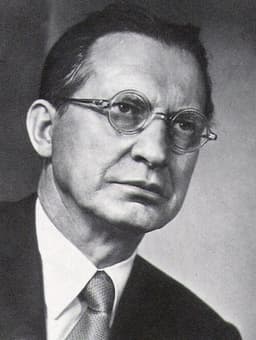
Alcide De Gasperi
Politician · Modern
55.5Total
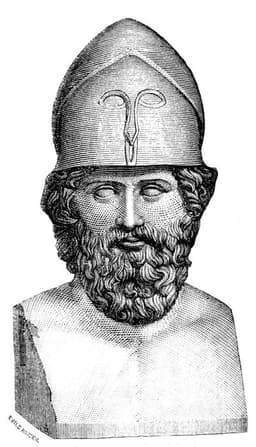
Themistocles
Politician · Ancient
68.4Total
Basic Information
Born
1881
-524
Died
1954
-459
Era
Modern
Ancient
Nationality
Italy
Greece
Occupation
Politician
Politician
Civilization
Western
Western
Score Comparison
Military (10%)
12.4
80.0
Political (20%)
85.0
72.0
Influence (20%)
65.0
40.0
Legacy (20%)
40.0
80.0
Leadership (15%)
80.7
79.8
Strategy (15%)
31.5
76.0
TOTAL
55.5
68.4
Alcide De Gasperi — Complete Timeline
1946 AD
First Prime Minister of the Italian RepublicPolitical Action
De Gasperi became the first prime minister of the newly proclaimed Italian Republic in December 1945. He led a coalition government that included Christian Democrats, Socialists, and Communists. His government oversaw the transition from monarchy to republic.
RepublicGovernmentTransition
Impact: nationalconstructive
1947 AD
Peace Treaty of ParisPolitical Action◆ Major
De Gasperi signed the Treaty of Paris, which formally ended World War II for Italy. Italy lost its colonies, ceded territory to Yugoslavia and France, and paid reparations. The treaty was unpopular but allowed Italy to regain sovereignty and join the Western alliance.
TreatyWorld War IIDiplomacy
Impact: global
Expulsion of Communists from GovernmentPolitical Action
De Gasperi expelled the Italian Communist Party and Socialist Party from his coalition government in May 1947. This move aligned Italy with the United States and the Marshall Plan, deepening the Cold War divide. It solidified Christian Democratic dominance for decades.
Cold WarMarshall PlanCoalition
Impact: global
1949 AD
Italian Membership in NATOPolitical Action◆ Major
De Gasperi led Italy into the North Atlantic Treaty Organization (NATO) as a founding member. This decision anchored Italy in the Western bloc during the Cold War and secured U.S. military and economic support. It was opposed by the Communist Party.
NATOCold WarAlliance
Impact: globalconstructive
Themistocles — Complete Timeline
483 BC
Construction of the Athenian FleetReform◆ Major
Themistocles persuaded the Athenian assembly to use silver from the Laurion mines to build a fleet of 200 triremes. This naval expansion transformed Athens into a major maritime power and was crucial for the victory at Salamis.
AthensNaval PowerReform
Impact: nationalconstructive
480 BC
Battle of SalamisWar
Themistocles commanded the Greek navy against the Persian fleet at Salamis. He lured the Persians into the narrow straits, where the Greek ships destroyed the larger Persian fleet. This victory ended the Persian threat to Greece and preserved Greek independence.
Greco-Persian WarsNaval BattleAthens
Impact: regionalconstructive
472 BC
Ostracism from AthensPolitical Action◆ Major
Themistocles was ostracized by the Athenian assembly, likely due to political rivalries and accusations of arrogance. He went into exile, first to Argos, then to Persia, where he was received by King Artaxerxes I.
AthensExileOstracism
Impact: nationaltragic
465 BC
Service under the Persian KingPolitical Action
After his ostracism, Themistocles fled to Persia and offered his services to King Artaxerxes I. He was granted governorship of Magnesia and other cities in Asia Minor, where he lived until his death. This act was seen as treason by many Athenians.
PersiaExileTreason
Impact: regional
Expert Analysis
Themistocles vs Alcide De Gasperi
### The Statesman and the Exile: Themistocles and De Gasperi
On a sun-drenched morning in September 480 BCE, the waters of the Salamis Strait became a cauldron of chaos. A Greek admiral, his mind a labyrinth of cunning, had just tricked the mightiest navy in the known world into a death trap. Two and a half millennia later, in a cold December of 1945, a soft-spoken man from the Italian Alps stood before a shattered parliament in Rome. He held no sword, commanded no fleet, yet he was about to perform a miracle of his own: forging a democratic republic from the ashes of fascism. Themistocles and Alcide De Gasperi lived worlds apart—one in the age of oars and oracles, the other in the age of atom bombs and alliances. But both faced the same fundamental question: how does a leader save a civilization from itself?
### Origins
Themistocles was born into a world of clay and competition. His father, Neocles, was a modest Athenian, not of the ancient aristocracy; his mother was reportedly a Carian, a foreigner. In a city that prized pure lineage, this blemish followed him like a shadow. It may have sharpened his hunger. Athens was a raw democracy where a man could rise by his wits and his words, and young Themistocles learned early that persuasion was power. He studied rhetoric, studied the sea, and studied the Persian threat that loomed like a thundercloud over the Aegean.
Alcide De Gasperi came from a different kind of edge. Born in 1881 in the Trentino, then part of the Austro-Hungarian Empire, he grew up speaking Italian in a German-speaking bureaucracy. He was a border-dweller, a man who understood that identity was not a given but a choice. His father was a tax collector; his mother, a schoolteacher. The family was devoutly Catholic, and that faith would become the steel spine of his politics. While Themistocles learned to navigate the stormy assembly of Athens, De Gasperi learned to navigate the labyrinth of empires—first Austrian, then Italian, then the chaos of war.
### Rise to Power
Themistocles’ ascent was a study in audacity. In 483 BCE, he stood before the Athenian assembly and proposed a radical gamble: instead of distributing the silver from the Laurion mines to the citizens, use it to build a fleet of 200 triremes. The Persians, he argued, were coming. His rivals called him a warmonger, a populist. But he had read the future. When the Persian king Xerxes invaded in 480 BCE, Athens had the ships to fight. Themistocles did not just build a navy; he built a nation’s will.
De Gasperi’s rise was slower, more subterranean. A journalist and a politician in the Italian People’s Party, he was a democrat in a time of dictators. When Mussolini came to power, De Gasperi was arrested, imprisoned, and spent the fascist years in the Vatican library, working as a cataloguer. He did not lead armies; he waited. And when the war ended, he emerged—pale, ascetic, unbroken—to lead a broken country. In December 1945, he became the first prime minister of the Italian Republic, a title that carried more weight than any crown.
### Leadership & Governance
Here, the contrast is stark. Themistocles governed through genius and manipulation. He was a master of the *ad hoc*: at Salamis, he sent a false message to the Persians, pretending that the Greek fleet was about to flee, luring them into the narrow strait where their numbers became a liability. He won by turning the enemy’s strength into weakness. But his political style was abrasive. He was arrogant, ostentatious, and quick to remind others of his brilliance. Athens, a city that invented ostracism to curb overreaching ambition, eventually turned on him.
De Gasperi governed through patience and coalition. He was no orator like Themistocles; his speeches were dry, his manner modest. But he understood that in a fractured democracy, survival came from building bridges, not burning them. In 1947, he made a decision that would define post-war Europe: he expelled the Communists and Socialists from his coalition government. It was a risk—Italy’s left was powerful, and the Soviet Union loomed in the east. But De Gasperi had a vision: Italy must be anchored to the West. That same year, he signed the harsh Treaty of Paris, accepting the loss of colonies and territory, because he knew that peace, even a bitter one, was the only foundation for the future.
### Triumph & Tragedy
Themistocles’ triumph was Salamis. It was the moment that saved Greece, and by extension, Western civilization. The Persian fleet was shattered; Xerxes fled. Athens entered a golden age. But his tragedy was his fall. In 472 BCE, he was ostracized—not for incompetence, but for the sin of being too great. He fled to the very enemy he had defeated, the Persian king, and offered his services. He ended his days as a governor in Magnesia, a servant of the empire he had once humbled. It is a story of brilliant victory and bitter exile.
De Gasperi’s triumph was more gradual but no less profound. By joining NATO in 1949, he locked Italy into the Atlantic alliance, ensuring that the country would never again fall under fascism or communism. He also championed the European Coal and Steel Community, the seed of the European Union. His tragedy was the coldness of that achievement. He died in 1954, before he could see the full flowering of his work. And unlike Themistocles, he was never exiled—but he was forgotten by a generation that took peace for granted.
### Character & Destiny
Themistocles was driven by ambition; De Gasperi by duty. Themistocles saw politics as a game of chess where the king must be checkmated; De Gasperi saw it as a cathedral that must be built stone by stone. Themistocles’ personality—brilliant, vain, restless—led him to save Athens and then to be cast out by it. De Gasperi’s personality—patient, humble, iron-willed—allowed him to rebuild Italy without ever becoming its master. One died in exile, the other in bed. But both understood that leadership is not about being loved; it is about being necessary.
### Legacy
Themistocles is remembered as the father of Athenian naval power, the man who made the Golden Age possible. His name is etched in the story of Salamis, a battle that still echoes in military academies. De Gasperi is remembered as a founding father of the European Union, a man who turned a defeated fascist state into a stable democracy. His face is on Italian coins, his name on streets and squares.
But their legacies share a deeper truth: both men understood that survival depends on vision. Themistocles saw the sea as a shield; De Gasperi saw the alliance as a lifeline. Both were pragmatists who used the tools of their time—ships, treaties, cunning, patience—to build something that outlasted them.
### Conclusion
Standing at the edge of the Salamis Strait, you can still feel the ghost of that ancient battle. And walking through the halls of the European Parliament in Brussels, you can still sense the quiet presence of De Gasperi. They were not alike. One was a warrior-statesman, the other a diplomat-priest. But both faced the same abyss—the collapse of their world—and both chose to build rather than to despair. In the end, that is the only measure of a leader: not how many battles they won, but how many futures they made possible.
Rankings
🥇
ThemistoclesLeader
Mil: 80.0Pol: 72.0Inf: 40.0
68.4
🥈
Alcide De Gasperi
Mil: 12.4Pol: 85.0Inf: 65.0
55.5
+12.9 behind
How This Comparison Works
Algorithm
Each figure is scored on 6 dimensions (0—100 scale) based on structured historical data: Military (10%), Political (20%), Influence (20%), Legacy (20%), Leadership (15%), Strategy (15%). The weighted total produces the final ranking.
Data Sources
Scores are computed from structured sub-indicators in the database. Scale factors adjust for era (Ancient ×0.85, Modern ×1.0) and civilization size (Eastern ×1.05, Other ×0.80) to account for differences in population and military scale.
Maximum 3 Figures
Comparisons are limited to 2—3 figures to ensure readability and statistical meaningfulness.
Error Margins
±5 points per dimension — Sub-scores are derived from historical records with inherent uncertainty. Two figures within 5 points on a dimension should be considered roughly equivalent in that area.
Total Score Accuracy
±3 points overall — The weighted combination of 6 dimensions produces a total score with approximately ±3 points of uncertainty. Differences of less than 3 points are not statistically significant— the figures are effectively tied.
Known Limitations
- Historical records are incomplete and uneven across civilizations
- Figures from oral-tradition societies may be underrepresented
- Occupation labels can misclassify multi-role figures
- Scores measure capability and impact, not moral character
- Quantitative scoring is a comparison tool, not absolute truth
Capability Radar
Military (10%) — Battles & Warfare
Battles
11
75
Win Rate
15
85
Expansion
17
60
Political (20%) — Governance & Reform
Reform
85
75
Diplomacy
80
85
Economy
70
65
Influence (20%) — Cultural & Global Reach
Cultural
60
70
Global
65
75
Legacy (20%) — Historical Impact
Historical
70
85
Longevity
65
80
Leadership (15%) — Power & Stability
Tenure
75
70
Stability
75
60
Strategy (15%) — Tactics & Innovation
Strategy
21
90
Tactics
23
95
Reform
27
80
Similar Comparisons
Comments & Discussion
1. **AdmiralOfCunning6/16/2026
**Themistocles would’ve eaten De Gasperi alive at breakfast. One guy tricked the Persian fleet into a cramped strait and won a war with wooden walls and pure chutzpah. The other patched up a broken Italy with treaties and Catholic guilt. Give me the Athenian who gambled on triremes and ostracism over the Alpine bureaucrat any day. Real power isn’t coalition-building—it’s a trap sprung at dawn.
2. **DataSkepticSue6/16/2026
**Hold up—this comparison’s a stretch. Themistocles fought a war; De Gasperi rebuilt a nation. The stats don’t lie: Salamis saved Athens, but De Gasperi’s 1948 election win kept Italy out of Stalin’s orbit. Themistocles ended up a traitor begging Artaxerxes for mercy; De Gasperi died respected in his own bed. If we’re measuring effectiveness post-crisis, give me the prime minister who didn’t need exile to prove his worth.
3. **古典糊涂蛋6/16/2026
**拿地米斯托克利这种赌徒去比加斯佩里,简直是侮辱历史。雅典人赢了萨拉米斯就把他流放了,他叛逃波斯当总督。加斯佩里呢?1946年带领意大利全民公投废君主,1947年签马歇尔计划,从二战废墟里造出欧洲之父。一个靠诈术活一瞬,一个靠信仰铸七十年。雅典的狐狸?比不上特伦蒂诺的圣徒。
4. **NavyBlueRevival6/16/2026
**Both faced the abyss, but Themistocles had better instincts. He saw the Persian threat decades early, built the fleet at Laurion silver mines, and knew a naval state would outlast hoplites. De Gasperi was smart—backed the Christian Democrats, NATO, EU—but he was a strategist of paper, not salt spray. Salamis was a single day’s chaos; Italy’s survival was a decade of patience. Different leagues, same grit—but Themistocles changed warfare forever.
5. **地中海之刺6/16/2026
**我站加斯佩里,因为他的沉默比地米斯托克利的呐喊更有力。当年在维也纳议会当奥地利议员,后来蹲墨索里尼的监狱,他硬是没崩。1944年重组政府时,连共产党都怕他的冷静。而地米斯托克利被希罗多德捧成天才是因为他会吹牛,加斯佩里不需要吹——他让意大利入北约、进联合国,低调建起民主高墙。后者才是真政治家:不流亡,只重建。