Loading...
Chiang Kai-shek vs Themistocles
Themistocles leads by 7.8 pts · 2 figures compared
…
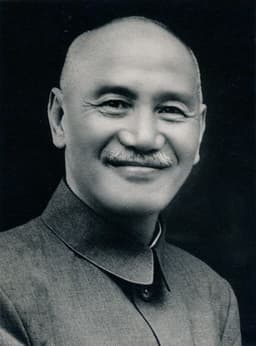
Chiang Kai-shek
Politician · Modern
60.6Total
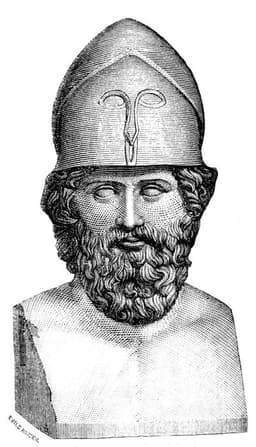
Themistocles
Politician · Ancient
68.4Total
Basic Information
Born
1887
-524
Died
1975
-459
Era
Modern
Ancient
Nationality
China
Greece
Occupation
Politician
Politician
Civilization
Eastern
Western
Score Comparison
Military (10%)
70.0
80.0
Political (20%)
62.7
72.0
Influence (20%)
65.0
40.0
Legacy (20%)
52.0
80.0
Leadership (15%)
66.0
79.8
Strategy (15%)
50.0
76.0
TOTAL
60.6
68.4
Chiang Kai-shek — Complete Timeline
1926 AD
Northern ExpeditionWar◆ Major
Chiang Kai-shek led the National Revolutionary Army in the Northern Expedition to defeat warlords and unify China. The campaign succeeded in capturing Beijing and establishing Kuomintang control over most of the country.
UnificationMilitary campaign
Impact: national
1927 AD
Shanghai Massacre of 1927Political Action◆ Major
Chiang Kai-shek ordered the purge of communists and leftists in Shanghai, resulting in thousands of deaths. This event broke the First United Front between the Kuomintang and the Communist Party, leading to civil war.
PurgeCivil war
Impact: nationaldestructive
1937 AD
Leadership during the Second Sino-Japanese WarWar
Chiang Kai-shek, as leader of the Kuomintang, commanded Chinese forces during the Second Sino-Japanese War. He directed the defense of Shanghai and the relocation of the capital to Chongqing, maintaining resistance against Japan.
World War IIChinese resistance
Impact: global
1945 AD
Signing of the Sino-Soviet Treaty of 1945Political Action◆ Major
Chiang Kai-shek signed the Sino-Soviet Treaty of Friendship and Alliance, which recognized Soviet interests in Manchuria in exchange for Soviet support against Japan. The treaty later facilitated Communist gains in the civil war.
DiplomacySoviet Union
Impact: global
1949 AD
Retreat to TaiwanPolitical Action
After losing the Chinese Civil War to the Communists, Chiang Kai-shek retreated to Taiwan with the remnants of the Kuomintang government and military. He established the Republic of China on Taiwan, claiming legitimacy over all of China.
TaiwanExileCold War
Impact: globaltragic
Themistocles — Complete Timeline
483 BC
Construction of the Athenian FleetReform◆ Major
Themistocles persuaded the Athenian assembly to use silver from the Laurion mines to build a fleet of 200 triremes. This naval expansion transformed Athens into a major maritime power and was crucial for the victory at Salamis.
AthensNaval PowerReform
Impact: nationalconstructive
480 BC
Battle of SalamisWar
Themistocles commanded the Greek navy against the Persian fleet at Salamis. He lured the Persians into the narrow straits, where the Greek ships destroyed the larger Persian fleet. This victory ended the Persian threat to Greece and preserved Greek independence.
Greco-Persian WarsNaval BattleAthens
Impact: regionalconstructive
472 BC
Ostracism from AthensPolitical Action◆ Major
Themistocles was ostracized by the Athenian assembly, likely due to political rivalries and accusations of arrogance. He went into exile, first to Argos, then to Persia, where he was received by King Artaxerxes I.
AthensExileOstracism
Impact: nationaltragic
465 BC
Service under the Persian KingPolitical Action
After his ostracism, Themistocles fled to Persia and offered his services to King Artaxerxes I. He was granted governorship of Magnesia and other cities in Asia Minor, where he lived until his death. This act was seen as treason by many Athenians.
PersiaExileTreason
Impact: regional
Expert Analysis
Themistocles vs Chiang Kai-shek
# The Exile and the Emperor
On a narrow strait, two men changed the course of history. One, an Athenian statesman, watched his triremes ram through Persian hulls at Salamis, securing the survival of Greek civilization. The other, a Chinese general, stood on the deck of a fleeing ship in 1949, watching the mainland he had once unified vanish into the Taiwan Strait. Both were masters of survival—but one died in exile, serving his former enemy, while the other created a nation in exile that would outlast him. What drove these divergent endings? The answer lies not in their triumphs, but in the soil of their origins.
Origins
Themistocles was born around 524 BCE into a world of shifting alliances and maritime ambition. His father, Neocles, was a minor aristocrat, but his mother was reportedly a Carian or Thracian—a foreigner. In Athens, where citizenship was a sacred inheritance, this mixed lineage marked him. He grew up in the shadow of the Persian Empire, a colossus that had swallowed the Greek cities of Ionia and now threatened Athens itself. The air of the Piraeus, the scent of tar and salt, taught him that the future belonged to ships. He learned politics in the agora, where persuasion was a weapon sharper than any spear.
Chiang Kai-shek was born in 1887 in Xikou, a village in Zhejiang province, China. His family were salt merchants, modestly prosperous, but the China of his youth was a dying empire—the Qing Dynasty, hollowed by opium wars and foreign concessions. At seventeen, Chiang left home for military academies in Baoding and Tokyo. In Japan, he absorbed the discipline of the samurai and the revolutionary fire of Sun Yat-sen. Where Themistocles learned to read the winds of the sea, Chiang learned to read the winds of power—fragmented, brutal, and unforgiving.
Rise to Power
Themistocles rose through the turbulence of Athenian democracy. In 483 BCE, a rich vein of silver was discovered at Laurion. Most Athenians wanted to distribute the wealth as a dividend. Themistocles, with the cunning of a fox, persuaded them instead to build a fleet of 200 triremes—a navy that would transform Athens from a land power into a maritime empire. It was a gamble that paid off at Salamis in 480 BCE, where he lured the Persian fleet into the narrow strait and destroyed it. The victory made him the savior of Greece, but it also made him enemies.
Chiang Kai-shek’s rise was forged in blood. After Sun Yat-sen’s death in 1925, Chiang emerged as the leader of the Kuomintang (KMT). In 1926, he launched the Northern Expedition, a military campaign to crush the warlords and unify China. By 1928, he had succeeded—but the cost was a broken alliance with the Communists. In 1927, he ordered the Shanghai Massacre, purging thousands of leftists in a single night. The streets of Shanghai ran red. Where Themistocles built a fleet to defend democracy, Chiang built a dictatorship to defend China—and the difference would haunt him.
Leadership & Governance
Themistocles governed through persuasion and paranoia. He understood that democracy required a constant dance with the demos—the people. He strengthened the Piraeus, Athens’ port, and fortified the city against siege. His military genius lay not in personal bravery but in strategic vision: at Salamis, he gambled everything on the narrows, knowing that Persian numbers were useless in a bottle. His political wisdom, however, was brittle. He was arrogant, flaunting his victories, and he made enemies of powerful rivals like Aristides and Cimon.
Chiang Kai-shek governed through hierarchy and control. He modernized the Chinese army, but his rule was undermined by corruption, nepotism, and a failure to reform land ownership—a fatal weakness that the Communists exploited. His military strategy was competent but cautious. During the Second Sino-Japanese War (1937–1945), he directed Chinese resistance against Japan, but his tactics often prioritized preserving his own forces over engaging the enemy. He trusted his generals, but not his people. Where Themistocles built a navy, Chiang built a bureaucracy—and both were betrayed by their own creations.
Triumph & Tragedy
Themistocles’ greatest moment was Salamis. The battle was a masterpiece of deception: he sent a slave to the Persian king Xerxes, falsely claiming that the Greek fleet was preparing to flee. Xerxes took the bait, sending his ships into the strait, where they were shattered. The tragedy came later. In 472 BCE, Themistocles was ostracized—exiled by the democracy he had saved. He fled to Persia, of all places, and offered his services to King Artaxerxes I. He was granted the governorship of Magnesia, where he died around 459 BCE. The savior of Greece died a servant of its enemy.
Chiang Kai-shek’s greatest moment was the Northern Expedition—a campaign that united a fractured nation. His tragedy was the Chinese Civil War. After Japan’s surrender in 1945, Chiang signed the Sino-Soviet Treaty of 1945, recognizing Soviet interests in Manchuria in exchange for support—a deal that handed the Communists a strategic foothold. By 1949, his army was broken, his government collapsed. He retreated to Taiwan with the remnants of the KMT, where he declared the island the legitimate Republic of China. He never returned to the mainland.
Character & Destiny
Themistocles was a fox—cunning, adaptable, and utterly unprincipled when survival demanded it. He could flatter, deceive, and betray with equal ease. His exile was not a punishment for failure but for success: in a democracy, a hero is a threat. He chose Persia because he had no homeland left. His character was his destiny: he built a navy to save Athens, but he could not save himself from the jealousy of his peers.
Chiang Kai-shek was a tiger—fierce, hierarchical, and ultimately trapped. He believed in order, in the old Confucian virtues of loyalty and discipline. But he could not adapt. He could not win the hearts of the peasants, nor negotiate with the Communists, nor reform his own party. His retreat to Taiwan was not a surrender but a creation: he built a separate nation, authoritarian but prosperous, that would outlast him by decades. His character was his destiny: he unified China, but he could not hold it.
Legacy
Themistocles is remembered as the father of Athenian naval power, the architect of the victory that saved Western civilization. His name is carved into the history of democracy, but his exile is a cautionary tale—a reminder that the savior is often forgotten. In modern Greece, he is a national hero; in the West, a symbol of strategic genius.
Chiang Kai-shek is remembered in Taiwan as the founding father of the Republic of China, a man who preserved Chinese culture against Communist tyranny. On the mainland, he is reviled as a dictator who massacred his own people and fled in defeat. His legacy is split by the Taiwan Strait—a ghost that still haunts the relationship between two Chinas.
Conclusion
Two men, two straits, two exiles—one chosen, one forced. Themistocles died in Persia, a servant of the king he had defeated. Chiang Kai-shek died in Taiwan, the ruler of an island he had never intended to rule. Their fates were shaped by the same force: the gap between their ambition and their era. Themistocles lived in a world of city-states, where a man could reinvent himself. Chiang lived in a world of nations, where a man could only hold what he conquered. One was a fox who outran his enemies; the other, a tiger who outran his country. History remembers both—but it judges them by the soil they left behind.
Rankings
🥇
ThemistoclesLeader
Mil: 80.0Pol: 72.0Inf: 40.0
68.4
🥈
Chiang Kai-shek
Mil: 70.0Pol: 62.7Inf: 65.0
60.6
+7.8 behind
How This Comparison Works
Algorithm
Each figure is scored on 6 dimensions (0—100 scale) based on structured historical data: Military (10%), Political (20%), Influence (20%), Legacy (20%), Leadership (15%), Strategy (15%). The weighted total produces the final ranking.
Data Sources
Scores are computed from structured sub-indicators in the database. Scale factors adjust for era (Ancient ×0.85, Modern ×1.0) and civilization size (Eastern ×1.05, Other ×0.80) to account for differences in population and military scale.
Maximum 3 Figures
Comparisons are limited to 2—3 figures to ensure readability and statistical meaningfulness.
Error Margins
±5 points per dimension — Sub-scores are derived from historical records with inherent uncertainty. Two figures within 5 points on a dimension should be considered roughly equivalent in that area.
Total Score Accuracy
±3 points overall — The weighted combination of 6 dimensions produces a total score with approximately ±3 points of uncertainty. Differences of less than 3 points are not statistically significant— the figures are effectively tied.
Known Limitations
- Historical records are incomplete and uneven across civilizations
- Figures from oral-tradition societies may be underrepresented
- Occupation labels can misclassify multi-role figures
- Scores measure capability and impact, not moral character
- Quantitative scoring is a comparison tool, not absolute truth
Capability Radar
Military (10%) — Battles & Warfare
Battles
75
75
Win Rate
35
85
Expansion
65
60
Political (20%) — Governance & Reform
Reform
55
75
Diplomacy
60
85
Economy
40
65
Influence (20%) — Cultural & Global Reach
Cultural
60
70
Global
65
75
Legacy (20%) — Historical Impact
Historical
70
85
Longevity
55
80
Leadership (15%) — Power & Stability
Tenure
85
70
Stability
30
60
Strategy (15%) — Tactics & Innovation
Strategy
60
90
Tactics
55
95
Reform
50
80
Similar Comparisons
Comments & Discussion
SalamisShark6/16/2026
"Calling Chiang Kai-shek a 'second Themistocles' is historical malpractice. Themistocles built Athens' navy from scratch and outsmarted Xerxes with trap tactics at Salamis. Chiang lost mainland China because he hoarded American guns and fled to Taiwan. Themistocles won the battle; Chiang lost the war. One unified, the other divided. Don't mythologize a general who fled to an island as a 'strategic retreat' unless you think losing 90% of your country is strategy."
史海猎手6/16/2026
"把蒋介石比作地米斯托克利,简直是对历史的侮辱!地米斯托克利说服雅典人用劳里昂银矿收入造战船,在萨拉米斯以寡敌众。老蒋呢?1949年带着黄金和故宫文物逃台,丢下四万万人不管。一个用智慧保住了文明,一个把江山送给了对手。别用‘伟大逃亡’美化失败,那叫溃败。"
NavalInsider6/16/2026
"The only real comparison here is that both leaders understood naval power. Themistocles built 200 triremes with silver from Laurion—raw grit. Chiang ran a navy of ex-Japanese ships in Taiwan. But here's the catch: Themistocles won Salamis with wood and oars; Chiang lost the Yangtze crossing because his commanders defected. Different eras, same lesson: trust your navy, not your politics."
数据打脸派6/16/2026
"地米斯托克利在萨拉米斯击沉300艘波斯战舰,波斯损失惨重。蒋介石在1949年渡江战役时,长江防线号称70万人,结果一周内溃散。数据不会说谎:一个用最小的代价改变了欧洲命运,一个用最大的军队输掉了中国。别美化失败,看数字就行。"
ClassicsAlive6/16/2026
"Themistocles died in Persia, serving Artaxerxes I as a governor of Magnesia. Chiang died in Taiwan, still claiming the mainland as free China. Both ended up in exile—but Themistocles bent his knee to his former enemy; Chiang refused to surrender. Strange parallel: the Greek who won democracy's fight and then ate Persian salt; the Chinese who lost the war and built a separate nation. Irony cuts both ways."
双城故事6/16/2026
"地米斯托克利晚年给波斯皇帝当官,喝着希腊人恨的蜜酒。蒋介石在台北士林官邸去世,至死不承认共和国。一个输了人格,一个输了大陆。谁更可悲?希腊人为了活命投敌,中国人为了脸面守岛。历史从不给完美结局,但讽刺各有滋味。"