Loading...
Saddam Hussein vs Yuan Shikai
Yuan Shikai leads by 10.3 pts · 2 figures compared
…
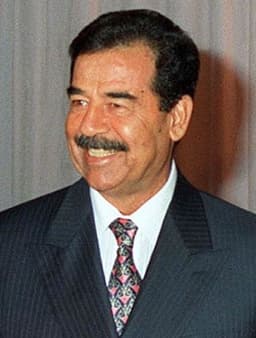
Saddam Hussein
Politician · Modern
49.7Total
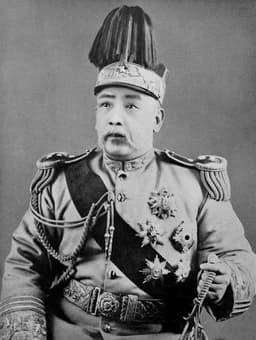
Yuan Shikai
Politician · Modern
60.0Total
Basic Information
Born
1937
1859
Died
—
1916
Era
Modern
Modern
Nationality
Iraq
China
Occupation
Politician
Politician
Civilization
Middle Eastern
Eastern
Score Comparison
Military (10%)
52.5
45.0
Political (20%)
43.7
72.0
Influence (20%)
58.0
57.2
Legacy (20%)
47.5
54.0
Leadership (15%)
40.0
72.0
Strategy (15%)
55.0
61.2
TOTAL
49.7
60.0
Saddam Hussein — Complete Timeline
1979 AD
Became President of IraqPolitical Action
Saddam Hussein forced President Ahmed Hassan al-Bakr to resign on July 16, 1979, and assumed the presidency. He immediately purged the Ba'ath Party, executing 68 senior members in a televised purge. This consolidated his absolute control over Iraq's government and security apparatus.
Power ConsolidationPurgeBa'ath Party
Impact: nationaldestructive
1980 AD
Invaded IranWar
Saddam launched a full-scale invasion of Iran on September 22, 1980, aiming to seize the oil-rich Khuzestan province and overthrow the new Islamic regime. The war lasted eight years, resulting in hundreds of thousands of casualties and massive economic destruction for both countries, ending in a stalemate.
Iran-Iraq WarInvasionStalemate
Impact: regionaldestructive
1988 AD
Used chemical weapons against Kurds at HalabjaWar◆ Major
During the Anfal campaign, Iraqi forces under Saddam's orders attacked the Kurdish town of Halabja with mustard gas and nerve agents on March 16, 1988. An estimated 5,000 civilians were killed instantly. The attack is considered one of the worst chemical weapons attacks against a civilian population.
Chemical WeaponsWar CrimeKurds
Impact: nationaldestructive
1990 AD
Invaded KuwaitWar
Saddam ordered the invasion and annexation of Kuwait on August 2, 1990, claiming it was historically part of Iraq. The invasion was condemned internationally and led to the Gulf War. A US-led coalition expelled Iraqi forces in February 1991, and Iraq faced severe UN sanctions.
Gulf WarInvasionSanctions
Impact: globaldestructive
2003 AD
Captured by US forces and executedPolitical Action
After the US-led invasion of Iraq in March 2003, Saddam went into hiding. He was captured by US forces on December 13, 2003, near Tikrit. Tried by the Iraqi Special Tribunal for crimes against humanity, he was sentenced to death and executed by hanging on December 30, 2006.
CaptureTrialExecution
Impact: globaltragic
Yuan Shikai — Complete Timeline
1901 AD
Command of the Beiyang ArmyReform◆ Major
Yuan Shikai took command of the Beiyang Army, the most modern military force in late Qing China. He expanded and trained the army, which became the basis for his political power and later dominated Chinese politics.
Military reformBeiyang Army
Impact: national
1912 AD
Appointed First President of the Republic of ChinaPolitical Action
Yuan Shikai became the first president of the Republic of China after negotiating the abdication of the Qing emperor. He used his control of the Beiyang Army to pressure the revolutionary government into accepting his leadership.
PresidencyRepublic of China
Impact: national
1915 AD
Declaration of the Empire of ChinaPolitical Action◆ Major
Yuan Shikai declared himself emperor of the Empire of China, attempting to restore the monarchy. This move sparked widespread opposition from provincial leaders and foreign powers, leading to the collapse of his regime.
Monarchy restorationPolitical crisis
Impact: nationaldestructive
Signing of the Twenty-One DemandsPolitical Action◆ Major
Yuan Shikai accepted most of Japan's Twenty-One Demands, which expanded Japanese influence in China. The agreement granted Japan economic rights in Manchuria and Shandong, and was seen as a national humiliation.
DiplomacyJapanese imperialism
Impact: globaltragic
1916 AD
Death and Collapse of the Beiyang GovernmentPolitical Action◆ Major
Yuan Shikai died of uremia, leaving no clear successor. His death led to the fragmentation of the Beiyang Army into warlord factions, plunging China into a period of civil war and political instability.
Warlord eraPolitical fragmentation
Impact: nationaltragic
Expert Analysis
Yuan Shikai vs Saddam Hussein
# The Emperor and the Dictator: Yuan Shikai and Saddam Hussein
In the winter of 1915, a portly Chinese man in dragon robes knelt before the Altar of Heaven in Beijing, performing rituals that had not been seen since the fall of the Qing dynasty three years earlier. Yuan Shikai, the first president of the Republic of China, was now declaring himself emperor. Half a world away and seven decades later, another man in military uniform stood before a television camera in Baghdad, announcing that Iraq had annexed Kuwait—a move that would bring the full fury of the United States upon his nation. Both men reached for absolute power. Both saw their ambitions crumble into ruin. But their paths, shaped by vastly different worlds, tell a deeper story about the nature of leadership in times of national crisis.
Origins
Yuan Shikai was born in 1859 into a landowning family in Henan province, at a time when the Qing Empire was reeling from the Opium Wars and the Taiping Rebellion. The old Confucian order was crumbling, and young Yuan, failing the civil service examinations twice, chose a different path: the military. He joined the Huai Army and was sent to Korea in 1882, where he learned the art of power brokering in a tributary state. His China was a civilization trying to modernize without losing its soul—a struggle that would define his entire career.
Saddam Hussein was born in 1937 in the village of Al-Awja, near Tikrit, into a family of poor shepherds. His father died before he was born, and his mother reportedly tried to abort him. He was raised by a harsh uncle who beat him and instilled in him a fierce will to survive. His Iraq was a nation carved from Ottoman ruins by British colonialists, a land of ancient rivalries between Sunni and Shia, Arab and Kurd. Where Yuan inherited a fading empire, Saddam inherited a fractured state searching for identity.
Rise to Power
Yuan Shikai’s ascent was a masterclass in strategic patience. In 1901, he took command of the Beiyang Army, transforming it into the most modern military force in China. He cultivated loyalty among his officers, built a network of supporters, and positioned himself as the indispensable man—the one who could hold the country together. When the Qing dynasty collapsed in 1911, Yuan was the only figure trusted by both the imperial court and the revolutionaries. He negotiated the abdication of the child emperor Puyi and, in 1912, became the first president of the Republic of China. His rise was not a coup but a coronation by default.
Saddam’s rise was bloodier. He joined the Ba'ath Party as a young man, participating in a failed assassination attempt against Prime Minister Abdul Karim Qasim in 1959. He fled to Egypt, returned, and climbed the party ranks through ruthlessness and cunning. In 1979, he forced President Ahmed Hassan al-Bakr to resign and immediately purged his rivals in a televised meeting where names were read aloud and men were dragged away to execution. His rise was a purge, not a negotiation.
Leadership & Governance
Yuan Shikai governed as a modernizer with traditional instincts. He expanded the Beiyang Army, built schools, and promoted industry. But his political wisdom was shallow. He believed that China needed a strongman to hold together its vast, fractious regions, and he saw democracy as a foreign imposition. His fatal error came in 1915, when he declared himself emperor of the "Empire of China." The move was not merely ambitious—it was suicidal. Provincial governors rebelled, foreign powers withdrew support, and within months his empire crumbled. He died of uremia in 1916, leaving behind a shattered Beiyang Army that fragmented into warlord fiefdoms.
Saddam’s governance was a study in terror. He built a vast security apparatus, crushed dissent with chemical weapons—as in the 1988 Halabja attack against the Kurds—and waged a brutal eight-year war against Iran that bled Iraq dry. His strategy was aggressive but shortsighted. In 1990, he invaded Kuwait, believing the world would accept the fait accompli. Instead, he provoked the Gulf War and a decade of crippling sanctions. His political wisdom was realpolitik without restraint, and his military genius was a myth: he lost every major war he started.
Triumph & Tragedy
Yuan’s greatest moment was also his tragedy. In 1912, he had achieved what seemed impossible: the peaceful transition from empire to republic. He was hailed as a savior. But his hunger for monarchy turned triumph into farce. Saddam’s greatest moment came in the early years of the Iran-Iraq War, when Iraqi forces held the line against a larger enemy. But his use of chemical weapons and his invasion of Kuwait turned him into a pariah. Both men built structures of power that collapsed under their own weight.
Character & Destiny
Yuan Shikai was a survivor, not a visionary. He was cautious, calculating, and deeply conservative. He believed in power, not ideas. Saddam Hussein was a predator, not a builder. He was bold, paranoid, and grandiose. He believed in fear, not loyalty. Their personalities shaped their decisions: Yuan hesitated when he should have acted; Saddam acted when he should have hesitated. Yuan’s indecision led to his empire’s collapse; Saddam’s aggression led to his capture and execution.
Legacy
Yuan Shikai is remembered as a betrayer of the republic, a man who put personal ambition above national unity. His legacy is the warlord era—a decade of chaos that set back Chinese modernization. Saddam Hussein is remembered as a tyrant who terrorized his own people and dragged Iraq into ruin. His legacy is a shattered country, sectarian violence, and a region still reeling from his wars. Both men are cautionary tales, but for different reasons: Yuan shows how a leader can fail by trying to turn back the clock; Saddam shows how a leader can fail by trying to bend history to his will.
Conclusion
Standing at the Altar of Heaven, Yuan Shikai believed he was restoring the Mandate of Heaven. Standing in the Republican Palace, Saddam Hussein believed he was reviving the glory of Babylon. Both were wrong. Their stories remind us that power, when divorced from a genuine understanding of the people and the times, is a fragile thing. The tragedy of Yuan and Saddam is not that they failed, but that they never understood why they were destined to fail. In the end, they were not masters of history, but its victims—men who believed they could command the tides, only to be swept away by them.
Rankings
🥇
Yuan ShikaiLeader
Mil: 45.0Pol: 72.0Inf: 57.2
60.0
🥈
Saddam Hussein
Mil: 52.5Pol: 43.7Inf: 58.0
49.7
+10.3 behind
How This Comparison Works
Algorithm
Each figure is scored on 6 dimensions (0—100 scale) based on structured historical data: Military (10%), Political (20%), Influence (20%), Legacy (20%), Leadership (15%), Strategy (15%). The weighted total produces the final ranking.
Data Sources
Scores are computed from structured sub-indicators in the database. Scale factors adjust for era (Ancient ×0.85, Modern ×1.0) and civilization size (Eastern ×1.05, Other ×0.80) to account for differences in population and military scale.
Maximum 3 Figures
Comparisons are limited to 2—3 figures to ensure readability and statistical meaningfulness.
Error Margins
±5 points per dimension — Sub-scores are derived from historical records with inherent uncertainty. Two figures within 5 points on a dimension should be considered roughly equivalent in that area.
Total Score Accuracy
±3 points overall — The weighted combination of 6 dimensions produces a total score with approximately ±3 points of uncertainty. Differences of less than 3 points are not statistically significant— the figures are effectively tied.
Known Limitations
- Historical records are incomplete and uneven across civilizations
- Figures from oral-tradition societies may be underrepresented
- Occupation labels can misclassify multi-role figures
- Scores measure capability and impact, not moral character
- Quantitative scoring is a comparison tool, not absolute truth
Capability Radar
Military (10%) — Battles & Warfare
Battles
65
45
Win Rate
40
55
Expansion
60
50
Political (20%) — Governance & Reform
Reform
40
55
Diplomacy
35
70
Economy
30
50
Influence (20%) — Cultural & Global Reach
Cultural
30
40
Global
50
35
Legacy (20%) — Historical Impact
Historical
55
65
Longevity
20
40
Leadership (15%) — Power & Stability
Tenure
75
60
Stability
20
30
Strategy (15%) — Tactics & Innovation
Strategy
50
65
Tactics
55
60
Reform
45
80
Similar Comparisons
Comments & Discussion
北洋幻梦6/16/2026
袁世凯和萨达姆都死于野心膨胀,但一个试图复辟千年帝制,一个妄想建立阿拉伯帝国。袁世凯至少签了《二十一条》时的阳奉阴违保住中国不被肢解,萨达姆两伊战争打了八年却一无所获。要说相似,都是错过历史潮流的悲剧人物,但袁世凯的悲剧更深沉—他是想拯救一个时代的残骸,萨达姆只是毁掉了一个还有救的国家。
Historian3666/16/2026
Comparing Yuan Shikai and Saddam is a false equivalence. Yuan was a Qing loyalist who modernized China's military and kept the empire together during its death throes. Saddam was a Ba'athist thug who started pointless wars. Yuan never gassed his own people. This comparison gives Saddam too much historical weight—he was a local bully, not a figure navigating the collapse of a 2000-year imperial system.