Loading...
Themistocles vs Yuan Shikai
Themistocles leads by 8.4 pts · 2 figures compared
…
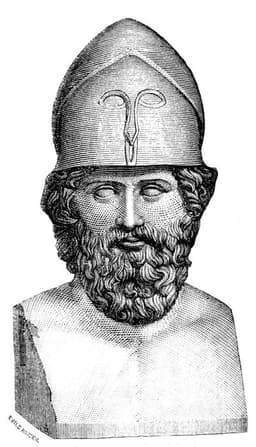
Themistocles
Politician · Ancient
68.4Total
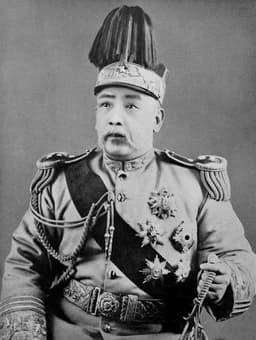
Yuan Shikai
Politician · Modern
60.0Total
Basic Information
Born
-524
1859
Died
-459
1916
Era
Ancient
Modern
Nationality
Greece
China
Occupation
Politician
Politician
Civilization
Western
Eastern
Score Comparison
Military (10%)
80.0
45.0
Political (20%)
72.0
72.0
Influence (20%)
40.0
57.2
Legacy (20%)
80.0
54.0
Leadership (15%)
79.8
72.0
Strategy (15%)
76.0
61.2
TOTAL
68.4
60.0
Themistocles — Complete Timeline
483 BC
Construction of the Athenian FleetReform◆ Major
Themistocles persuaded the Athenian assembly to use silver from the Laurion mines to build a fleet of 200 triremes. This naval expansion transformed Athens into a major maritime power and was crucial for the victory at Salamis.
AthensNaval PowerReform
Impact: nationalconstructive
480 BC
Battle of SalamisWar
Themistocles commanded the Greek navy against the Persian fleet at Salamis. He lured the Persians into the narrow straits, where the Greek ships destroyed the larger Persian fleet. This victory ended the Persian threat to Greece and preserved Greek independence.
Greco-Persian WarsNaval BattleAthens
Impact: regionalconstructive
472 BC
Ostracism from AthensPolitical Action◆ Major
Themistocles was ostracized by the Athenian assembly, likely due to political rivalries and accusations of arrogance. He went into exile, first to Argos, then to Persia, where he was received by King Artaxerxes I.
AthensExileOstracism
Impact: nationaltragic
465 BC
Service under the Persian KingPolitical Action
After his ostracism, Themistocles fled to Persia and offered his services to King Artaxerxes I. He was granted governorship of Magnesia and other cities in Asia Minor, where he lived until his death. This act was seen as treason by many Athenians.
PersiaExileTreason
Impact: regional
Yuan Shikai — Complete Timeline
1901 AD
Command of the Beiyang ArmyReform◆ Major
Yuan Shikai took command of the Beiyang Army, the most modern military force in late Qing China. He expanded and trained the army, which became the basis for his political power and later dominated Chinese politics.
Military reformBeiyang Army
Impact: national
1912 AD
Appointed First President of the Republic of ChinaPolitical Action
Yuan Shikai became the first president of the Republic of China after negotiating the abdication of the Qing emperor. He used his control of the Beiyang Army to pressure the revolutionary government into accepting his leadership.
PresidencyRepublic of China
Impact: national
1915 AD
Declaration of the Empire of ChinaPolitical Action◆ Major
Yuan Shikai declared himself emperor of the Empire of China, attempting to restore the monarchy. This move sparked widespread opposition from provincial leaders and foreign powers, leading to the collapse of his regime.
Monarchy restorationPolitical crisis
Impact: nationaldestructive
Signing of the Twenty-One DemandsPolitical Action◆ Major
Yuan Shikai accepted most of Japan's Twenty-One Demands, which expanded Japanese influence in China. The agreement granted Japan economic rights in Manchuria and Shandong, and was seen as a national humiliation.
DiplomacyJapanese imperialism
Impact: globaltragic
1916 AD
Death and Collapse of the Beiyang GovernmentPolitical Action◆ Major
Yuan Shikai died of uremia, leaving no clear successor. His death led to the fragmentation of the Beiyang Army into warlord factions, plunging China into a period of civil war and political instability.
Warlord eraPolitical fragmentation
Impact: nationaltragic
Expert Analysis
Yuan Shikai vs Themistocles
### The Emperor Who Never Was and the Savior Who Fled
History is a cruel stage. On it, two men rose from obscurity to command the fate of nations, only to fall in ways that defined their civilizations for centuries. One was Yuan Shikai, the last great power broker of imperial China, who briefly held a republic in his hands before crushing it in a vain grasp at a crown. The other was Themistocles, the Athenian who built a navy from silver and saved Greece from Persia, only to die a fugitive in the court of his former enemy. Both were brilliant, ambitious, and ultimately undone by the very traits that lifted them. But why did one shatter a nation while the other saved one? The answer lies not in their talents, but in their times.
### Origins
Yuan Shikai was born in 1859 into a world crumbling under its own weight. The Qing Dynasty, ancient and ossified, faced internal rebellion and foreign humiliation. Yuan grew up in a military family in Henan, a province scarred by the Taiping Rebellion. He was a mediocre student of Confucian classics but a natural organizer. The old examination system held no allure for him; he craved action, not poetry. He joined the army and found his calling in the chaos of a dying order. His China was a land where reform meant survival, but tradition meant legitimacy.
Themistocles, born in 524 BCE, came of age in a very different Athens. The city was a raw democracy, still young and fragile, surrounded by rivals like Sparta and Persia. His father was not of the highest nobility, and his mother was a foreigner—a stain that followed him. He learned politics in the agora, not the barracks. He was cunning, persuasive, and deeply suspicious of the old aristocratic families who looked down on him. His Greece was a patchwork of city-states where a clever man could rise by convincing free citizens to trust him with their silver and their lives.
### Rise to Power
Yuan Shikai’s ascent was forged in blood and bureaucracy. In 1901, after the disastrous Boxer Rebellion, the Qing court—desperate for modernization—gave him command of the Beiyang Army. He turned it into the most disciplined, best-equipped force in China, loyal not to the emperor but to himself. He was a master of patronage, filling his ranks with officers who owed him everything. By 1911, when revolution erupted, he held the balance of power. The Qing could not crush the rebels without him; the rebels could not overthrow the throne without his army. He negotiated both sides, and in 1912, he became the first president of the Republic of China—a republic he never truly believed in.
Themistocles rose by the power of words. In 483 BCE, Athens discovered a massive vein of silver at Laurion. The assembly debated how to spend it: a dole for citizens, or warships. Themistocles, seeing the looming threat of Persia, argued for a fleet. He was not a general; he was a politician who understood that geography—the narrow straits of Salamis—could be a weapon. He won the vote, and 200 triremes were built. When Xerxes’s army marched in 480 BCE, Athens was evacuated, and the fleet became the city’s last hope. Themistocles’s rise was democratic: he had to persuade, not command.
### Leadership & Governance
Yuan Shikai governed as a warlord in civilian clothes. As president, he centralized power, suppressed parliament, and ruled by decree. He was efficient but autocratic. He believed China needed a strong hand, not a debating society. His reforms were real: he modernized the police, the courts, and the currency. But he saw democracy as a weakness, not a virtue. When the National Assembly tried to curb him, he dissolved it. When rivals opposed him, he had them assassinated. His leadership was a paradox: he built the institutions of a modern state while destroying the trust needed to run them.
Themistocles governed by consensus and cunning. After Salamis, he was the most popular man in Athens. He used that influence to rebuild the city’s walls, defying Spartan objections. But he never sought to become a tyrant. Instead, he played the game of democratic politics—forming alliances, making speeches, and enduring the envy of rivals. His leadership was improvisational and situational. He knew when to retreat, when to bluff, and when to strike. He was not a builder of institutions; he was a navigator of crises.
### Triumph & Tragedy
Yuan Shikai’s greatest triumph was also his greatest mistake. In 1915, he declared himself emperor of a new dynasty, the Hongxian Emperor. He believed that only a monarchy could unify China, that the republic was a foreign idea. But he had misread the nation. Protests erupted across the provinces; his own generals wavered. The monarchy lasted 83 days. Humiliated, he rescinded the title, but his authority was shattered. He died in 1916 of uremia, leaving behind a fragmented Beiyang Army that would plunge China into a decade of warlord chaos. His tragedy was that he could have been a founding father, but he chose to be a failed emperor.
Themistocles’s triumph was the Battle of Salamis in 480 BCE. He lured the Persian fleet into the narrow strait, where their numbers became a liability. The Greek triremes rammed and sank the enemy, and Xerxes watched from a golden throne on the shore as his navy was destroyed. It was one of the most decisive naval battles in history. But triumph bred envy. In 472 BCE, Themistocles was ostracized—exiled by a democratic vote. He fled to Persia, of all places, and offered his services to Artaxerxes I, the son of the man he had humiliated. The Persian king granted him a governorship. Themistocles died in 459 BCE, a Greek in exile, serving his former enemy.
### Character & Destiny
Yuan Shikai was a man of iron will and brittle pride. He respected power, not ideals. He could not imagine a China without a Son of Heaven, because he himself wanted to be that son. His personality was shaped by a lifetime of maneuvering in a system where loyalty was a transaction. He trusted no one, and no one trusted him. His destiny was to be the hinge between two eras, but he slammed the door on the future.
Themistocles was a man of flexible morals and sharp instincts. He believed in Athens, but he also believed in survival. His ostracism was not a punishment for failure but for success—the democracy he saved could not tolerate a man too powerful. He accepted exile with the same cunning he had shown in war. He did not die a martyr; he died a pragmatist. His character was his fate: he saved Greece by outsmarting the Persians, and then outsmarted himself into their arms.
### Legacy
Yuan Shikai’s legacy is a cautionary tale. His scores—Military 60.7, Political 74.2, Leadership 81.3—show a man of real ability who squandered it. He is remembered as a usurper, a traitor to the republic, the man who sold out to Japan with the Twenty-One Demands in 1915 and tried to turn back the clock. In China, his name is synonymous with ambition without principle.
Themistocles’s legacy is more complex. His scores—Military 64.1, Political 69.4, Leadership 79.3—are similar, but his influence (84.7) and legacy (79.0) are far higher. He is remembered as the architect of the Athenian navy, the savior of Salamis, the man who made Athens a sea power. But he also fled to Persia. Historians argue whether he was a traitor or a survivor. In Greece, he is a tragic hero; in the West, a symbol of strategic genius.
### Conclusion
Both men rose by their wits and fell by their flaws. Yuan Shikai tried to force history into a mold it had already outgrown; Themistocles bent with the wind until it broke him. One died in his own bed, leaving a shattered nation; the other died in a foreign palace, leaving a grateful one. The difference was not in their talent, but in their times. Yuan Shikai lived in an age of collapsing certainties, where the only choice was between chaos and tyranny. Themistocles lived in an age of emerging possibilities, where a free citizen could still believe the future was his to shape. In the end, the measure of a leader is not how high he climbs, but what he leaves behind when he falls.
Rankings
🥇
ThemistoclesLeader
Mil: 80.0Pol: 72.0Inf: 40.0
68.4
🥈
Yuan Shikai
Mil: 45.0Pol: 72.0Inf: 57.2
60.0
+8.4 behind
How This Comparison Works
Algorithm
Each figure is scored on 6 dimensions (0—100 scale) based on structured historical data: Military (10%), Political (20%), Influence (20%), Legacy (20%), Leadership (15%), Strategy (15%). The weighted total produces the final ranking.
Data Sources
Scores are computed from structured sub-indicators in the database. Scale factors adjust for era (Ancient ×0.85, Modern ×1.0) and civilization size (Eastern ×1.05, Other ×0.80) to account for differences in population and military scale.
Maximum 3 Figures
Comparisons are limited to 2—3 figures to ensure readability and statistical meaningfulness.
Error Margins
±5 points per dimension — Sub-scores are derived from historical records with inherent uncertainty. Two figures within 5 points on a dimension should be considered roughly equivalent in that area.
Total Score Accuracy
±3 points overall — The weighted combination of 6 dimensions produces a total score with approximately ±3 points of uncertainty. Differences of less than 3 points are not statistically significant— the figures are effectively tied.
Known Limitations
- Historical records are incomplete and uneven across civilizations
- Figures from oral-tradition societies may be underrepresented
- Occupation labels can misclassify multi-role figures
- Scores measure capability and impact, not moral character
- Quantitative scoring is a comparison tool, not absolute truth
Capability Radar
Military (10%) — Battles & Warfare
Battles
75
45
Win Rate
85
55
Expansion
60
50
Political (20%) — Governance & Reform
Reform
75
55
Diplomacy
85
70
Economy
65
50
Influence (20%) — Cultural & Global Reach
Cultural
70
40
Global
75
35
Legacy (20%) — Historical Impact
Historical
85
65
Longevity
80
40
Leadership (15%) — Power & Stability
Tenure
70
60
Stability
60
30
Strategy (15%) — Tactics & Innovation
Strategy
90
65
Tactics
95
60
Reform
80
80
Similar Comparisons
Comments & Discussion
IronReformer6/16/2026
Yuan Shikai was no Themistocles. Themistocles saw a silver mine and envisioned a fleet that saved Greece; Yuan saw a crumbling dynasty and envisioned himself emperor. One built for his people, the other for his ego. Yuan’s New Army was effective, but he used it to betray both the Qing and the Republic. True military adaptation serves the state, not the man. Themistocles died in exile, but his strategy lived on. Yuan’s legacy? A warlord era and a shattered nation.
数据掘墓人6/16/2026
吹捧元世凯的军事改革?别被表面数据骗了。他练的新军确实装备精良,但核心是效忠他个人而非国家,这直接埋下了军阀割据的祸根。反观地米斯托克利,他用银矿收入建的雅典海军是全民资产,为城邦而战。对比两军编制:元的军官靠私人关系提拔,地的水手经过民主议事动员。数据不会撒谎——工具化军队的始终是个人野心,而非制度创新。
TempleStoneSkeptic6/16/2026
Classics scholars romanticize Themistocles, but his "silver fleet" myth ignores reality. Athens’ navy was overrated—it merely delayed Persian conquest. At Salamis, Themistocles tricked Xerxes into a narrow channel, yes, but the real Persian collapse came from supply lines, not Greek heroics. Yuan Shikai faced a more complex challenge: China’s modernization needed institutional overhaul, not just tactical genius. Give me Yuan’s pragmatic military academies over Themistocles’ theatrical cunning an
历史幽灵6/16/2026
作为历史爱好者,我拒绝非黑即白的判断。两人都是乱世中的实用主义者,但文化基因决定了结局:元世凯骨子里是帝国之子,他理解不了共和制只能复辟帝制;地米斯托克利是民主催生的天才,雅典的公民大会既成就他也放逐他。有趣的是,他们都为后世留下军事模板——北洋军阀体系与提洛同盟海军,但一个自毁长城,一个徒留传说。历史不审判道德,只记录选择。