Loading...
Ito Hirobumi vs Themistocles
Ito Hirobumi leads by 5.4 pts · 2 figures compared
…
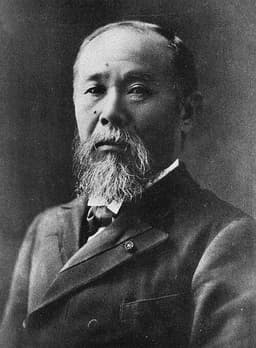
Ito Hirobumi
Politician · Modern
73.8Total
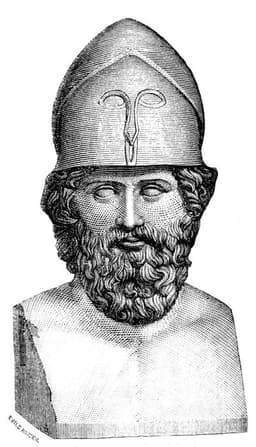
Themistocles
Politician · Ancient
68.4Total
Basic Information
Born
1841
-524
Died
1909
-459
Era
Modern
Ancient
Nationality
Japan
Greece
Occupation
Politician
Politician
Civilization
Eastern
Western
Score Comparison
Military (10%)
50.0
80.0
Political (20%)
86.0
72.0
Influence (20%)
71.0
40.0
Legacy (20%)
80.0
80.0
Leadership (15%)
80.9
79.8
Strategy (15%)
60.0
76.0
TOTAL
73.8
68.4
Ito Hirobumi — Complete Timeline
1882 AD
Establishment of the Bank of JapanReform◆ Major
Under Ito Hirobumi's leadership, the Bank of Japan was established as the nation's central bank. It was modeled after European central banks and aimed to stabilize the currency and control inflation. This institution was crucial for Japan's economic modernization and industrial growth.
Central BankEconomic ReformModernization
Impact: nationalconstructive
1885 AD
First Prime Minister of JapanPolitical Action◆ Major
Ito Hirobumi became the first Prime Minister of Japan under the new cabinet system. He served four non-consecutive terms and was instrumental in shaping the modern Japanese state. His tenure focused on centralizing power, modernizing the economy, and strengthening the military.
Prime MinisterCabinet SystemMeiji Period
Impact: nationalconstructive
1889 AD
Drafting of the Meiji ConstitutionReform
Ito Hirobumi led the drafting of the Meiji Constitution, which established a constitutional monarchy with a bicameral parliament (the Diet). The constitution granted the emperor sovereign power but also provided for elected representatives. It was promulgated in 1889 and remained in effect until 1947.
ConstitutionMeiji PeriodGovernment Reform
Impact: nationalconstructive
1909 AD
Assassination at Harbin StationPolitical Action◆ Major
Ito Hirobumi was assassinated by Korean nationalist An Jung-geun at Harbin railway station in Manchuria. Ito was on a mission to negotiate with Russian officials regarding Korea. His death shocked Japan and was used to justify the formal annexation of Korea in 1910.
AssassinationKoreaAnnexation
Impact: globaltragic
Themistocles — Complete Timeline
483 BC
Construction of the Athenian FleetReform◆ Major
Themistocles persuaded the Athenian assembly to use silver from the Laurion mines to build a fleet of 200 triremes. This naval expansion transformed Athens into a major maritime power and was crucial for the victory at Salamis.
AthensNaval PowerReform
Impact: nationalconstructive
480 BC
Battle of SalamisWar
Themistocles commanded the Greek navy against the Persian fleet at Salamis. He lured the Persians into the narrow straits, where the Greek ships destroyed the larger Persian fleet. This victory ended the Persian threat to Greece and preserved Greek independence.
Greco-Persian WarsNaval BattleAthens
Impact: regionalconstructive
472 BC
Ostracism from AthensPolitical Action◆ Major
Themistocles was ostracized by the Athenian assembly, likely due to political rivalries and accusations of arrogance. He went into exile, first to Argos, then to Persia, where he was received by King Artaxerxes I.
AthensExileOstracism
Impact: nationaltragic
465 BC
Service under the Persian KingPolitical Action
After his ostracism, Themistocles fled to Persia and offered his services to King Artaxerxes I. He was granted governorship of Magnesia and other cities in Asia Minor, where he lived until his death. This act was seen as treason by many Athenians.
PersiaExileTreason
Impact: regional
Expert Analysis
Themistocles vs Ito Hirobumi
# The Architect and the Savior
On a cold October morning in 1909, Ito Hirobumi stepped off a train at Harbin station in Manchuria, his mind likely occupied with the delicate negotiations that had brought him to this Russian-controlled territory. Moments later, a Korean nationalist’s bullet ended his life. Twenty-three centuries earlier, another statesman, Themistocles, stood on the deck of a trireme in the narrow strait of Salamis, watching the Persian fleet sail into his trap. Both men shaped their nations’ destinies through political genius, yet their paths—and their ends—could not have been more different. Why did one die a martyr for his country’s ambitions, while the other died a fugitive in the service of its enemy?
Origins
Ito Hirobumi was born in 1841 into a low-ranking samurai family in the domain of Choshu, a region that would become a hotbed of opposition to the Tokugawa shogunate. His world was one of rigid feudal hierarchy, where birth determined one’s place. Yet the arrival of Commodore Perry’s black ships in 1853 shattered that world, and young Ito, like many of his generation, became a passionate reformer. He studied in England, witnessed the power of Western industry and governance, and returned convinced that Japan must modernize or be colonized.
Themistocles, born around 524 BC, emerged from a less privileged background in democratic Athens. His father was not among the noble clans, and his mother was reportedly a foreigner—a stigma in the hyper-competitive world of Athenian politics. Where Ito’s era demanded the destruction of an old order, Themistocles’ required its defense. The Persian Empire, under Darius and later Xerxes, was the existential threat. Both men were outsiders in their own societies, but that outsider status sharpened their instincts.
Rise to Power
Ito’s ascent was methodical. After the Meiji Restoration of 1868, he served in various government roles, traveling to the United States and Europe to study their institutions. His great opportunity came in 1882 when he led the drafting of a constitution. He spent months in Germany and Austria, consulting with scholars like Rudolf von Gneist and Lorenz von Stein, absorbing the principles of constitutional monarchy. In 1885, he became Japan’s first Prime Minister, a position he would hold four times. His power came from institutions he helped create.
Themistocles’ rise was more dramatic and precarious. In 483 BC, he convinced the Athenian assembly to use a windfall of silver from the Laurion mines—which others wanted to distribute among citizens—to build a fleet of 200 triremes. This was a gamble, a bet that Persia would return. When Xerxes invaded in 480 BC, Themistocles’ fleet was ready. At the Battle of Salamis, he lured the vastly larger Persian navy into the narrow strait, where the Greeks’ heavier ships and superior tactics turned the tide. It was a victory that saved Greece and defined his career.
Leadership & Governance
Ito Hirobumi governed through structure. The Meiji Constitution of 1889, which he drafted, established a bicameral parliament, a cabinet system, and a constitutional monarchy. It was a masterful compromise: it granted the emperor supreme authority while creating elected institutions. Ito also oversaw the establishment of the Bank of Japan in 1882, modeled on European central banks, stabilizing the currency and modernizing the economy. His leadership style was patient, diplomatic, and legalistic. He believed in building systems that would outlast him.
Themistocles governed through vision and charisma. He had no constitution to write—Athens already had a democracy. His genius was strategic and improvisational. The construction of the fleet was a reform that transformed Athens from a land power into a naval empire. After Salamis, he used the victory to build walls around Athens, defying Spartan objections, ensuring the city could withstand future sieges. He was brilliant but arrogant, and his unwillingness to share credit bred enemies. His political wisdom was immense, but his personal flaws were equally large.
Triumph & Tragedy
Ito’s greatest triumph was the Meiji Constitution, a document that allowed Japan to modernize while maintaining its cultural identity. It was a model for other Asian nations seeking to resist Western domination. His tragedy came in 1909, when he was assassinated by An Jung-geun, a Korean nationalist who saw Ito as the architect of Japan’s colonial oppression of Korea. Ito had been on a mission to discuss the annexation of Korea with Russian officials. His death transformed him into a martyr for Japanese imperialism, but also highlighted the brutal cost of his nation’s expansion.
Themistocles’ triumph was Salamis, a victory so complete that it ended the Persian threat to Greece. His tragedy was his own fall. In 472 BC, he was ostracized—exiled by a democratic vote, likely due to political rivals who resented his influence. He fled first to Argos, then to Persia itself, where he offered his services to King Artaxerxes I. He was granted the governorship of Magnesia, a Greek city in Asia Minor. The man who saved Greece died years later, serving its greatest enemy.
Character & Destiny
Ito was a builder. He believed in order, law, and progress. His personality was disciplined, patient, and pragmatic. He understood that Japan’s survival depended on mastering Western methods while preserving Japanese spirit. His destiny was to create a modern state, but also to become a symbol of its aggressive expansion.
Themistocles was a strategist. He saw the world as a chessboard, where a single move could decide everything. His personality was brilliant, bold, and reckless. He understood that Athens’ future depended on the sea, but he could not navigate the treacherous currents of democratic politics. His destiny was to save his city, only to be destroyed by its own freedom.
Legacy
Ito Hirobumi is remembered as the father of modern Japan. His constitution lasted until 1947, and the institutions he built—the cabinet system, the central bank—endure. His legacy is complicated by Japan’s later militarism, but his role as a reformer is undisputed. In South Korea, however, he is remembered differently: as the architect of colonization, and his assassin is hailed as a hero.
Themistocles is remembered as the savior of Greece. The Battle of Salamis is a turning point in Western history, securing the survival of Greek civilization and its contributions to democracy, philosophy, and art. Yet his exile and service to Persia leave an uncomfortable question: Was he a patriot forced into betrayal, or a pragmatist who put survival above loyalty?
Conclusion
Two men, two eras, two different answers to the same question: How do you save your nation? Ito built a structure that would withstand any storm. Themistocles built a fleet that could win any battle. One died for his country’s ambitions; the other died in exile from his own. Their stories remind us that the line between hero and traitor is often just a matter of perspective—and that the greatest architects of history are sometimes the most tragic figures within it.
Rankings
🥇
Ito HirobumiLeader
Mil: 50.0Pol: 86.0Inf: 71.0
73.8
🥈
Themistocles
Mil: 80.0Pol: 72.0Inf: 40.0
68.4
+5.4 behind
How This Comparison Works
Algorithm
Each figure is scored on 6 dimensions (0—100 scale) based on structured historical data: Military (10%), Political (20%), Influence (20%), Legacy (20%), Leadership (15%), Strategy (15%). The weighted total produces the final ranking.
Data Sources
Scores are computed from structured sub-indicators in the database. Scale factors adjust for era (Ancient ×0.85, Modern ×1.0) and civilization size (Eastern ×1.05, Other ×0.80) to account for differences in population and military scale.
Maximum 3 Figures
Comparisons are limited to 2—3 figures to ensure readability and statistical meaningfulness.
Error Margins
±5 points per dimension — Sub-scores are derived from historical records with inherent uncertainty. Two figures within 5 points on a dimension should be considered roughly equivalent in that area.
Total Score Accuracy
±3 points overall — The weighted combination of 6 dimensions produces a total score with approximately ±3 points of uncertainty. Differences of less than 3 points are not statistically significant— the figures are effectively tied.
Known Limitations
- Historical records are incomplete and uneven across civilizations
- Figures from oral-tradition societies may be underrepresented
- Occupation labels can misclassify multi-role figures
- Scores measure capability and impact, not moral character
- Quantitative scoring is a comparison tool, not absolute truth
Capability Radar
Military (10%) — Battles & Warfare
Battles
0
75
Win Rate
0
85
Expansion
70
60
Political (20%) — Governance & Reform
Reform
95
75
Diplomacy
90
85
Economy
80
65
Influence (20%) — Cultural & Global Reach
Cultural
75
70
Global
80
75
Legacy (20%) — Historical Impact
Historical
85
85
Longevity
80
80
Leadership (15%) — Power & Stability
Tenure
85
70
Stability
85
60
Strategy (15%) — Tactics & Innovation
Strategy
0
90
Tactics
0
95
Reform
85
80
Similar Comparisons
Comments & Discussion
IRON_HELLAS6/16/2026
The question misses the damn point entirely. Themistocles didn't "die a fugitive in the service of an enemy"—he built Athenian hegemony from nothing while Ito presided over Japan's modernization on a silver platter pressed by Commodore Perry's guns. Themistocles faced Persia when Athens barely had a navy; he tricked the richest empire of the age at Salamis with nothing but guts, a narrow strait, and a slave's whisper. Ito's Western-style constitution was cribbed from Bismarck over schnapps. Give
紫电青霜6/16/2026
这对比有意思,但漏了一个关键维度:Ito 政治寿命的跨度远比Themistocles长。Themistocles被陶片放逐流放阿尔戈斯,最后郁郁投靠波斯王,前后统治时间不过十年。Ito则跨越明治维新、自由民权运动、日俄战争,做了四任首相,90%的日本近代制度蓝图出自他手。一个是昙花一现的彗星,一个是精密运转的钟表。不是谁更高明,而是两人面对的时代任务根本不同。