Loading...
Ramon Castilla vs To Lam
Ramon Castilla leads by 9.1 pts · 2 figures compared
…
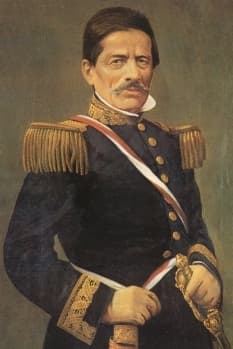
Ramon Castilla
General · Modern
59.7Total
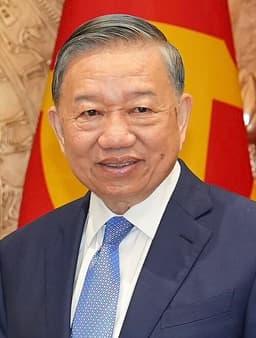
To Lam
General · Modern
50.6Total
Basic Information
Born
1797
1957
Died
1867
—
Era
Modern
Modern
Nationality
Peru
Vietnam
Occupation
General
General
Civilization
Western
Eastern
Score Comparison
Military (10%)
40.0
25.9
Political (20%)
72.0
68.0
Influence (20%)
56.7
51.8
Legacy (20%)
52.0
41.7
Leadership (15%)
78.0
72.0
Strategy (15%)
60.0
36.8
TOTAL
59.7
50.6
Ramon Castilla — Complete Timeline
1824 AD
Battle of AyacuchoWar
Castilla fought as a junior officer in the decisive Battle of Ayacucho, which ended Spanish rule in Peru. This victory secured Peruvian independence and marked the end of the Spanish Empire in South America, shaping Castilla's nationalist views.
Peruvian War of IndependenceBattleLiberation
Impact: regional
1845 AD
First Presidency of PeruPolitical Action◆ Major
Castilla was elected President of Peru in 1845, serving until 1851. His first term focused on economic development, including the guano boom, and infrastructure projects such as railroads and ports, modernizing the Peruvian state.
PresidencyEconomic DevelopmentGuano
Impact: nationalconstructive
1854 AD
Abolition of Slavery in PeruReform◆ Major
During his second presidency, Castilla issued a decree abolishing slavery in Peru on December 3, 1854. This reform freed approximately 25,000 slaves and was part of a broader liberal agenda, though it faced opposition from slave-owning elites.
AbolitionSlaveryHuman Rights
Impact: nationalprogressive
Abolition of Indigenous TributeReform◆ Major
Castilla also abolished the indigenous tribute tax in 1854, which had been a burden on native communities since colonial times. This measure aimed to integrate indigenous peoples into the Peruvian state as equal citizens, though its implementation was uneven.
Indigenous RightsTax ReformCitizenship
Impact: nationalprogressive
1855 AD
Second Presidency and Guano BoomPolitical Action◆ Major
Castilla served a second term from 1855 to 1862, during the peak of the guano export boom. He used guano revenues to fund public works, pay off foreign debt, and modernize the military, but also faced criticism for corruption and over-reliance on a single resource.
PresidencyGuanoModernization
Impact: nationalconstructive
1860 AD
Constitutional Reform of 1860Reform◆ Major
Castilla oversaw the adoption of a new constitution in 1860, which established a centralized republic with a strong executive. The constitution remained in effect until 1920 and shaped Peru's political structure, though it limited regional autonomy.
ConstitutionPolitical ReformCentralization
Impact: nationalconstructive
To Lam — Complete Timeline
2016 AD
Appointed Minister of Public SecurityPolitical Action◆ Major
To Lam was appointed Minister of Public Security of Vietnam, overseeing the country's police and internal security forces. He played a key role in maintaining public order and combating crime.
Ministerial AppointmentSecurity Leadership
Impact: national
2024 AD
Elected President of VietnamPolitical Action◆ Major
To Lam was elected President of Vietnam by the National Assembly, succeeding Vo Van Thuong. He transitioned from security chief to head of state, continuing his influence in national politics.
PresidencyGovernment Leadership
Impact: national
Expert Analysis
Ramon Castilla vs To Lam
# The General and the Guardian
On a December morning in 1854, Ramon Castilla sat in his Lima office and signed a decree that would transform Peru forever. The ink was barely dry on the abolition of slavery when he reached for another document, this one ending the centuries-old tribute tax on indigenous communities. Half a world away and 162 years later, a different kind of general, To Lam, assumed control of Vietnam's Ministry of Public Security, beginning a quiet ascent that would culminate in the presidency. One man liberated millions; the other consolidated power. What drove these two military men down such divergent paths?
Origins
Ramon Castilla was born in 1797 in Tarapacá, then a remote corner of the Spanish Empire. His father was a Basque immigrant who had carved out a modest existence in the desert, and young Ramon grew up speaking Spanish and Quechua, the language of the Andes. The wars of independence that erupted across Latin America when he was a teenager gave him a cause and a sword. He joined the patriot forces and learned war in the crucible of the Andes, where battles were fought at altitudes that killed European lungs.
To Lam arrived in 1957, just three years after the Geneva Accords divided Vietnam. His generation was forged in the American War, but while others fought in the jungles of the South, To Lam chose a different battlefield. He studied law at the People's Security Academy, then rose through the ranks of the internal security apparatus. Where Castilla learned to fight enemies from without, To Lam learned to watch for enemies within.
Rise to Power
The Battle of Ayacucho on December 9, 1824, was Castilla's crucible. As a junior officer, he charged into the mists of the Peruvian highlands alongside General Antonio José de Sucre's army. When the Spanish surrendered, Castilla was not just a victor—he was a man who had helped birth a nation. That battle opened doors. He became a prefect, then a minister, then a president. His path was public, visible, and earned through blood.
To Lam's rise was silent. Appointed Minister of Public Security in 2016, he commanded a vast apparatus of surveillance, police, and intelligence. His power was not won on battlefields but built through files, informants, and the quiet accumulation of leverage. When he was elected President of Vietnam in 2024, succeeding Vo Van Thuong, the transition was smooth, almost invisible. The security chief had become the head of state without firing a shot.
Leadership & Governance
Castilla governed during Peru's guano boom, when bird droppings from the coastal islands made the country staggeringly rich. He used that wealth with surprising wisdom. His first term from 1845 to 1851 focused on paying off foreign debts, building railways, and modernizing the state. His second term from 1855 to 1862 was even bolder. The guano revenues funded schools, hospitals, and infrastructure. He oversaw the Constitution of 1860, which created a centralized republic with a strong executive—a framework that would outlast him by generations.
But his most radical act was the abolition of slavery in 1854. Castilla did not wait for consensus. He simply decreed that no human being in Peru could be bought or sold. He followed this by abolishing the indigenous tribute, a tax that had crushed native communities since the Spanish conquest. These were not popular moves among the landed elite. Castilla pushed them through anyway, using his military prestige and the guano wealth to buy off opposition.
To Lam governs in a different age and a different system. Vietnam is a one-party state where the president shares power with the party general secretary and the prime minister. His leadership has focused on continuity and stability. He has not abolished anything or launched grand reforms. Instead, he has tightened control over dissent, expanded surveillance, and maintained the Communist Party's grip on power. Where Castilla used wealth to liberate, To Lam uses security to stabilize.
Triumph & Tragedy
Castilla's triumph was the abolition decree. It was a moment of moral clarity in a century that often lacked it. His tragedy came later. The guano boom proved unsustainable, and the centralized state he built could not survive the inevitable bust. By the time he died in 1867, Peru was already sliding toward the chaos that would culminate in the disastrous War of the Pacific.
To Lam's triumph is his own survival. In a political system where rivals are purged and careers end abruptly, he rose to the presidency without a scandal. His tragedy is that his legacy remains unwritten. He has not yet faced a crisis that would test his mettle or reveal his character. The security state he commands may keep Vietnam stable, but stability is not the same as progress.
Character & Destiny
Castilla was a man of action, not contemplation. He believed in the power of the decree, the force of the law, and the authority of the state. His decisions were bold because he trusted his own judgment. He abolished slavery not because the economy demanded it but because his conscience required it. That moral certainty drove him to greatness and also to error.
To Lam is a man of patience and calculation. He rose through an apparatus that rewards caution and punishes risk. His decisions are made in committee, vetted by party elders, and executed through layers of bureaucracy. He does not abolish; he adjusts. He does not reform; he consolidates. His character is the product of a system that values order over justice.
Legacy
Castilla's legacy is carved into Peru's national identity. He is remembered as the liberator of slaves, the modernizer of the state, and the author of the 1860 Constitution. Statues of him stand in Lima's plazas. Schoolchildren learn his name. His scores—Leadership 84.0, Political 77.4, Legacy 75.0—reflect a man who shaped his nation's destiny.
To Lam's legacy is still being written. His scores—Leadership 81.0, Political 74.6, Legacy 58.4—suggest a capable administrator but not a transformative leader. He may be remembered as a caretaker who kept the system running, or as a strongman who tightened the screws. The future will decide.
Conclusion
Two generals, two centuries, two worlds. Castilla fought a war to free his country, then used his power to free its people. To Lam rose through a security state, then used his power to preserve it. One abolished slavery; the other consolidated control. The difference is not just in their times but in their choices. Castilla chose liberation. To Lam has chosen order. History will judge which was the greater gift to their people.
Rankings
🥇
Ramon CastillaLeader
Mil: 40.0Pol: 72.0Inf: 56.7
59.7
🥈
To Lam
Mil: 25.9Pol: 68.0Inf: 51.8
50.6
+9.1 behind
How This Comparison Works
Algorithm
Each figure is scored on 6 dimensions (0—100 scale) based on structured historical data: Military (10%), Political (20%), Influence (20%), Legacy (20%), Leadership (15%), Strategy (15%). The weighted total produces the final ranking.
Data Sources
Scores are computed from structured sub-indicators in the database. Scale factors adjust for era (Ancient ×0.85, Modern ×1.0) and civilization size (Eastern ×1.05, Other ×0.80) to account for differences in population and military scale.
Maximum 3 Figures
Comparisons are limited to 2—3 figures to ensure readability and statistical meaningfulness.
Error Margins
±5 points per dimension — Sub-scores are derived from historical records with inherent uncertainty. Two figures within 5 points on a dimension should be considered roughly equivalent in that area.
Total Score Accuracy
±3 points overall — The weighted combination of 6 dimensions produces a total score with approximately ±3 points of uncertainty. Differences of less than 3 points are not statistically significant— the figures are effectively tied.
Known Limitations
- Historical records are incomplete and uneven across civilizations
- Figures from oral-tradition societies may be underrepresented
- Occupation labels can misclassify multi-role figures
- Scores measure capability and impact, not moral character
- Quantitative scoring is a comparison tool, not absolute truth
Capability Radar
Military (10%) — Battles & Warfare
Battles
45
10
Win Rate
50
10
Expansion
30
10
Political (20%) — Governance & Reform
Reform
85
40
Diplomacy
70
40
Economy
75
30
Influence (20%) — Cultural & Global Reach
Cultural
55
20
Global
50
20
Legacy (20%) — Historical Impact
Historical
65
20
Longevity
60
20
Leadership (15%) — Power & Stability
Tenure
65
50
Stability
60
40
Strategy (15%) — Tactics & Innovation
Strategy
45
10
Tactics
40
10
Reform
55
10
Similar Comparisons
Comments & Discussion
Castilla's Reckoning6/16/2026
Anyone who compares a 19th-century abolitionist to a modern police commissar is committing intellectual malpractice. Castilla freed 25,000 slaves and abolished indigenous tribute in one afternoon—he literally bankrupted the landed elite to pay compensation. To Lam’s "achievement"? Overseeing the arrest of every dissident blogger in Vietnam. One man lost political capital to expand human freedom; the other accumulated power by shrinking it. Call it what it is: liberation versus suffocation.
铁血数据派6/16/2026
别拿卡斯蒂利亚的浪漫史和现代威权剧本混为一谈。秘鲁1854年废奴时全国只有2.5万奴隶,补偿金高达300万比索——真金白银的代价。而苏林2016年接手公安部后,越南政治犯数量从个位数飙到150+,这叫“治理”?分明是数据上的恐怖平衡。前者用税收赎买自由,后者用监控换“稳定”。别被叙事骗了,看看逮捕令的总数。
The Janus of Command6/16/2026
Same uniform, opposite trajectories. Castilla learned war in the Andes—charging through 4,000-meter passes to fight royalists. That forged a leader who could defy his own class to emancipate the oppressed. To Lam studied internal security doctrine—tactical manuals about neutralizing enemies within. What emerges? A man who sees every citizen as a potential threat. The difference isn't personality; it's training. One army created liberators; the other produced gatekeepers.
经纬之间6/16/2026
卡斯蒂利亚时代印加贵族后裔还有发言权,而苏林面对的越南已是单一党国机器。十九世纪的南美将军可以靠个人权威撼动制度——秘鲁解放黑奴比巴西早整整三十四年。今天越南的“公安总统”只能强化现有铁笼。两种权力结构决定两种结局:前者用一纸法令改写两百年民族矛盾;后者用摄像头和举报系统巩固一个十年。不是人不同,是笼子不同。
Revisionist's Lament6/16/2026
Let's stop canonizing Castilla. He freed slaves from Spanish-descended masters, sure, but he also imported 80,000 Chinese coolies under brutal contracts—replacing one form of bondage with another. To Lam at least prevented Vietnam from sliding into the chaos of post-communist Eastern Europe. Both men used state power for "stability." Castilla just wore a more photogenic hat. History loves a narrative; I prefer the receipts.