Loading...
Ramon Castilla vs Yitzhak Rabin
Yitzhak Rabin leads by 6.7 pts · 2 figures compared
…
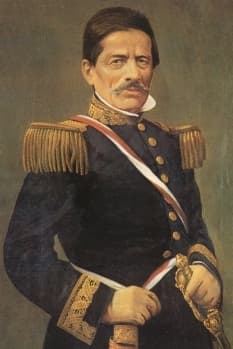
Ramon Castilla
General · Modern
59.7Total
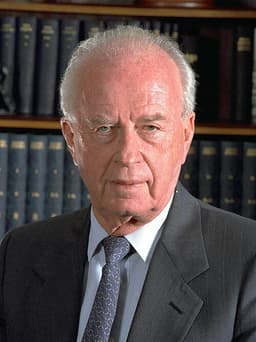
Yitzhak Rabin
General · Modern
66.4Total
Basic Information
Born
1797
1922
Died
1867
—
Era
Modern
Modern
Nationality
Peru
Israel
Occupation
General
General
Civilization
Western
Middle Eastern
Score Comparison
Military (10%)
40.0
61.7
Political (20%)
72.0
82.0
Influence (20%)
56.7
68.0
Legacy (20%)
52.0
55.0
Leadership (15%)
78.0
78.0
Strategy (15%)
60.0
55.0
TOTAL
59.7
66.4
Ramon Castilla — Complete Timeline
1824 AD
Battle of AyacuchoWar
Castilla fought as a junior officer in the decisive Battle of Ayacucho, which ended Spanish rule in Peru. This victory secured Peruvian independence and marked the end of the Spanish Empire in South America, shaping Castilla's nationalist views.
Peruvian War of IndependenceBattleLiberation
Impact: regional
1845 AD
First Presidency of PeruPolitical Action◆ Major
Castilla was elected President of Peru in 1845, serving until 1851. His first term focused on economic development, including the guano boom, and infrastructure projects such as railroads and ports, modernizing the Peruvian state.
PresidencyEconomic DevelopmentGuano
Impact: nationalconstructive
1854 AD
Abolition of Slavery in PeruReform◆ Major
During his second presidency, Castilla issued a decree abolishing slavery in Peru on December 3, 1854. This reform freed approximately 25,000 slaves and was part of a broader liberal agenda, though it faced opposition from slave-owning elites.
AbolitionSlaveryHuman Rights
Impact: nationalprogressive
Abolition of Indigenous TributeReform◆ Major
Castilla also abolished the indigenous tribute tax in 1854, which had been a burden on native communities since colonial times. This measure aimed to integrate indigenous peoples into the Peruvian state as equal citizens, though its implementation was uneven.
Indigenous RightsTax ReformCitizenship
Impact: nationalprogressive
1855 AD
Second Presidency and Guano BoomPolitical Action◆ Major
Castilla served a second term from 1855 to 1862, during the peak of the guano export boom. He used guano revenues to fund public works, pay off foreign debt, and modernize the military, but also faced criticism for corruption and over-reliance on a single resource.
PresidencyGuanoModernization
Impact: nationalconstructive
1860 AD
Constitutional Reform of 1860Reform◆ Major
Castilla oversaw the adoption of a new constitution in 1860, which established a centralized republic with a strong executive. The constitution remained in effect until 1920 and shaped Peru's political structure, though it limited regional autonomy.
ConstitutionPolitical ReformCentralization
Impact: nationalconstructive
Yitzhak Rabin — Complete Timeline
1967 AD
Chief of Staff during the Six-Day WarWar
As Chief of Staff of the Israel Defense Forces, Rabin commanded the Israeli military during the Six-Day War against Egypt, Jordan, and Syria. Israel captured the Sinai Peninsula, Gaza Strip, West Bank, East Jerusalem, and Golan Heights, reshaping the region.
Six-Day WarTerritorial ExpansionMilitary Victory
Impact: global
1993 AD
Signing of the Oslo AccordsPolitical Action
As prime minister, Rabin signed the Oslo Accords with PLO Chairman Yasser Arafat on the White House lawn. The agreement established the Palestinian Authority and set a framework for Palestinian self-governance in the West Bank and Gaza Strip.
Peace ProcessPalestiniansOslo
Impact: globalconstructive
1995 AD
Assassination at Peace RallyPolitical Action
Rabin was assassinated by Israeli extremist Yigal Amir after a peace rally in Tel Aviv. The assassination shocked Israel and the world, derailing the Oslo peace process and leading to a period of political instability.
AssassinationPeace ProcessPolitical Violence
Impact: globaltragic
Expert Analysis
Yitzhak Rabin vs Ramon Castilla
# The General and the Peacemaker
On a warm November evening in 1995, Yitzhak Rabin stood on a stage in Tel Aviv, singing a song of peace with a crowd of 100,000 Israelis. Moments later, three bullets from a Jewish extremist’s pistol ended his life—and with it, a fragile hope for reconciliation in the Middle East. Half a world away and a century earlier, another general, Ramon Castilla, had also faced the fury of his own countrymen. But unlike Rabin, Castilla died in his bed, surrounded by the monuments of a nation he had helped remake. Both men were soldiers who became statesmen. Both sought to transform their societies. Yet one was cut down at the height of his peacemaking, while the other lived to see his reforms take root. Why did their paths diverge so dramatically?
Origins
Yitzhak Rabin was born in Jerusalem in 1922 to secular Zionist parents who had emigrated from Eastern Europe. His father, a laborer, and his mother, a political activist, instilled in him a fierce commitment to building a Jewish state. Rabin grew up in a world of pioneers and paramilitaries, where survival depended on strength and pragmatism. He joined the Palmach, the elite strike force of the Jewish underground, at age 19, and learned early that in the crucible of war, hesitation meant death.
Ramon Castilla, born in 1797 in the remote province of Tarapacá, came from a very different world. His father was a Spanish colonial official, his mother a local aristocrat. But Castilla was a *criollo*—a person of Spanish descent born in the Americas—and thus barred from the highest offices under Spanish rule. The rigid hierarchy of the colonial system bred in him a restless ambition and a deep awareness of injustice. When the wars of independence erupted across Latin America, Castilla saw his chance. He joined the patriot army at age 20, fighting not for an abstract ideal but for a Peru that did not yet exist.
Rise to Power
Rabin’s rise was forged in the crucible of Israel’s wars of survival. As a young officer, he commanded the Harel Brigade in the 1948 War of Independence, where he fought to keep Jerusalem’s supply route open. His reputation for meticulous planning and cool leadership earned him the post of Chief of Staff in 1964. Then came June 1967. In six days, Rabin orchestrated a preemptive strike that destroyed the Egyptian, Jordanian, and Syrian air forces and captured the Sinai, Gaza, the West Bank, and the Golan Heights. The Six-Day War transformed Israel from a vulnerable state into a regional superpower—and Rabin into a national hero.
Castilla’s path was less dramatic but equally decisive. He fought at the Battle of Ayacucho in 1824, the final clash that ended Spanish rule in South America. As a junior officer, he witnessed the triumph of the patriot cause. But victory did not bring stability. Peru descended into two decades of caudillo warfare—feuds between strongmen who ruled through force. Castilla learned the art of survival, switching sides when necessary, building alliances, and waiting for his moment. In 1845, at age 48, he was elected president. Unlike the firebrands who came before him, Castilla understood that power was not an end in itself but a tool for building a nation.
Leadership & Governance
Rabin and Castilla shared a pragmatic approach to leadership, but their governing styles reflected the different challenges they faced. Rabin, as prime minister from 1974 to 1977 and again from 1992 until his death, was a man of few words and decisive action. He distrusted grand rhetoric and preferred back-channel negotiations. His military background shaped his political philosophy: he saw peace not as a moral imperative but as a strategic necessity. The Oslo Accords, signed with Yasser Arafat in 1993, were a gamble—an attempt to trade land for security, to end the occupation that was draining Israel’s soul and its resources.
Castilla, by contrast, governed during a period of extraordinary prosperity. The guano boom—the export of seabird droppings used as fertilizer—flooded Peru with revenue. Castilla used this windfall to modernize the country. He abolished slavery in 1854, freeing thousands of African-Peruvians, and ended the indigenous tribute tax that had burdened native communities since colonial times. He built railroads, modernized the army, and oversaw a new constitution in 1860 that centralized power in Lima. Where Rabin sought to dismantle an occupation, Castilla sought to build a state.
Triumph & Tragedy
Rabin’s greatest triumph was also his greatest tragedy. The Oslo Accords earned him the Nobel Peace Prize in 1994, but they also unleashed a wave of violence. Palestinian suicide bombers targeted Israeli buses and cafés; Israeli settlers protested and rioted; right-wing politicians accused Rabin of treason. The peace process was unraveling even as he stood on that stage in Tel Aviv. His assassination on November 4, 1995, by Yigal Amir, a law student who believed Rabin was betraying the Jewish people, was the final, devastating blow. The peace process did not die with Rabin, but it lost its most credible champion.
Castilla’s triumphs were more tangible. He left office in 1862 with Peru transformed: slavery abolished, indigenous tribute ended, a modern constitution in place, and the treasury flush with guano revenues. But the tragedy of Castilla’s legacy is that the prosperity he built was unsustainable. The guano boom ended within a decade of his death, and Peru plunged into economic crisis and war with Chile. His reforms, however, endured. The abolition of slavery and indigenous tribute remained permanent achievements, even if the nation he helped build proved fragile.
Character & Destiny
What drove these two men down such different paths? Rabin was a reluctant peacemaker. He had spent his life fighting Israel’s enemies, and he knew the cost of war better than most. But he also understood that Israel could not rule over millions of Palestinians forever. His decision to negotiate with Arafat was not born of idealism but of realism. He once said, “You don’t make peace with friends. You make it with very unsavory enemies.” That pragmatism made him a target—not just of Palestinians who rejected Israel’s existence, but of Israelis who saw his concessions as betrayal.
Castilla, by contrast, was a master of political survival. He had lived through the chaos of Peru’s early republic and knew that stability required compromise. His abolition of slavery was not purely altruistic—it also helped him win support from liberal factions and weaken the power of the landed elite. But Castilla also had a genuine vision for a modern Peru, one where the state, not the caudillos, held authority. He was a reformer who understood that change had to be gradual, that the nation had to be built brick by brick.
Legacy
Rabin’s legacy is one of unfulfilled promise. He is remembered as a martyr for peace, a soldier who laid down his arms and was killed by his own people. The Oslo Accords remain a framework for Israeli-Palestinian negotiations, but the peace they envisioned—two states living side by side—has never been realized. Rabin’s assassination cast a long shadow over Israeli politics, deepening the divisions that still plague the country today.
Castilla’s legacy is more ambiguous. He is celebrated as the “Liberator of the Slaves” and the “Father of the 1860 Constitution,” but his reliance on guano revenues meant that Peru’s modernization was built on a fragile foundation. Still, his reforms—the abolition of slavery, the end of indigenous tribute, the establishment of a stable constitutional order—were lasting achievements. In Peru, he is remembered as a founder, not a martyr.
Conclusion
Rabin and Castilla were both generals who sought to build a better world. But Rabin’s world was one of intractable conflict, where every step toward peace was met with violence. Castilla’s world was one of opportunity, where a leader could use prosperity to reshape a nation. Their fates remind us that history is not just about character—it is about context. Rabin was a peacemaker in a time of war; Castilla was a builder in a time of plenty. One was killed for his vision; the other lived to see his work endure. In the end, both men understood that the greatest battles are not fought on the battlefield, but in the hearts and minds of the people they sought to lead.
Rankings
🥇
Yitzhak RabinLeader
Mil: 61.7Pol: 82.0Inf: 68.0
66.4
🥈
Ramon Castilla
Mil: 40.0Pol: 72.0Inf: 56.7
59.7
+6.7 behind
How This Comparison Works
Algorithm
Each figure is scored on 6 dimensions (0—100 scale) based on structured historical data: Military (10%), Political (20%), Influence (20%), Legacy (20%), Leadership (15%), Strategy (15%). The weighted total produces the final ranking.
Data Sources
Scores are computed from structured sub-indicators in the database. Scale factors adjust for era (Ancient ×0.85, Modern ×1.0) and civilization size (Eastern ×1.05, Other ×0.80) to account for differences in population and military scale.
Maximum 3 Figures
Comparisons are limited to 2—3 figures to ensure readability and statistical meaningfulness.
Error Margins
±5 points per dimension — Sub-scores are derived from historical records with inherent uncertainty. Two figures within 5 points on a dimension should be considered roughly equivalent in that area.
Total Score Accuracy
±3 points overall — The weighted combination of 6 dimensions produces a total score with approximately ±3 points of uncertainty. Differences of less than 3 points are not statistically significant— the figures are effectively tied.
Known Limitations
- Historical records are incomplete and uneven across civilizations
- Figures from oral-tradition societies may be underrepresented
- Occupation labels can misclassify multi-role figures
- Scores measure capability and impact, not moral character
- Quantitative scoring is a comparison tool, not absolute truth
Capability Radar
Military (10%) — Battles & Warfare
Battles
45
65
Win Rate
50
70
Expansion
30
50
Political (20%) — Governance & Reform
Reform
85
65
Diplomacy
70
85
Economy
75
60
Influence (20%) — Cultural & Global Reach
Cultural
55
55
Global
50
70
Legacy (20%) — Historical Impact
Historical
65
75
Longevity
60
60
Leadership (15%) — Power & Stability
Tenure
65
70
Stability
60
40
Strategy (15%) — Tactics & Innovation
Strategy
45
75
Tactics
40
60
Reform
55
55
Similar Comparisons
Comments & Discussion
Bullseye Broker6/16/2026
This "general vs. peacemaker" framing is a disservice to both men. Rabin wasn't some dove who stumbled into politics; he was the architect of the 1967 victory, the man who crushed the First Intifada as Defense Minister. Calling him just a peacemaker ignores that he bombed Lebanon back to the Stone Age in '73. Castilla was a soldier-politician too, but he abolished slavery with a cash compensation scam that basically bankrolled the old masters. Both were ruthless pragmatists. The only difference