Loading...
Ramon Castilla vs Sitiveni Rabuka
Ramon Castilla leads by 8.0 pts · 2 figures compared
…
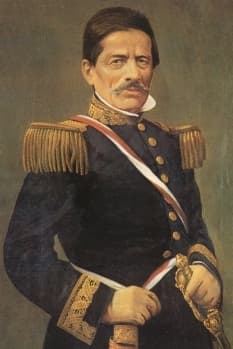
Ramon Castilla
General · Modern
59.7Total
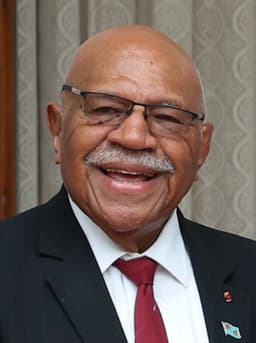
Sitiveni Rabuka
General · Modern
51.7Total
Basic Information
Born
1797
1948
Died
1867
—
Era
Modern
Modern
Nationality
Peru
Fiji
Occupation
General
General
Civilization
Western
Other
Score Comparison
Military (10%)
40.0
10.2
Political (20%)
72.0
60.0
Influence (20%)
56.7
53.3
Legacy (20%)
52.0
46.7
Leadership (15%)
78.0
85.0
Strategy (15%)
60.0
39.6
TOTAL
59.7
51.7
Ramon Castilla — Complete Timeline
1824 AD
Battle of AyacuchoWar
Castilla fought as a junior officer in the decisive Battle of Ayacucho, which ended Spanish rule in Peru. This victory secured Peruvian independence and marked the end of the Spanish Empire in South America, shaping Castilla's nationalist views.
Peruvian War of IndependenceBattleLiberation
Impact: regional
1845 AD
First Presidency of PeruPolitical Action◆ Major
Castilla was elected President of Peru in 1845, serving until 1851. His first term focused on economic development, including the guano boom, and infrastructure projects such as railroads and ports, modernizing the Peruvian state.
PresidencyEconomic DevelopmentGuano
Impact: nationalconstructive
1854 AD
Abolition of Slavery in PeruReform◆ Major
During his second presidency, Castilla issued a decree abolishing slavery in Peru on December 3, 1854. This reform freed approximately 25,000 slaves and was part of a broader liberal agenda, though it faced opposition from slave-owning elites.
AbolitionSlaveryHuman Rights
Impact: nationalprogressive
Abolition of Indigenous TributeReform◆ Major
Castilla also abolished the indigenous tribute tax in 1854, which had been a burden on native communities since colonial times. This measure aimed to integrate indigenous peoples into the Peruvian state as equal citizens, though its implementation was uneven.
Indigenous RightsTax ReformCitizenship
Impact: nationalprogressive
1855 AD
Second Presidency and Guano BoomPolitical Action◆ Major
Castilla served a second term from 1855 to 1862, during the peak of the guano export boom. He used guano revenues to fund public works, pay off foreign debt, and modernize the military, but also faced criticism for corruption and over-reliance on a single resource.
PresidencyGuanoModernization
Impact: nationalconstructive
1860 AD
Constitutional Reform of 1860Reform◆ Major
Castilla oversaw the adoption of a new constitution in 1860, which established a centralized republic with a strong executive. The constitution remained in effect until 1920 and shaped Peru's political structure, though it limited regional autonomy.
ConstitutionPolitical ReformCentralization
Impact: nationalconstructive
Sitiveni Rabuka — Complete Timeline
1987 AD
1987 Fijian Coup d'étatPolitical Action
Rabuka, as a colonel in the Fijian military, led a coup overthrowing the elected government of Timoci Bavadra. The coup was motivated by ethnic Fijian opposition to Indo-Fijian political influence. Rabuka declared Fiji a republic.
CoupMilitary InterventionEthnic Tension
Impact: nationaldestructive
1992 AD
1992 Election as Prime MinisterPolitical Action◆ Major
Rabuka transitioned from military leader to civilian politician, winning the 1992 general election as leader of the Fijian Political Party. He became Prime Minister, serving until 1999.
ElectionCivilian GovernmentPolitical Transition
Impact: national
1997 AD
1997 Constitution ReformReform◆ Major
Rabuka's government oversaw the adoption of a new constitution that removed ethnic-based voting and provided for a multi-ethnic government. The constitution aimed to reduce ethnic tensions and promote national unity.
ConstitutionReformEthnic Reconciliation
Impact: nationalconstructive
1999 AD
1999 General Election DefeatPolitical Action◆ Major
Rabuka's government was defeated in the general election by the Labour Party led by Mahendra Chaudhry. Rabuka stepped down as Prime Minister, marking the end of his first period in power.
Election DefeatGovernment ChangeChaudhry
Impact: national
2022 AD
2022 Return as Prime MinisterPolitical Action◆ Major
Rabuka led the People's Alliance to victory in the 2022 general election, forming a coalition government. He became Prime Minister again, 23 years after his previous tenure, promising democratic reforms.
ElectionReturn to PowerCoalition Government
Impact: national
Expert Analysis
Sitiveni Rabuka vs Ramon Castilla
# The General Who Freed Slaves and the General Who Seized Power
On a December day in 1854, Ramón Castilla sat in his military headquarters in the Peruvian highlands and signed a decree that would transform his nation. With a stroke of the pen, he freed every enslaved person in Peru. A century and a half later, on a May morning in 1987, Sitiveni Rabuka, a colonel in the Fijian army, walked into the parliament building in Suva and arrested the country's democratically elected prime minister. Two generals, two vastly different worlds, and two radically different answers to the question of what a soldier owes his country.
Origins
Ramón Castilla was born in 1797, the son of a Spanish colonial official in the remote province of Tarapacá. He grew up in the twilight of the Spanish Empire, a world where indigenous people paid tribute, African slaves worked coastal plantations, and the mere idea of a Peruvian nation was still being forged in the fires of revolution. Castilla joined the royalist army as a young man, then switched sides to fight for independence—a pragmatic decision that would define his career.
Sitiveni Rabuka was born in 1948, nearly a century and a half later, on the island of Vanua Levu. He came from a chiefly Fijian family, raised in a society where land was owned communally, where ethnic Fijians and Indo-Fijians lived in uneasy proximity, and where the legacy of British colonialism had created a country divided by race. Rabuka joined the military as a young officer, rising through the ranks of a small but professional army that had never before interfered in politics.
Rise to Power
Castilla's path to power ran through the battlefield. At the Battle of Ayacucho in 1824, he fought as a junior officer in the decisive engagement that ended Spanish rule in South America. The victory made him a hero, but Peru in the decades after independence was a chaotic place—presidents rose and fell, caudillos fought for control, and the new nation struggled to find its footing. Castilla bided his time, serving in various military and political posts, until 1845, when he was elected president. He was forty-eight years old, a veteran of war and politics, ready to govern.
Rabuka's rise was swifter and more violent. In 1987, Fiji held a general election that brought to power a coalition government led by Timoci Bavadra, an ethnic Fijian whose party included many Indo-Fijians. For many ethnic Fijians, this was an unacceptable breach of the racial contract that had governed the country since independence. Rabuka, then a colonel, led a bloodless coup. He arrested the government, suspended the constitution, and declared himself head of state. He was thirty-nine years old, a soldier who had just toppled his country's democracy.
Leadership & Governance
As president, Castilla governed with a vision that was both practical and humane. During his first term from 1845 to 1851, he focused on economic development, using the new guano export revenues—the vast deposits of seabird droppings that became Peru's most valuable resource—to pay off foreign debts, build railways, and modernize the state. But his most enduring achievement came in his second term, from 1855 to 1862. On December 3, 1854, he abolished slavery, freeing an estimated 25,000 people. The same year, he abolished the indigenous tribute tax, a colonial-era burden that had weighed on native communities for three centuries. In 1860, he oversaw the adoption of a new constitution that centralized power and strengthened the executive. Castilla was not a democrat in the modern sense—he governed with a strong hand—but he used that hand to dismantle the structures of colonial oppression.
Rabuka's governance was a study in contradiction. After seizing power in 1987, he initially ruled as a military dictator, imposing a constitution that enshrined ethnic Fijian supremacy. But then he did something unexpected: he stepped down, ran for office, and won the 1992 election as a civilian politician. As prime minister, he oversaw the 1997 constitution reform, which removed ethnic-based voting and created a multiracial parliament. It was a remarkable reversal—the man who had overthrown democracy was now trying to rebuild it. Yet his government was defeated in 1999, and he stepped down peacefully. For two decades, he remained in politics, a figure of controversy and complexity. Then, in 2022, he returned as prime minister, leading a coalition government that promised unity and reconciliation.
Triumph & Tragedy
Castilla's greatest triumph was the abolition of slavery. It was not an easy decision—the slave-owning elite was powerful, and the guano revenues could have been spent on other things. But Castilla chose emancipation, and he paid compensation to former slave owners to smooth the transition. His tragedy was that Peru's prosperity was built on guano, a finite resource that would eventually run out. The boom years of the 1850s gave way to bust in the 1870s, and Peru descended into chaos after his death.
Rabuka's triumph was his ability to change. The 1987 coup was a disaster for Fiji's democracy, but the 1997 constitution was a genuine achievement, creating a framework for multiracial politics. His tragedy was that the coup's legacy was never fully undone. In 2000, another coup overthrew the government, and in 2006, yet another. Rabuka's initial act of political violence had opened a door that others would walk through.
Character & Destiny
Castilla was a pragmatist with a moral core. He believed in order, progress, and the nation. His military background gave him discipline, but his political instincts gave him vision. He saw that Peru could not be a modern state while it still held people in chains, and he acted accordingly. His scores—Leadership 84, Political 77, Military 64—reflect a man who was more statesman than soldier.
Rabuka was a man of contradictions. He was capable of both authoritarianism and democracy, of division and unity. His military score is low—20—because he was not a battlefield commander but a political soldier. His political score is high—72—because he learned the art of governance. But his strategy score—45—suggests a man who acted impulsively and then tried to fix the consequences. "I did it for my people," he said of the coup, but his people have been paying the price ever since.
Legacy
Castilla is remembered as one of Peru's greatest presidents. Schools and streets bear his name. The abolition of slavery is his enduring monument. His legacy score of 75 reflects a man who shaped his nation for the better.
Rabuka's legacy is more contested. To some, he is a savior of indigenous Fijian rights. To others, he is the man who destroyed Fiji's democracy. His legacy score of 61 is lower, but perhaps misleading—he is still alive, still governing, still writing his final chapter.
Conclusion
Two generals, two centuries, two nations. Castilla used military discipline to build a state and free the enslaved. Rabuka used military power to seize a state and then spent decades trying to repair the damage. One looked forward to a nation of citizens, the other backward to a nation of tribes. The difference is not just in their character but in their era: Castilla lived in a time when nation-building was the great project of the age, while Rabuka lived in a time when the nation itself was the subject of dispute. Both were men of their times, but only one used his power to set people free.
Rankings
🥇
Ramon CastillaLeader
Mil: 40.0Pol: 72.0Inf: 56.7
59.7
🥈
Sitiveni Rabuka
Mil: 10.2Pol: 60.0Inf: 53.3
51.7
+8.0 behind
How This Comparison Works
Algorithm
Each figure is scored on 6 dimensions (0—100 scale) based on structured historical data: Military (10%), Political (20%), Influence (20%), Legacy (20%), Leadership (15%), Strategy (15%). The weighted total produces the final ranking.
Data Sources
Scores are computed from structured sub-indicators in the database. Scale factors adjust for era (Ancient ×0.85, Modern ×1.0) and civilization size (Eastern ×1.05, Other ×0.80) to account for differences in population and military scale.
Maximum 3 Figures
Comparisons are limited to 2—3 figures to ensure readability and statistical meaningfulness.
Error Margins
±5 points per dimension — Sub-scores are derived from historical records with inherent uncertainty. Two figures within 5 points on a dimension should be considered roughly equivalent in that area.
Total Score Accuracy
±3 points overall — The weighted combination of 6 dimensions produces a total score with approximately ±3 points of uncertainty. Differences of less than 3 points are not statistically significant— the figures are effectively tied.
Known Limitations
- Historical records are incomplete and uneven across civilizations
- Figures from oral-tradition societies may be underrepresented
- Occupation labels can misclassify multi-role figures
- Scores measure capability and impact, not moral character
- Quantitative scoring is a comparison tool, not absolute truth
Capability Radar
Military (10%) — Battles & Warfare
Battles
45
5
Win Rate
50
5
Expansion
30
5
Political (20%) — Governance & Reform
Reform
85
50
Diplomacy
70
45
Economy
75
40
Influence (20%) — Cultural & Global Reach
Cultural
55
30
Global
50
20
Legacy (20%) — Historical Impact
Historical
65
40
Longevity
60
30
Leadership (15%) — Power & Stability
Tenure
65
55
Stability
60
35
Strategy (15%) — Tactics & Innovation
Strategy
45
10
Tactics
40
10
Reform
55
5
Similar Comparisons
Comments & Discussion
REVOLUTION'S GRANDCHILD6/16/2026
Castilla didn't just free slaves—he weaponized emancipation. By 1854, Peru's guano boom was generating insane wealth, but the coastal elite needed enslaved labor. Castilla calculated that abolishing slavery would (1) undermine the oligharchy's power base, (2) secure indigenous support in the highlands, and (3) position him as a liberator. His decree wasn't moral awakening—it was the smartest power play in 19th-century South American politics. Rabuka's coup, by contrast, was a clumsy reaction to
刀与笔的审判官6/16/2026
把Castilla和Rabuka并列本身就是在玩火。一个是解放了整个阶级的统帅,另一个是打断了民主进程的政变者——但历史从不按道德剧本走。Rabuka后来两次担任民选总理,而Castilla废除奴隶制后,转眼就征召原住民去打仗。真实的历史永远是:今天的英雄,明天可能成为刽子手。别急着给这两位将军贴标签。
TIKINA CHIEF'S GHOST6/16/2026
As someone who's marched under both a parliamentary mace and a ceremonial war club, I see this wrong. Rabuka's 1987 coup was about protecting indigenous Fijian land rights from an Indo-Fijian dominated government that threatened to privatize communal lands. Castilla freed slaves who had no ancestral land to return to—completely different calculus. Rabuka knew that without land, ethnic Fijians become landless laborers in their own islands. His sin wasn't ambition; it was choosing ethnic survival
铁幕前的自由人6/16/2026
有意思,但你们漏掉了最关键的变量——国际环境。1854年的Castilla可以自由行动,因为欧洲忙着克里米亚战争,美国即将内战,没人管南美洲的奴隶制。Rabuka呢?1987年的冷战格局下,澳大利亚和新西兰立刻制裁斐济,逼得他三年后主动还政于民。不是Rabuka人品好,而是地缘政治的铁拳砸下来,没人扛得住。将军们的选择,从来都是国际棋局上的落子。
NUMBERS DON'T LIE6/16/2026
Statistically, Castilla's decree freed approximately 25,000 enslaved people—about 4% of Peru's population at the time. Impressive, but context matters: Peru's economy was already shifting from plantation agriculture to guano extraction, which didn't require slave labor. Meanwhile, Rabuka's coup affected over 300,000 Indo-Fijians who lost political representation for over a decade. Castilla liberated a minority; Rabuka disenfranchised a plurality. Morality aside, the scale of human impact favors