Loading...
Muhammadu Buhari vs Ramon Castilla
Ramon Castilla leads by 8.2 pts · 2 figures compared
…
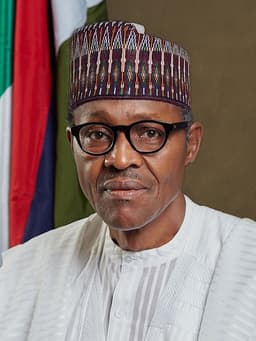
Muhammadu Buhari
General · Modern
51.5Total
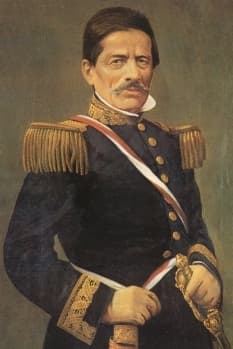
Ramon Castilla
General · Modern
59.7Total
Basic Information
Born
1942
1797
Died
—
1867
Era
Modern
Modern
Nationality
Nigeria
Peru
Occupation
General
General
Civilization
Other
Western
Score Comparison
Military (10%)
22.6
40.0
Political (20%)
68.0
72.0
Influence (20%)
53.3
56.7
Legacy (20%)
43.3
52.0
Leadership (15%)
72.0
78.0
Strategy (15%)
41.0
60.0
TOTAL
51.5
59.7
Muhammadu Buhari — Complete Timeline
1983 AD
1983 Nigerian coup d'étatPolitical Action
Major General Muhammadu Buhari led a military coup that overthrew the civilian government of President Shehu Shagari. Buhari cited corruption and economic mismanagement as justifications, and he became the head of state.
CoupMilitary RuleCorruption
Impact: nationaldestructive
1984 AD
War Against Indiscipline (WAI)Reform◆ Major
Buhari launched the War Against Indiscipline, a campaign to enforce discipline and order in Nigerian society. It included harsh penalties for minor offenses, such as queue-jumping, and was criticized for human rights abuses.
DisciplineSocial PolicyHuman Rights
Impact: nationaldestructive
1985 AD
Overthrow by Ibrahim BabangidaPolitical Action◆ Major
Buhari was overthrown in a palace coup led by his Chief of Army Staff, Ibrahim Babangida. Babangida cited Buhari's authoritarian style and failure to address the economy as reasons for the coup.
CoupOverthrowBabangida
Impact: national
2015 AD
Anti-corruption campaignReform◆ Major
Buhari launched a high-profile anti-corruption campaign, targeting government officials and recovering stolen assets. The campaign was praised internationally but criticized for being selective and politically motivated.
Anti-CorruptionReformGovernance
Impact: nationalconstructive
Election as President of NigeriaPolitical Action
Buhari won the 2015 Nigerian presidential election, defeating incumbent Goodluck Jonathan. This was the first time an opposition candidate had defeated a sitting president in Nigeria's history, marking a democratic milestone.
ElectionDemocracyOpposition Victory
Impact: nationalprogressive
Ramon Castilla — Complete Timeline
1824 AD
Battle of AyacuchoWar
Castilla fought as a junior officer in the decisive Battle of Ayacucho, which ended Spanish rule in Peru. This victory secured Peruvian independence and marked the end of the Spanish Empire in South America, shaping Castilla's nationalist views.
Peruvian War of IndependenceBattleLiberation
Impact: regional
1845 AD
First Presidency of PeruPolitical Action◆ Major
Castilla was elected President of Peru in 1845, serving until 1851. His first term focused on economic development, including the guano boom, and infrastructure projects such as railroads and ports, modernizing the Peruvian state.
PresidencyEconomic DevelopmentGuano
Impact: nationalconstructive
1854 AD
Abolition of Slavery in PeruReform◆ Major
During his second presidency, Castilla issued a decree abolishing slavery in Peru on December 3, 1854. This reform freed approximately 25,000 slaves and was part of a broader liberal agenda, though it faced opposition from slave-owning elites.
AbolitionSlaveryHuman Rights
Impact: nationalprogressive
Abolition of Indigenous TributeReform◆ Major
Castilla also abolished the indigenous tribute tax in 1854, which had been a burden on native communities since colonial times. This measure aimed to integrate indigenous peoples into the Peruvian state as equal citizens, though its implementation was uneven.
Indigenous RightsTax ReformCitizenship
Impact: nationalprogressive
1855 AD
Second Presidency and Guano BoomPolitical Action◆ Major
Castilla served a second term from 1855 to 1862, during the peak of the guano export boom. He used guano revenues to fund public works, pay off foreign debt, and modernize the military, but also faced criticism for corruption and over-reliance on a single resource.
PresidencyGuanoModernization
Impact: nationalconstructive
1860 AD
Constitutional Reform of 1860Reform◆ Major
Castilla oversaw the adoption of a new constitution in 1860, which established a centralized republic with a strong executive. The constitution remained in effect until 1920 and shaped Peru's political structure, though it limited regional autonomy.
ConstitutionPolitical ReformCentralization
Impact: nationalconstructive
Expert Analysis
Muhammadu Buhari vs Ramon Castilla
# The General and the Republic
In 1854, as Ramon Castilla signed the decree abolishing slavery in Peru, he set in motion a transformation that would define his nation for generations. A century and a half later, in 2015, Muhammadu Buhari stood before the Nigerian flag as the first opposition candidate to win a presidential election in his country’s history. Both men were generals who became presidents. Both promised order, reform, and national renewal. Yet their stories diverged in ways that reveal the profound differences between the eras and societies they sought to lead. Why did one succeed in forging lasting change, while the other struggled to escape the shadow of his own contradictions?
Origins
Ramon Castilla was born in 1797 in Tarapacá, a remote desert province of the Viceroyalty of Peru. His father was a Spanish colonial official of modest means, his mother a descendant of indigenous nobility. This mixed heritage placed Castilla at the margins of a rigid caste society, but it also gave him an intimate understanding of the injustices that would later define his reforms. He came of age during the Wars of Independence, when the old order crumbled and new possibilities emerged.
Muhammadu Buhari was born in 1942 in Daura, a town in northern Nigeria, into a Fulani Muslim family. His father was a farmer and village chief. Buhari grew up under British colonial rule, attending a primary school named after the colonial governor. When Nigeria gained independence in 1960, Buhari was eighteen—old enough to witness the promise of freedom, young enough to be shaped by the disillusionment that followed. The contrast between Castilla’s world of revolutionary upheaval and Buhari’s world of postcolonial disappointment would echo through their lives.
Rise to Power
Castilla entered history at the Battle of Ayacucho in 1824, where he fought as a junior officer in the decisive engagement that ended Spanish rule in South America. That victory was not merely a military triumph; it was the founding moment of a new nation. For Castilla, it was a credential that would open doors for decades. He rose through the ranks of the Peruvian army, served as minister of war, and navigated the chaotic politics of the early republic with patience and pragmatism.
Buhari’s rise followed a different path. He joined the Nigerian army in 1962, trained in Britain, and served in the civil war that tore Nigeria apart in the late 1960s. But his decisive moment came not on a battlefield but in a coup. On December 31, 1983, Major General Buhari led a military takeover that overthrew the civilian government of Shehu Shagari, citing corruption and mismanagement. Where Castilla had fought for independence, Buhari seized power in the name of discipline. The difference was more than symbolic: Castilla’s legitimacy derived from a national struggle; Buhari’s rested on the barrel of a gun.
Leadership and Governance
Castilla’s two presidencies—first from 1845 to 1851, then from 1855 to 1862—coincided with the guano boom, a windfall of wealth from bird droppings that fertilized European fields. He used this revenue with remarkable foresight. He paid off Peru’s foreign debt, built railroads, modernized the port of Callao, and expanded education. More importantly, he addressed the moral debts of the past. On December 3, 1854, Castilla abolished slavery, freeing an estimated 25,000 enslaved people. That same year, he abolished the indigenous tribute tax, a colonial levy that had burdened native communities for three centuries. In 1860, he oversaw the adoption of a new constitution that centralized the republic while protecting civil rights.
Buhari’s governance was marked by a different calculus. His first regime, from 1983 to 1985, was defined by the War Against Indiscipline (WAI)—a campaign that punished lateness, enforced queuing, and jailed journalists. It was order without justice, discipline without development. The economy, meanwhile, continued to deteriorate. Buhari was overthrown in 1985 by his own chief of army staff, Ibrahim Babangida, who cited his authoritarianism. When Buhari returned to power in 2015, this time as an elected president, he launched an anti-corruption campaign that recovered stolen assets and imprisoned officials. Yet the results were uneven. Corruption persisted, the economy stagnated, and security deteriorated as Boko Haram’s insurgency raged in the northeast.
Triumph and Tragedy
Castilla’s greatest triumph was the abolition of slavery—a moral achievement that also strengthened the nation. By freeing enslaved people, he undercut the power of the landed elite and created a larger pool of citizens who owed their freedom to the state. His tragedy was that the guano boom was unsustainable. When the deposits ran out, Peru descended into debt and war. But Castilla could not have known that his prosperity was built on a finite resource.
Buhari’s triumph was electoral: his 2015 victory was a historic milestone for Nigerian democracy. For the first time, an opposition candidate defeated an incumbent president at the ballot box. His tragedy was that he could not translate that victory into lasting change. His anti-corruption campaign, while genuine, became politicized. His economic policies faltered. And his military, despite billions in spending, struggled to contain insurgents. By the end of his second term in 2023, many Nigerians felt that the country was no better off than when he began.
Character and Destiny
Castilla was a pragmatist with principles. He understood that reform required both vision and compromise. He worked with the conservative elite to pass his constitution, and he used guano revenues to buy political support. But he never wavered on the core issues: slavery and indigenous tribute had to end. His character was suited to his era—a time when nation-building demanded bold strokes and patient diplomacy.
Buhari was a disciplinarian with a mission. He believed that Nigeria’s problems stemmed from a lack of order, and he governed accordingly. But this rigidity, which served him in the military, became a liability in democratic politics. He was slow to delegate, reluctant to innovate, and suspicious of dissent. His character, forged in the barracks, could not adapt to the messy compromises of democracy. Where Castilla learned to navigate politics, Buhari sought to command it.
Legacy
Castilla is remembered as Peru’s great reformer—the president who freed the slaves, abolished the tribute, and built the institutions of the modern state. His name adorns streets, schools, and a province. His 1860 constitution, though later replaced, set the framework for Peruvian governance for decades. His legacy is tangible and celebrated.
Buhari’s legacy is more contested. To his supporters, he is a man of integrity who fought corruption and defended Nigeria’s sovereignty. To his critics, he is a symbol of missed opportunities—a leader who promised change but delivered stagnation. His War Against Indiscipline is remembered as a relic of authoritarianism, not a model for reform. And his democratic victory, while historic, has not yet produced the transformation he envisioned.
Conclusion
The difference between Castilla and Buhari is not simply a matter of talent or will. It is a difference of timing, resources, and context. Castilla governed during a golden age of guano, when a small elite could reshape a nation with export revenues. Buhari governed during a time of global economic pressure, population growth, and entrenched corruption. Castilla’s reforms were possible because the old order was already crumbling; Buhari’s were difficult because the new order was already failing.
Yet there is a deeper lesson. Castilla succeeded because he understood that power must be used not just to command, but to liberate. He abolished slavery because he saw that freedom was the foundation of citizenship. Buhari, for all his discipline, never offered a comparable vision. He fought corruption, but he did not build institutions. He restored order, but he did not create opportunity. In the end, the general who freed his people outlasts the general who only ruled them.
Rankings
🥇
Ramon CastillaLeader
Mil: 40.0Pol: 72.0Inf: 56.7
59.7
🥈
Muhammadu Buhari
Mil: 22.6Pol: 68.0Inf: 53.3
51.5
+8.2 behind
How This Comparison Works
Algorithm
Each figure is scored on 6 dimensions (0—100 scale) based on structured historical data: Military (10%), Political (20%), Influence (20%), Legacy (20%), Leadership (15%), Strategy (15%). The weighted total produces the final ranking.
Data Sources
Scores are computed from structured sub-indicators in the database. Scale factors adjust for era (Ancient ×0.85, Modern ×1.0) and civilization size (Eastern ×1.05, Other ×0.80) to account for differences in population and military scale.
Maximum 3 Figures
Comparisons are limited to 2—3 figures to ensure readability and statistical meaningfulness.
Error Margins
±5 points per dimension — Sub-scores are derived from historical records with inherent uncertainty. Two figures within 5 points on a dimension should be considered roughly equivalent in that area.
Total Score Accuracy
±3 points overall — The weighted combination of 6 dimensions produces a total score with approximately ±3 points of uncertainty. Differences of less than 3 points are not statistically significant— the figures are effectively tied.
Known Limitations
- Historical records are incomplete and uneven across civilizations
- Figures from oral-tradition societies may be underrepresented
- Occupation labels can misclassify multi-role figures
- Scores measure capability and impact, not moral character
- Quantitative scoring is a comparison tool, not absolute truth
Capability Radar
Military (10%) — Battles & Warfare
Battles
10
45
Win Rate
10
50
Expansion
5
30
Political (20%) — Governance & Reform
Reform
30
85
Diplomacy
25
70
Economy
20
75
Influence (20%) — Cultural & Global Reach
Cultural
25
55
Global
25
50
Legacy (20%) — Historical Impact
Historical
30
65
Longevity
20
60
Leadership (15%) — Power & Stability
Tenure
45
65
Stability
15
60
Strategy (15%) — Tactics & Innovation
Strategy
15
45
Tactics
15
40
Reform
20
55
Similar Comparisons
Comments & Discussion
数据拆弹侠6/16/2026
把1854年废除奴隶制和2015年赢得大选放在一起比,本质上是在偷换统计口径。Castilla签完法令就实现了制度飞跃,Buhari上任后尼日利亚GDP增长率从2015年的2.8%掉到2016年的-1.6%,贫困率反而从62%飙升到71%。你要比“转型”,先看GDP曲线是往上还是炸了。一个靠修订宪法规范了国家模型参数,另一个连CPI都压不住,你跟我说他们都是“改革将军”?账不是这么算的。
古典学判官6/16/2026
从政体转型的底层逻辑看,Castilla做对了一件事:他用废除奴隶制来换取新共和国的合法性溢出。1850年代拉丁美洲正陷入caudillismo(考迪罗主义)的泥潭,他偏偏用一纸法令把国家从血统和种姓中剥离出来。Buhari面对的是更深层的问题——一个由石油租金和族群分肥定义的现代国家结构。你没法用一个将军的纪律去解决经济学上的“资源诅咒”。Castilla打赢了旧制度的残局,Buhari却输给了新制度的开局。
Historian3816/16/2026
Castilla abolished slavery in 1854 with the stroke of a pen while Peru was still digging out from colonial rubble. Buhari couldn't even get his own cabinet ministers to declare assets in 2015—that's not leadership, that's a man fighting a war with no bullets. One general read the room and changed the laws; the other one is still reading the room like it’s a bedtime story that never ends. Different centuries, same problem: a general's promise is only as good as his follow-through.
Historian8536/16/2026
Let's be honest: Castilla abolished slavery in a country with 2 million people and a single commodity boom. Buhari inherited a fractured federation of 180 million, multiple insurgencies, and an economy that had just lost its oil lifeline. Comparing them is like comparing a well-driller to a brain surgeon—both use steady hands, but the stakes and the tools are in completely different leagues. Castilla's Peru was a small, salvageable wreck. Buhari's Nigeria was a supertanker already listing to por
Chronicler31266/16/2026
Two generals, two battlefields—but only one saw the map clearly. Castilla understood that freeing slaves wasn't just moral, it was strategic: he needed labor for the guano boom and a loyal base against the old aristocracy. Buhari, by contrast, fought corruption like it was a guerrilla insurgency—raids and arrests, but no institutional fortification. One built a system; the other just kept chasing shadows. A good general knows when to stop fighting the enemy and start building the peace.