Loading...
Ramon Castilla vs Sengge Rinchen
Ramon Castilla leads by 2.8 pts · 2 figures compared
…
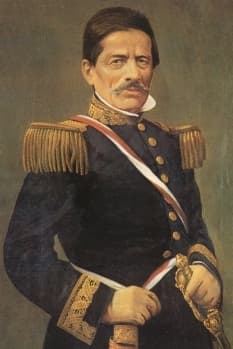
Ramon Castilla
General · Modern
59.7Total
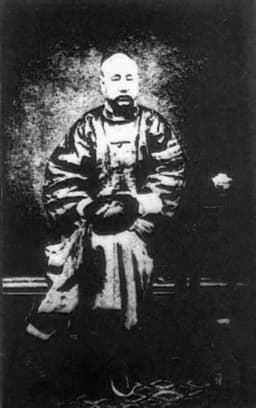
Sengge Rinchen
General · Modern
56.9Total
Basic Information
Born
1797
1811
Died
1867
1865
Era
Modern
Modern
Nationality
Peru
China
Occupation
General
General
Civilization
Western
Eastern
Score Comparison
Military (10%)
40.0
70.0
Political (20%)
72.0
43.7
Influence (20%)
56.7
55.0
Legacy (20%)
52.0
54.0
Leadership (15%)
78.0
67.0
Strategy (15%)
60.0
60.7
TOTAL
59.7
56.9
Ramon Castilla — Complete Timeline
1824 AD
Battle of AyacuchoWar
Castilla fought as a junior officer in the decisive Battle of Ayacucho, which ended Spanish rule in Peru. This victory secured Peruvian independence and marked the end of the Spanish Empire in South America, shaping Castilla's nationalist views.
Peruvian War of IndependenceBattleLiberation
Impact: regional
1845 AD
First Presidency of PeruPolitical Action◆ Major
Castilla was elected President of Peru in 1845, serving until 1851. His first term focused on economic development, including the guano boom, and infrastructure projects such as railroads and ports, modernizing the Peruvian state.
PresidencyEconomic DevelopmentGuano
Impact: nationalconstructive
1854 AD
Abolition of Slavery in PeruReform◆ Major
During his second presidency, Castilla issued a decree abolishing slavery in Peru on December 3, 1854. This reform freed approximately 25,000 slaves and was part of a broader liberal agenda, though it faced opposition from slave-owning elites.
AbolitionSlaveryHuman Rights
Impact: nationalprogressive
Abolition of Indigenous TributeReform◆ Major
Castilla also abolished the indigenous tribute tax in 1854, which had been a burden on native communities since colonial times. This measure aimed to integrate indigenous peoples into the Peruvian state as equal citizens, though its implementation was uneven.
Indigenous RightsTax ReformCitizenship
Impact: nationalprogressive
1855 AD
Second Presidency and Guano BoomPolitical Action◆ Major
Castilla served a second term from 1855 to 1862, during the peak of the guano export boom. He used guano revenues to fund public works, pay off foreign debt, and modernize the military, but also faced criticism for corruption and over-reliance on a single resource.
PresidencyGuanoModernization
Impact: nationalconstructive
1860 AD
Constitutional Reform of 1860Reform◆ Major
Castilla oversaw the adoption of a new constitution in 1860, which established a centralized republic with a strong executive. The constitution remained in effect until 1920 and shaped Peru's political structure, though it limited regional autonomy.
ConstitutionPolitical ReformCentralization
Impact: nationalconstructive
Sengge Rinchen — Complete Timeline
1859 AD
Battle of Dagu FortsWar◆ Major
Sengge Rinchen commanded Qing forces defending the Dagu Forts against a British and French naval attack. His forces repelled the assault, sinking several enemy ships and inflicting heavy casualties, a rare Qing victory in the Second Opium War.
Second Opium WarBattleVictory
Impact: regional
1860 AD
Battle of PalikaoWar◆ Major
Sengge Rinchen commanded Qing cavalry at the Battle of Palikao against Anglo-French forces. His forces were decisively defeated by superior firepower, leading to the fall of Beijing and the burning of the Old Summer Palace.
Second Opium WarBattleDefeat
Impact: regionaltragic
1863 AD
Suppression of the Nian RebellionWar◆ Major
Sengge Rinchen led Qing forces against the Nian rebels in northern China. He achieved several victories but was ultimately killed in battle against the Nian in 1865, marking a turning point in the rebellion.
Nian RebellionCampaignDeath
Impact: regionaltragic
Expert Analysis
Ramon Castilla vs Sengge Rinchen
The General and the Reformer
On a December morning in 1854, in the Andean city of Huancayo, a Peruvian general in his late fifties signed a decree that would forever change his nation. At that same moment, halfway across the world, a Mongol prince in his forties was preparing his cavalry for a very different kind of battle—one that would pit horse archers against steamships and rifled muskets. Ramon Castilla and Sengge Rinchen never met, never corresponded, and belonged to civilizations that regarded each other as distant curiosities. Yet both men rose to prominence in the same mid-nineteenth-century moment, when old empires were cracking and new powers were demanding entry. Why did one leave a nation transformed, while the other left only a memory of gallant defeat?
Origins
Ramon Castilla was born in 1797 in Tarapacá, then part of the Viceroyalty of Peru, to a Spanish father and an indigenous mother. This mixed heritage gave him a foot in two worlds—the colonial elite and the subjugated majority—and would later inform his most radical policies. He grew up in a time when Spanish authority was already fraying, and the wars of independence that erupted across South America in the 1810s offered young men of ambition a path to glory. Castilla chose the royalist side initially, serving in the Spanish army, but switched to the patriot cause after 1821, a pragmatic decision that many Peruvian officers made as the tide turned.
Sengge Rinchen was born in 1811 into the Mongol aristocracy of the Khorchin Banner, a hereditary military caste that had served the Qing dynasty for centuries. His world was one of horsemen and archers, of nomadic traditions overlaid with Confucian bureaucracy. The Qing Empire in 1811 was still the Middle Kingdom, confident in its ancient superiority, but the first tremors of the Opium War were only three decades away. Sengge Rinchen’s upbringing drilled into him the values of loyalty, martial prowess, and the defense of the imperial order—values that would prove tragically mismatched with the industrial warfare bearing down on China.
Rise to Power
Castilla’s rise followed the chaotic logic of post-independence Peru. He fought at the Battle of Ayacucho in December 1824 as a junior officer, witnessing the final defeat of Spanish forces that secured Peruvian independence. But independence brought not peace but a scramble for power among caudillos—regional strongmen who ruled through personal loyalty and military force. Castilla played this game with shrewdness, allying with stronger figures, waiting for openings, and building a reputation as an effective administrator. In 1845, he was elected president, a position he would hold twice, totaling nearly a decade in office.
Sengge Rinchen’s path was more direct. He inherited command of Mongol cavalry units as a matter of birthright, and his early career consisted of suppressing local rebellions in Inner Mongolia. The Qing court noticed his effectiveness and promoted him to higher commands. By the late 1850s, as the Taiping Rebellion threatened to topple the dynasty and foreign powers pressed for concessions, Sengge Rinchen was one of the few Qing generals who had actually defeated Western forces—a rare commodity. His victory at the Dagu Forts in 1859, when he repelled a British and French naval attack, made him a national hero and the emperor’s most trusted commander.
Leadership & Governance
Here the two men diverged most sharply. Castilla governed, not merely commanded. His first presidency focused on economic development, paying off Peru’s foreign debt and stabilizing the currency. But his second term, from 1855 to 1862, coincided with the guano boom—Peru’s sudden wealth from seabird droppings, which became a prized fertilizer for European agriculture. Castilla channeled this windfall into state-building: he expanded education, built railroads, modernized the military, and, most importantly, abolished slavery in 1854 and the indigenous tribute tax the same year. These were not empty gestures; they dismantled the colonial caste system and created a legal framework for citizenship. His 1860 constitution centralized power in a strong executive, but it also guaranteed civil rights and ended the legal distinctions between indigenous, mixed-race, and white Peruvians.
Sengge Rinchen never had the chance to govern. He was a military commander, pure and simple, and his role was to fight—first the British and French, then the Nian rebels. His tactical skills were real: at Dagu, he used a combination of fixed fortifications, shallow-water obstacles, and massed cavalry charges to break the allied assault. But he had no economic program, no reform agenda, no vision beyond defending the Qing order. When he faced the Anglo-French army again at Palikao in 1860, the result was a catastrophe. His Mongol cavalry, armed with lances and bows, charged into volleys of Minié rifles and artillery canister. They were annihilated. The British and French marched on Beijing and burned the Summer Palace.
Triumph & Tragedy
Castilla’s greatest triumph was the abolition of slavery. The decree of December 3, 1854, freed approximately 25,000 enslaved people in Peru, and he followed it with compensation for former slaveholders—a pragmatic compromise that minimized resistance. His tragedy was the guano boom itself: the easy wealth created a dependency that later generations would mismanage, leading to economic collapse and war. But Castilla died in 1867, before the worst of it, remembered as the “Liberator of the Slaves.”
Sengge Rinchen’s triumph was Dagu, a rare moment when Qing forces defeated a Western power. His tragedy was that this victory only delayed the inevitable, and that his final campaign—against the Nian rebels—ended in his death in 1865, ambushed and killed by a rebellion he had been unable to crush. Unlike Castilla, he left no institutions, no reforms, only a legend of doomed courage.
Character & Destiny
Castilla was a pragmatist. He switched sides during the independence wars, allied with caudillos he later outmaneuvered, and used guano revenues to buy political support. But his pragmatism had a moral core: he genuinely believed in equality before the law, and he acted on that belief when the opportunity arose. Sengge Rinchen was a loyalist, bound by honor to a dynasty that was already dying. His courage was absolute, but it was a courage that could not adapt—charging rifles with lances, trusting in the old ways against the new machines.
Legacy
Castilla is remembered in Peru as one of its greatest presidents. His abolition decree is celebrated annually, and his name adorns streets, schools, and a province. The 1860 constitution remained in effect for sixty years. He gave Peru a modern legal foundation and a vision of citizenship that transcended race.
Sengge Rinchen is a more ambiguous figure. In China, he is honored as a patriotic hero who fought foreign aggression, but his defeat is also a symbol of Qing backwardness. His story is taught as a warning: loyalty without modernization is suicide. He has no monuments like Castilla’s, only a place in the long narrative of China’s humiliation and eventual resurgence.
Conclusion
The difference between these two men was not talent or courage—both had these in abundance. It was context and choice. Castilla inherited a broken Spanish colony and chose to build a nation; Sengge Rinchen inherited a crumbling empire and chose to defend it. One rode the wave of change, the other was crushed by it. Their stories remind us that history rewards not just the brave, but the adaptable—and that the same mid-century moment that gave Peru a reformer gave China a martyr.
Rankings
🥇
Ramon CastillaLeader
Mil: 40.0Pol: 72.0Inf: 56.7
59.7
🥈
Sengge Rinchen
Mil: 70.0Pol: 43.7Inf: 55.0
56.9
+2.8 behind
How This Comparison Works
Algorithm
Each figure is scored on 6 dimensions (0—100 scale) based on structured historical data: Military (10%), Political (20%), Influence (20%), Legacy (20%), Leadership (15%), Strategy (15%). The weighted total produces the final ranking.
Data Sources
Scores are computed from structured sub-indicators in the database. Scale factors adjust for era (Ancient ×0.85, Modern ×1.0) and civilization size (Eastern ×1.05, Other ×0.80) to account for differences in population and military scale.
Maximum 3 Figures
Comparisons are limited to 2—3 figures to ensure readability and statistical meaningfulness.
Error Margins
±5 points per dimension — Sub-scores are derived from historical records with inherent uncertainty. Two figures within 5 points on a dimension should be considered roughly equivalent in that area.
Total Score Accuracy
±3 points overall — The weighted combination of 6 dimensions produces a total score with approximately ±3 points of uncertainty. Differences of less than 3 points are not statistically significant— the figures are effectively tied.
Known Limitations
- Historical records are incomplete and uneven across civilizations
- Figures from oral-tradition societies may be underrepresented
- Occupation labels can misclassify multi-role figures
- Scores measure capability and impact, not moral character
- Quantitative scoring is a comparison tool, not absolute truth
Capability Radar
Military (10%) — Battles & Warfare
Battles
45
75
Win Rate
50
60
Expansion
30
20
Political (20%) — Governance & Reform
Reform
85
20
Diplomacy
70
50
Economy
75
20
Influence (20%) — Cultural & Global Reach
Cultural
55
40
Global
50
35
Legacy (20%) — Historical Impact
Historical
65
55
Longevity
60
30
Leadership (15%) — Power & Stability
Tenure
65
40
Stability
60
30
Strategy (15%) — Tactics & Innovation
Strategy
45
70
Tactics
40
80
Reform
55
30
Similar Comparisons
Comments & Discussion
塔拉帕卡之鹰6/16/2026
评论:卡斯蒂利亚废除奴隶制时,秘鲁正靠鸟粪暴富,他精明地利用这笔财富治国,而非像僧格林沁那样硬扛英法舰队。1858年他甚至买下铁甲舰“洛亚号”,巩固海军。一个知道何时打仗,一个知道如何免战。改革家的胜利比骑士的悲歌更有味。
马背上的挽歌6/16/2026
评论:僧格林沁的悲剧在于,他带8000蒙古铁骑对阵英法联军时,对方已有蒸汽炮艇和线膛枪,1860年八里桥一战,马队冲锋成了神话。而卡斯蒂利亚在1856年就搞铁路和电报项目,拥抱工业革命。一个死守传统,一个适应时代。历史不留眼泪,只记胜败。
Historian8146/16/2026
Both men stood at crossroads of empires: Castilla at Peru’s independence from Spain, Sengge at Mongolia’s twilight under Qing. But Castilla, influenced by French positivism (think Auguste Comte), pushed secular education and state modernization, whereas Sengge remained a feudal Mongol prince clinging to horse and bow. One read the room; the other read ancient texts. The outcome was inevitable: reform secures legacy; romantic heroism secures a footnote.
DeepScribe236/16/2026
Let’s cut the hype: ending slavery in 1854 is great and all, but Castilla’s Peru still had 50% indigenous population living under feudal-like conditions post-reform. Meanwhile, Sengge Rinchen’s Mongolian cavalry did inflict 1,500+ British casualties at the 1859 Battle of Taku Forts before losing. Numbers don’t lie: one made a symbolic change, the other actually bled his enemy. I’ll take grit over gesture any day.
Chronicler43746/16/2026
Ramon Castilla wasn't just a reformer—he was a strategic genius who used timing to his advantage. While Sengge Rinchen bravely but futilely charged against modernization, Castilla leveraged the Guano Era's wealth to abolish slavery and indigenous tribute in 1854, securing his legacy as a nation-builder. One died a hero of a lost cause; the other, a visionary who reshaped Peru's future. History favors the tactician over the gallant fool.