Loading...
Plutarco Elias Calles vs To Lam
Plutarco Elias Calles leads by 7.9 pts · 2 figures compared
…
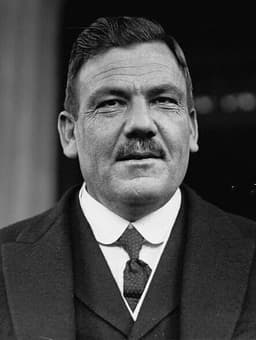
Plutarco Elias Calles
General · Modern
58.5Total
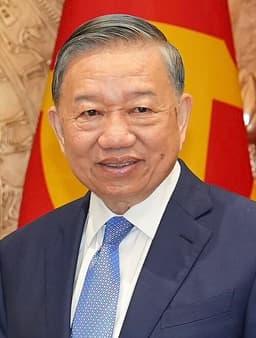
To Lam
General · Modern
50.6Total
Basic Information
Born
1877
1957
Died
1945
—
Era
Modern
Modern
Nationality
Mexico
Vietnam
Occupation
General
General
Civilization
Western
Eastern
Score Comparison
Military (10%)
40.0
25.9
Political (20%)
70.3
68.0
Influence (20%)
68.0
51.8
Legacy (20%)
40.0
41.7
Leadership (15%)
78.0
72.0
Strategy (15%)
52.5
36.8
TOTAL
58.5
50.6
Plutarco Elias Calles — Complete Timeline
1915 AD
Governorship of SonoraPolitical Action
Calles served as Governor of Sonora from 1915 to 1919, implementing radical reforms including land redistribution, anti-clerical laws, and labor rights. His governorship established him as a key figure in the Sonoran dynasty and a proponent of revolutionary change.
GovernorshipSonoraReforms
Impact: regionalconstructive
1924 AD
Presidency of MexicoPolitical Action◆ Major
Calles was elected President of Mexico in 1924, serving until 1928. His administration continued revolutionary reforms, including land reform, labor rights, and secularization, but also faced opposition from the Catholic Church and conservative groups.
PresidencyMexican RevolutionReforms
Impact: nationalconstructive
1926 AD
Cristero WarWar◆ Major
Calles enforced anti-clerical laws, including the Calles Law, which restricted the Catholic Church's role in society. This sparked the Cristero War (1926-1929), a violent rebellion by Catholic peasants against the state, resulting in tens of thousands of deaths.
Cristero WarAnti-clericalismReligious Conflict
Impact: nationaldestructive
1928 AD
MaximatoPolitical Action◆ Major
After his presidency, Calles remained the de facto ruler of Mexico during the Maximato (1928-1934), controlling puppet presidents. He continued to influence policy, but his power waned as President L
MaximatoPolitical ControlCárdenas
Impact: national
1929 AD
Founding of the National Revolutionary Party (PNR)Political Action
Calles founded the National Revolutionary Party (PNR) in 1929, which later became the Institutional Revolutionary Party (PRI). This party dominated Mexican politics for over 70 years, institutionalizing the revolution's legacy and centralizing power.
Political PartyPRIInstitutionalization
Impact: nationalconstructive
To Lam — Complete Timeline
2016 AD
Appointed Minister of Public SecurityPolitical Action◆ Major
To Lam was appointed Minister of Public Security of Vietnam, overseeing the country's police and internal security forces. He played a key role in maintaining public order and combating crime.
Ministerial AppointmentSecurity Leadership
Impact: national
2024 AD
Elected President of VietnamPolitical Action◆ Major
To Lam was elected President of Vietnam by the National Assembly, succeeding Vo Van Thuong. He transitioned from security chief to head of state, continuing his influence in national politics.
PresidencyGovernment Leadership
Impact: national
Expert Analysis
Plutarco Elias Calles vs To Lam
# The Shadow and the Strongman
On a dusty morning in Sonora, 1915, Plutarco Elías Calles signed a decree that would define his life and his nation’s future: the redistribution of land from wealthy hacendados to peasants. Half a world away and a century later, in Hanoi, 2024, General To Lam stood before Vietnam’s National Assembly, accepting the presidency with the quiet, practiced authority of a man who had spent decades in the shadows of internal security. One man built a party that ruled Mexico for seventy years; the other inherited a single-party state and sought to tighten its grip. Both were generals, both were political architects, but the paths they walked—and the worlds they shaped—could not have been more different.
Origins
Calles was born into the chaos of Porfirio Díaz’s Mexico, a nation of vast inequality and simmering rebellion. His father was a teacher, his mother a homemaker; the family knew poverty. Calles himself worked as a bartender, a teacher, and a farmer before the Mexican Revolution of 1910 swept him into its violent currents. He was a self-made man, forged in the crucible of civil war, where loyalty and ruthlessness were the only currencies that mattered. The revolution taught him that power was not given—it was taken, and held by force.
To Lam, by contrast, was born in 1957 into a Vietnam already at war. His father, a party loyalist, instilled in him the discipline of communist orthodoxy. Lam grew up in the shadow of the Ho Chi Minh Trail, not the battlefield. He studied law and rose through the ranks of the Ministry of Public Security, a vast apparatus that combined police, intelligence, and political surveillance. His Vietnam was not a revolution in progress but a revolution already won—and defended by a single, unyielding party. Lam’s education was not in trenches but in files, in the quiet art of watching and controlling.
Rise to Power
Calles entered the national stage through military service. He fought under Álvaro Obregón, another Sonoran general, and proved himself a capable administrator. In 1915, he became Governor of Sonora, where he began his radical reforms: land redistribution, anti-clerical laws, and the suppression of political rivals. His governorship was a laboratory for the policies he would later impose on all of Mexico. By 1924, he had built enough support to win the presidency, a victory that marked the triumph of the revolutionary generals over the old elite.
To Lam’s rise was slower, more methodical. He was appointed Minister of Public Security in 2016, a position that placed him at the heart of Vietnam’s security state. For eight years, he consolidated power, purging rivals, building networks of loyalty, and positioning himself as the indispensable guardian of party stability. When President Vo Van Thuong resigned under pressure in 2024, Lam was the natural successor—a man the party trusted to keep order. His presidency was not a conquest but a coronation, the culmination of decades behind the scenes.
Leadership & Governance
Calles governed with the zeal of a revolutionary and the pragmatism of a despot. His presidency (1924–1928) was a whirlwind of reform: he nationalized oil resources, expanded education, and, most controversially, enforced the Calles Law of 1926, which restricted the Catholic Church’s role in society. This sparked the Cristero War (1926–1929), a bloody uprising of Catholic peasants that killed tens of thousands. Calles crushed the rebellion with merciless force, but the war scarred Mexico deeply. After his term ended, he ruled through puppet presidents during the Maximato (1928–1934), proving that his authority transcended any office. In 1929, he founded the National Revolutionary Party (PNR), a political machine that would, as the Institutional Revolutionary Party (PRI), dominate Mexico until 2000.
To Lam’s leadership is quieter but no less absolute. As president, he has not launched wars or enacted sweeping reforms; he has tightened the party’s control over the economy, the media, and dissent. Vietnam’s single-party system, born in the crucible of war, does not require the dramatic gestures of Calles. Instead, Lam works through the security apparatus he once commanded, ensuring that any threat to the party—whether from activists, journalists, or rival factions—is neutralized before it can grow. His governance is a system of managed stability, not revolutionary transformation.
Triumph & Tragedy
Calles’s greatest triumph was the creation of the PNR, a party that gave Mexico decades of political stability after a century of chaos. But his tragedy was the Cristero War—a conflict he could have avoided with compromise, but chose to escalate out of ideological rigidity. The war killed over 90,000 people and left a legacy of religious bitterness that still lingers. Calles’s triumph and tragedy were the same: his refusal to bend.
To Lam’s triumph is his seamless rise to the presidency, a masterclass in bureaucratic survival. His tragedy is that his legacy remains unwritten. He governs a nation that has known peace for decades but faces new threats: economic stagnation, environmental crisis, and a restless population that remembers neither war nor revolution. His greatest challenge is not an enemy but an era—the slow erosion of the party’s legitimacy.
Character & Destiny
Calles was a man of iron will and ideological fire. He believed in the revolution’s promise of justice, but he also believed in his own right to define that justice. His character was forged in violence and hardened by power; he could be generous to allies and merciless to enemies. His destiny was to build a system that outlasted him, but at the cost of the very ideals he claimed to serve.
To Lam is a shadow figure by comparison. He is not a revolutionary but a manager, not a visionary but a guardian. His character is defined by patience, caution, and an instinct for survival. His destiny is to preside over a system that already exists, to preserve rather than create. In a different age, he might have been a bureaucrat; in this age, he is a president.
Legacy
Calles is remembered as the founder of modern Mexico’s political system—a system that brought stability but also corruption and authoritarianism. His name is synonymous with the PRI’s long reign, and his anti-clericalism remains a point of contention. Historians give him a total score of 74.5, a reflection of his immense influence and his deep flaws.
To Lam’s legacy is still forming. His total score of 67.1 suggests a figure of significant but not transformative impact. He will be remembered as a transitional president, a man who held the line but did not advance it. In Vietnam’s long story, he may be a footnote or a pivot—only time will tell.
Conclusion
The difference between Calles and Lam is the difference between a builder and a keeper. Calles built a party, a state, and a system from the ashes of a revolution; Lam inherited a system and seeks only to preserve it. One shaped his nation through war and reform; the other shapes it through surveillance and silence. Both are generals, both are politicians, but the age they lived in—and the character they brought to it—determined everything. In the end, history remembers not just what leaders do, but what they dare to attempt.
Rankings
🥇
Plutarco Elias CallesLeader
Mil: 40.0Pol: 70.3Inf: 68.0
58.5
🥈
To Lam
Mil: 25.9Pol: 68.0Inf: 51.8
50.6
+7.9 behind
How This Comparison Works
Algorithm
Each figure is scored on 6 dimensions (0—100 scale) based on structured historical data: Military (10%), Political (20%), Influence (20%), Legacy (20%), Leadership (15%), Strategy (15%). The weighted total produces the final ranking.
Data Sources
Scores are computed from structured sub-indicators in the database. Scale factors adjust for era (Ancient ×0.85, Modern ×1.0) and civilization size (Eastern ×1.05, Other ×0.80) to account for differences in population and military scale.
Maximum 3 Figures
Comparisons are limited to 2—3 figures to ensure readability and statistical meaningfulness.
Error Margins
±5 points per dimension — Sub-scores are derived from historical records with inherent uncertainty. Two figures within 5 points on a dimension should be considered roughly equivalent in that area.
Total Score Accuracy
±3 points overall — The weighted combination of 6 dimensions produces a total score with approximately ±3 points of uncertainty. Differences of less than 3 points are not statistically significant— the figures are effectively tied.
Known Limitations
- Historical records are incomplete and uneven across civilizations
- Figures from oral-tradition societies may be underrepresented
- Occupation labels can misclassify multi-role figures
- Scores measure capability and impact, not moral character
- Quantitative scoring is a comparison tool, not absolute truth
Capability Radar
Military (10%) — Battles & Warfare
Battles
45
10
Win Rate
50
10
Expansion
30
10
Political (20%) — Governance & Reform
Reform
85
40
Diplomacy
65
40
Economy
60
30
Influence (20%) — Cultural & Global Reach
Cultural
70
20
Global
60
20
Legacy (20%) — Historical Impact
Historical
75
20
Longevity
70
20
Leadership (15%) — Power & Stability
Tenure
70
50
Stability
55
40
Strategy (15%) — Tactics & Innovation
Strategy
55
10
Tactics
40
10
Reform
60
10
Similar Comparisons
Comments & Discussion
The Revolutionary Builder6/16/2026
Calles was the true revolutionary pragmatist. He didn't just make speeches—he built institutions. While To Lam inherited a stable one-party state, Calles created one from the chaos of civil war. He founded the PNR (precursor to the PRI) that ruled Mexico for 71 years. The Cristero War? A brutal necessity to crush church interference in governance. Mexico needed a steel fist, not velvet gloves.
持剑者6/16/2026
To Lam继承了完整的国家机器,Calles则需要从废墟中重建。但数据不会说谎:Calles时期墨西哥工业产出增长超过150%,建立了中央银行和石油公司。To Lam呢?越南反腐运动冻结了房地产和外资,GDP增速从8%降至5%。谁才是真正的'建设者'?Calles用铁腕实现了工业化,To Lam却在用清洗削弱经济根基。
Classics Lens6/16/2026
Both men understood power as Thucydides did: the strong do what they can, the weak suffer what they must. But Calles had the audacity of a Greek tyrant—he secularized the state, expelled foreign priests, and centralized control like Peisistratus in Athens. To Lam, however, is more akin to a Byzantine eunuch, consolidating authority through silent coups and loyalty purges. One built a temple to the state; the other guards a crumbling palace.
铁血统计员6/16/2026
别被'革命者'的光环迷惑。Calles任内墨西哥死亡人数超过50万(农民战争+宗教冲突),而To Lam的反腐尚未造成大规模流血。但效率呢?Calles仅用8年就让铁路里程翻倍,而To Lam执政2年,越南高铁还在纸上。手段血腥却有产出,法律温和却无进展——历史会怎么算这笔账?