Loading...
Muhammadu Buhari vs Plutarco Elias Calles
Plutarco Elias Calles leads by 7.0 pts · 2 figures compared
…
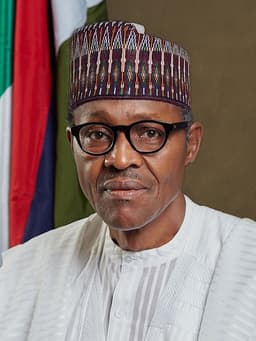
Muhammadu Buhari
General · Modern
51.5Total
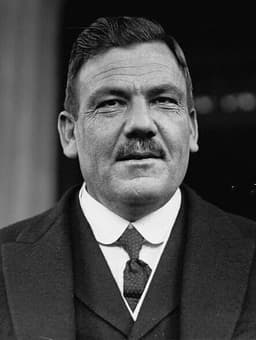
Plutarco Elias Calles
General · Modern
58.5Total
Basic Information
Born
1942
1877
Died
—
1945
Era
Modern
Modern
Nationality
Nigeria
Mexico
Occupation
General
General
Civilization
Other
Western
Score Comparison
Military (10%)
22.6
40.0
Political (20%)
68.0
70.3
Influence (20%)
53.3
68.0
Legacy (20%)
43.3
40.0
Leadership (15%)
72.0
78.0
Strategy (15%)
41.0
52.5
TOTAL
51.5
58.5
Muhammadu Buhari — Complete Timeline
1983 AD
1983 Nigerian coup d'étatPolitical Action
Major General Muhammadu Buhari led a military coup that overthrew the civilian government of President Shehu Shagari. Buhari cited corruption and economic mismanagement as justifications, and he became the head of state.
CoupMilitary RuleCorruption
Impact: nationaldestructive
1984 AD
War Against Indiscipline (WAI)Reform◆ Major
Buhari launched the War Against Indiscipline, a campaign to enforce discipline and order in Nigerian society. It included harsh penalties for minor offenses, such as queue-jumping, and was criticized for human rights abuses.
DisciplineSocial PolicyHuman Rights
Impact: nationaldestructive
1985 AD
Overthrow by Ibrahim BabangidaPolitical Action◆ Major
Buhari was overthrown in a palace coup led by his Chief of Army Staff, Ibrahim Babangida. Babangida cited Buhari's authoritarian style and failure to address the economy as reasons for the coup.
CoupOverthrowBabangida
Impact: national
2015 AD
Anti-corruption campaignReform◆ Major
Buhari launched a high-profile anti-corruption campaign, targeting government officials and recovering stolen assets. The campaign was praised internationally but criticized for being selective and politically motivated.
Anti-CorruptionReformGovernance
Impact: nationalconstructive
Election as President of NigeriaPolitical Action
Buhari won the 2015 Nigerian presidential election, defeating incumbent Goodluck Jonathan. This was the first time an opposition candidate had defeated a sitting president in Nigeria's history, marking a democratic milestone.
ElectionDemocracyOpposition Victory
Impact: nationalprogressive
Plutarco Elias Calles — Complete Timeline
1915 AD
Governorship of SonoraPolitical Action
Calles served as Governor of Sonora from 1915 to 1919, implementing radical reforms including land redistribution, anti-clerical laws, and labor rights. His governorship established him as a key figure in the Sonoran dynasty and a proponent of revolutionary change.
GovernorshipSonoraReforms
Impact: regionalconstructive
1924 AD
Presidency of MexicoPolitical Action◆ Major
Calles was elected President of Mexico in 1924, serving until 1928. His administration continued revolutionary reforms, including land reform, labor rights, and secularization, but also faced opposition from the Catholic Church and conservative groups.
PresidencyMexican RevolutionReforms
Impact: nationalconstructive
1926 AD
Cristero WarWar◆ Major
Calles enforced anti-clerical laws, including the Calles Law, which restricted the Catholic Church's role in society. This sparked the Cristero War (1926-1929), a violent rebellion by Catholic peasants against the state, resulting in tens of thousands of deaths.
Cristero WarAnti-clericalismReligious Conflict
Impact: nationaldestructive
1928 AD
MaximatoPolitical Action◆ Major
After his presidency, Calles remained the de facto ruler of Mexico during the Maximato (1928-1934), controlling puppet presidents. He continued to influence policy, but his power waned as President L
MaximatoPolitical ControlCárdenas
Impact: national
1929 AD
Founding of the National Revolutionary Party (PNR)Political Action
Calles founded the National Revolutionary Party (PNR) in 1929, which later became the Institutional Revolutionary Party (PRI). This party dominated Mexican politics for over 70 years, institutionalizing the revolution's legacy and centralizing power.
Political PartyPRIInstitutionalization
Impact: nationalconstructive
Expert Analysis
Muhammadu Buhari vs Plutarco Elias Calles
# The Iron Fist and the Second Chance
On a sweltering morning in Mexico City, 1926, President Plutarco Elías Calles signed a law that would ignite a bloody civil war. He was a man who believed the state must crush the Church to save the nation. Half a world away, in 1984, another general, Muhammadu Buhari, launched his own crusade—a “War Against Indiscipline” in Nigeria, ordering citizens to queue in straight lines or face humiliation. Both men were soldiers who became rulers. Both believed order was the only path to progress. Yet their stories diverged like rivers splitting from the same mountain: one built a political dynasty that lasted seven decades, the other saw his power crumble, only to rise again decades later—this time as a democrat. What drove these different outcomes? The answer lies not in their iron wills, but in the soil where those wills took root.
Origins
Calles was born in 1877 in the rugged state of Sonora, a land of dusty ranches and revolutionary fervor. His father was a schoolteacher who died young; his mother raised him in poverty. Mexico was a cauldron of dictatorship and rebellion—Porfirio Díaz ruled with an iron hand, and the people simmered. Calles joined the Mexican Revolution in his thirties, a latecomer but a fierce one. He learned that power came from organization, not charisma. He was a stoic, calculating man who saw the Church as a rival state, a relic of colonial oppression.
Buhari, born in 1942 in Daura, northern Nigeria, grew up in a different storm. His father was a village chief; his mother a devout Muslim. Nigeria was emerging from British colonial rule, a patchwork of ethnic and religious tensions—Hausa-Fulani in the north, Yoruba and Igbo in the south. Buhari attended military academy, absorbing a rigid code of discipline. He believed Nigeria’s rot came from corruption and indiscipline, not from any deep historical wound. Where Calles saw a revolution to be institutionalized, Buhari saw a nation to be cleansed.
Rise to Power
Calles rose through the ranks of the revolutionary army, but his true ascent began in 1915 when he became Governor of Sonora. He didn’t just govern; he transformed. He redistributed land, built schools, and clamped down on the Church. By 1924, he was elected President of Mexico, a position he used to accelerate secularization. His power was not just political—it was ideological. He believed the state must be the sole arbiter of morality.
Buhari’s rise was swifter and more violent. On December 31, 1983, he led a coup that overthrew the civilian government of Shehu Shagari. Nigeria was drowning in oil-boom corruption—bribes, smuggling, decay. Buhari promised order. He arrested politicians, jailed journalists, and banned strikes. His rule was a military dictatorship, pure and simple. Unlike Calles, who built a party to sustain his revolution, Buhari built only a prison.
Leadership & Governance
Calles governed with a vision that was both radical and pragmatic. His Calles Law of 1926 restricted the Catholic Church’s role in education, property, and public life. The result was the Cristero War (1926–1929), a brutal rebellion of Catholic peasants that killed tens of thousands. Calles crushed it mercilessly. But he also saw that military force alone could not hold Mexico together. In 1929, he founded the National Revolutionary Party (PNR)—the precursor to the Institutional Revolutionary Party (PRI). This was his masterstroke: a political machine that co-opted unions, peasants, and elites, ensuring that power would flow through the party, not through any single leader.
Buhari’s governance was simpler and harsher. His War Against Indiscipline forced Nigerians to stand in line, pay taxes, and obey traffic laws. He jailed drug traffickers and corrupt officials. But he offered no vision beyond discipline. He did not build a party or a coalition. When he was overthrown in 1985 by his own chief of army staff, Ibrahim Babangida, the coup was almost welcomed. Babangida called Buhari “too rigid” for a nation that craved not just order, but hope.
Triumph & Tragedy
Calles’s greatest triumph was the Maximato (1928–1934), the period after his presidency when he remained the de facto ruler of Mexico, controlling puppet presidents. He had institutionalized his power so thoroughly that he could rule without holding office. His tragedy came later: in 1936, his own protégé, Lázaro Cárdenas, exiled him. The machine he built had turned on him.
Buhari’s triumph came decades later. After his 1985 overthrow, he lived in obscurity. Then, in 2015, he won the Nigerian presidency in a democratic election—the first time an opposition candidate had defeated an incumbent. His anti-corruption campaign recovered stolen assets and imprisoned officials. But his tragedy was that Nigeria’s problems—poverty, corruption, insurgency—were deeper than any campaign. His health faltered, his economy stagnated, and by 2019, his second term was a shadow of his first.
Character & Destiny
Calles was a builder. He thought in decades, not years. He understood that power needed a home—a party, a bureaucracy, a system. His stoicism was his strength and his weakness: he crushed the Church, but he also crushed dissent, creating a one-party state that would eventually become authoritarian and corrupt.
Buhari was a purifier. He thought in absolutes—discipline or chaos, honesty or theft. He lacked Calles’s political imagination. He did not build institutions; he only punished enemies. When he returned as a democrat, he tried to govern as a general, but democracy requires compromise. His rigidity, which once seemed a virtue, became a liability.
Legacy
Calles is remembered as the father of modern Mexico—the man who secularized the state and created the PRI, which ruled for 71 years. But his legacy is ambiguous: the PRI brought stability, but also authoritarianism. Today, Mexicans debate whether he was a visionary or a caudillo.
Buhari’s legacy is more fractured. In northern Nigeria, he is revered as a symbol of integrity. In the south, he is seen as a northern strongman who failed to unite the country. His anti-corruption campaign was genuine, but it did not transform Nigeria. He leaves behind a nation still struggling with the same demons he fought in 1984.
Conclusion
Two generals, two nations, two different fates. Calles built a party that outlasted him; Buhari built a reputation that could not. The difference was not in their iron fists—both had those—but in their vision of what comes after the fist. Calles understood that power must be organized, not just wielded. Buhari understood that corruption must be fought, but not how to build a system that would fight it. In the end, the general who learns to be a politician outlasts the general who remains only a soldier. The lesson is as old as history itself: the hardest war is not against an enemy, but against the chaos within your own creation.
Rankings
🥇
Plutarco Elias CallesLeader
Mil: 40.0Pol: 70.3Inf: 68.0
58.5
🥈
Muhammadu Buhari
Mil: 22.6Pol: 68.0Inf: 53.3
51.5
+7.0 behind
How This Comparison Works
Algorithm
Each figure is scored on 6 dimensions (0—100 scale) based on structured historical data: Military (10%), Political (20%), Influence (20%), Legacy (20%), Leadership (15%), Strategy (15%). The weighted total produces the final ranking.
Data Sources
Scores are computed from structured sub-indicators in the database. Scale factors adjust for era (Ancient ×0.85, Modern ×1.0) and civilization size (Eastern ×1.05, Other ×0.80) to account for differences in population and military scale.
Maximum 3 Figures
Comparisons are limited to 2—3 figures to ensure readability and statistical meaningfulness.
Error Margins
±5 points per dimension — Sub-scores are derived from historical records with inherent uncertainty. Two figures within 5 points on a dimension should be considered roughly equivalent in that area.
Total Score Accuracy
±3 points overall — The weighted combination of 6 dimensions produces a total score with approximately ±3 points of uncertainty. Differences of less than 3 points are not statistically significant— the figures are effectively tied.
Known Limitations
- Historical records are incomplete and uneven across civilizations
- Figures from oral-tradition societies may be underrepresented
- Occupation labels can misclassify multi-role figures
- Scores measure capability and impact, not moral character
- Quantitative scoring is a comparison tool, not absolute truth
Capability Radar
Military (10%) — Battles & Warfare
Battles
10
45
Win Rate
10
50
Expansion
5
30
Political (20%) — Governance & Reform
Reform
30
85
Diplomacy
25
65
Economy
20
60
Influence (20%) — Cultural & Global Reach
Cultural
25
70
Global
25
60
Legacy (20%) — Historical Impact
Historical
30
75
Longevity
20
70
Leadership (15%) — Power & Stability
Tenure
45
70
Stability
15
55
Strategy (15%) — Tactics & Innovation
Strategy
15
55
Tactics
15
40
Reform
20
60
Similar Comparisons
Comments & Discussion
铁血数据党6/16/2026
别被表面叙事骗了。Buhari 1984年GDP增长率是-5.8%,通胀率逼近40%——他推行 austerity 时连基本民生数据都没稳住。Calles 执政期墨西哥年均GDP增长约3.5%,虽然 Cristero War 死了九万人,但他用国家暴力机器稳住了资本流通。数字不会说谎:Calles 的经济基础更扎实。Buhari 想学铁腕治国,可他搞的是碎片化镇压,没有宏观数据支撑的都是赌桌吹牛。
IRON GENERAL VS PRESIDENTE6/16/2026
Calles and Buhari both used military discipline to reshape their nations, but Calles played the long game better. He didn't just crush cristeros—he founded the PNR, a party that dominated Mexico for 71 years. That's institutional legacy. Buhari's "War Against Indiscipline" was PR theater; his 1985 coup and exile show he couldn't build durable power. Generals who only lead from the front rarely outlast the barracks politics. Calles won because he turned soldiers into bureaucrats. Buhari just scar
CLASSICS OF CAUDILLO6/16/2026
Calles understood that deifying revolutionary legitimacy requires more than bayonets—you need a secular catechism. He banned Church processions but replaced them with civic rituals in Sonoran schools. That's state-building as theology. Buhari, by contrast, tried to enforce queueing obedience without any cultural narrative. Nigerians didn't memorize a "Discipline Catechism"; they just bribed their way around it. One man created a liturgy of order; the other only made a circus of order.
历史投机分子说6/16/2026
你们都在夸 Calles 的老谋深算,可别忘了他是怎么被 Cárdenas 流放的!他亲手建立的政党最后反噬了他自己。Buhari 反而靠着 2015 年的民主选举逆袭回归,成为首个击败在位者的反对派候选人。这叫什么?叫时运反转!Calles 的王朝是独裁者的棺材钉,Buhari 的二次崛起才真正打了民主理论家的脸。别把政治家族吹得太神,历史最终偏爱打不死的小强——哪怕他们曾经是独裁者。
REALPOLITIK REDUX6/16/2026
Both men understood that popular sovereignty is a myth—order flows from the barrel of a disciplined state. Calles perfected the Leninist party structure before Leninism was cool; Buhari tried but lacked institutional depth. The key difference? Calles purged rivals in his own cabinet (1928 assassination of Obregón anyone?), while Buhari never truly consolidated a single-party hegemony. In Nigeria, regional warlords always had alternative power bases. In Calles' Mexico, the state was the only game