Loading...
Plutarco Elias Calles vs Sitiveni Rabuka
Plutarco Elias Calles leads by 6.8 pts · 2 figures compared
…
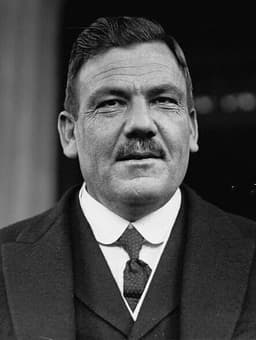
Plutarco Elias Calles
General · Modern
58.5Total
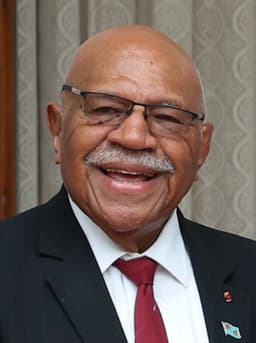
Sitiveni Rabuka
General · Modern
51.7Total
Basic Information
Born
1877
1948
Died
1945
—
Era
Modern
Modern
Nationality
Mexico
Fiji
Occupation
General
General
Civilization
Western
Other
Score Comparison
Military (10%)
40.0
10.2
Political (20%)
70.3
60.0
Influence (20%)
68.0
53.3
Legacy (20%)
40.0
46.7
Leadership (15%)
78.0
85.0
Strategy (15%)
52.5
39.6
TOTAL
58.5
51.7
Plutarco Elias Calles — Complete Timeline
1915 AD
Governorship of SonoraPolitical Action
Calles served as Governor of Sonora from 1915 to 1919, implementing radical reforms including land redistribution, anti-clerical laws, and labor rights. His governorship established him as a key figure in the Sonoran dynasty and a proponent of revolutionary change.
GovernorshipSonoraReforms
Impact: regionalconstructive
1924 AD
Presidency of MexicoPolitical Action◆ Major
Calles was elected President of Mexico in 1924, serving until 1928. His administration continued revolutionary reforms, including land reform, labor rights, and secularization, but also faced opposition from the Catholic Church and conservative groups.
PresidencyMexican RevolutionReforms
Impact: nationalconstructive
1926 AD
Cristero WarWar◆ Major
Calles enforced anti-clerical laws, including the Calles Law, which restricted the Catholic Church's role in society. This sparked the Cristero War (1926-1929), a violent rebellion by Catholic peasants against the state, resulting in tens of thousands of deaths.
Cristero WarAnti-clericalismReligious Conflict
Impact: nationaldestructive
1928 AD
MaximatoPolitical Action◆ Major
After his presidency, Calles remained the de facto ruler of Mexico during the Maximato (1928-1934), controlling puppet presidents. He continued to influence policy, but his power waned as President L
MaximatoPolitical ControlCárdenas
Impact: national
1929 AD
Founding of the National Revolutionary Party (PNR)Political Action
Calles founded the National Revolutionary Party (PNR) in 1929, which later became the Institutional Revolutionary Party (PRI). This party dominated Mexican politics for over 70 years, institutionalizing the revolution's legacy and centralizing power.
Political PartyPRIInstitutionalization
Impact: nationalconstructive
Sitiveni Rabuka — Complete Timeline
1987 AD
1987 Fijian Coup d'étatPolitical Action
Rabuka, as a colonel in the Fijian military, led a coup overthrowing the elected government of Timoci Bavadra. The coup was motivated by ethnic Fijian opposition to Indo-Fijian political influence. Rabuka declared Fiji a republic.
CoupMilitary InterventionEthnic Tension
Impact: nationaldestructive
1992 AD
1992 Election as Prime MinisterPolitical Action◆ Major
Rabuka transitioned from military leader to civilian politician, winning the 1992 general election as leader of the Fijian Political Party. He became Prime Minister, serving until 1999.
ElectionCivilian GovernmentPolitical Transition
Impact: national
1997 AD
1997 Constitution ReformReform◆ Major
Rabuka's government oversaw the adoption of a new constitution that removed ethnic-based voting and provided for a multi-ethnic government. The constitution aimed to reduce ethnic tensions and promote national unity.
ConstitutionReformEthnic Reconciliation
Impact: nationalconstructive
1999 AD
1999 General Election DefeatPolitical Action◆ Major
Rabuka's government was defeated in the general election by the Labour Party led by Mahendra Chaudhry. Rabuka stepped down as Prime Minister, marking the end of his first period in power.
Election DefeatGovernment ChangeChaudhry
Impact: national
2022 AD
2022 Return as Prime MinisterPolitical Action◆ Major
Rabuka led the People's Alliance to victory in the 2022 general election, forming a coalition government. He became Prime Minister again, 23 years after his previous tenure, promising democratic reforms.
ElectionReturn to PowerCoalition Government
Impact: national
Expert Analysis
Sitiveni Rabuka vs Plutarco Elias Calles
### The General Who Built a Dynasty, and the General Who Dismantled One
In the high, thin air of Mexico City, a man in a dark suit stood in the shadow of the National Palace, his hand resting on a lever that would pull the country into a decade of blood and silence. In the humid, palm-fringed capital of Suva, another man, still in his military fatigues, walked into a Parliament chamber and asked the Speaker to step outside. Both were generals. Both seized power. But one spent his life constructing a single, unbreakable political machine, while the other spent his life trying to tear one apart. Plutarco Elías Calles and Sitiveni Rabuka are separated by seventy years and an ocean, yet their stories form a strange mirror: one of a man who became his nation’s invisible emperor, and another who became his nation’s reluctant democrat.
**Origins**
Plutarco Elías Calles was born in 1877 in the northern Mexican state of Sonora, a dusty frontier of cattle ranches and revolutionary fervor. His father was a schoolteacher who died young; his mother raised him in poverty. The Mexican Revolution was not yet a memory but a gathering storm, and Calles absorbed its radical, anti-clerical energy like a dry riverbed waiting for rain. He was a man of the hard, dry earth—pragmatic, ruthless, and convinced that the old order of Church and landlord had to be ground to dust.
Sitiveni Rabuka, born in 1948 on the island of Vanua Levu, grew up in a very different world: a British colony where indigenous Fijians held the land but not the power, and where ethnic Indians, descendants of indentured laborers, dominated the economy. Rabuka was a chief’s son, educated in the Methodist mission schools, a man of deep Christian faith and deep loyalty to Fijian tradition. Where Calles emerged from chaos, Rabuka emerged from order—an order that felt increasingly like a cage for his people.
**Rise to Power**
Calles’s path was forged in the crucible of revolution. He served as a military commander under Álvaro Obregón, and in 1915, at the age of 38, he became Governor of Sonora. There, he did not merely govern; he remade. He redistributed land, crushed the Catholic Church’s influence, and built a network of loyalists that would become the skeleton of a new state. His rise was not a coup but a climb—rung by rung, through war, reform, and patronage.
Rabuka’s rise was a single, violent leap. In 1987, as a 39-year-old colonel, he led a coup against the newly elected government of Timoci Bavadra, a coalition that included ethnic Indians. Rabuka claimed he was defending indigenous Fijian rights, but the world saw a soldier overthrowing a democracy. He did not build a machine; he broke one. And then, unexpectedly, he put down his rifle and entered the very Parliament he had stormed.
**Leadership & Governance**
Calles governed as a builder of institutions. His 1924–1928 presidency was a whirlwind of secularization: he closed church-run schools, expelled foreign priests, and passed the infamous Calles Law, which effectively criminalized public worship. The result was the Cristero War (1926–1929), a bloody rebellion that killed tens of thousands. Yet Calles was not merely a destroyer. In 1929, he founded the National Revolutionary Party (PNR), a political umbrella that would evolve into the Institutional Revolutionary Party (PRI). For the next seventy years, the PRI would win every presidential election—often by fraud, always by design. Calles’s true genius was not in winning a war but in creating a system that made opposition irrelevant.
Rabuka governed as a reformer of institutions. After winning the 1992 election as a civilian, he could have entrenched Fijian supremacy. Instead, he pushed through the 1997 Constitution, which abolished ethnic voting rolls and created a multiracial parliament. It was an act of political courage, but it cost him the election in 1999. He stepped down peacefully—a rare thing for a coup leader. His second term, beginning in 2022, has been less about building a machine than managing a fragile coalition of parties and ethnic groups, trying to keep the peace in a nation still haunted by the ghosts of 1987.
**Triumph & Tragedy**
Calles’s greatest triumph was the Maximato (1928–1934), the period when, though no longer president, he controlled three puppet presidents from behind the throne. He was the *Jefe Máximo*, the supreme chief, and Mexico was his estate. His tragedy was that his own creation outgrew him: when President Lázaro Cárdenas broke with Calles in 1935, the old general was exiled to the United States, a ghost in a machine he could no longer control.
Rabuka’s greatest triumph was the 1997 Constitution, a document that, for a time, promised a united Fiji. His tragedy was that the coup he led in 1987 opened a wound that would never fully heal. In 2000, another coup—this time led by a civilian, George Speight—used Rabuka’s precedent to justify its own violence. Rabuka himself condemned it, but the echo of his own boots on the Parliament floor could not be silenced.
**Character & Destiny**
Calles was a man of iron will and cold calculation. He once said, “The Revolution is not a banquet; it is a struggle.” He saw politics as war by other means, and he fought it with the same ruthlessness. His destiny was to create a system so stable it became stagnant, so powerful it became corrupt.
Rabuka, by contrast, is a man of contradiction—a soldier who became a democrat, a nationalist who wrote a multiracial constitution. He has admitted that he “made a mistake” with the 1987 coup, a rare act of public contrition from a former dictator. His destiny has been to learn from his own sins, and to spend his later years trying to undo what his younger self had done.
**Legacy**
Calles is remembered as the father of the PRI, the architect of modern Mexico’s political system. But that system is now dead, voted out in 2000 after seven decades. His legacy is a paradox: he built a state that brought stability, but at the cost of democracy. Today, Mexicans remember him with a wary respect—the general who gave them order, and took their freedom.
Rabuka is remembered as the man who broke Fiji’s democracy and then helped rebuild it. His legacy is still unfolding. In 2022, at age 74, he returned to the prime minister’s office, a grandfather of the nation, carrying the weight of his own history. Fijians call him “Rambo” for his youthful bravado, but the nickname now feels like an artifact of a distant war.
**Conclusion**
Two generals, two nations, two very different answers to the same question: what does a soldier do after he has seized power? Calles chose to build a dynasty of shadows, ruling through others long after his own term ended. Rabuka chose to step into the light, to submit himself to the ballot box, and to accept defeat when it came. One saw power as a permanent possession; the other saw it as a temporary trust. In the end, Calles’s machine outlasted him, while Rabuka’s conscience outlasted his coup. And perhaps that is the deepest difference of all: one man built a system that could survive without him, while the other built a legacy that could only survive by him changing.
Rankings
🥇
Plutarco Elias CallesLeader
Mil: 40.0Pol: 70.3Inf: 68.0
58.5
🥈
Sitiveni Rabuka
Mil: 10.2Pol: 60.0Inf: 53.3
51.7
+6.8 behind
How This Comparison Works
Algorithm
Each figure is scored on 6 dimensions (0—100 scale) based on structured historical data: Military (10%), Political (20%), Influence (20%), Legacy (20%), Leadership (15%), Strategy (15%). The weighted total produces the final ranking.
Data Sources
Scores are computed from structured sub-indicators in the database. Scale factors adjust for era (Ancient ×0.85, Modern ×1.0) and civilization size (Eastern ×1.05, Other ×0.80) to account for differences in population and military scale.
Maximum 3 Figures
Comparisons are limited to 2—3 figures to ensure readability and statistical meaningfulness.
Error Margins
±5 points per dimension — Sub-scores are derived from historical records with inherent uncertainty. Two figures within 5 points on a dimension should be considered roughly equivalent in that area.
Total Score Accuracy
±3 points overall — The weighted combination of 6 dimensions produces a total score with approximately ±3 points of uncertainty. Differences of less than 3 points are not statistically significant— the figures are effectively tied.
Known Limitations
- Historical records are incomplete and uneven across civilizations
- Figures from oral-tradition societies may be underrepresented
- Occupation labels can misclassify multi-role figures
- Scores measure capability and impact, not moral character
- Quantitative scoring is a comparison tool, not absolute truth
Capability Radar
Military (10%) — Battles & Warfare
Battles
45
5
Win Rate
50
5
Expansion
30
5
Political (20%) — Governance & Reform
Reform
85
50
Diplomacy
65
45
Economy
60
40
Influence (20%) — Cultural & Global Reach
Cultural
70
30
Global
60
20
Legacy (20%) — Historical Impact
Historical
75
40
Longevity
70
30
Leadership (15%) — Power & Stability
Tenure
70
55
Stability
55
35
Strategy (15%) — Tactics & Innovation
Strategy
55
10
Tactics
40
10
Reform
60
5
Similar Comparisons
Comments & Discussion
First Strike Sam6/16/2026
Calles was a master builder, Rabuka a wrecking ball who later tried to glue things back together. Calles constructed the PRI’s iron grip, ruling Mexico from the shadows for a decade after his presidency ended—he gave the world the *maximato*. Rabuka? He didn’t build a machine; he smashed Fiji’s established power with two coups, then awkwardly handed it back. Calles knew how to consolidate; Rabuka stumbled into democracy by accident.
知兵非好战6/16/2026
从军事成就看,卡列斯才是真正的硬汉。他打赢了墨西哥的“克里斯泰罗战争”,用铁腕手段粉碎了教会武装的起义,把国家从神权拉扯进现代。拉布卡呢?两个政变没流多少血,对手太弱罢了。卡列斯在尸山血海里杀出来的统治权,跟拉布卡在议会让议长“出去谈谈”的儿戏,能比?历史看的是强度,不是长度。
Caliper Lord6/16/2026
Data-wise, you can’t compare an economy builder to a breaker. Calles took a Mexico wrecked by civil war and turned it into a functioning central bank state—Banco de México was his baby, still standing 100 years later. Rabuka didn’t build institutions; he wrecked Fiji’s GDP by scaring off tourists and investors post-1987. The numbers are clear: Calles stabilized, Rabuka destabilized. One grew the pie, the other burned the kitchen.
古卷守望者6/16/2026
两人都是“秩序至上”的信徒,但剧本完全相反。卡列斯继承革命遗产后,创立了墨西哥历史上最持久的政党机器,压制了教会和军阀,求的是铁打的江山。而拉布卡政变是在替原住民出头,推翻的是被印度裔精英控制的政府。卡列斯是强者治乱世,拉布卡是弱者翻棋局。前者让人怕,后者让人疑。
Pacific Echo6/16/2026
Here’s the twist: Rabuka’s legacy is more honest. Calles ruled through a shadow presidency, the *Jefe Máximo* of a one-party state that later stole elections and massacred students. Rabuka’s coup was dirty, sure—indigenous rights vs. Indo-Fijian power—but he walked away, let democracy crawl back, and eventually became PM through an election. Calles never apologized. Rabuka did, in his way. Give me the man who owns his mess over the one who hides behind party insignia.