Loading...
Plutarco Elias Calles vs Suharto
Plutarco Elias Calles leads by 1.3 pts · 2 figures compared
…
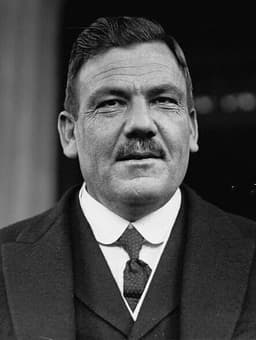
Plutarco Elias Calles
General · Modern
58.5Total
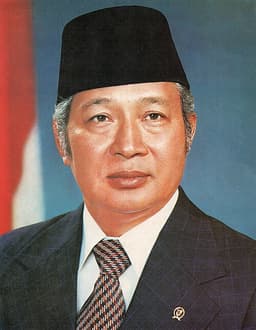
Suharto
General · Modern
57.2Total
Basic Information
Born
1877
1921
Died
1945
—
Era
Modern
Modern
Nationality
Mexico
Indonesia
Occupation
General
General
Civilization
Western
Eastern
Score Comparison
Military (10%)
40.0
20.0
Political (20%)
70.3
59.3
Influence (20%)
68.0
60.0
Legacy (20%)
40.0
52.0
Leadership (15%)
78.0
82.0
Strategy (15%)
52.5
60.0
TOTAL
58.5
57.2
Plutarco Elias Calles — Complete Timeline
1915 AD
Governorship of SonoraPolitical Action
Calles served as Governor of Sonora from 1915 to 1919, implementing radical reforms including land redistribution, anti-clerical laws, and labor rights. His governorship established him as a key figure in the Sonoran dynasty and a proponent of revolutionary change.
GovernorshipSonoraReforms
Impact: regionalconstructive
1924 AD
Presidency of MexicoPolitical Action◆ Major
Calles was elected President of Mexico in 1924, serving until 1928. His administration continued revolutionary reforms, including land reform, labor rights, and secularization, but also faced opposition from the Catholic Church and conservative groups.
PresidencyMexican RevolutionReforms
Impact: nationalconstructive
1926 AD
Cristero WarWar◆ Major
Calles enforced anti-clerical laws, including the Calles Law, which restricted the Catholic Church's role in society. This sparked the Cristero War (1926-1929), a violent rebellion by Catholic peasants against the state, resulting in tens of thousands of deaths.
Cristero WarAnti-clericalismReligious Conflict
Impact: nationaldestructive
1928 AD
MaximatoPolitical Action◆ Major
After his presidency, Calles remained the de facto ruler of Mexico during the Maximato (1928-1934), controlling puppet presidents. He continued to influence policy, but his power waned as President L
MaximatoPolitical ControlCárdenas
Impact: national
1929 AD
Founding of the National Revolutionary Party (PNR)Political Action
Calles founded the National Revolutionary Party (PNR) in 1929, which later became the Institutional Revolutionary Party (PRI). This party dominated Mexican politics for over 70 years, institutionalizing the revolution's legacy and centralizing power.
Political PartyPRIInstitutionalization
Impact: nationalconstructive
Suharto — Complete Timeline
1966 AD
Supersemar and Transfer of PowerPolitical Action
President Sukarno signed the Supersemar order, delegating authority to General Suharto to restore order after the 30 September Movement. Suharto used this to ban the Communist Party, purge leftists, and gradually assume executive power, effectively beginning his New Order regime.
SupersemarNew OrderIndonesia
Impact: nationaldestructive
1967 AD
New Order Economic DevelopmentReform◆ Major
Suharto implemented the New Order's economic policies, focusing on foreign investment, agricultural self-sufficiency, and industrialization. The government achieved high growth rates, reduced poverty, and stabilized the economy, but also fostered crony capitalism and corruption.
Economic GrowthDevelopmentIndonesia
Impact: nationalconstructive
1975 AD
Invasion of East TimorWar◆ Major
Suharto ordered the invasion of East Timor after Portugal withdrew. Indonesian forces occupied the territory, leading to a 24-year occupation marked by widespread human rights abuses, including massacres and forced displacement, resulting in an estimated 100,000-200,000 deaths.
East TimorOccupationHuman Rights
Impact: regionaldestructive
1998 AD
Asian Financial Crisis and Fall from PowerPolitical Action
The Asian Financial Crisis devastated Indonesia's economy, leading to massive unemployment and food shortages. Widespread protests and riots forced Suharto to resign in May 1998 after 31 years in power, ending his authoritarian rule and ushering in the Reformasi era.
Financial CrisisResignationReformasi
Impact: nationaltragic
Expert Analysis
Plutarco Elias Calles vs Suharto
# The Iron Fist and the Institutional Grip
On a sweltering morning in Jakarta, March 1966, General Suharto stood before a nation in chaos. Across the Pacific, four decades earlier, another general, Plutarco Elías Calles, had watched Mexico City burn with revolutionary fervor. Both men inherited turmoil. Both built systems that would define their nations for generations. But while one created a personal dictatorship that collapsed overnight, the other forged a political machine that outlived him by half a century. What separates a strongman from a system-builder? The answer lies not in their power, but in what they chose to build with it.
Origins
Suharto was born in 1921 into the quiet obscurity of Java’s peasantry—a world of rice paddies, shadow puppets, and Dutch colonial indifference. His father was a minor irrigation official; his mother, a woman of Javanese mysticism. The young Suharto learned early that survival meant bending to authority, not challenging it. He joined the Dutch colonial army, then the Japanese-sponsored forces during World War II, and finally the Indonesian nationalist struggle. He was a creature of circumstance, not ideology—pragmatic, patient, and utterly devoid of grand visions.
Calles, born in 1877 in Sonora, Mexico, came from a different crucible. His father was a schoolteacher who died young; his mother raised him in poverty. But Sonora was a frontier of rebellion, where men like Álvaro Obregón and Pancho Villa were rewriting history with rifles. Calles became a teacher himself, then a revolutionary. He had seen the old order of Porfirio Díaz crumble, and he understood that power was not just about holding a gun—it was about building institutions that could survive the next revolution. Where Suharto saw power as personal, Calles saw it as organizational.
Rise to Power
Suharto’s ascent was a slow, silent creep. The 1965 coup attempt—the September 30 Movement—gave him his moment. As commander of the Army Strategic Reserve, he crushed the rebellion, then turned on President Sukarno, accusing him of communist sympathies. In March 1966, Sukarno signed the Supersemar order, delegating authority to Suharto to “restore order.” It was a legal fiction, but Suharto never needed popularity—only obedience. By 1967, he was president, and the New Order had begun.
Calles rose through the crucible of war. He served as Governor of Sonora from 1915, implementing radical land reforms and anti-clerical laws that made him a hero to the revolutionary left. In 1924, he was elected president of Mexico—not through a coup, but through the machinery of the revolution itself. His presidency was a whirlwind of reform: land redistribution, labor rights, and a ferocious assault on the Catholic Church. But Calles understood that personal power was fragile. So when his term ended in 1928, he did not cling to the presidency. Instead, he founded the National Revolutionary Party (PNR) in 1929, a political machine designed to control Mexico from behind the throne.
Leadership & Governance
Suharto’s New Order was a paradox of stability and stagnation. He opened Indonesia to foreign investment, achieving agricultural self-sufficiency and rapid economic growth—the “Asian Tiger” of the 1970s. But this prosperity came at a price: a suffocating authoritarianism, systematic corruption, and the brutal 1975 invasion of East Timor, where Indonesian forces occupied the territory in a conflict that would claim hundreds of thousands of lives. Suharto’s leadership score of 80.7 reflects his ability to command loyalty, but his military score of 45.5 and strategy of 58.2 reveal a man who relied on force, not finesse. He governed through a network of family, cronies, and generals—a personal fiefdom, not a state.
Calles governed through ideology and institution. His Calles Law of 1926, which restricted the Catholic Church’s role, sparked the Cristero War—a bloody rebellion that killed tens of thousands. But Calles was not a brute; he was a builder. He founded the PNR to channel revolutionary factions into a single party, creating a system where presidents were chosen by the party, not by coups. During the Maximato (1928–1934), he ruled as the *jefe máximo*—the maximum chief—controlling puppet presidents while the party consolidated power. His political score of 79.8 and strategy of 72.0 reflect a man who understood that power is not about holding office, but about controlling the game.
Triumph & Tragedy
Suharto’s greatest triumph was economic: Indonesia’s GDP grew by an average of 7% annually for decades. His tragedy was that this growth was built on sand. When the Asian Financial Crisis hit in 1997, the rupiah collapsed, unemployment soared, and the streets filled with protesters. In May 1998, after 31 years, Suharto resigned in disgrace—a strongman who had built nothing that could outlast him.
Calles’s triumph was institutional: the PNR evolved into the Institutional Revolutionary Party (PRI), which would rule Mexico for 71 years. His tragedy was that his anti-clericalism provoked a civil war he could not fully control. Yet even in exile after 1935, when President Lázaro Cárdenas pushed him out, Calles’s creation endured. The PRI outlived its founder, adapting to every crisis until its fall in 2000.
Character & Destiny
Suharto was a Javanese *priyayi*—a man of hierarchy and deference. He believed in order, not ideas. His decisions were shaped by a desire for control, not legacy. He never wrote memoirs, never explained himself. When the crisis came, he had no party, no ideology, no successor—only family and fortune. His total score of 67.7 reflects a leader who was effective but ultimately hollow.
Calles was a revolutionary who became a pragmatist. He believed in the state as an instrument of transformation. His character was ruthless but strategic: he could order massacres in the Cristero War, then sit down with his enemies to draft a party charter. He understood that history is not made by men, but by systems. His total score of 74.5 reflects a leader who was both effective and enduring.
Legacy
Today, Suharto is remembered as a dictator who brought prosperity and then destroyed it. His name is synonymous with corruption and nepotism. Indonesia’s democracy, born in 1998, still struggles to escape his shadow. His legacy score of 67.1 is a monument to a man who ruled but never led.
Calles is remembered as the architect of modern Mexico. The PRI is gone, but the institutions he built—the centralized state, the corporatist system, the secular constitution—remain. He is a controversial figure, hated by the devout, revered by the secular. But his legacy score of 72.0 reflects the truth: he created something that lasted.
Conclusion
Suharto and Calles both seized history by the throat. But one built a palace of cards, the other a house of stone. The difference was not in their ambition, but in their imagination. Suharto saw power as an end; Calles saw it as a tool. In the end, the strongman falls, but the system endures. And that is the lesson for every leader who dreams of leaving a mark: build not for yourself, but for the future you will never see.
Rankings
🥇
Plutarco Elias CallesLeader
Mil: 40.0Pol: 70.3Inf: 68.0
58.5
🥈
Suharto
Mil: 20.0Pol: 59.3Inf: 60.0
57.2
+1.3 behind
How This Comparison Works
Algorithm
Each figure is scored on 6 dimensions (0—100 scale) based on structured historical data: Military (10%), Political (20%), Influence (20%), Legacy (20%), Leadership (15%), Strategy (15%). The weighted total produces the final ranking.
Data Sources
Scores are computed from structured sub-indicators in the database. Scale factors adjust for era (Ancient ×0.85, Modern ×1.0) and civilization size (Eastern ×1.05, Other ×0.80) to account for differences in population and military scale.
Maximum 3 Figures
Comparisons are limited to 2—3 figures to ensure readability and statistical meaningfulness.
Error Margins
±5 points per dimension — Sub-scores are derived from historical records with inherent uncertainty. Two figures within 5 points on a dimension should be considered roughly equivalent in that area.
Total Score Accuracy
±3 points overall — The weighted combination of 6 dimensions produces a total score with approximately ±3 points of uncertainty. Differences of less than 3 points are not statistically significant— the figures are effectively tied.
Known Limitations
- Historical records are incomplete and uneven across civilizations
- Figures from oral-tradition societies may be underrepresented
- Occupation labels can misclassify multi-role figures
- Scores measure capability and impact, not moral character
- Quantitative scoring is a comparison tool, not absolute truth
Capability Radar
Military (10%) — Battles & Warfare
Battles
45
40
Win Rate
50
45
Expansion
30
30
Political (20%) — Governance & Reform
Reform
85
55
Diplomacy
65
60
Economy
60
65
Influence (20%) — Cultural & Global Reach
Cultural
70
40
Global
60
50
Legacy (20%) — Historical Impact
Historical
75
55
Longevity
70
45
Leadership (15%) — Power & Stability
Tenure
70
85
Stability
55
50
Strategy (15%) — Tactics & Innovation
Strategy
55
40
Tactics
40
35
Reform
60
50
Similar Comparisons
Comments & Discussion
THE SYSTEM SMITH6/16/2026
Calles was the ultimate institutional architect, while Suharto was just a glorified warlord with good tailoring. Calles didn't just grab power—he created the Institutional Revolutionary Party (PRI) that ran Mexico for 71 years without him. That's legacy engineering. Suharto's Golkar party collapsed the moment his New Order crumbled in 1998. Calles understood you build a system, not a throne. Suharto built a throne and called it a system. There's your difference.
反古侠客6/16/2026
拿卡列斯跟苏哈托比?笑话!卡列斯好歹在墨西哥革命里站过队、流过血,苏哈托就是个日本扶持的伪军头子爬上去的。1938年卡列斯把石油收归国有时,苏哈托还在给荷兰人擦靴子呢!你要谈铁腕统治,卡列斯搞“最高元首时期”至少没搞家族垄断,苏哈托他六个娃全成亿万富翁——这叫制度?这叫腐败世袭!
DATA DISSECTOR6/16/2026
This comparison is intellectually dishonest. You're comparing a 1920s institutional product with a 1960s Cold War warlord. Different contexts, different tools. But look at the numbers: Under Calles, Mexico's GDP growth averaged 1.8% annually (1924-1934). Under Suharto, Indonesia hit 7% annual growth for two decades. Calles built a party that lasted; Suharto built an economy that lifted 40 million people out of poverty. Which "system" served its people better? Don't confuse longevity with success
考据派讲古6/16/2026
你们忽略了一个关键细节:卡列斯执政时搞了“国家革命党”,把地方军阀全收编进一个组织里——这是人类史上第一个成功的"一党制现代化模板",比列宁那套灵活十倍。苏哈托呢?1965年清共后搞的"新秩序"就是军管会的包装版。卡列斯的制度创新让墨西哥稳了半世纪,苏哈托的下台只用了三个月。这差距不在铁腕,在脑子。