Loading...
Plutarco Elias Calles vs Sengge Rinchen
Plutarco Elias Calles leads by 1.6 pts · 2 figures compared
…
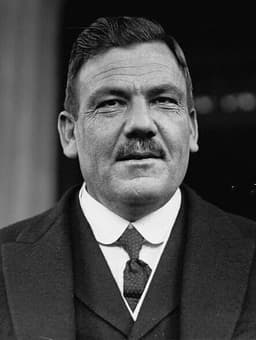
Plutarco Elias Calles
General · Modern
58.5Total
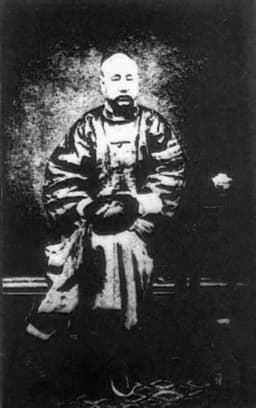
Sengge Rinchen
General · Modern
56.9Total
Basic Information
Born
1877
1811
Died
1945
1865
Era
Modern
Modern
Nationality
Mexico
China
Occupation
General
General
Civilization
Western
Eastern
Score Comparison
Military (10%)
40.0
70.0
Political (20%)
70.3
43.7
Influence (20%)
68.0
55.0
Legacy (20%)
40.0
54.0
Leadership (15%)
78.0
67.0
Strategy (15%)
52.5
60.7
TOTAL
58.5
56.9
Plutarco Elias Calles — Complete Timeline
1915 AD
Governorship of SonoraPolitical Action
Calles served as Governor of Sonora from 1915 to 1919, implementing radical reforms including land redistribution, anti-clerical laws, and labor rights. His governorship established him as a key figure in the Sonoran dynasty and a proponent of revolutionary change.
GovernorshipSonoraReforms
Impact: regionalconstructive
1924 AD
Presidency of MexicoPolitical Action◆ Major
Calles was elected President of Mexico in 1924, serving until 1928. His administration continued revolutionary reforms, including land reform, labor rights, and secularization, but also faced opposition from the Catholic Church and conservative groups.
PresidencyMexican RevolutionReforms
Impact: nationalconstructive
1926 AD
Cristero WarWar◆ Major
Calles enforced anti-clerical laws, including the Calles Law, which restricted the Catholic Church's role in society. This sparked the Cristero War (1926-1929), a violent rebellion by Catholic peasants against the state, resulting in tens of thousands of deaths.
Cristero WarAnti-clericalismReligious Conflict
Impact: nationaldestructive
1928 AD
MaximatoPolitical Action◆ Major
After his presidency, Calles remained the de facto ruler of Mexico during the Maximato (1928-1934), controlling puppet presidents. He continued to influence policy, but his power waned as President L
MaximatoPolitical ControlCárdenas
Impact: national
1929 AD
Founding of the National Revolutionary Party (PNR)Political Action
Calles founded the National Revolutionary Party (PNR) in 1929, which later became the Institutional Revolutionary Party (PRI). This party dominated Mexican politics for over 70 years, institutionalizing the revolution's legacy and centralizing power.
Political PartyPRIInstitutionalization
Impact: nationalconstructive
Sengge Rinchen — Complete Timeline
1859 AD
Battle of Dagu FortsWar◆ Major
Sengge Rinchen commanded Qing forces defending the Dagu Forts against a British and French naval attack. His forces repelled the assault, sinking several enemy ships and inflicting heavy casualties, a rare Qing victory in the Second Opium War.
Second Opium WarBattleVictory
Impact: regional
1860 AD
Battle of PalikaoWar◆ Major
Sengge Rinchen commanded Qing cavalry at the Battle of Palikao against Anglo-French forces. His forces were decisively defeated by superior firepower, leading to the fall of Beijing and the burning of the Old Summer Palace.
Second Opium WarBattleDefeat
Impact: regionaltragic
1863 AD
Suppression of the Nian RebellionWar◆ Major
Sengge Rinchen led Qing forces against the Nian rebels in northern China. He achieved several victories but was ultimately killed in battle against the Nian in 1865, marking a turning point in the rebellion.
Nian RebellionCampaignDeath
Impact: regionaltragic
Expert Analysis
Plutarco Elias Calles vs Sengge Rinchen
# The Iron Fist and the Mongol Bow
On a dusty afternoon in 1926, Plutarco Elías Calles stood before the Mexican Congress and signed into law a decree that would ignite a civil war. The Calles Law, as it came to be known, stripped the Catholic Church of property rights, banned religious orders, and forbade public worship outside church buildings. Half a world away and sixty-seven years earlier, a Mongol prince named Sengge Rinchen watched from the ramparts of the Dagu Forts as British and French warships steamed toward the mouth of the Hai River. Both men believed they were defending their nations against existential threats. One would create a political dynasty that lasted seven decades. The other would die in the mud of a forgotten battlefield, his bones left to rot. What separates a founder from a footnote?
Origins
Calles was born in 1877 in the northern state of Sonora, a son of the Mexican frontier. His father died when he was young, and he grew up in poverty, working as a teacher, a bartender, and a miller before joining the Mexican Revolution. The revolution was not a single event but a convulsion that lasted from 1910 to 1920, tearing down the old Porfirian order and replacing it with nothing certain. Calles learned early that power was something you took, not something you waited for.
Sengge Rinchen was a Mongol prince of the Borjigin clan, descended from the lineage of Genghis Khan. Born in 1811, he came of age in a China that had already begun its long decline under the Qing Dynasty. The Opium Wars had humiliated the empire, and the Taiping Rebellion—the bloodiest civil war in human history—was consuming the south. He was a cavalry commander trained in the old ways, a man who believed that honor and the bow could still defeat the cannon.
The difference in their origins was not merely cultural but structural. Calles emerged from a revolution that promised to remake society. Sengge Rinchen fought to preserve a dynasty that was already crumbling.
Rise to Power
Calles rose through the ranks of revolutionary politics with the precision of a machine. He served as Governor of Sonora from 1915 to 1919, where he implemented radical land redistribution and anti-clerical policies that made him a hero to the revolutionary left and a villain to the conservative right. In 1924, he was elected President of Mexico. He did not stumble into power; he built a ladder, rung by rung, from the chaos of revolution.
Sengge Rinchen rose through military merit. His victory at the Battle of Dagu Forts in 1859, where his forces repelled a British and French naval attack, made him a national hero. For a brief moment, it seemed the old empire could still fight. But the victory was a mirage. In 1860, at the Battle of Palikao, his Mongol cavalry charged into modern rifle fire and was annihilated. The British and French marched into Beijing and burned the Summer Palace. Sengge Rinchen survived, but his reputation never fully recovered.
Calles’s rise was political, sustained by institutions. Sengge Rinchen’s was military, dependent on victories that could not last.
Leadership & Governance
As president, Calles governed with a vision that was both ruthless and coherent. He secularized the state, broke the power of the Church, and built the foundations of modern Mexico. When his term ended in 1928, he did not simply leave office. He created the Maximato—a shadow presidency in which he controlled puppet presidents from behind the scenes. In 1929, he founded the National Revolutionary Party (PNR), the institutional ancestor of the Institutional Revolutionary Party (PRI) that would rule Mexico for seventy-one years. Calles understood that power was not about personality but about organization. He built a machine.
Sengge Rinchen governed as a military commander, not a builder. He suppressed the Nian Rebellion in northern China from 1863 onward, achieving several victories but never crushing the insurgency. His strategy was the strategy of the steppe: mobile, aggressive, but ultimately unsustainable against an enemy that could melt into the countryside. He had no political party, no bureaucracy, no vision beyond loyalty to the Qing throne. He was a hammer, but the empire needed a surgeon.
The difference in their governance reflects the difference between a revolutionary who builds a new state and a loyalist who tries to patch an old one.
Triumph & Tragedy
Calles’s greatest triumph was the founding of the PNR, which gave Mexico political stability for most of the twentieth century. His greatest tragedy was the Cristero War, which erupted in 1926 after he enforced the Calles Law. The war killed an estimated 250,000 people, mostly peasants who fought for the right to practice their faith. Calles won the war, but he lost the moral high ground. He was a modernizer who used medieval methods.
Sengge Rinchen’s greatest triumph was the defense of the Dagu Forts in 1859, a rare Qing victory against a Western power. His greatest tragedy was his death in 1865, killed in battle against the Nian rebels. He was reportedly decapitated, and his head was displayed as a trophy. The Qing court posthumously honored him, but the empire he served would collapse within fifty years.
Calles died in 1945, old and exiled, but his legacy lived on. Sengge Rinchen died in the field, forgotten by all but historians.
Character & Destiny
Calles was a pragmatist who believed that ends justified means. He was not charismatic in the style of a caudillo; he was cold, calculating, and patient. His personality was suited to an era of institutional building, where the goal was not glory but stability. Sengge Rinchen was a warrior of the old school, brave and loyal, but trapped in a world that no longer valued those virtues. His personality was suited to an era that had already passed.
Destiny, in both cases, was not a matter of fate but of fit. Calles fit his time. Sengge Rinchen did not.
Legacy
Calles is remembered as the founder of modern Mexico’s political system, for better and for worse. The PRI ruled until 2000, and its shadow still hangs over Mexican politics. He is also remembered as the man who persecuted the Church, a figure of deep controversy. His legacy is complex, contested, and alive.
Sengge Rinchen is remembered, if at all, as a symbol of Qing resistance against Western imperialism. In China, he is honored as a national hero, but his name is obscure outside specialist circles. His legacy is frozen, a monument to a lost cause.
Conclusion
What drove the different outcomes? It was not talent. Both men were capable commanders and shrewd politicians. It was not morality. Calles’s anti-clericalism was as brutal as any Qing repression. The difference was that Calles built something new, while Sengge Rinchen defended something old. One created a future. The other tried to preserve a past. In the end, the future always wins.
Rankings
🥇
Plutarco Elias CallesLeader
Mil: 40.0Pol: 70.3Inf: 68.0
58.5
🥈
Sengge Rinchen
Mil: 70.0Pol: 43.7Inf: 55.0
56.9
+1.6 behind
How This Comparison Works
Algorithm
Each figure is scored on 6 dimensions (0—100 scale) based on structured historical data: Military (10%), Political (20%), Influence (20%), Legacy (20%), Leadership (15%), Strategy (15%). The weighted total produces the final ranking.
Data Sources
Scores are computed from structured sub-indicators in the database. Scale factors adjust for era (Ancient ×0.85, Modern ×1.0) and civilization size (Eastern ×1.05, Other ×0.80) to account for differences in population and military scale.
Maximum 3 Figures
Comparisons are limited to 2—3 figures to ensure readability and statistical meaningfulness.
Error Margins
±5 points per dimension — Sub-scores are derived from historical records with inherent uncertainty. Two figures within 5 points on a dimension should be considered roughly equivalent in that area.
Total Score Accuracy
±3 points overall — The weighted combination of 6 dimensions produces a total score with approximately ±3 points of uncertainty. Differences of less than 3 points are not statistically significant— the figures are effectively tied.
Known Limitations
- Historical records are incomplete and uneven across civilizations
- Figures from oral-tradition societies may be underrepresented
- Occupation labels can misclassify multi-role figures
- Scores measure capability and impact, not moral character
- Quantitative scoring is a comparison tool, not absolute truth
Capability Radar
Military (10%) — Battles & Warfare
Battles
45
75
Win Rate
50
60
Expansion
30
20
Political (20%) — Governance & Reform
Reform
85
20
Diplomacy
65
50
Economy
60
20
Influence (20%) — Cultural & Global Reach
Cultural
70
40
Global
60
35
Legacy (20%) — Historical Impact
Historical
75
55
Longevity
70
30
Leadership (15%) — Power & Stability
Tenure
70
40
Stability
55
30
Strategy (15%) — Tactics & Innovation
Strategy
55
70
Tactics
40
80
Reform
60
30
Similar Comparisons
Comments & Discussion
NICKNAME_BATTLEBORN6/16/2026
Calles had the better strategic instincts—he knew that crushing the Cristeros wasn't just about bullets, but about controlling the narrative and institutions for decades. Sengge Rinchen was a brave commander, but his victory at Dagu in 1859 was a tactical triumph with zero strategic follow-through. A footnote because he couldn't adapt to 19th-century diplomacy or logistics, not because he lacked courage. Founding a dynasty > winning a single battle.
江南铁骑MM6/16/2026
说实话,僧格林沁就是清朝末年的"蒙昧英雄"。勇猛归勇猛,但对洋人军舰和火炮一无所知,八里桥之战还拿马队冲锋,结果被排枪打成筛子。卡列斯呢?他知道要现代化军队、搞教育、控制经济命脉。一个用中世纪思维打仗,一个用现代手段治国,结局自然天差地别。勇气不能代替脑子。
Skeptical_Soc6/16/2026
We're praising Calles as a "founder"? The guy whose policies caused the Cristero War, killed tens of thousands of Mexicans, and created the authoritarian PRI system that suppressed democracy for 70 years? Sengge Rinchen at least died trying to defend his homeland against foreign invaders. Calles built a repressive state that brutalized its own people. If that's the standard for "founder," then we're just valorizing effective tyranny over honest failure.
红楼鉴史6/16/2026
别急着给两人定性。卡列斯的"改革"代价是十万墨西哥人死于宗教冲突,教会财产被洗劫,文化传统被连根拔起。僧格林沁虽然战败,但他在大沽口击沉英法四艘战舰那次,证明了传统战术在正确地形下仍能奏效。历史评价不能只看胜败,要看他们留下了什么。一个留下仇恨,一个留下悲壮。
Tactical_Tempest6/16/2026
The real difference is institutional legacy. Calles founded the Institutional Revolutionary Party (PRI) that outlived him by seven decades. That's not accidental—he understood modern political machinery. Sengge Rinchen, for all his Mongol cavalry prowess, was fighting for a Qing dynasty that was already rotting from within. No amount of battlefield heroics could save an empire that refused reform. One built a machine; the other was just a cog in a dying engine.