Loading...
Plutarco Elias Calles vs Ramon Castilla
Ramon Castilla leads by 1.2 pts · 2 figures compared
…
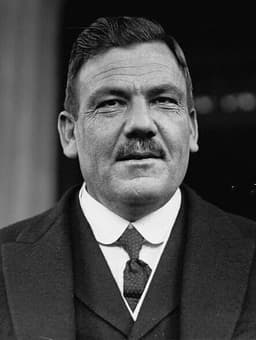
Plutarco Elias Calles
General · Modern
58.5Total
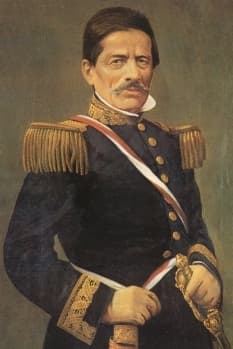
Ramon Castilla
General · Modern
59.7Total
Basic Information
Born
1877
1797
Died
1945
1867
Era
Modern
Modern
Nationality
Mexico
Peru
Occupation
General
General
Civilization
Western
Western
Score Comparison
Military (10%)
40.0
40.0
Political (20%)
70.3
72.0
Influence (20%)
68.0
56.7
Legacy (20%)
40.0
52.0
Leadership (15%)
78.0
78.0
Strategy (15%)
52.5
60.0
TOTAL
58.5
59.7
Plutarco Elias Calles — Complete Timeline
1915 AD
Governorship of SonoraPolitical Action
Calles served as Governor of Sonora from 1915 to 1919, implementing radical reforms including land redistribution, anti-clerical laws, and labor rights. His governorship established him as a key figure in the Sonoran dynasty and a proponent of revolutionary change.
GovernorshipSonoraReforms
Impact: regionalconstructive
1924 AD
Presidency of MexicoPolitical Action◆ Major
Calles was elected President of Mexico in 1924, serving until 1928. His administration continued revolutionary reforms, including land reform, labor rights, and secularization, but also faced opposition from the Catholic Church and conservative groups.
PresidencyMexican RevolutionReforms
Impact: nationalconstructive
1926 AD
Cristero WarWar◆ Major
Calles enforced anti-clerical laws, including the Calles Law, which restricted the Catholic Church's role in society. This sparked the Cristero War (1926-1929), a violent rebellion by Catholic peasants against the state, resulting in tens of thousands of deaths.
Cristero WarAnti-clericalismReligious Conflict
Impact: nationaldestructive
1928 AD
MaximatoPolitical Action◆ Major
After his presidency, Calles remained the de facto ruler of Mexico during the Maximato (1928-1934), controlling puppet presidents. He continued to influence policy, but his power waned as President L
MaximatoPolitical ControlCárdenas
Impact: national
1929 AD
Founding of the National Revolutionary Party (PNR)Political Action
Calles founded the National Revolutionary Party (PNR) in 1929, which later became the Institutional Revolutionary Party (PRI). This party dominated Mexican politics for over 70 years, institutionalizing the revolution's legacy and centralizing power.
Political PartyPRIInstitutionalization
Impact: nationalconstructive
Ramon Castilla — Complete Timeline
1824 AD
Battle of AyacuchoWar
Castilla fought as a junior officer in the decisive Battle of Ayacucho, which ended Spanish rule in Peru. This victory secured Peruvian independence and marked the end of the Spanish Empire in South America, shaping Castilla's nationalist views.
Peruvian War of IndependenceBattleLiberation
Impact: regional
1845 AD
First Presidency of PeruPolitical Action◆ Major
Castilla was elected President of Peru in 1845, serving until 1851. His first term focused on economic development, including the guano boom, and infrastructure projects such as railroads and ports, modernizing the Peruvian state.
PresidencyEconomic DevelopmentGuano
Impact: nationalconstructive
1854 AD
Abolition of Slavery in PeruReform◆ Major
During his second presidency, Castilla issued a decree abolishing slavery in Peru on December 3, 1854. This reform freed approximately 25,000 slaves and was part of a broader liberal agenda, though it faced opposition from slave-owning elites.
AbolitionSlaveryHuman Rights
Impact: nationalprogressive
Abolition of Indigenous TributeReform◆ Major
Castilla also abolished the indigenous tribute tax in 1854, which had been a burden on native communities since colonial times. This measure aimed to integrate indigenous peoples into the Peruvian state as equal citizens, though its implementation was uneven.
Indigenous RightsTax ReformCitizenship
Impact: nationalprogressive
1855 AD
Second Presidency and Guano BoomPolitical Action◆ Major
Castilla served a second term from 1855 to 1862, during the peak of the guano export boom. He used guano revenues to fund public works, pay off foreign debt, and modernize the military, but also faced criticism for corruption and over-reliance on a single resource.
PresidencyGuanoModernization
Impact: nationalconstructive
1860 AD
Constitutional Reform of 1860Reform◆ Major
Castilla oversaw the adoption of a new constitution in 1860, which established a centralized republic with a strong executive. The constitution remained in effect until 1920 and shaped Peru's political structure, though it limited regional autonomy.
ConstitutionPolitical ReformCentralization
Impact: nationalconstructive
Expert Analysis
Ramon Castilla vs Plutarco Elias Calles
The General and the Caudillo
In December 1854, Ramon Castilla stood in the Plaza de Armas of Lima and signed a decree that would forever change Peru: the abolition of slavery. Seventy-two years later and two thousand miles north, Plutarco Elias Calles signed the Ley Calles, a law that would ignite the bloodiest religious war in modern Mexican history. Both men were generals who reshaped their nations. Both sought to modernize societies fractured by colonialism and revolution. Yet one is remembered as a liberator, the other as a tyrant. What drove these two paths to diverge so sharply?
Origins
Ramon Castilla was born in 1797 in Tarapacá, then a remote corner of the Viceroyalty of Peru. His father was a Spanish miner, his mother a descendant of indigenous nobility. This mixed heritage—European ambition and native roots—would define his political instincts. He came of age during the final convulsions of Spanish rule, joining the royalist army as a young man before switching sides to fight for independence. The Battle of Ayacucho in 1824, where he served as a junior officer, was his baptism by fire. That victory ended three centuries of Spanish dominion, but it left Peru a hollow shell: bankrupt, divided, and still carrying the moral weight of slavery.
Plutarco Elias Calles was born in 1877 in Sonora, a dusty frontier state in northern Mexico. Unlike Castilla, he was the son of a poor alcoholic father who died when Calles was young. He grew up in poverty, working as a bartender, a teacher, and a flour mill manager before the Mexican Revolution of 1910 gave him a cause. Where Castilla inherited a war for independence, Calles fought in a revolution against his own government—a conflict that was as much about class as about nationhood. His era was defined not by colonial collapse but by the violent birth of a new order.
Rise to Power
Castilla’s path to power was patient and constitutional. After Ayacucho, he served in various military and administrative posts, building a reputation as a competent, pragmatic officer. He was not a fiery revolutionary but a steady hand. In 1845, he was elected president of Peru—a rare peaceful transition in a country accustomed to coups. His rise reflected the exhaustion of a nation weary of chaos, yearning for stability.
Calles rose through fire. As governor of Sonora from 1915 to 1919, he implemented radical land reforms and crushed opposition with ruthless efficiency. He was a master of the machine gun and the political deal. By 1924, when he assumed the presidency of Mexico, he had already learned that power was not given—it was seized and held by force. The revolution had taught him that compromise meant death.
Leadership & Governance
Castilla governed during the guano boom, when Peru’s coastal islands were covered in centuries of bird droppings that the world suddenly craved as fertilizer. He used this windfall wisely: building railroads, modernizing the port of Callao, and funding public education. His abolition of slavery in 1854 was not merely moral—it was strategic. He needed labor for the guano fields and soldiers for his army. The same decree abolished the indigenous tribute tax, a colonial relic that had crushed native communities. His 1860 constitution created a centralized republic with a strong executive, but it also guaranteed civil rights. Castilla ruled as a reformer, not a dictator.
Calles faced a different reality. Mexico was still convulsing from the revolution, and the Catholic Church was a rival power with deep roots. His Calles Law of 1926 restricted church property, banned religious orders, and expelled foreign priests. The result was the Cristero War (1926-1929), a savage conflict that killed an estimated 90,000 people. Calles did not flinch. He crushed the rebellion with mass executions and forced resettlements. After his presidency ended in 1928, he did not leave power—he created the Maximato, a shadow regime where he controlled puppet presidents from behind the scenes. In 1929, he founded the National Revolutionary Party (PNR), which would evolve into the Institutional Revolutionary Party (PRI) that dominated Mexico for seven decades. Calles built a one-party state disguised as a democracy.
Triumph & Tragedy
Castilla’s greatest triumph was the abolition of slavery—a bold act that freed tens of thousands of Afro-Peruvians and positioned Peru as a progressive nation in Latin America. His tragedy came later: the guano boom proved a curse. The easy money bred corruption, and when the guano ran out, Peru collapsed into debt and war. Castilla died in 1867, just as the boom was fading, spared the sight of his country’s humiliation in the War of the Pacific.
Calles’ triumph was the consolidation of the Mexican Revolution. He gave Mexico stability—at a terrible cost. His tragedy was personal: the Maximato ended in 1934 when his chosen successor, Lazaro Cardenas, turned against him. Calles was exiled to the United States, a bitter old man watching from afar as Cardenas dismantled his system. He died in 1945, a ghost of the power he once held.
Character & Destiny
Castilla was a pragmatist with a conscience. He abolished slavery not because he was a saint, but because he saw that Peru could not modernize with chains on its economy and its soul. He was cautious, methodical, and ultimately humane. His scores reflect this: high in leadership (84.0) and political wisdom (77.4), lower in military strategy (58.7). He was a builder, not a warrior.
Calles was a revolutionary who became an autocrat. He was driven by a cold, ideological certainty that the Church and the old elite had to be destroyed. His political score (79.8) and influence (78.0) were high, but his leadership (75.5) was that of a machine boss, not a visionary. He was a warrior who never learned to build peace. Where Castilla used power to free people, Calles used it to control them.
Legacy
Castilla is remembered as the “Liberator of Slaves” in Peru. His statue stands in Lima, and schoolchildren learn his name. His legacy is a nation that abolished slavery before the United States, a constitution that lasted until 1920, and a model of reform through law rather than blood. But his reliance on guano also left a cautionary tale about resource dependence.
Calles is a more ambiguous figure. He is the father of modern Mexico’s political system, but that system was authoritarian for decades. The PRI gave Mexico stability but suffocated democracy. Today, Calles is often vilified for the Cristero War, yet historians also credit him with secularizing the state and breaking the Church’s political power. His legacy is a paradox: the man who unified Mexico by dividing it.
Conclusion
Two generals, two nations, two visions of modernity. Castilla used a bird-dung boom to buy freedom for the enslaved. Calles used a revolution to build a prison for the soul. Both succeeded in their own terms, but their differences reveal something profound about the nature of power. Castilla believed that change came through institutions and law; Calles believed it came through force and party. One left a nation grateful; the other left a nation scarred. In the end, the question is not who was more effective, but who was more human. And that answer, perhaps, is written in the blood and the ink of their respective histories.
Rankings
🥇
Ramon CastillaLeader
Mil: 40.0Pol: 72.0Inf: 56.7
59.7
🥈
Plutarco Elias Calles
Mil: 40.0Pol: 70.3Inf: 68.0
58.5
+1.2 behind
How This Comparison Works
Algorithm
Each figure is scored on 6 dimensions (0—100 scale) based on structured historical data: Military (10%), Political (20%), Influence (20%), Legacy (20%), Leadership (15%), Strategy (15%). The weighted total produces the final ranking.
Data Sources
Scores are computed from structured sub-indicators in the database. Scale factors adjust for era (Ancient ×0.85, Modern ×1.0) and civilization size (Eastern ×1.05, Other ×0.80) to account for differences in population and military scale.
Maximum 3 Figures
Comparisons are limited to 2—3 figures to ensure readability and statistical meaningfulness.
Error Margins
±5 points per dimension — Sub-scores are derived from historical records with inherent uncertainty. Two figures within 5 points on a dimension should be considered roughly equivalent in that area.
Total Score Accuracy
±3 points overall — The weighted combination of 6 dimensions produces a total score with approximately ±3 points of uncertainty. Differences of less than 3 points are not statistically significant— the figures are effectively tied.
Known Limitations
- Historical records are incomplete and uneven across civilizations
- Figures from oral-tradition societies may be underrepresented
- Occupation labels can misclassify multi-role figures
- Scores measure capability and impact, not moral character
- Quantitative scoring is a comparison tool, not absolute truth
Capability Radar
Military (10%) — Battles & Warfare
Battles
45
45
Win Rate
50
50
Expansion
30
30
Political (20%) — Governance & Reform
Reform
85
85
Diplomacy
65
70
Economy
60
75
Influence (20%) — Cultural & Global Reach
Cultural
70
55
Global
60
50
Legacy (20%) — Historical Impact
Historical
75
65
Longevity
70
60
Leadership (15%) — Power & Stability
Tenure
70
65
Stability
55
60
Strategy (15%) — Tactics & Innovation
Strategy
55
45
Tactics
40
40
Reform
60
55
Similar Comparisons
Comments & Discussion
1. LiberatorLaunderer6/16/2026
Castilla’s abolition decree reeks of performative political theater, not genuine liberation. He freed slaves to undercut his rivals and bolster Peru’s army with cheap conscripts. Compare that to Calles, who at least ignited a real ideological war against entrenched Catholic power. Castilla is praised for signing paper; Calles is damned for actually fighting. Libertad without sacrifice is just branding. Mexico’s Cristero War bled for change; Peru got a photo op.
2. DataDeconstructor6/16/2026
The “modernizer” label is ahistorical when the numbers tell another story. Castilla’s 1850s guano boom gave Peru a brief fiscal miracle, but he saddled the country with ballooning debt and no industrial base. Calles, meanwhile, built Mexico’s first real banking system and tripled rail lines during his 1924-1928 term. If we measure modernization by lasting infrastructure, not virtue-signaling, Calles wins: his roads, dams, and schools outlasted Castilla’s binges. The “tyrant” tag hides the stats.
3. 印加余烬6/16/2026
卡斯蒂利亚废除奴隶制,不过是用白纸黑字延续殖民体系的虚伪。他一边喊着自由,一边强迫前奴隶在军队里服役十年——这叫什么解放?卡耶斯至少撕破了教会的假面,用子弹砸碎旧秩序。秘鲁人跪着喊“解放者”,墨西哥人站着打内战。我宁可要血淋淋的真理,也不要镀金的谎言。卡耶斯至少让墨西哥人学会了恨,比假装爱的解放者强一百倍。
4. 墨镜与军靴6/16/2026
你们只看见卡耶斯的冷血,却忘了他是从贫民窟爬出来的硬汉。他爹是个醉鬼,他十二岁当账房谋生——这种人懂的苦难比你们一辈子都多。他镇压教会不是因为恨上帝,而是恨那些骑在农民头上收什一税的神棍。卡斯蒂利亚?土生白人少爷,从小有矿。他解放奴隶是为了省下买黑奴的钱,塞进私囊。平民英雄vs贵族投机客,选谁不言自明。
5. ChronoShift6/16/2026
Historians frame Castilla as Peru’s great emancipator, but that’s a 20th-century gloss. In 1854, his motives were tactical: he needed black soldiers to crush a rebellion in Arequipa. Calles also used violence tactically, but his Ley Calles targeted church power over education and land—a structural shift, not a military expedient. Castilla’s legacy was a one-off decree; Calles’s reforms shaped Mexico’s secular state for decades. Temporal scale matters: one man changed a date, the other changed a