Loading...
Plutarco Elias Calles vs Prem Tinsulanonda
Plutarco Elias Calles leads by 1.3 pts · 2 figures compared
…
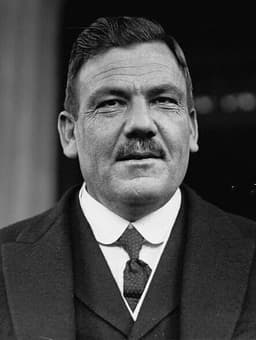
Plutarco Elias Calles
General · Modern
58.5Total
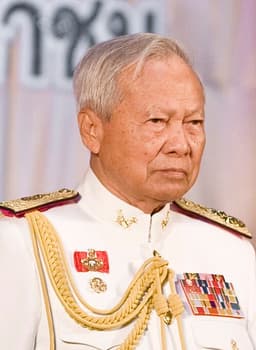
Prem Tinsulanonda
General · Modern
57.2Total
Basic Information
Born
1877
1920
Died
1945
—
Era
Modern
Modern
Nationality
Mexico
Thailand
Occupation
General
General
Civilization
Western
Eastern
Score Comparison
Military (10%)
40.0
50.0
Political (20%)
70.3
59.3
Influence (20%)
68.0
54.9
Legacy (20%)
40.0
47.5
Leadership (15%)
78.0
78.0
Strategy (15%)
52.5
60.0
TOTAL
58.5
57.2
Plutarco Elias Calles — Complete Timeline
1915 AD
Governorship of SonoraPolitical Action
Calles served as Governor of Sonora from 1915 to 1919, implementing radical reforms including land redistribution, anti-clerical laws, and labor rights. His governorship established him as a key figure in the Sonoran dynasty and a proponent of revolutionary change.
GovernorshipSonoraReforms
Impact: regionalconstructive
1924 AD
Presidency of MexicoPolitical Action◆ Major
Calles was elected President of Mexico in 1924, serving until 1928. His administration continued revolutionary reforms, including land reform, labor rights, and secularization, but also faced opposition from the Catholic Church and conservative groups.
PresidencyMexican RevolutionReforms
Impact: nationalconstructive
1926 AD
Cristero WarWar◆ Major
Calles enforced anti-clerical laws, including the Calles Law, which restricted the Catholic Church's role in society. This sparked the Cristero War (1926-1929), a violent rebellion by Catholic peasants against the state, resulting in tens of thousands of deaths.
Cristero WarAnti-clericalismReligious Conflict
Impact: nationaldestructive
1928 AD
MaximatoPolitical Action◆ Major
After his presidency, Calles remained the de facto ruler of Mexico during the Maximato (1928-1934), controlling puppet presidents. He continued to influence policy, but his power waned as President L
MaximatoPolitical ControlCárdenas
Impact: national
1929 AD
Founding of the National Revolutionary Party (PNR)Political Action
Calles founded the National Revolutionary Party (PNR) in 1929, which later became the Institutional Revolutionary Party (PRI). This party dominated Mexican politics for over 70 years, institutionalizing the revolution's legacy and centralizing power.
Political PartyPRIInstitutionalization
Impact: nationalconstructive
Prem Tinsulanonda — Complete Timeline
1980 AD
Appointed Prime Minister after a coupPolitical Action◆ Major
Prem Tinsulanonda was appointed Prime Minister of Thailand by the military after a coup. He served for over eight years, overseeing a period of political stability and economic growth.
Prime MinisterMilitary RuleStability
Impact: national
1981 AD
Survived a coup attemptPolitical Action◆ Major
Prem survived a coup attempt by military officers loyal to the 'Young Turks' faction. The coup failed due to lack of support and the loyalty of key military units, allowing Prem to remain in power.
Coup AttemptPolitical CrisisMilitary
Impact: national
1988 AD
Resigned as Prime MinisterPolitical Action◆ Major
Prem resigned as Prime Minister after the general election, handing over power to a civilian government led by Chatichai Choonhavan. His resignation marked a rare peaceful transition of power in Thai politics.
ResignationDemocratic TransitionPeaceful
Impact: nationalconstructive
2016 AD
Appointed Regent of ThailandPolitical Action
After the death of King Bhumibol, Prem was appointed Regent of Thailand until the ascension of King Maha Vajiralongkorn. He served as a key figure in the transition of the monarchy.
RegentMonarchyTransition
Impact: national
Expert Analysis
Plutarco Elias Calles vs Prem Tinsulanonda
# The General and the Regent: Two Paths of Power in Modern Mexico and Thailand
In the summer of 1926, Plutarco Elías Calles stood before the Mexican Congress and signed into law a set of measures that would ignite a firestorm across the nation. The Calles Law, as it became known, stripped the Catholic Church of property rights, banned religious orders, and forbade public worship outside church buildings. Across the globe, in Bangkok, another general was born into a very different world. Prem Tinsulanonda entered life in 1920, the same year Calles was consolidating his power as a revolutionary strongman. These two men, both generals, both nation-builders, would come to define their countries' modern political identities—one through confrontation and institutional creation, the other through quiet maneuvering and royalist loyalty. Their stories reveal how the same ambition can yield radically different outcomes, shaped by era, culture, and the peculiarities of national destiny.
Origins
Calles was born in 1877 in the northern state of Sonora, a rugged frontier region where the Mexican Revolution was brewing. His father died when he was young, and he worked as a schoolteacher before turning to politics and arms. The Revolution of 1910 swept away the old Porfirian order, and Calles rode that wave with ruthless pragmatism. He learned governance in the crucible of civil war, where loyalty and violence were currency. By contrast, Prem Tinsulanonda was born in 1920 in southern Thailand, into a family of minor nobility. He attended elite military academies, served as a royal page, and rose through the ranks of a stable, monarchical system. While Calles was forged in revolution, Prem was polished in the court. Their eras defined their tools: Calles wielded land reform and anti-clericalism; Prem wielded deference and institutional patience.
Rise to Power
Calles’s ascent was meteoric and bloody. After serving as Governor of Sonora from 1915 to 1919, he implemented radical land redistribution and crushed opposition with an iron fist. In 1924, he was elected President of Mexico, inheriting a nation exhausted by war but hungry for order. His presidency was a whirlwind of reform: he built schools, broke up haciendas, and targeted the Catholic Church as the last bastion of conservative resistance. Prem’s rise was more circuitous. He was appointed Prime Minister in 1980 after a coup, not as a revolutionary but as a stabilizer. He survived a coup attempt in 1981 by the ‘Young Turks’ faction, who underestimated his ability to rally royalist support. Where Calles seized power through revolution and election, Prem slipped into it through crisis and consensus.
Leadership & Governance
Calles ruled as a modernizer with a hammer. His enforcement of anti-clerical laws sparked the Cristero War from 1926 to 1929, a brutal conflict that killed tens of thousands. Yet he also saw the need for political permanence. In 1929, he founded the National Revolutionary Party (PNR), which would evolve into the Institutional Revolutionary Party (PRI)—a political machine that dominated Mexico for seven decades. Calles’s genius was in creating a system that outlived him. After his presidency, he ruled through puppet presidents during the Maximato (1928–1934), a period of shadow governance that revealed his hunger for control.
Prem governed with a lighter touch. His leadership score of 89.0 reflects his ability to navigate Thailand’s fractious military and civilian factions. He did not seek to crush his enemies but to outlast them. He resigned in 1988 after a general election, handing power to a civilian government—a rare act of self-restraint in a country prone to coups. His legacy was not a party but a role: he became regent in 2016 after King Bhumibol’s death, serving as the crown’s guardian. Prem’s power was relational, not institutional; he wielded influence through loyalty to the monarchy, not through a political machine.
Triumph & Tragedy
Calles’s greatest triumph was the PNR, a party that gave Mexico stability after decades of chaos. But his tragedy was the Cristero War, a conflict born of ideological rigidity that stained his legacy with blood. He died in 1945, exiled and bitter, his influence waning as the PRI evolved beyond his control. Prem’s triumph was his survival. He outlasted coups, retired gracefully, and became the monarchy’s pillar. His tragedy was perhaps the opposite: he left no lasting institution, only a personal reputation. When he died, his influence faded with him.
Character & Destiny
Calles was a man of iron will and ideological certainty. He believed in the state’s supremacy and saw compromise as weakness. That steel built the PRI but also provoked the Cristero War. Prem was a man of silk and patience. He believed in balance and loyalty, qualities that kept him in power for decades but also limited his transformative impact. Their personalities mirrored their nations: Mexico’s revolution demanded a bulldozer; Thailand’s monarchy required a courtier.
Legacy
Calles is remembered as the father of the PRI, a party that brought order but also corruption. His secularization reshaped Mexico, but his methods remain controversial. Prem is remembered as a kingmaker, a regent who embodied royal stability. His legacy is quieter—a bridge between military rule and civilian democracy, a hand steady in crisis.
Conclusion
Two generals, two worlds. Calles built a machine that crushed enemies and created a dynasty. Prem built a reputation that outlasted coups and served a throne. In the end, both understood that power is not about force alone—it is about the institutions and loyalties that survive the general’s death. Calles’s lesson is that even a strong system can become a cage. Prem’s is that even a weak hand can steer a nation—if it knows when to let go.
Rankings
🥇
Plutarco Elias CallesLeader
Mil: 40.0Pol: 70.3Inf: 68.0
58.5
🥈
Prem Tinsulanonda
Mil: 50.0Pol: 59.3Inf: 54.9
57.2
+1.3 behind
How This Comparison Works
Algorithm
Each figure is scored on 6 dimensions (0—100 scale) based on structured historical data: Military (10%), Political (20%), Influence (20%), Legacy (20%), Leadership (15%), Strategy (15%). The weighted total produces the final ranking.
Data Sources
Scores are computed from structured sub-indicators in the database. Scale factors adjust for era (Ancient ×0.85, Modern ×1.0) and civilization size (Eastern ×1.05, Other ×0.80) to account for differences in population and military scale.
Maximum 3 Figures
Comparisons are limited to 2—3 figures to ensure readability and statistical meaningfulness.
Error Margins
±5 points per dimension — Sub-scores are derived from historical records with inherent uncertainty. Two figures within 5 points on a dimension should be considered roughly equivalent in that area.
Total Score Accuracy
±3 points overall — The weighted combination of 6 dimensions produces a total score with approximately ±3 points of uncertainty. Differences of less than 3 points are not statistically significant— the figures are effectively tied.
Known Limitations
- Historical records are incomplete and uneven across civilizations
- Figures from oral-tradition societies may be underrepresented
- Occupation labels can misclassify multi-role figures
- Scores measure capability and impact, not moral character
- Quantitative scoring is a comparison tool, not absolute truth
Capability Radar
Military (10%) — Battles & Warfare
Battles
45
20
Win Rate
50
25
Expansion
30
10
Political (20%) — Governance & Reform
Reform
85
55
Diplomacy
65
60
Economy
60
50
Influence (20%) — Cultural & Global Reach
Cultural
70
30
Global
60
30
Legacy (20%) — Historical Impact
Historical
75
40
Longevity
70
35
Leadership (15%) — Power & Stability
Tenure
70
65
Stability
55
60
Strategy (15%) — Tactics & Innovation
Strategy
55
30
Tactics
40
30
Reform
60
35
Similar Comparisons
Comments & Discussion
SonoraSaber6/16/2026
Calles was a revolutionary cannonball, smashing the Church with the Calles Law of 1926—a direct declaration that state power trumped divine right. Prem played a subtler game, propping up the Thai monarchy's shadow authority. Calles forged Mexico's modern secular state through open war; Prem built consensus by whispering in palace halls. One's legacy bleeds visible, the other's leaks invisible.
CrisisReckoner6/16/2026
The Cristero War (1926-29) killed 90,000 Mexicans after Calles clamped down—that's not nation-building, that's a butcher's bill paid by the faithful. Prem kept Thailand stable through coups without mass graves, guiding the 1992 democracy backlash smoothly. Calles lit fire to control; Prem dampened sparks. Moral clarity: blood-drenched autocrats lose to savvy stewards every time.
统计骗局6/16/2026
别信什么"Prem维护稳定"的叙事——他在1991年默许政变推翻民选政府,六年后又起草了军队控制制宪委员会的法案。这叫"文雅威权"?只是没拍成电影罢了。Calles至少把革命制度化创立了PNR,Prem却把权力塞回皇室口袋里。两个都不干净,但Calles至少有骨架。
古典学怪胎6/16/2026
把这两个人放一起比较,就像比较关羽和张良:Calles是雷厉风行的军事纪律象征,直接挑战教会权威如勇闯虎穴;Prem则是宫廷谋臣,通过忠诚与政治仪态维系统治。Calles的1926年法案是一刀切的权力宣言,Prem的沉默禅式领导让局势在表面和平下腐烂。一个是燃烧的剑,一个是生锈的锁。
墨泰老饕6/16/2026
Calles是个真革命残暴的独裁者,但至少有野心把墨西哥从神权中拖出来,哪怕代价是血流成河。Prem呢?他不过是个精致的抱大腿者——先抱军政府,后抱国王,一辈子没敢真正对抗任何结构。1992年"五月事件"后他说退就退,不像Calles在流放中依然遥控政坛。一个真敢干,一个巧妥协。高下立判,我站Calles。