Loading...
This comparison has not been analyzed yet.
One-time AI generation (~1 minute). Scores and timeline are already available below.
Pelopidas vs Sun Tzu
Sun Tzu leads by 7.9 pts · 2 figures compared
…

Pelopidas
General · Ancient
52.9Total
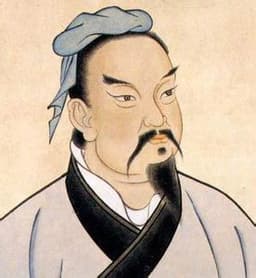
Sun Tzu
General · Ancient
60.8Total
Basic Information
Born
-410
-544
Died
-364
-496
Era
Ancient
Ancient
Nationality
Thebes
China
Occupation
General
General
Civilization
Western
Eastern
Score Comparison
Military (10%)
61.7
50.0
Political (20%)
37.9
35.0
Influence (20%)
56.4
85.0
Legacy (20%)
50.0
65.0
Leadership (15%)
50.7
30.0
Strategy (15%)
68.0
85.0
TOTAL
52.9
60.8
Pelopidas — Complete Timeline
379 BC
Liberation of Thebes from Spartan ControlPolitical Action◆ Major
Pelopidas led a group of exiles in a coup to overthrow the pro-Spartan oligarchy in Thebes. Disguised as women, they infiltrated a banquet and killed the ruling oligarchs. This action freed Thebes from Spartan control and established a democratic government.
CoupLiberationThebes
Impact: regionalconstructive
375 BC
Battle of TegyraWar◆ Major
Pelopidas led the Sacred Band in a victory against a larger Spartan force at Tegyra. The Thebans, though outnumbered, broke through the Spartan lines. This battle demonstrated the effectiveness of the Sacred Band and boosted Theban morale before Leuctra.
Theban-Spartan WarBattleSacred Band
Impact: regionalconstructive
371 BC
Battle of LeuctraWar
Pelopidas, as a leader of the Sacred Band, played a key role in the Theban victory over Sparta at Leuctra. The Theban general Epaminondas used an oblique formation, with the Sacred Band on the left wing, crushing the Spartan elite. This battle ended Spartan hegemony in Greece.
Theban-Spartan WarBattleHegemony
Impact: globalconstructive
364 BC
Death at the Battle of CynoscephalaeWar◆ Major
Pelopidas led a Theban expedition against Alexander of Pherae in Thessaly. At Cynoscephalae, he was killed in battle after charging recklessly into the enemy ranks. His death was a major loss for Thebes, though the Thebans eventually won the battle.
Thessalian CampaignBattleDeath
Impact: regionaltragic
Sun Tzu — Complete Timeline
512 BC
Service as General for King Helü of WuWar◆ Major
Sun Tzu served as a general under King Hel
GeneralWuWar
Impact: regional
506 BC
Battle of BojuWar◆ Major
Sun Tzu is traditionally credited with contributing to the Wu victory at the Battle of Boju, where Wu forces defeated the larger Chu army. The battle demonstrated the application of strategic principles from The Art of War.
BattleWuChu
Impact: regional
500 BC
Composition of The Art of WarCultural
Sun Tzu authored The Art of War, a treatise on military strategy and tactics. The text covers planning, deception, terrain, and leadership, and has been studied for centuries in both military and civilian contexts worldwide.
Military StrategyClassicPhilosophy
Impact: globalconstructive
This comparison has not been analyzed yet.
One-time AI generation (~1 minute). Scores and timeline are already available below.
Rankings
🥇
Sun TzuLeader
Mil: 50.0Pol: 35.0Inf: 85.0
60.8
🥈
Pelopidas
Mil: 61.7Pol: 37.9Inf: 56.4
52.9
+7.9 behind
How This Comparison Works
Algorithm
Each figure is scored on 6 dimensions (0—100 scale) based on structured historical data: Military (10%), Political (20%), Influence (20%), Legacy (20%), Leadership (15%), Strategy (15%). The weighted total produces the final ranking.
Data Sources
Scores are computed from structured sub-indicators in the database. Scale factors adjust for era (Ancient ×0.85, Modern ×1.0) and civilization size (Eastern ×1.05, Other ×0.80) to account for differences in population and military scale.
Maximum 3 Figures
Comparisons are limited to 2—3 figures to ensure readability and statistical meaningfulness.
Error Margins
±5 points per dimension — Sub-scores are derived from historical records with inherent uncertainty. Two figures within 5 points on a dimension should be considered roughly equivalent in that area.
Total Score Accuracy
±3 points overall — The weighted combination of 6 dimensions produces a total score with approximately ±3 points of uncertainty. Differences of less than 3 points are not statistically significant— the figures are effectively tied.
Known Limitations
- Historical records are incomplete and uneven across civilizations
- Figures from oral-tradition societies may be underrepresented
- Occupation labels can misclassify multi-role figures
- Scores measure capability and impact, not moral character
- Quantitative scoring is a comparison tool, not absolute truth
Capability Radar
Military (10%) — Battles & Warfare
Battles
55
30
Win Rate
60
40
Expansion
50
20
Political (20%) — Governance & Reform
Reform
50
10
Diplomacy
55
30
Economy
40
10
Influence (20%) — Cultural & Global Reach
Cultural
55
95
Global
45
95
Legacy (20%) — Historical Impact
Historical
60
98
Longevity
50
99
Leadership (15%) — Power & Stability
Tenure
45
20
Stability
45
10
Strategy (15%) — Tactics & Innovation
Strategy
65
98
Tactics
70
95
Reform
75
85
Similar Comparisons
Comments & Discussion
No comments yet. Be the first to share your thoughts!