Loading...
Oscar Mejia Victores vs Sitiveni Rabuka
Oscar Mejia Victores leads by 0.2 pts · 2 figures compared
…

Oscar Mejia Victores
General · Modern
51.9Total
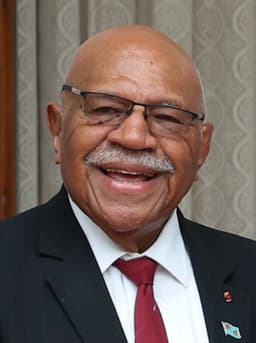
Sitiveni Rabuka
General · Modern
51.7Total
Basic Information
Born
1930
1948
Died
—
—
Era
Modern
Modern
Nationality
Guatemala
Fiji
Occupation
General
General
Civilization
Western
Other
Score Comparison
Military (10%)
22.6
10.2
Political (20%)
68.0
60.0
Influence (20%)
50.2
53.3
Legacy (20%)
43.3
46.7
Leadership (15%)
80.0
85.0
Strategy (15%)
41.0
39.6
TOTAL
51.9
51.7
Oscar Mejia Victores — Complete Timeline
1983 AD
1983 Guatemalan coup d'étatPolitical Action◆ Major
Mejia Victores, then Defense Minister, led a coup that ousted President Efrain Rios Montt. He assumed the presidency, becoming the last military ruler of Guatemala.
CoupMilitary RuleGuatemala
Impact: nationaldestructive
1984 AD
Human rights abuses during his ruleOther◆ Major
During his presidency, Mejia Victores' government continued counterinsurgency operations that resulted in forced disappearances and massacres of indigenous Maya communities, as documented by truth commissions.
Human RightsCivil WarAtrocities
Impact: nationaltragic
1985 AD
Transition to civilian rulePolitical Action
Under pressure, Mejia Victores oversaw the drafting of a new constitution and called for democratic elections. He transferred power to civilian President Vinicio Cerezo in 1986, ending decades of military rule.
DemocratizationConstitutionElection
Impact: nationalconstructive
Sitiveni Rabuka — Complete Timeline
1987 AD
1987 Fijian Coup d'étatPolitical Action
Rabuka, as a colonel in the Fijian military, led a coup overthrowing the elected government of Timoci Bavadra. The coup was motivated by ethnic Fijian opposition to Indo-Fijian political influence. Rabuka declared Fiji a republic.
CoupMilitary InterventionEthnic Tension
Impact: nationaldestructive
1992 AD
1992 Election as Prime MinisterPolitical Action◆ Major
Rabuka transitioned from military leader to civilian politician, winning the 1992 general election as leader of the Fijian Political Party. He became Prime Minister, serving until 1999.
ElectionCivilian GovernmentPolitical Transition
Impact: national
1997 AD
1997 Constitution ReformReform◆ Major
Rabuka's government oversaw the adoption of a new constitution that removed ethnic-based voting and provided for a multi-ethnic government. The constitution aimed to reduce ethnic tensions and promote national unity.
ConstitutionReformEthnic Reconciliation
Impact: nationalconstructive
1999 AD
1999 General Election DefeatPolitical Action◆ Major
Rabuka's government was defeated in the general election by the Labour Party led by Mahendra Chaudhry. Rabuka stepped down as Prime Minister, marking the end of his first period in power.
Election DefeatGovernment ChangeChaudhry
Impact: national
2022 AD
2022 Return as Prime MinisterPolitical Action◆ Major
Rabuka led the People's Alliance to victory in the 2022 general election, forming a coalition government. He became Prime Minister again, 23 years after his previous tenure, promising democratic reforms.
ElectionReturn to PowerCoalition Government
Impact: national
Expert Analysis
Sitiveni Rabuka vs Oscar Mejia Victores
The General Who Became a Democrat: Two Paths from Uniform to Suit
In 1987, a Fijian colonel stormed parliament in a coup that shocked the Pacific. In 1983, a Guatemalan defense minister ousted a dictator who had terrorized his own people. Both men wore the same uniform—the starched olive of a military general—and both would eventually hand power to civilians. But their journeys from coup leader to democratic statesman could not have been more different. Why did one succeed in building a lasting legacy of reform, while the other slipped into history as a footnote? The answer lies not in the uniforms they shed, but in the worlds that shaped them.
Origins
Sitiveni Rabuka was born in 1948 on the island of Vanua Levu, the second-largest of Fiji’s more than 300 islands. He grew up in a Methodist household where strict discipline and communal loyalty were the bedrock of life. The Fijian military—a small, ethnically divided force—was his ladder upward. By 1987, he was a colonel, respected but not renowned. Fiji was a young nation, independent from Britain only since 1970, and its politics were already fracturing along ethnic lines between indigenous Fijians and the Indo-Fijian community, descendants of Indian laborers brought by the British.
Oscar Mejía Víctores was born in 1930 in Guatemala City, the heart of a country that had known more coups than elections. Guatemala’s military was not a small force; it was the state itself. The army had ruled directly or indirectly for decades, waging a brutal counterinsurgency war against leftist guerrillas. Mejía rose through the ranks in an institution that saw politics as a battlefield and dissent as treason. By 1983, he was defense minister under General Efraín Ríos Montt, a man whose name had become synonymous with genocide.
Their eras shaped them. Rabuka came of age in a postcolonial Pacific where democracy was a fragile experiment. Mejía came of age in a Cold War crucible where the United States backed any strongman who promised order. One would eventually embrace reform; the other would merely manage it.
Rise to Power
Rabuka’s rise was a single, dramatic stroke. On May 14, 1987, he led a coup that overthrew the newly elected government of Timoci Bavadra, a coalition of Indo-Fijian and progressive indigenous parties. Rabuka claimed he was protecting indigenous Fijian rights. The coup was swift, bloodless, and deeply controversial. Within a year, he had staged a second coup to tighten his grip. But then something unexpected happened: Rabuka began to doubt his own path. He resigned from the military, formed a political party, and in 1992 won the general election as a civilian prime minister. His coup had opened the door; his election was meant to close it.
Mejía’s rise was a palace coup. On August 8, 1983, he ousted Ríos Montt, his own boss, in a bloodless takeover. Ríos Montt had grown too erratic, too vocal about his apocalyptic Christian fundamentalism, and too brutal even for the Guatemalan military. Mejía promised to restore order and then return power to civilians. But his rule was not a clean break. His government continued the counterinsurgency campaign that had already killed tens of thousands, including forced disappearances and massacres in the highlands. The United Nations later documented that his security forces committed widespread human rights abuses. Mejía was not a reformer from within; he was a caretaker of a system that had to change because the world was watching.
Leadership & Governance
Rabuka’s governance was a study in transformation. As prime minister from 1992 to 1999, he pushed through the most significant reform in Fijian history: the 1997 Constitution. This document removed ethnic-based voting, created a multi-party cabinet system, and guaranteed equal rights for all citizens. It was a radical departure from the ethnic nationalism that had fueled his coup. Rabuka’s political wisdom lay in his willingness to admit that his earlier actions had been wrong. He told a journalist in 1997, “I have learned that you cannot build a nation on fear.” His military score of 19.9 reflects his limited strategic brilliance as a soldier, but his political score of 72.0 captures his ability to navigate a deeply divided society.
Mejía’s governance was a holding action. He oversaw the drafting of a new constitution in 1985 and called for elections the same year. He transferred power to a civilian president, Vinicio Cerezo, in 1986—the first peaceful transition in Guatemala in decades. But his rule was marred by continued violence. The human rights abuses during his presidency, including forced disappearances, were not aberrations; they were the continuation of a war that the military refused to end. Mejía’s strategy score of 67.8 suggests he was a competent tactician, but his leadership was reactive. He did not reform the military; he merely handed it over to civilians who were too weak to control it.
Triumph & Tragedy
Rabuka’s greatest moment was the 1997 Constitution. It was a triumph of political courage over personal history. His tragedy came in 1999, when his government was defeated in a landslide by the Labour Party led by Mahendra Chaudhry, an Indo-Fijian. Rabuka stepped down gracefully, a rare act in a region where leaders often clung to power. But his legacy was tested: a coup in 2000 by other nationalists would undo much of his work.
Mejía’s triumph was the 1985 election itself. He had promised democracy and delivered it, at least on paper. His tragedy was the blood that stained that promise. For every vote cast, there was a family that had lost someone to the army’s terror. Mejía left office in 1986 and faded into obscurity. He never faced justice for the abuses committed under his watch.
Character & Destiny
Rabuka was a man of contradictions. He was a Methodist lay preacher who had overthrown a democratically elected government. He was a nationalist who came to embrace multiculturalism. His personality was marked by humility and a capacity for self-reflection. He once said, “I am not a hero. I am a man who made mistakes and tried to correct them.” That willingness to learn drove his destiny.
Mejía was a product of his institution. The Guatemalan military did not produce reformers; it produced survivors. He was cautious, pragmatic, and ultimately indifferent to the suffering his regime caused. He did what was necessary to stay in power and then leave it. His character was not one of transformation but of adaptation.
Legacy
Rabuka is remembered as a flawed but essential figure in Fijian history. His return to power in 2022 as prime minister, at age 74, completed a remarkable arc from coup leader to democratic elder statesman. His legacy is the 1997 Constitution, which, though imperfect, remains a foundation for Fiji’s fragile democracy.
Mejía is remembered, if at all, as the last military ruler of Guatemala’s long night. His transition to civilian rule was real, but it was also hollow. The violence did not end with him; it simply changed shape. His legacy is a cautionary tale: democracy cannot be built on a foundation of unpunished crimes.
Conclusion
Two generals, two coups, two transitions. Rabuka chose to change, and in doing so, he gave his country a second chance. Mejía chose to manage, and in doing so, he left his country a poisoned inheritance. Their stories remind us that history is not written by uniforms or constitutions alone. It is written by the willingness of leaders to look into the mirror of their own actions and decide whether to break it—or to see their own face clearly for the first time.
Rankings
🥇
Oscar Mejia VictoresLeader
Mil: 22.6Pol: 68.0Inf: 50.2
51.9
🥈
Sitiveni Rabuka
Mil: 10.2Pol: 60.0Inf: 53.3
51.7
+0.2 behind
How This Comparison Works
Algorithm
Each figure is scored on 6 dimensions (0—100 scale) based on structured historical data: Military (10%), Political (20%), Influence (20%), Legacy (20%), Leadership (15%), Strategy (15%). The weighted total produces the final ranking.
Data Sources
Scores are computed from structured sub-indicators in the database. Scale factors adjust for era (Ancient ×0.85, Modern ×1.0) and civilization size (Eastern ×1.05, Other ×0.80) to account for differences in population and military scale.
Maximum 3 Figures
Comparisons are limited to 2—3 figures to ensure readability and statistical meaningfulness.
Error Margins
±5 points per dimension — Sub-scores are derived from historical records with inherent uncertainty. Two figures within 5 points on a dimension should be considered roughly equivalent in that area.
Total Score Accuracy
±3 points overall — The weighted combination of 6 dimensions produces a total score with approximately ±3 points of uncertainty. Differences of less than 3 points are not statistically significant— the figures are effectively tied.
Known Limitations
- Historical records are incomplete and uneven across civilizations
- Figures from oral-tradition societies may be underrepresented
- Occupation labels can misclassify multi-role figures
- Scores measure capability and impact, not moral character
- Quantitative scoring is a comparison tool, not absolute truth
Capability Radar
Military (10%) — Battles & Warfare
Battles
10
5
Win Rate
10
5
Expansion
5
5
Political (20%) — Governance & Reform
Reform
55
50
Diplomacy
50
45
Economy
30
40
Influence (20%) — Cultural & Global Reach
Cultural
15
30
Global
15
20
Legacy (20%) — Historical Impact
Historical
30
40
Longevity
20
30
Leadership (15%) — Power & Stability
Tenure
40
55
Stability
35
35
Strategy (15%) — Tactics & Innovation
Strategy
15
10
Tactics
15
10
Reform
20
5
Similar Comparisons
Comments & Discussion
COUP_COMPARATOR6/16/2026
Rabuka gets treated like a democrat, but he literally overthrew a legitimately elected government because he didn't like the result. Mejia Victores at least took power from Rios Montt, a genocidal maniac who was already a de facto dictator. One restored civilian rule only after extreme external pressure and sanctions; the other handed power to a Constituent Assembly that wrote a new constitution. Call me when Rabuka admits the 1987 coups were ethically wrong, not just politically necessary.
民族视角观察员6/16/2026
斐济1987年政变的实质是土著斐济人害怕失去土地控制权,拉布卡只是那场恐惧的代言人。反观梅希亚,他推翻的里奥斯·蒙特在危地马拉农村留下了血淋淋的屠杀记录。拉布卡后来道歉了,但从未承认他亲手撕裂了一个多民族国家的宪法契约。梅希亚没道歉,可他至少放开了媒体,允许流亡者回国。谁更“民主”?我不选,但事实就摆在那儿。
ORANGE_ORDER_REVISIONIST6/16/2026
The "Fijian ethno-nationalist savior" narrative is a colonial hangover. Rabuka's coup wasn't about protecting indigenous rights—it was about maintaining the chiefly system that the British created to divide and rule. Mejia Victores, for all his ugliness, actually accelerated the end of Guatemala's most violent military dictatorship. Rabuka's democratic conversion took a decade and three coups; Mejia never pretended to be a democrat, which makes his transition far more honest.
历史压力测试员6/16/2026
别美化拉布卡的“民主转型”。他1987年政变后,斐济经历了1988年陆军哗变、1990年种族主义宪法、2000年再度政变。他个人的转变花了整整12年,期间斐济的国际地位一落千丈。梅希亚呢?1985年就交权给了民选总统塞雷索,虽然他的政权也腐败残暴,但从政变到民主选举只用了两年。前者的民主是长期的自我救赎,后者的是被逼无奈的战略撤退。谁都别装圣人。
DIPLOMATIC_BODY_COUNT6/16/2026
Mejia Victores allowed a truth commission? No, that's a myth. His regime actually intensified the counterinsurgency in the highlands after 1983. The difference is scale: Rabuka's coups caused zero deaths in the immediate takeover, while Mejia's rise was soaked in the genocide of indigenous Mayans. One built a democratic reputation despite a bloodless crime; the other inherited a hell and slightly opened the prison gates. I know which historical debt I'd rather be repaying.
全球南方观察者6/16/2026
两人都穿了军事制服却走向不同结局,根本原因在国体规模:斐济