Loading...
Oscar Mejia Victores vs Yitzhak Rabin
Yitzhak Rabin leads by 14.5 pts · 2 figures compared
…

Oscar Mejia Victores
General · Modern
51.9Total
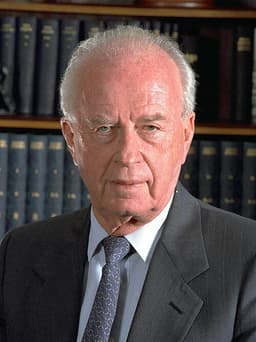
Yitzhak Rabin
General · Modern
66.4Total
Basic Information
Born
1930
1922
Died
—
—
Era
Modern
Modern
Nationality
Guatemala
Israel
Occupation
General
General
Civilization
Western
Middle Eastern
Score Comparison
Military (10%)
22.6
61.7
Political (20%)
68.0
82.0
Influence (20%)
50.2
68.0
Legacy (20%)
43.3
55.0
Leadership (15%)
80.0
78.0
Strategy (15%)
41.0
55.0
TOTAL
51.9
66.4
Oscar Mejia Victores — Complete Timeline
1983 AD
1983 Guatemalan coup d'étatPolitical Action◆ Major
Mejia Victores, then Defense Minister, led a coup that ousted President Efrain Rios Montt. He assumed the presidency, becoming the last military ruler of Guatemala.
CoupMilitary RuleGuatemala
Impact: nationaldestructive
1984 AD
Human rights abuses during his ruleOther◆ Major
During his presidency, Mejia Victores' government continued counterinsurgency operations that resulted in forced disappearances and massacres of indigenous Maya communities, as documented by truth commissions.
Human RightsCivil WarAtrocities
Impact: nationaltragic
1985 AD
Transition to civilian rulePolitical Action
Under pressure, Mejia Victores oversaw the drafting of a new constitution and called for democratic elections. He transferred power to civilian President Vinicio Cerezo in 1986, ending decades of military rule.
DemocratizationConstitutionElection
Impact: nationalconstructive
Yitzhak Rabin — Complete Timeline
1967 AD
Chief of Staff during the Six-Day WarWar
As Chief of Staff of the Israel Defense Forces, Rabin commanded the Israeli military during the Six-Day War against Egypt, Jordan, and Syria. Israel captured the Sinai Peninsula, Gaza Strip, West Bank, East Jerusalem, and Golan Heights, reshaping the region.
Six-Day WarTerritorial ExpansionMilitary Victory
Impact: global
1993 AD
Signing of the Oslo AccordsPolitical Action
As prime minister, Rabin signed the Oslo Accords with PLO Chairman Yasser Arafat on the White House lawn. The agreement established the Palestinian Authority and set a framework for Palestinian self-governance in the West Bank and Gaza Strip.
Peace ProcessPalestiniansOslo
Impact: globalconstructive
1995 AD
Assassination at Peace RallyPolitical Action
Rabin was assassinated by Israeli extremist Yigal Amir after a peace rally in Tel Aviv. The assassination shocked Israel and the world, derailing the Oslo peace process and leading to a period of political instability.
AssassinationPeace ProcessPolitical Violence
Impact: globaltragic
Expert Analysis
Yitzhak Rabin vs Oscar Mejia Victores
# The General’s Choice: Peacemaker and Power Broker
On a warm November evening in 1995, Yitzhak Rabin stood on a stage in Tel Aviv, singing “Song for Peace” with a crowd of 100,000 Israelis. Minutes later, three bullets fired by a fellow Jew ended his life. Half a world away and twelve years earlier, Oscar Mejia Victores seized power in Guatemala with a quiet coup, ousting a brutal dictator only to rule with an iron fist—before voluntarily stepping aside. One general became a martyr for peace; the other, a footnote in democracy’s slow march. What drove these two soldiers to such different fates?
Origins
Rabin was born in Jerusalem in 1922 to secular Zionist parents who had emigrated from Russia. He grew up in a land of pioneers, where the dream of a Jewish state was forged through sweat, soil, and struggle. The Holocaust’s shadow loomed; survival meant strength. Rabin joined the Palmach, the elite strike force of the Jewish underground, at eighteen. His world was one of existential threat, where military prowess was not ambition but necessity.
Mejia Victores came into the world in 1930 in Guatemala City, a child of a nation scarred by dictatorship, poverty, and a 36-year civil war. Guatemala was a Cold War battlefield, where the United States backed anticommunist strongmen and indigenous Mayan communities were crushed underfoot. Mejia Victores rose through the army, a institution that was less a defender of the state than its master. He learned that power came from the barrel of a gun—and that democracy was a luxury for the rich.
The difference in their eras is stark. Rabin’s Israel was a young, embattled democracy fighting for survival against neighbors who sought its destruction. Mejia Victores’ Guatemala was a feudal society where the army acted as a predator, not a protector. One general inherited a nation with ideals to defend; the other, a system of oppression to maintain.
Rise to Power
Rabin’s path was meteoric. By 1967, at age 45, he was Chief of Staff of the Israel Defense Forces. That June, he commanded the Six-Day War, a lightning campaign that crushed the armies of Egypt, Jordan, and Syria. Israel captured the Sinai, Gaza, the West Bank, and the Golan Heights—territories that would define its future. Rabin became a national hero, but the victory sowed seeds of occupation that would haunt him.
Mejia Victores’ rise was quieter but no less decisive. In August 1983, as Defense Minister, he led a coup against Efrain Rios Montt, a general who had ruled with genocidal fury. Rios Montt’s scorched-earth campaigns had massacred tens of thousands of Mayan villagers. Mejia Victores stepped into the vacuum, promising order. He was the fourth military ruler in a decade—a revolving door of khaki and blood.
The contrast is telling. Rabin rose through triumph in war; Mejia Victores, through the failure of a predecessor. Rabin’s legitimacy came from victory; Mejia Victores’, from the absence of worse alternatives.
Leadership & Governance
As prime minister, Rabin transformed from warrior to peacemaker. In 1993, he shook hands with Yasser Arafat on the White House lawn, signing the Oslo Accords. The agreement granted Palestinians limited self-rule—a gamble that split Israel. Rabin’s leadership was pragmatic, not ideological. He believed security required a political solution, that walls could not stand forever. His military mind saw that occupation was a losing battle.
Mejia Victores governed differently. His counterinsurgency operations continued the dirty war: forced disappearances, torture, and killings of leftists and indigenous activists. Human rights groups documented the horror. Yet, under pressure from the United States and a war-weary public, Mejia Victores did something unexpected. In 1985, he oversaw a new constitution and called for elections. He handed power to a civilian, Vinicio Cerezo, in 1986—the first peaceful transfer in decades.
Rabin used his military credibility to pursue peace; Mejia Victores used his to preserve stability while retreating from power. Rabin’s reforms were bold and divisive; Mejia Victores’ were cautious and transactional.
Triumph & Tragedy
Rabin’s greatest moment was Oslo—a handshake that seemed to promise a new Middle East. His greatest failure was the assassination that cut that promise short. He died not by an enemy’s bullet, but by a citizen’s hatred. The tragedy was that he had become a symbol of hope for many, and a traitor to others.
Mejia Victores’ triumph was the transition itself—a rare case of a military ruler voluntarily leaving. His tragedy was the human cost: the disappeared, the tortured, the villages burned. He left power, but the wounds of his rule festered. Guatemala’s democracy was fragile, built on a foundation of impunity.
Character & Destiny
Rabin was a sabra—tough, blunt, and introspective. He once said, “You don’t make peace with friends. You make it with very nasty enemies.” His character was shaped by duty: to his people, to his country, to history. He believed in the power of the state to protect and to change. His assassination was not just a political act; it was a verdict on the cost of courage.
Mejia Victores was a survivor. He played the game of power in a system where mercy was weakness. He was not a visionary, but a pragmatist. His decision to step down was not altruism; it was calculation. The army had lost its legitimacy, and he knew when to fold. His character was that of a bureaucrat in fatigues—efficient, cold, and ultimately forgettable.
Legacy
Rabin’s legacy is a question mark. He is remembered as a martyr, his name etched in Israeli memory. The Oslo Accords collapsed in violence, but his vision endures. He proved that a general could dream of peace. His score of 70.6 reflects a life cut short, but a story that continues.
Mejia Victores’ legacy is quieter. He is a footnote in Guatemala’s long nightmare. The transition he oversaw was real, but incomplete. His score of 64.7 marks a man who did less harm than his predecessor, but no good. He is remembered, if at all, as the last military ruler—a necessary evil, not a hero.
Conclusion
Two generals, two choices. Rabin risked everything for peace and paid the ultimate price. Mejia Victores risked nothing and left a hollow legacy. Their lives ask us: What does it mean to wield power? Rabin showed that power can be a bridge; Mejia Victores, that it can be a cage. In the end, history judges not by victories alone, but by what we do with them. One man’s blood still speaks; the other’s silence is a warning.
Rankings
🥇
Yitzhak RabinLeader
Mil: 61.7Pol: 82.0Inf: 68.0
66.4
🥈
Oscar Mejia Victores
Mil: 22.6Pol: 68.0Inf: 50.2
51.9
+14.5 behind
How This Comparison Works
Algorithm
Each figure is scored on 6 dimensions (0—100 scale) based on structured historical data: Military (10%), Political (20%), Influence (20%), Legacy (20%), Leadership (15%), Strategy (15%). The weighted total produces the final ranking.
Data Sources
Scores are computed from structured sub-indicators in the database. Scale factors adjust for era (Ancient ×0.85, Modern ×1.0) and civilization size (Eastern ×1.05, Other ×0.80) to account for differences in population and military scale.
Maximum 3 Figures
Comparisons are limited to 2—3 figures to ensure readability and statistical meaningfulness.
Error Margins
±5 points per dimension — Sub-scores are derived from historical records with inherent uncertainty. Two figures within 5 points on a dimension should be considered roughly equivalent in that area.
Total Score Accuracy
±3 points overall — The weighted combination of 6 dimensions produces a total score with approximately ±3 points of uncertainty. Differences of less than 3 points are not statistically significant— the figures are effectively tied.
Known Limitations
- Historical records are incomplete and uneven across civilizations
- Figures from oral-tradition societies may be underrepresented
- Occupation labels can misclassify multi-role figures
- Scores measure capability and impact, not moral character
- Quantitative scoring is a comparison tool, not absolute truth
Capability Radar
Military (10%) — Battles & Warfare
Battles
10
65
Win Rate
10
70
Expansion
5
50
Political (20%) — Governance & Reform
Reform
55
65
Diplomacy
50
85
Economy
30
60
Influence (20%) — Cultural & Global Reach
Cultural
15
55
Global
15
70
Legacy (20%) — Historical Impact
Historical
30
75
Longevity
20
60
Leadership (15%) — Power & Stability
Tenure
40
70
Stability
35
40
Strategy (15%) — Tactics & Innovation
Strategy
15
75
Tactics
15
60
Reform
20
55
Similar Comparisons
Comments & Discussion
IRON_RABIN6/16/2026
I get why people romanticize Rabin, but let's not forget he ordered 18,000 Palestinian expulsions in 1948 and approved collective punishments as defense minister during the First Intifada. The "peacemaker" label is propaganda that ignores how Oslo was a security-driven deal to bypass the PLO, not a moral conversion. He was a pragmatic general who adjusted tactics when bullets failed, not some saint who found enlightenment.
法老之瞳6/16/2026
Mejía Víctores 是拉丁美洲最被低估的转型人物。他1983年政变推翻里奥斯·蒙特这个种族灭绝者,1985年主动还政于民选政府。虽然他在位期间继续镇压游击队和工会,但对比蒙特用"焦土政策"屠杀四万玛雅人,他至少铺平了民主化道路。历史把他写成独裁者脚注,却让里奥斯·蒙特活到2021年——这才是讽刺。
DATA_DISECTOR6/16/2026
The analytics here are wildly uneven. Rabin's assassination didn't end the peace process—it was already dead. Oslo B (1995) had stalled completely, with settlements growing 40% faster under Rabin than Shamir. Mejía's "voluntary exit" sounds noble until you check Guatemala's economy: he inherited 10% inflation and left 60%, while suspending habeas corpus. Both generals failed their people; one just got a tragic movie ending.
铁幕观察者6/16/2026
别把拉宾神话成"和平烈士"。他1987年当国防部长时发明了"打碎骨头"政策镇压巴勒斯坦人起义,还公开说"消灭他们"。1993年签奥斯陆协议是因为海法大学民调显示68%以色列人厌倦打仗,纯粹政治求生。他在希伯伦屠杀后继续扩建定居点——和平只是战术,不是信念。真正的和平缔造者不会在1995年仍在约旦河西岸征地。
CLASSICS_COUNTER6/16/2026
The comparison itself is flawed—it equates two vastly different geopolitical sandboxes. Rabin fought a war for national survival against neighbors who literally promised annihilation (Khaled al-Hassan's 1968 "extermination strategy" letter), while Mejía fought a counterinsurgency where indigenous villages were collateral. Rabin's tragedy is that he broke from his military caste; Mejía's tragedy is that he stayed within it. Apples and landmines.