Loading...
Oscar Mejia Victores vs Plutarco Elias Calles
Plutarco Elias Calles leads by 6.6 pts · 2 figures compared
…

Oscar Mejia Victores
General · Modern
51.9Total
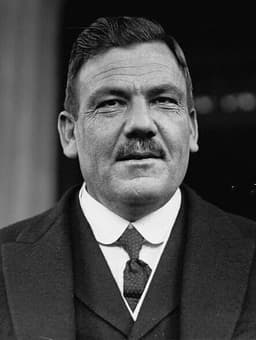
Plutarco Elias Calles
General · Modern
58.5Total
Basic Information
Born
1930
1877
Died
—
1945
Era
Modern
Modern
Nationality
Guatemala
Mexico
Occupation
General
General
Civilization
Western
Western
Score Comparison
Military (10%)
22.6
40.0
Political (20%)
68.0
70.3
Influence (20%)
50.2
68.0
Legacy (20%)
43.3
40.0
Leadership (15%)
80.0
78.0
Strategy (15%)
41.0
52.5
TOTAL
51.9
58.5
Oscar Mejia Victores — Complete Timeline
1983 AD
1983 Guatemalan coup d'étatPolitical Action◆ Major
Mejia Victores, then Defense Minister, led a coup that ousted President Efrain Rios Montt. He assumed the presidency, becoming the last military ruler of Guatemala.
CoupMilitary RuleGuatemala
Impact: nationaldestructive
1984 AD
Human rights abuses during his ruleOther◆ Major
During his presidency, Mejia Victores' government continued counterinsurgency operations that resulted in forced disappearances and massacres of indigenous Maya communities, as documented by truth commissions.
Human RightsCivil WarAtrocities
Impact: nationaltragic
1985 AD
Transition to civilian rulePolitical Action
Under pressure, Mejia Victores oversaw the drafting of a new constitution and called for democratic elections. He transferred power to civilian President Vinicio Cerezo in 1986, ending decades of military rule.
DemocratizationConstitutionElection
Impact: nationalconstructive
Plutarco Elias Calles — Complete Timeline
1915 AD
Governorship of SonoraPolitical Action
Calles served as Governor of Sonora from 1915 to 1919, implementing radical reforms including land redistribution, anti-clerical laws, and labor rights. His governorship established him as a key figure in the Sonoran dynasty and a proponent of revolutionary change.
GovernorshipSonoraReforms
Impact: regionalconstructive
1924 AD
Presidency of MexicoPolitical Action◆ Major
Calles was elected President of Mexico in 1924, serving until 1928. His administration continued revolutionary reforms, including land reform, labor rights, and secularization, but also faced opposition from the Catholic Church and conservative groups.
PresidencyMexican RevolutionReforms
Impact: nationalconstructive
1926 AD
Cristero WarWar◆ Major
Calles enforced anti-clerical laws, including the Calles Law, which restricted the Catholic Church's role in society. This sparked the Cristero War (1926-1929), a violent rebellion by Catholic peasants against the state, resulting in tens of thousands of deaths.
Cristero WarAnti-clericalismReligious Conflict
Impact: nationaldestructive
1928 AD
MaximatoPolitical Action◆ Major
After his presidency, Calles remained the de facto ruler of Mexico during the Maximato (1928-1934), controlling puppet presidents. He continued to influence policy, but his power waned as President L
MaximatoPolitical ControlCárdenas
Impact: national
1929 AD
Founding of the National Revolutionary Party (PNR)Political Action
Calles founded the National Revolutionary Party (PNR) in 1929, which later became the Institutional Revolutionary Party (PRI). This party dominated Mexican politics for over 70 years, institutionalizing the revolution's legacy and centralizing power.
Political PartyPRIInstitutionalization
Impact: nationalconstructive
Expert Analysis
Plutarco Elias Calles vs Oscar Mejia Victores
### The Strongman and the Steward
On a dusty street in Mexico City in 1926, a priest in a cassock faced a firing squad. The execution was not for murder or treason, but for saying Mass. Plutarco Elías Calles, the president of Mexico, had declared war on the Catholic Church. Half a century later and a thousand miles south, in Guatemala City, another general in a crisp uniform signed a document that would end decades of military rule. Oscar Mejía Victores, the last of a long line of caudillos, handed power to a civilian. One man crushed a church; the other cradled a constitution. Both were generals, both ruled in the shadow of revolution, and both believed they knew what was best for their nations. But their paths, and their outcomes, could not have been more different.
### Origins
Calles was born in 1877 in the northern border state of Sonora, a land of hard men and harder politics. His father was a failed alcoholic; his mother raised him in near poverty. The son of a schoolteacher, Calles learned early that the world was a battlefield of ideas and power. He turned to politics during the Mexican Revolution, a decade-long bloodbath that toppled the old dictatorship of Porfirio Díaz. The revolution was not a single movement but a whirlwind of factions, and Calles, a shrewd administrator, survived by attaching himself to the strongest horse. He was a child of chaos, and chaos shaped him.
Mejía Victores, born in 1930, came of age in a different Guatemala. His country had no grand revolution—only a long, grinding civil war that began in 1960. The son of a military family, he was raised in barracks and classrooms where the army was the only stable institution. Guatemala’s history was a cycle of coups and counter-coups, and Mejía Victores learned that power came from a gun, not a ballot box. But he also saw the world change. By the 1980s, international pressure and internal exhaustion were eroding the old order. Where Calles was forged in fire, Mejía Victores was tempered in twilight.
### Rise to Power
Calles rose through the ranks of Sonora’s revolutionary government, becoming governor in 1915. He was ruthless and efficient, redistributing land to peasants and crushing opposition with a mailed fist. His reputation for order caught the eye of President Álvaro Obregón, and when Obregón was assassinated in 1928, Calles was ready. He had already served as president from 1924 to 1928, but his real power came after: the Maximato, from 1928 to 1934, when he ruled through puppet presidents, pulling strings from behind the throne.
Mejía Victores’s rise was simpler. In 1983, he was defense minister under the brutal dictator Efraín Ríos Montt. When Ríos Montt’s scorched-earth tactics alienated even the military, Mejía Victores led a coup that August. He did not seize power for a grand vision; he did so because the army needed a cleaner face. His path was not one of ambition but of convenience—a man who stepped into a vacuum because someone had to.
### Leadership & Governance
Calles was a builder. His presidency saw the construction of schools, highways, and irrigation systems. But his defining act was the Calles Law of 1926, which restricted the Catholic Church’s property, banned foreign priests, and closed religious schools. The result was the Cristero War, a three-year rebellion that killed an estimated 90,000 people. Calles did not flinch. He saw the Church as a rival to the state, and he crushed it with the same steel he used against bandits. His greatest political creation was the National Revolutionary Party (PNR) in 1929, a machine that would dominate Mexico for seven decades. It was not democracy—it was control through organization.
Mejía Victores governed differently. He inherited a country bleeding from Ríos Montt’s massacres, where tens of thousands had been “disappeared.” His government continued counterinsurgency operations, but the violence ebbed. He faced international condemnation and a drained treasury. His response was not to fight harder but to negotiate. In 1984, he allowed a constituent assembly to draft a new constitution, and in 1985, he oversaw elections that transferred power to a civilian, Vinicio Cerezo. It was not a clean transition—the army retained veto power—but it was a door opened, not a wall built.
### Triumph & Tragedy
Calles’s greatest triumph was the PRI, the party that brought stability to a fractured nation. His tragedy was the Cristero War, a conflict that turned churches into fortresses and priests into martyrs. He won the war, but the scars remain. Mexico’s secularism is his legacy, but so is the memory of bodies hanging from telegraph poles.
Mejía Victores’s triumph was the transition itself. He could have clung to power, as Ríos Montt did, but he chose to step aside. His tragedy is that the democracy he birthed was fragile. Human rights abuses continued, and the war dragged on until 1996. He is remembered as the man who ended military rule, but also as one who did not stop the killing.
### Character & Destiny
Calles was a man of iron will. He believed that Mexico could only be saved by a strong state, and he was willing to kill to build it. His personality was authoritarian, but also visionary—he saw a nation free from the grip of the Church and the old oligarchy. His destiny was to create a system that outlasted him, but one that also stifled dissent.
Mejía Victores was a pragmatist. He lacked Calles’s ideological fire. He did not want to build a new world; he wanted to manage the end of the old one. His character was cautious, even timid. He sensed that history was moving against military dictatorships, and he chose to surf the wave rather than drown in it. His destiny was to be a footnote, not a founder.
### Legacy
Calles is a ghost in Mexico. The PRI ruled until 2000, but its corruption and authoritarianism have tarnished his name. He is remembered as the “Jefe Máximo,” the boss of bosses, but also as a man who started a war with God. His legacy is a mixed one: a modern state built on blood.
Mejía Victores is barely remembered at all. He died in obscurity, his exact date of death unknown. In Guatemala, he is a bridge between two eras—a general who gave up his sword. His legacy is not a party or a law, but a precedent: that even in the darkest times, power can be handed over.
### Conclusion
Two generals, two Americas, two fates. Calles built a machine that crushed his enemies and created order. Mejía Victores dismantled a machine that had crushed his people and created a chance. One believed in power; the other believed in exit. In the end, the question is not who was stronger, but who was wiser. Calles’s Mexico is a nation of secular laws and one-party memories. Mejía Victores’s Guatemala is a fragile democracy still wrestling with its past. Perhaps the lesson is that the strongest hand does not always build the strongest house. Sometimes, the greatest strength is knowing when to let go.
Rankings
🥇
Plutarco Elias CallesLeader
Mil: 40.0Pol: 70.3Inf: 68.0
58.5
🥈
Oscar Mejia Victores
Mil: 22.6Pol: 68.0Inf: 50.2
51.9
+6.6 behind
How This Comparison Works
Algorithm
Each figure is scored on 6 dimensions (0—100 scale) based on structured historical data: Military (10%), Political (20%), Influence (20%), Legacy (20%), Leadership (15%), Strategy (15%). The weighted total produces the final ranking.
Data Sources
Scores are computed from structured sub-indicators in the database. Scale factors adjust for era (Ancient ×0.85, Modern ×1.0) and civilization size (Eastern ×1.05, Other ×0.80) to account for differences in population and military scale.
Maximum 3 Figures
Comparisons are limited to 2—3 figures to ensure readability and statistical meaningfulness.
Error Margins
±5 points per dimension — Sub-scores are derived from historical records with inherent uncertainty. Two figures within 5 points on a dimension should be considered roughly equivalent in that area.
Total Score Accuracy
±3 points overall — The weighted combination of 6 dimensions produces a total score with approximately ±3 points of uncertainty. Differences of less than 3 points are not statistically significant— the figures are effectively tied.
Known Limitations
- Historical records are incomplete and uneven across civilizations
- Figures from oral-tradition societies may be underrepresented
- Occupation labels can misclassify multi-role figures
- Scores measure capability and impact, not moral character
- Quantitative scoring is a comparison tool, not absolute truth
Capability Radar
Military (10%) — Battles & Warfare
Battles
10
45
Win Rate
10
50
Expansion
5
30
Political (20%) — Governance & Reform
Reform
55
85
Diplomacy
50
65
Economy
30
60
Influence (20%) — Cultural & Global Reach
Cultural
15
70
Global
15
60
Legacy (20%) — Historical Impact
Historical
30
75
Longevity
20
70
Leadership (15%) — Power & Stability
Tenure
40
70
Stability
35
55
Strategy (15%) — Tactics & Innovation
Strategy
15
55
Tactics
15
40
Reform
20
60
Similar Comparisons
Comments & Discussion
No comments yet. Be the first to share your thoughts!