Loading...
Orhan vs Raja Raja Chola I
Raja Raja Chola I leads by 10.4 pts · 2 figures compared
…
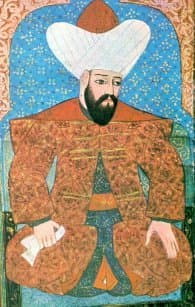
Orhan
Emperor · Medieval
59.6Total
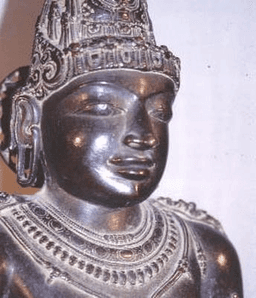
Raja Raja Chola I
Emperor · Medieval
70.0Total
Basic Information
Born
1281
947
Died
1362
1014
Era
Medieval
Medieval
Nationality
Ottoman Empire
India
Occupation
Emperor
Emperor
Civilization
Middle Eastern
Indian
Score Comparison
Military (10%)
67.5
82.0
Political (20%)
68.0
72.0
Influence (20%)
61.0
65.0
Legacy (20%)
50.0
65.0
Leadership (15%)
66.0
78.0
Strategy (15%)
50.0
68.0
TOTAL
59.6
70.0
Orhan — Complete Timeline
1326 AD
Capture of BursaWar◆ Major
Orhan captured the city of Bursa from the Byzantine Empire after a prolonged siege. He made Bursa the first Ottoman capital, establishing it as a political and economic center that would serve as the base for further expansion into Europe.
ConquestBursaCapital
Impact: regional
1329 AD
Battle of PelekanonWar◆ Major
Orhan defeated a Byzantine army led by Emperor Andronikos III at Pelekanon near Nicomedia. This victory secured Ottoman control over northwestern Anatolia and forced the Byzantines to abandon attempts to reclaim lost territory.
BattleByzantineAnatolia
Impact: regional
1337 AD
Capture of NicomediaWar◆ Major
Orhan captured the Byzantine city of Nicomedia (modern
ConquestNicomediaByzantine
Impact: regional
1346 AD
Marriage to Theodora KantakouzenePolitical Action
Orhan married Theodora, the daughter of Byzantine emperor John VI Kantakouzenos, as part of a political alliance. This marriage strengthened Ottoman-Byzantine relations and gave the Ottomans a foothold in European affairs.
MarriageAllianceByzantine
Impact: regionalconstructive
1362 AD
Establishment of the Janissary CorpsReform◆ Major
Orhan is traditionally credited with creating the Janissary corps, an elite infantry unit composed of Christian boys taken through the devshirme system. This force became the backbone of the Ottoman military, though its exact origins are debated.
JanissaryMilitary ReformDevshirme
Impact: global
Raja Raja Chola I — Complete Timeline
985 AD
Accession to the Chola ThronePolitical Action
Raja Raja Chola I ascended the throne of the Chola Empire, succeeding his father Parantaka II. He inherited a kingdom in the Tamil region and began a series of military campaigns that would transform the Chola state into a major power.
Chola EmpireSuccessionExpansion
Impact: regional
990 AD
Conquest of the Chera KingdomWar◆ Major
Raja Raja Chola I defeated the Chera king Bhaskara Ravi Varman and annexed the Chera territories in present-day Kerala. This conquest gave the Cholas control over the Malabar Coast and its spice trade.
CheraKeralaSpice Trade
Impact: regional
1000 AD
Administrative Reforms and Land SurveyReform◆ Major
Raja Raja Chola I conducted a comprehensive land survey and reorganized the revenue system. He standardized tax collection and recorded land holdings in inscriptions, which improved administrative efficiency and funded his military and building projects.
Land SurveyRevenue SystemAdministration
Impact: regionalconstructive
1005 AD
Naval Campaign against the Srivijaya EmpireWar◆ Major
Raja Raja Chola I launched a naval expedition against the Srivijaya Empire in Southeast Asia, targeting the Strait of Malacca. The campaign disrupted Srivijaya's trade monopoly and established Chola influence in the region, though full conquest was not achieved.
SrivijayaNaval ExpeditionSoutheast Asia
Impact: regional
1010 AD
Construction of the Brihadeeswarar TempleCultural◆ Major
Raja Raja Chola I commissioned the construction of the Brihadeeswarar Temple in Thanjavur, dedicated to Shiva. The temple, built with granite, features a 66-meter vimana and is a masterpiece of Dravidian architecture, later designated a UNESCO World Heritage site.
Brihadeeswarar TempleThanjavurDravidian Architecture
Impact: regionalconstructive
Expert Analysis
Origins
Orhan (c. 1281–1362) was the second sultan of the Ottoman Empire, born in Söğüt to Osman I, the founder of the dynasty. Little is known of his early life, but he likely received military training in the frontier ghazi tradition. His father's expansion of the small beylik set the stage for Orhan's conquests.
Raja Raja Chola I (c. 947–1014) ascended the Chola throne in 985 CE, inheriting a kingdom centered in the Kaveri River delta. His father, Parantaka II, had restored Chola power after a period of decline. Raja Raja was educated in statecraft and military tactics, and his early campaigns focused on consolidating control over Tamil Nadu.
Rise to Power
Orhan became ruler upon Osman's death in 1324. His first major act was the capture of Bursa in 1326 after a prolonged siege. This city became the first Ottoman capital, providing a political and economic base. In 1329, he defeated Byzantine Emperor Andronikos III at Pelekanon, opening the way for further conquests in Anatolia. By 1337, he captured Nicomedia, the last Byzantine stronghold in the region. These victories established Ottoman dominance over northwestern Anatolia.
Raja Raja Chola I began his reign with campaigns against the Pandyas and Cheras. He defeated the Chera king Bhaskara Ravi Varman around 1000 CE, annexing the Kerala coast. This victory gave the Cholas control over the spice trade routes. He also subdued the Pandya kingdom and launched a naval expedition against the Srivijaya Empire in 1025 CE, disrupting their hold on the Strait of Malacca. These conquests elevated the Chola Empire to a maritime power.
Leadership & Governance
Orhan's governance was characterized by military organization and administrative innovation. He is traditionally credited with creating the Janissary corps, an elite infantry unit recruited through the devshirme system—taking Christian boys and converting them to Islam. This institution provided loyal, well-trained soldiers. He also introduced a silver coin, the akçe, to standardize trade. Politically, he married Theodora Kantakouzene, a Byzantine princess, to secure an alliance with Constantinople. However, his state remained a frontier beylik with limited bureaucracy.
Raja Raja Chola I implemented sweeping administrative reforms. He conducted a comprehensive land survey in 1000 CE, recording holdings and standardizing tax collection. This data allowed efficient revenue extraction and funding for public works. He reorganized the empire into provinces (mandalam) and districts (valanadu), each with appointed officials. His naval campaigns established a powerful Chola fleet that protected trade routes. The construction of the Brihadeeswarar Temple (completed 1010 CE) demonstrated his ability to mobilize resources and workers on a massive scale.
Triumph & Tragedy
Orhan's greatest success was the capture of Bursa and the establishment of a capital that would serve the Ottomans for decades. The Battle of Pelekanon ensured Ottoman control over Anatolia. However, his failure to capture Constantinople or establish a lasting administrative system limited his immediate impact. His reliance on the devshirme system created future tensions within the empire.
Raja Raja Chola I's triumphs include the conquest of the Chera kingdom and the naval campaign against Srivijaya, which opened trade with Southeast Asia. The Brihadeeswarar Temple remains a UNESCO World Heritage site, a testament to Chola engineering. His failures include overextension: the empire struggled to maintain control over distant territories after his death. The naval expedition, while disruptive, did not lead to permanent conquest.
Character & Destiny
Orhan was a pragmatic and patient leader, willing to besiege cities for years and to form alliances through marriage. He avoided unnecessary risks, consolidating gains before expanding. His character suited the slow expansion of the Ottoman state. Historians note his role as a founder of institutions that outlasted him.
Raja Raja Chola I was ambitious and methodical, with a vision for a centralized empire. He personally oversaw the land survey and temple construction, reflecting attention to detail. His character drove him to achieve both military and cultural heights, but his centralized model required strong successors.
Legacy
Orhan's legacy is foundational: the Janissary corps, the first Ottoman capital, and the expansion into Europe. His military innovations scored 67.5, while his political score is 68.0. However, his influence (61.0) and legacy (50.0) are lower due to being overshadowed by later sultans.
Raja Raja Chola I's legacy is more enduring: the Brihadeeswarar Temple, administrative reforms, and maritime expansion. His military score is 82.0, political 72.0, and legacy 65.0. The temple remains a symbol of Chola power, and his land survey influenced Indian taxation for centuries.
Conclusion
Raja Raja Chola I had a greater impact than Orhan, with a total score of 70.0 vs 59.6. His military, political, and cultural achievements were broader and more lasting. While Orhan laid the groundwork for the Ottoman Empire, Raja Raja Chola I built a centralized state that left monumental architecture and administrative systems. The Chola emperor's influence extended across the Indian Ocean, while Orhan's was regional. Therefore, Raja Raja Chola I stands as the more significant historical figure.
Rankings
🥇
Raja Raja Chola ILeader
Mil: 82.0Pol: 72.0Inf: 65.0
70.0
🥈
Orhan
Mil: 67.5Pol: 68.0Inf: 61.0
59.6
+10.4 behind
How This Comparison Works
Algorithm
Each figure is scored on 6 dimensions (0—100 scale) based on structured historical data: Military (10%), Political (20%), Influence (20%), Legacy (20%), Leadership (15%), Strategy (15%). The weighted total produces the final ranking.
Data Sources
Scores are computed from structured sub-indicators in the database. Scale factors adjust for era (Ancient ×0.85, Modern ×1.0) and civilization size (Eastern ×1.05, Other ×0.80) to account for differences in population and military scale.
Maximum 3 Figures
Comparisons are limited to 2—3 figures to ensure readability and statistical meaningfulness.
Error Margins
±5 points per dimension — Sub-scores are derived from historical records with inherent uncertainty. Two figures within 5 points on a dimension should be considered roughly equivalent in that area.
Total Score Accuracy
±3 points overall — The weighted combination of 6 dimensions produces a total score with approximately ±3 points of uncertainty. Differences of less than 3 points are not statistically significant— the figures are effectively tied.
Known Limitations
- Historical records are incomplete and uneven across civilizations
- Figures from oral-tradition societies may be underrepresented
- Occupation labels can misclassify multi-role figures
- Scores measure capability and impact, not moral character
- Quantitative scoring is a comparison tool, not absolute truth
Capability Radar
Military (10%) — Battles & Warfare
Battles
60
85
Win Rate
65
90
Expansion
65
85
Political (20%) — Governance & Reform
Reform
55
80
Diplomacy
60
75
Economy
55
85
Influence (20%) — Cultural & Global Reach
Cultural
50
85
Global
45
70
Legacy (20%) — Historical Impact
Historical
55
80
Longevity
50
85
Leadership (15%) — Power & Stability
Tenure
70
85
Stability
65
80
Strategy (15%) — Tactics & Innovation
Strategy
60
85
Tactics
55
80
Reform
50
75
Similar Comparisons
Comments & Discussion
No comments yet. Be the first to share your thoughts!