Loading...
Oranmiyan vs Raja Raja Chola I
Raja Raja Chola I leads by 16.9 pts · 2 figures compared
…
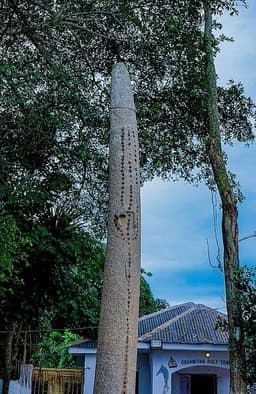
Oranmiyan
Emperor · Medieval
53.1Total
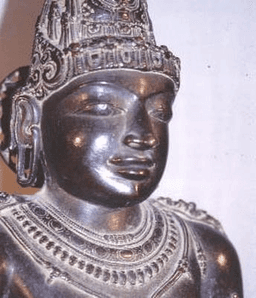
Raja Raja Chola I
Emperor · Medieval
70.0Total
Basic Information
Born
1150
947
Died
1220
1014
Era
Medieval
Medieval
Nationality
Oyo Empire
India
Occupation
Emperor
Emperor
Civilization
Other
Indian
Score Comparison
Military (10%)
45.0
82.0
Political (20%)
43.7
72.0
Influence (20%)
55.7
65.0
Legacy (20%)
48.3
65.0
Leadership (15%)
67.0
78.0
Strategy (15%)
60.0
68.0
TOTAL
53.1
70.0
Oranmiyan — Complete Timeline
1170 AD
Rule as Oba of BeninPolitical Action◆ Major
Before founding Oyo, Oranmiyan is said to have ruled the Kingdom of Benin as its Oba (king). His son, Eweka I, became the first Oba of the Benin Empire, establishing a dynasty that continues to the present day. This dual rule links the histories of Oyo and Benin.
Benin KingdomDynastic LinkOba
Impact: regionalconstructive
1180 AD
Foundation of the Oyo EmpirePolitical Action
Oranmiyan, a son of Oduduwa, is credited with founding the Oyo Empire. He established the city of Oyo-Ile as the capital and became the first Alaafin (king) of Oyo. This event laid the foundation for one of the most powerful empires in West African history.
Empire FoundationOyoAlaafin
Impact: regionalconstructive
Raja Raja Chola I — Complete Timeline
985 AD
Accession to the Chola ThronePolitical Action
Raja Raja Chola I ascended the throne of the Chola Empire, succeeding his father Parantaka II. He inherited a kingdom in the Tamil region and began a series of military campaigns that would transform the Chola state into a major power.
Chola EmpireSuccessionExpansion
Impact: regional
990 AD
Conquest of the Chera KingdomWar◆ Major
Raja Raja Chola I defeated the Chera king Bhaskara Ravi Varman and annexed the Chera territories in present-day Kerala. This conquest gave the Cholas control over the Malabar Coast and its spice trade.
CheraKeralaSpice Trade
Impact: regional
1000 AD
Administrative Reforms and Land SurveyReform◆ Major
Raja Raja Chola I conducted a comprehensive land survey and reorganized the revenue system. He standardized tax collection and recorded land holdings in inscriptions, which improved administrative efficiency and funded his military and building projects.
Land SurveyRevenue SystemAdministration
Impact: regionalconstructive
1005 AD
Naval Campaign against the Srivijaya EmpireWar◆ Major
Raja Raja Chola I launched a naval expedition against the Srivijaya Empire in Southeast Asia, targeting the Strait of Malacca. The campaign disrupted Srivijaya's trade monopoly and established Chola influence in the region, though full conquest was not achieved.
SrivijayaNaval ExpeditionSoutheast Asia
Impact: regional
1010 AD
Construction of the Brihadeeswarar TempleCultural◆ Major
Raja Raja Chola I commissioned the construction of the Brihadeeswarar Temple in Thanjavur, dedicated to Shiva. The temple, built with granite, features a 66-meter vimana and is a masterpiece of Dravidian architecture, later designated a UNESCO World Heritage site.
Brihadeeswarar TempleThanjavurDravidian Architecture
Impact: regionalconstructive
Expert Analysis
Origins
Oranmiyan, a prince of the Yoruba people, was born around the 12th century as a son of Oduduwa, the mythical progenitor of the Yoruba. He grew up in Ile-Ife, the spiritual center of Yorubaland, and was steeped in the oral traditions of his lineage. His early life is shrouded in legend, but he is consistently portrayed as a warrior and leader. Little is known of his education, but he likely received training in warfare and governance.
Raja Raja Chola I, born Arulmozhi Varman in 947 CE, was a prince of the Chola dynasty in South India. He was the son of Parantaka II and Vanavan Mahadevi. He grew up in the royal court of Thanjavur, receiving a comprehensive education in statecraft, military strategy, and Tamil literature. His early years were marked by the declining fortunes of the Chola Empire, which had lost territories to the Rashtrakutas and others.
Rise to Power
Oranmiyan's rise is tied to his departure from Ile-Ife after a dispute with his brothers. He traveled south and was invited to rule the Kingdom of Benin, which had no king. He became the Oba of Benin, but after a few years, he left due to cultural conflicts, leaving his son Eweka I as the first Oba of the Benin Empire. He then returned to the north and founded the Oyo Empire, establishing its capital at Oyo-Ile. He became the first Alaafin (king) of Oyo, around 1300 CE.
Raja Raja Chola I ascended the throne in 985 CE after a brief succession struggle. He inherited a kingdom that included the Tanjore region but faced threats from the Pandya and Chera kingdoms. He quickly consolidated power by crushing rebellions and launching campaigns against the Cheras and Pandyas. His early victories included the conquest of the Chera capital and the annexation of Kerala, which gave the Cholas control of the western coast.
Leadership & Governance
Oranmiyan's leadership was foundational. He established the political structure of Oyo, with the Alaafin as the supreme ruler, and set up a council of chiefs. His governance relied on decentralized authority, with local chiefs managing regions. However, his rule lacked administrative reforms or systematic record-keeping. His military campaigns were limited to consolidating territory around Oyo-Ile.
Raja Raja Chola I was a master administrator. He conducted a comprehensive land survey, recording holdings and standardizing tax collection. He reorganized the empire into provinces (mandalams) and districts (valanadus), appointing officials to ensure efficient governance. He also reformed the army, creating a standing force and a powerful navy. His leadership scored 78.0, compared to Oranmiyan's 67.0, reflecting his methodical approach.
Triumph & Tragedy
Oranmiyan's greatest success was founding both the Benin Empire and the Oyo Empire, creating dynasties that lasted centuries. His tragedy is the lack of written records; his achievements are known only through oral traditions, making historical assessment difficult. He also faced conflicts with his brothers, which limited his influence in Yorubaland.
Raja Raja Chola I's triumphs include the conquest of the Chera and Pandya kingdoms, the annexation of Sri Lanka, and the naval campaign against Srivijaya, which disrupted trade routes and projected Chola power across the Indian Ocean. He also built the Brihadeeswarar Temple, a masterpiece of Dravidian architecture. His failures include overextension; the Srivijaya campaign was costly and its long-term benefits limited. He also faced rebellions in conquered territories.
Character & Destiny
Oranmiyan is portrayed as a restless warrior, driven by ambition and a sense of destiny. His departure from Benin suggests a pragmatic ruler who prioritized his own vision over cultural adaptation. His character scored 67.0 in leadership, indicating strong but less systematic qualities.
Raja Raja Chola I was methodical, patient, and visionary. He was a patron of arts and religion, and his administrative reforms show a mind for detail. His decisions were calculated, as seen in his phased conquests. His leadership score of 78.0 reflects his effectiveness.
Legacy
Oranmiyan's legacy is the creation of the Oyo Empire, which became a major power in West Africa, and the Benin Empire, which lasted until 1897. He is revered as a founding father in Yoruba and Benin traditions. However, his legacy is largely symbolic, with limited concrete achievements.
Raja Raja Chola I's legacy is immense. The Brihadeeswarar Temple is a UNESCO World Heritage site. His administrative reforms influenced later South Indian kingdoms. The Chola Empire reached its zenith under him and his son Rajendra I. His naval campaigns established Chola dominance in the Indian Ocean. He scored 65.0 in legacy, while Oranmiyan scored 48.3.
Conclusion
Raja Raja Chola I had greater impact. His military score of 82.0 dwarfs Oranmiyan's 45.0, his political score of 72.0 exceeds 43.7, and his total score of 70.0 versus 53.1 confirms his superiority. Oranmiyan's role as a founder is significant, but Raja Raja Chola I's concrete achievements in governance, architecture, and empire-building are more measurable and enduring. While Oranmiyan established dynasties, Raja Raja Chola I transformed a kingdom into a pan-Asian empire.
Rankings
🥇
Raja Raja Chola ILeader
Mil: 82.0Pol: 72.0Inf: 65.0
70.0
🥈
Oranmiyan
Mil: 45.0Pol: 43.7Inf: 55.7
53.1
+16.9 behind
How This Comparison Works
Algorithm
Each figure is scored on 6 dimensions (0—100 scale) based on structured historical data: Military (10%), Political (20%), Influence (20%), Legacy (20%), Leadership (15%), Strategy (15%). The weighted total produces the final ranking.
Data Sources
Scores are computed from structured sub-indicators in the database. Scale factors adjust for era (Ancient ×0.85, Modern ×1.0) and civilization size (Eastern ×1.05, Other ×0.80) to account for differences in population and military scale.
Maximum 3 Figures
Comparisons are limited to 2—3 figures to ensure readability and statistical meaningfulness.
Error Margins
±5 points per dimension — Sub-scores are derived from historical records with inherent uncertainty. Two figures within 5 points on a dimension should be considered roughly equivalent in that area.
Total Score Accuracy
±3 points overall — The weighted combination of 6 dimensions produces a total score with approximately ±3 points of uncertainty. Differences of less than 3 points are not statistically significant— the figures are effectively tied.
Known Limitations
- Historical records are incomplete and uneven across civilizations
- Figures from oral-tradition societies may be underrepresented
- Occupation labels can misclassify multi-role figures
- Scores measure capability and impact, not moral character
- Quantitative scoring is a comparison tool, not absolute truth
Capability Radar
Military (10%) — Battles & Warfare
Battles
45
85
Win Rate
50
90
Expansion
55
85
Political (20%) — Governance & Reform
Reform
40
80
Diplomacy
45
75
Economy
35
85
Influence (20%) — Cultural & Global Reach
Cultural
45
85
Global
30
70
Legacy (20%) — Historical Impact
Historical
50
80
Longevity
40
85
Leadership (15%) — Power & Stability
Tenure
50
85
Stability
40
80
Strategy (15%) — Tactics & Innovation
Strategy
45
85
Tactics
40
80
Reform
35
75
Similar Comparisons
Comments & Discussion
No comments yet. Be the first to share your thoughts!