Loading...
James I of Aragon vs Orhan
Orhan leads by 0.9 pts · 2 figures compared
…
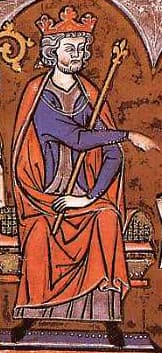
James I of Aragon
Emperor · Medieval
58.7Total
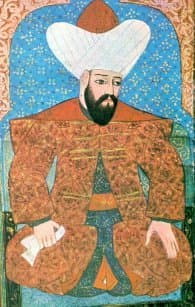
Orhan
Emperor · Medieval
59.6Total
Basic Information
Born
1208
1281
Died
1276
1362
Era
Medieval
Medieval
Nationality
Aragon
Ottoman Empire
Occupation
Emperor
Emperor
Civilization
Western
Middle Eastern
Score Comparison
Military (10%)
74.7
67.5
Political (20%)
45.0
68.0
Influence (20%)
61.0
61.0
Legacy (20%)
54.0
50.0
Leadership (15%)
66.0
66.0
Strategy (15%)
58.0
50.0
TOTAL
58.7
59.6
James I of Aragon — Complete Timeline
1229 AD
Conquest of MallorcaWar◆ Major
James I led a fleet from Salou to invade the island of Mallorca, defeating the Almohad governor. The conquest added the Balearic Islands to the Crown of Aragon and established a base for Mediterranean trade.
ReconquistaConquestMallorca
Impact: regionalconstructive
1238 AD
Conquest of ValenciaWar◆ Major
James I captured the city of Valencia after a long siege, incorporating the Kingdom of Valencia into the Crown of Aragon. The conquest added a wealthy and populous territory to Aragon and extended Christian control down the Mediterranean coast.
ReconquistaConquestValencia
Impact: regionalconstructive
1258 AD
Treaty of CorbeilPolitical Action◆ Major
James I signed the Treaty of Corbeil with Louis IX of France, renouncing Aragonese claims to territories in southern France in exchange for French recognition of Aragonese rule over Roussillon and Montpellier. This treaty defined the border between France and Aragon.
TreatyBorderFranceAragon
Impact: regionalconstructive
1261 AD
Promulgation of the Furs of ValenciaReform◆ Major
James I granted the Kingdom of Valencia its own legal code, the Furs, which established a separate legal and administrative system for the new kingdom. This code balanced royal authority with local privileges and became a model for later Aragonese governance.
LawLegal CodeValencia
Impact: regionalconstructive
Orhan — Complete Timeline
1326 AD
Capture of BursaWar◆ Major
Orhan captured the city of Bursa from the Byzantine Empire after a prolonged siege. He made Bursa the first Ottoman capital, establishing it as a political and economic center that would serve as the base for further expansion into Europe.
ConquestBursaCapital
Impact: regional
1329 AD
Battle of PelekanonWar◆ Major
Orhan defeated a Byzantine army led by Emperor Andronikos III at Pelekanon near Nicomedia. This victory secured Ottoman control over northwestern Anatolia and forced the Byzantines to abandon attempts to reclaim lost territory.
BattleByzantineAnatolia
Impact: regional
1337 AD
Capture of NicomediaWar◆ Major
Orhan captured the Byzantine city of Nicomedia (modern
ConquestNicomediaByzantine
Impact: regional
1346 AD
Marriage to Theodora KantakouzenePolitical Action
Orhan married Theodora, the daughter of Byzantine emperor John VI Kantakouzenos, as part of a political alliance. This marriage strengthened Ottoman-Byzantine relations and gave the Ottomans a foothold in European affairs.
MarriageAllianceByzantine
Impact: regionalconstructive
1362 AD
Establishment of the Janissary CorpsReform◆ Major
Orhan is traditionally credited with creating the Janissary corps, an elite infantry unit composed of Christian boys taken through the devshirme system. This force became the backbone of the Ottoman military, though its exact origins are debated.
JanissaryMilitary ReformDevshirme
Impact: global
Expert Analysis
Origins
James I of Aragon (born 1208) was the son of King Peter II of Aragon and Marie of Montpellier. His early life was marked by instability: his father died at the Battle of Muret in 1213, leaving James as a child king under the regency of his uncle, the Count of Provence. He was raised in the Templar castle of Monzón, receiving a military and political education. His formative years were shaped by the need to reclaim royal authority from the nobility.
Orhan (born c. 1281) was the son of Osman I, the founder of the Ottoman Empire. Little is known of his early life, but he grew up in the frontier warrior culture of the Turkish beyliks in Anatolia. He succeeded his father as bey of the Ottoman tribe around 1326. His background was one of constant warfare against the Byzantine Empire and rival Turkish states.
Rise to Power
James I assumed personal rule at age 20 in 1228. He immediately launched a campaign to conquer the Balearic Islands, starting with Mallorca. He assembled a fleet in Salou and landed on the island in September 1229, defeating the Almohad governor in a series of battles. The conquest took three months, and James incorporated the islands into the Crown of Aragon. This success solidified his authority and provided resources for further campaigns.
Orhan's rise was more gradual. He led Ottoman forces in the capture of Bursa in 1326, a city that had been under siege for years. This victory gave the Ottomans a capital and a strong base in northwestern Anatolia. Orhan then defeated a Byzantine army at the Battle of Pelekanon in 1329, securing Ottoman control over the region. He followed up with the capture of Nicomedia in 1337, completing the conquest of Byzantine territories in the area.
Leadership & Governance
James I was a feudal monarch who relied on the support of the nobility and the Church. He granted charters and legal codes to his conquered territories: the Furs of Valencia (1238) established a separate legal system for the Kingdom of Valencia, and the Llibre del Repartiment recorded land distribution. He also founded the University of Montpellier in 1289 (though earlier origins). His governance was decentralized, allowing local customs to persist. James scored 45.0 in political, reflecting the challenges of managing a loose confederation of kingdoms.
Orhan was a more centralized ruler. He is credited with establishing the Janissary corps (c. 1330s), an elite infantry unit recruited through the devshirme system—taking Christian boys, converting them, and training them as loyal soldiers. This created a professional army directly tied to the sultan. He also introduced a standing army of paid soldiers, reducing reliance on tribal levies. Orhan's political score of 68.0 indicates his success in building state institutions.
Triumph & Tragedy
James I's greatest triumph was the conquest of Valencia (1238), a wealthy kingdom that became a major part of the Crown of Aragon. He also signed the Treaty of Corbeil (1258) with Louis IX of France, which confirmed Aragonese rule over Roussillon and Montpellier in exchange for renouncing claims to other French territories. However, his failures included the failed invasion of the Kingdom of Navarre in 1270 and ongoing conflicts with the Aragonese nobility, which weakened royal authority. His legacy score of 54.0 reflects mixed long-term impact.
Orhan's triumphs include the capture of Bursa, which became the first Ottoman capital, and the victory at Pelekanon, which broke Byzantine resistance in Anatolia. His marriage to Theodora Kantakouzene (1346) forged a political alliance with a Byzantine emperor. However, his failure to capture the city of Constantinople left the Byzantine Empire intact, and his later years saw internal strife among his sons. His legacy score of 50.0 is subdued, as later sultans overshadowed his achievements.
Character & Destiny
James I was known for his energy and ambition, but also for his temper and conflicts with his nobles. He wrote a chronicle of his deeds, the Llibre dels Fets, which portrays him as a crusader king. His decision to divide his kingdoms among his sons (James II of Majorca and Peter III of Aragon) led to future conflicts. Historians assess him as a capable conqueror but a flawed administrator.
Orhan was a pragmatic and patient ruler. He avoided direct confrontation with larger Byzantine forces, preferring sieges and attrition. His creation of the Janissaries shows strategic foresight. However, his reliance on Byzantine alliances through marriage indicates a willingness to compromise. His character set the foundation for Ottoman expansion, but he was overshadowed by his successors Murad I and Mehmed II.
Legacy
James I left a lasting mark on the Mediterranean. The Kingdom of Valencia remained part of the Crown of Aragon until the 18th century, and its legal code (Furs) persisted until 1707. The Balearic Islands were permanently incorporated. His conquests expanded Aragonese trade and influence. However, his decentralized governance meant that his realms often acted independently.
Orhan's legacy is more institutional. The Janissary corps became a key instrument of Ottoman power for centuries. The capture of Bursa established a capital that remained important until the conquest of Constantinople. He also began the process of Ottoman expansion into Europe through alliances and military pressure. His total score of 59.6 edges out James's 58.7, but the gap is narrow.
Conclusion
Orhan had a greater long-term impact because he built state institutions—the Janissaries and a standing army—that enabled centuries of Ottoman expansion. James I's conquests were impressive but lacked centralization, leading to fragmentation after his death. While James scored higher in military (74.7 vs. 67.5) and strategy (58.0 vs. 50.0), Orhan's political (68.0 vs. 45.0) and leadership (66.0 vs. 66.0) scores reflect his superior governance. Orhan's foundation of the Ottoman state proved more enduring than James's Aragonese empire.
Rankings
🥇
OrhanLeader
Mil: 67.5Pol: 68.0Inf: 61.0
59.6
🥈
James I of Aragon
Mil: 74.7Pol: 45.0Inf: 61.0
58.7
+0.9 behind
How This Comparison Works
Algorithm
Each figure is scored on 6 dimensions (0—100 scale) based on structured historical data: Military (10%), Political (20%), Influence (20%), Legacy (20%), Leadership (15%), Strategy (15%). The weighted total produces the final ranking.
Data Sources
Scores are computed from structured sub-indicators in the database. Scale factors adjust for era (Ancient ×0.85, Modern ×1.0) and civilization size (Eastern ×1.05, Other ×0.80) to account for differences in population and military scale.
Maximum 3 Figures
Comparisons are limited to 2—3 figures to ensure readability and statistical meaningfulness.
Error Margins
±5 points per dimension — Sub-scores are derived from historical records with inherent uncertainty. Two figures within 5 points on a dimension should be considered roughly equivalent in that area.
Total Score Accuracy
±3 points overall — The weighted combination of 6 dimensions produces a total score with approximately ±3 points of uncertainty. Differences of less than 3 points are not statistically significant— the figures are effectively tied.
Known Limitations
- Historical records are incomplete and uneven across civilizations
- Figures from oral-tradition societies may be underrepresented
- Occupation labels can misclassify multi-role figures
- Scores measure capability and impact, not moral character
- Quantitative scoring is a comparison tool, not absolute truth
Capability Radar
Military (10%) — Battles & Warfare
Battles
70
60
Win Rate
75
65
Expansion
75
65
Political (20%) — Governance & Reform
Reform
70
55
Diplomacy
65
60
Economy
60
55
Influence (20%) — Cultural & Global Reach
Cultural
55
50
Global
50
45
Legacy (20%) — Historical Impact
Historical
60
55
Longevity
55
50
Leadership (15%) — Power & Stability
Tenure
75
70
Stability
60
65
Strategy (15%) — Tactics & Innovation
Strategy
70
60
Tactics
65
55
Reform
60
50
Similar Comparisons
Comments & Discussion
No comments yet. Be the first to share your thoughts!