Loading...
Charles IV vs Raja Raja Chola I
Raja Raja Chola I leads by 10.3 pts · 2 figures compared
…

Charles IV
Emperor · Medieval
59.7Total
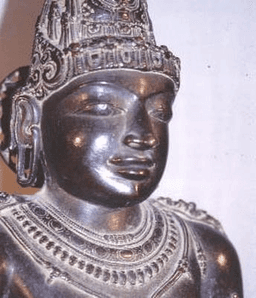
Raja Raja Chola I
Emperor · Medieval
70.0Total
Basic Information
Born
1316
947
Died
1378
1014
Era
Medieval
Medieval
Nationality
Holy Roman Empire
India
Occupation
Emperor
Emperor
Civilization
Western
Indian
Score Comparison
Military (10%)
50.0
82.0
Political (20%)
78.0
72.0
Influence (20%)
55.0
65.0
Legacy (20%)
52.0
65.0
Leadership (15%)
78.0
78.0
Strategy (15%)
45.0
68.0
TOTAL
59.7
70.0
Charles IV — Complete Timeline
1344 AD
Made Prague the Imperial CapitalPolitical Action◆ Major
Charles IV, as King of Bohemia and Holy Roman Emperor, established Prague as the permanent imperial capital. He initiated extensive building projects including the Charles Bridge and St. Vitus Cathedral, transforming Prague into a major European cultural and political center.
Urban DevelopmentImperial CapitalPrague
Impact: regionalconstructive
1348 AD
Founded Charles UniversityCultural◆ Major
Charles IV founded the University of Prague, later named Charles University, as the first university in Central Europe. It became a leading center for learning and attracted scholars from across the continent, strengthening Prague's intellectual reputation.
EducationUniversityCultural Development
Impact: regionalconstructive
1356 AD
Issued the Golden Bull of 1356Reform
Charles IV issued the Golden Bull, a constitutional document that regulated the election of the Holy Roman Emperor by seven prince-electors. This law stabilized imperial succession and defined the electoral process for centuries, reducing papal influence.
Constitutional LawImperial ReformElectoral System
Impact: regionalconstructive
1373 AD
Acquired BrandenburgPolitical Action
Charles IV secured the Margraviate of Brandenburg for the Luxembourg dynasty through a treaty with the Wittelsbachs. This territorial acquisition expanded his family's holdings in northern Germany and strengthened imperial authority.
Territorial ExpansionLuxembourg DynastyBrandenburg
Impact: regional
Raja Raja Chola I — Complete Timeline
985 AD
Accession to the Chola ThronePolitical Action
Raja Raja Chola I ascended the throne of the Chola Empire, succeeding his father Parantaka II. He inherited a kingdom in the Tamil region and began a series of military campaigns that would transform the Chola state into a major power.
Chola EmpireSuccessionExpansion
Impact: regional
990 AD
Conquest of the Chera KingdomWar◆ Major
Raja Raja Chola I defeated the Chera king Bhaskara Ravi Varman and annexed the Chera territories in present-day Kerala. This conquest gave the Cholas control over the Malabar Coast and its spice trade.
CheraKeralaSpice Trade
Impact: regional
1000 AD
Administrative Reforms and Land SurveyReform◆ Major
Raja Raja Chola I conducted a comprehensive land survey and reorganized the revenue system. He standardized tax collection and recorded land holdings in inscriptions, which improved administrative efficiency and funded his military and building projects.
Land SurveyRevenue SystemAdministration
Impact: regionalconstructive
1005 AD
Naval Campaign against the Srivijaya EmpireWar◆ Major
Raja Raja Chola I launched a naval expedition against the Srivijaya Empire in Southeast Asia, targeting the Strait of Malacca. The campaign disrupted Srivijaya's trade monopoly and established Chola influence in the region, though full conquest was not achieved.
SrivijayaNaval ExpeditionSoutheast Asia
Impact: regional
1010 AD
Construction of the Brihadeeswarar TempleCultural◆ Major
Raja Raja Chola I commissioned the construction of the Brihadeeswarar Temple in Thanjavur, dedicated to Shiva. The temple, built with granite, features a 66-meter vimana and is a masterpiece of Dravidian architecture, later designated a UNESCO World Heritage site.
Brihadeeswarar TempleThanjavurDravidian Architecture
Impact: regionalconstructive
Expert Analysis
Origins
Charles IV was born in 1316 in Prague, the son of John of Luxembourg, King of Bohemia. He was raised in the French court and educated in Paris, gaining a broad European perspective. His early exposure to governance came through administering Bohemia during his father's absences. Raja Raja Chola I was born around 947 in the Chola dynasty of South India. His father, Parantaka II, was a Chola king, and his mother was Vanavan Mahadevi. Raja Raja was trained in military and administrative skills from a young age, preparing for future rule.
Rise to Power
Charles IV became King of Bohemia in 1346 after his father's death, and was elected Holy Roman Emperor in 1355. His rise was facilitated by his political maneuvering and the support of the Pope. He issued the Golden Bull of 1356, which stabilized the imperial election process and strengthened his authority. Raja Raja Chola I ascended the throne in 985 after his father's death. He consolidated power by defeating rival claimants and launching campaigns against the Chera kingdom, which he conquered in 988. This victory gave him control over the Malabar Coast and access to valuable trade routes.
Leadership & Governance
Charles IV ruled with a focus on legal and administrative reforms. The Golden Bull established a clear succession mechanism for the Holy Roman Empire, reducing papal influence. He made Prague the imperial capital, funding construction of St. Vitus Cathedral and Charles Bridge. He also founded Charles University in 1348, the first university in Central Europe. Raja Raja Chola I was a military and administrative reformer. He conducted a comprehensive land survey in 1002, standardizing tax collection and recording holdings. He reorganized the army and built a powerful navy, enabling his naval campaign against the Srivijaya Empire in 1025. His governance emphasized efficient revenue extraction and centralized control.
Triumph & Tragedy
Charles IV's greatest success was the Golden Bull, which provided stability to the Holy Roman Empire for centuries. He also expanded Luxembourg territories, acquiring Brandenburg in 1373. However, his empire remained decentralized, and he failed to create a strong central monarchy. His death in 1378 led to succession disputes. Raja Raja Chola I's triumphs include the conquest of the Chera kingdom, the naval campaign against Srivijaya, and the construction of the Brihadeeswarar Temple in Thanjavur (completed 1010). His administrative reforms strengthened the empire. Yet, his aggressive militarism strained resources, and his death in 1014 left succession challenges.
Character & Destiny
Charles IV was pragmatic and diplomatic, prioritizing legal and cultural achievements over military conquest. His scores reflect this: Political 78.0, Leadership 78.0, but Military 50.0. He sought to unify the empire through institutions. Raja Raja Chola I was ambitious and militaristic, with a score of 82.0 in Military and 68.0 in Strategy. His character drove him to expand Chola power across India and Southeast Asia, but also led to overextension. Historians note his meticulous nature in administration, as seen in the land survey.
Legacy
Charles IV's legacy includes the Golden Bull, which governed imperial elections until 1806, and Charles University, still operating today. Prague's architectural heritage owes much to his patronage. However, his political influence was limited by the empire's feudal structure. Raja Raja Chola I's legacy is more tangible: the Brihadeeswarar Temple, a UNESCO World Heritage site, and the Chola navy's dominance in Southeast Asia. His administrative reforms influenced subsequent Indian empires. His total score of 70.0 exceeds Charles IV's 59.7, reflecting greater impact in military and strategic terms.
Conclusion
Raja Raja Chola I had a greater impact than Charles IV. While Charles IV's legal and cultural achievements were significant, his empire remained fragmented. Raja Raja Chola I built a centralized state, expanded Chola power across the Indian Ocean, and left a monumental temple that endures. His military score of 82.0 versus Charles IV's 50.0, and total score of 70.0 versus 59.7, support this. Raja Raja Chola I's reforms and conquests reshaped South India and Southeast Asia more profoundly than Charles IV's efforts in Central Europe.
Rankings
🥇
Raja Raja Chola ILeader
Mil: 82.0Pol: 72.0Inf: 65.0
70.0
🥈
Charles IV
Mil: 50.0Pol: 78.0Inf: 55.0
59.7
+10.3 behind
How This Comparison Works
Algorithm
Each figure is scored on 6 dimensions (0—100 scale) based on structured historical data: Military (10%), Political (20%), Influence (20%), Legacy (20%), Leadership (15%), Strategy (15%). The weighted total produces the final ranking.
Data Sources
Scores are computed from structured sub-indicators in the database. Scale factors adjust for era (Ancient ×0.85, Modern ×1.0) and civilization size (Eastern ×1.05, Other ×0.80) to account for differences in population and military scale.
Maximum 3 Figures
Comparisons are limited to 2—3 figures to ensure readability and statistical meaningfulness.
Error Margins
±5 points per dimension — Sub-scores are derived from historical records with inherent uncertainty. Two figures within 5 points on a dimension should be considered roughly equivalent in that area.
Total Score Accuracy
±3 points overall — The weighted combination of 6 dimensions produces a total score with approximately ±3 points of uncertainty. Differences of less than 3 points are not statistically significant— the figures are effectively tied.
Known Limitations
- Historical records are incomplete and uneven across civilizations
- Figures from oral-tradition societies may be underrepresented
- Occupation labels can misclassify multi-role figures
- Scores measure capability and impact, not moral character
- Quantitative scoring is a comparison tool, not absolute truth
Capability Radar
Military (10%) — Battles & Warfare
Battles
25
85
Win Rate
20
90
Expansion
15
85
Political (20%) — Governance & Reform
Reform
80
80
Diplomacy
85
75
Economy
80
85
Influence (20%) — Cultural & Global Reach
Cultural
75
85
Global
55
70
Legacy (20%) — Historical Impact
Historical
70
80
Longevity
65
85
Leadership (15%) — Power & Stability
Tenure
85
85
Stability
75
80
Strategy (15%) — Tactics & Innovation
Strategy
35
85
Tactics
30
80
Reform
20
75
Similar Comparisons
Comments & Discussion
No comments yet. Be the first to share your thoughts!