Loading...
Bhoja vs Orhan
Orhan leads by 3.7 pts · 2 figures compared
…
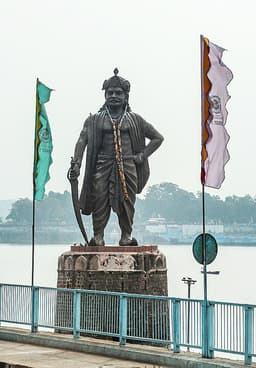
Bhoja
Emperor · Medieval
55.9Total
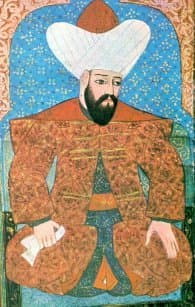
Orhan
Emperor · Medieval
59.6Total
Basic Information
Born
1010
1281
Died
1055
1362
Era
Medieval
Medieval
Nationality
India
Ottoman Empire
Occupation
Emperor
Emperor
Civilization
Indian
Middle Eastern
Score Comparison
Military (10%)
50.0
67.5
Political (20%)
53.8
68.0
Influence (20%)
58.3
61.0
Legacy (20%)
58.0
50.0
Leadership (15%)
53.2
66.0
Strategy (15%)
57.5
50.0
TOTAL
55.9
59.6
Bhoja — Complete Timeline
1030 AD
Patronage of the University of DharaCultural
Bhoja patronized the university at Dhara, his capital, attracting scholars from across India. He established a library and supported studies in grammar, philosophy, and astronomy. This made Dhara a major center of learning.
EducationPatronageScholarship
Impact: regionalconstructive
1040 AD
Composition of the Samarangana SutradharaCultural◆ Major
Bhoja wrote the Samarangana Sutradhara, a comprehensive treatise on architecture and engineering. The text covers temple construction, town planning, and mechanical devices. It became a foundational work in Indian architectural theory.
ArchitectureEngineeringScholarship
Impact: regionalconstructive
1042 AD
Defeat by the Chaulukya King Bhima IWar◆ Major
Bhoja's army was defeated by the Chaulukya king Bhima I of Gujarat in a battle near the Narmada River. This loss halted Paramara expansion westward and forced Bhoja to pay tribute. It marked a significant setback for his reign.
Chaulukya WarMilitary DefeatGujarat
Impact: regionaltragic
1050 AD
Construction of the Bhojeshwar TempleCultural◆ Major
Bhoja began construction of the Bhojeshwar Temple at Bhojpur, dedicated to Shiva. The temple features a massive lingam and a large dome, but was left incomplete at his death. It remains a significant example of Paramara architecture.
Temple BuildingShivaArchitecture
constructive
Orhan — Complete Timeline
1326 AD
Capture of BursaWar◆ Major
Orhan captured the city of Bursa from the Byzantine Empire after a prolonged siege. He made Bursa the first Ottoman capital, establishing it as a political and economic center that would serve as the base for further expansion into Europe.
ConquestBursaCapital
Impact: regional
1329 AD
Battle of PelekanonWar◆ Major
Orhan defeated a Byzantine army led by Emperor Andronikos III at Pelekanon near Nicomedia. This victory secured Ottoman control over northwestern Anatolia and forced the Byzantines to abandon attempts to reclaim lost territory.
BattleByzantineAnatolia
Impact: regional
1337 AD
Capture of NicomediaWar◆ Major
Orhan captured the Byzantine city of Nicomedia (modern
ConquestNicomediaByzantine
Impact: regional
1346 AD
Marriage to Theodora KantakouzenePolitical Action
Orhan married Theodora, the daughter of Byzantine emperor John VI Kantakouzenos, as part of a political alliance. This marriage strengthened Ottoman-Byzantine relations and gave the Ottomans a foothold in European affairs.
MarriageAllianceByzantine
Impact: regionalconstructive
1362 AD
Establishment of the Janissary CorpsReform◆ Major
Orhan is traditionally credited with creating the Janissary corps, an elite infantry unit composed of Christian boys taken through the devshirme system. This force became the backbone of the Ottoman military, though its exact origins are debated.
JanissaryMilitary ReformDevshirme
Impact: global
Expert Analysis
Origins
Bhoja was born around 1010 CE into the Paramara dynasty of central India, likely in Dhara (modern Dhar, Madhya Pradesh). His father, Sindhuraja, was a Paramara king, and Bhoja received a thorough education in statecraft, philosophy, and the arts. He ascended the throne around 1010 CE after his father's death, inheriting a kingdom that controlled parts of Malwa. Bhoja's early life was shaped by the intellectual atmosphere of Dhara, a center of learning.
Orhan was born around 1281 CE in Söğüt, a small beylik in northwestern Anatolia, as the son of Osman I, the founder of the Ottoman dynasty. He grew up in a frontier warrior society, engaged in constant conflict with the Byzantine Empire. Orhan's education focused on military tactics and tribal leadership. He became bey after his father's death in 1326 CE, inheriting a fledgling state.
Rise to Power
Bhoja's rise was straightforward: he inherited the throne and spent his early reign consolidating Paramara power. His major turning point was his patronage of the arts and scholarship, which elevated his reputation across India. He established the university at Dhara, attracting scholars like the poet Bilhana. Bhoja's military campaigns were less successful; he attempted to expand westward but was defeated by the Chaulukya king Bhima I around 1020 CE near the Narmada River, halting his expansion.
Orhan's rise was marked by military conquest. He captured Bursa in 1326 CE after a prolonged siege, making it the first Ottoman capital. The Battle of Pelekanon in 1329 CE saw Orhan defeat a Byzantine army led by Emperor Andronikos III, securing Ottoman control over northwestern Anatolia. He captured Nicomedia (modern İzmit) in 1337 CE, completing Ottoman dominance in the region. These victories transformed the Ottoman beylik into a significant regional power.
Leadership & Governance
Bhoja's leadership was defined by intellectual patronage. He wrote extensively, including the Samarangana Sutradhara, a treatise on architecture and engineering covering temple construction and town planning. He also composed works on grammar, philosophy, and poetry. His governance focused on cultural development, but his military and political scores (50.0 and 53.8 respectively) reflect limited expansion. In contrast, Orhan was a military and political organizer. He is credited with establishing the Janissary corps, an elite infantry unit recruited through the devshirme system—taking Christian boys, converting them, and training them as soldiers. This innovation created a loyal military force. Orhan also married Theodora Kantakouzene, daughter of Byzantine emperor John VI, to secure alliances. His political score is 68.0.
Triumph & Tragedy
Bhoja's greatest success was his cultural legacy: the Bhojeshwar Temple, though incomplete, features a massive lingam and large dome. His patronage of the University of Dhara made it a center of learning. However, his military failures defined his reign's limits. The defeat by Bhima I checked Paramara expansion and exposed his kingdom to threats. Bhoja's tragedy is that his grand building projects outpaced his state's resources, leaving the temple unfinished.
Orhan's triumphs were territorial and institutional. He captured Bursa, Nicomedia, and won at Pelekanon, laying the foundation for Ottoman expansion into Europe. The Janissary corps became a cornerstone of Ottoman military power. His tragedy includes the reliance on devshirme, which created a system of forced assimilation that later sparked resistance. His legacy score of 50.0 is lower than his military score (67.5), perhaps because his achievements were later overshadowed by successors like Mehmed II.
Character & Destiny
Bhoja was a scholar-king, more comfortable with books than battles. His character—intellectual, ambitious in culture—shaped a reign of artistic achievement but military stagnation. Historians note his patronage as exemplary, but his inability to defend his realm led to decline after his death. Orhan was a pragmatic warrior: calculating, strategic, and ruthless when needed. His marriage alliance and military reforms show a flexible mind. His character drove Ottoman expansion, but his reliance on conquest set a precedent for constant warfare.
Legacy
Bhoja's legacy is cultural: his architectural treatise influenced Indian temple design for centuries. The Bhojeshwar Temple, though incomplete, stands as a testament. His university at Dhara fostered a generation of scholars. However, his political impact was limited; the Paramara dynasty declined after his death.
Orhan's legacy is foundational: he transformed a small beylik into a state with a capital, an elite army, and territorial control. The Janissary corps lasted until 1826. His conquests opened the path for Ottoman expansion into Europe. Orhan scored 59.6 overall vs Bhoja's 55.9, a 3.7-point gap.
Conclusion
Orhan had greater impact. His military (67.5 vs 50.0) and political (68.0 vs 53.8) scores reflect his tangible achievements: capturing cities, founding institutions, and expanding territory. Bhoja's cultural contributions are significant but did not alter the course of history as profoundly. Orhan's state-building created an empire that lasted six centuries, while Bhoja's kingdom faded. The 3.7-point score gap understates Orhan's edge in shaping the medieval world.
Rankings
🥇
OrhanLeader
Mil: 67.5Pol: 68.0Inf: 61.0
59.6
🥈
Bhoja
Mil: 50.0Pol: 53.8Inf: 58.3
55.9
+3.7 behind
How This Comparison Works
Algorithm
Each figure is scored on 6 dimensions (0—100 scale) based on structured historical data: Military (10%), Political (20%), Influence (20%), Legacy (20%), Leadership (15%), Strategy (15%). The weighted total produces the final ranking.
Data Sources
Scores are computed from structured sub-indicators in the database. Scale factors adjust for era (Ancient ×0.85, Modern ×1.0) and civilization size (Eastern ×1.05, Other ×0.80) to account for differences in population and military scale.
Maximum 3 Figures
Comparisons are limited to 2—3 figures to ensure readability and statistical meaningfulness.
Error Margins
±5 points per dimension — Sub-scores are derived from historical records with inherent uncertainty. Two figures within 5 points on a dimension should be considered roughly equivalent in that area.
Total Score Accuracy
±3 points overall — The weighted combination of 6 dimensions produces a total score with approximately ±3 points of uncertainty. Differences of less than 3 points are not statistically significant— the figures are effectively tied.
Known Limitations
- Historical records are incomplete and uneven across civilizations
- Figures from oral-tradition societies may be underrepresented
- Occupation labels can misclassify multi-role figures
- Scores measure capability and impact, not moral character
- Quantitative scoring is a comparison tool, not absolute truth
Capability Radar
Military (10%) — Battles & Warfare
Battles
45
60
Win Rate
50
65
Expansion
45
65
Political (20%) — Governance & Reform
Reform
65
55
Diplomacy
55
60
Economy
70
55
Influence (20%) — Cultural & Global Reach
Cultural
70
50
Global
40
45
Legacy (20%) — Historical Impact
Historical
65
55
Longevity
60
50
Leadership (15%) — Power & Stability
Tenure
60
70
Stability
60
65
Strategy (15%) — Tactics & Innovation
Strategy
50
60
Tactics
55
55
Reform
40
50
Similar Comparisons
Comments & Discussion
No comments yet. Be the first to share your thoughts!