Loading...
Henry I of England vs Orhan
Orhan leads by 3.7 pts · 2 figures compared
…
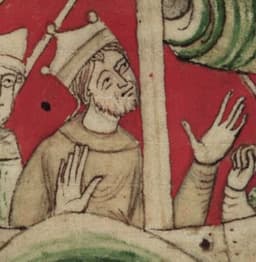
Henry I of England
Emperor · Medieval
55.9Total
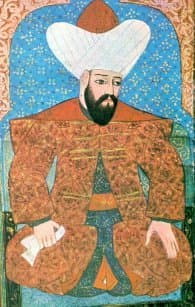
Orhan
Emperor · Medieval
59.6Total
Basic Information
Born
1068
1281
Died
1135
1362
Era
Medieval
Medieval
Nationality
England
Ottoman Empire
Occupation
Emperor
Emperor
Civilization
Western
Middle Eastern
Score Comparison
Military (10%)
10.0
67.5
Political (20%)
72.0
68.0
Influence (20%)
56.4
61.0
Legacy (20%)
54.0
50.0
Leadership (15%)
72.0
66.0
Strategy (15%)
57.5
50.0
TOTAL
55.9
59.6
Henry I of England — Complete Timeline
1100 AD
Coronation of Henry IPolitical Action◆ Major
Henry was crowned king of England on August 5, 1100, just three days after his brother William II's death. He issued the Charter of Liberties, promising to curb royal abuses.
CoronationCharter of LibertiesReform
Impact: nationalconstructive
1106 AD
Battle of TinchebrayWar◆ Major
Henry defeated his brother Robert Curthose at Tinchebray in Normandy. Robert was captured and imprisoned for life, and Henry reunited England and Normandy under his rule.
BattleVictoryNormandy
Impact: regional
1110 AD
Administrative ReformsReform◆ Major
Henry established the Exchequer as a central financial department, standardizing tax collection and accounting. He also issued the Leges Henrici Primi, a legal code that systematized English law.
ExchequerLegal ReformAdministration
Impact: nationalconstructive
1120 AD
White Ship DisasterOther◆ Major
Henry's only legitimate son, William Adelin, drowned in the White Ship disaster off the coast of Normandy. This tragedy left Henry without a male heir, leading to a succession crisis after his death.
DisasterSuccession CrisisHeir
Impact: nationaltragic
1135 AD
Death of Henry IPolitical Action◆ Major
Henry died on December 1, 1135, at Lyons-la-For
DeathSuccession CrisisAnarchy
Impact: nationaltragic
Orhan — Complete Timeline
1326 AD
Capture of BursaWar◆ Major
Orhan captured the city of Bursa from the Byzantine Empire after a prolonged siege. He made Bursa the first Ottoman capital, establishing it as a political and economic center that would serve as the base for further expansion into Europe.
ConquestBursaCapital
Impact: regional
1329 AD
Battle of PelekanonWar◆ Major
Orhan defeated a Byzantine army led by Emperor Andronikos III at Pelekanon near Nicomedia. This victory secured Ottoman control over northwestern Anatolia and forced the Byzantines to abandon attempts to reclaim lost territory.
BattleByzantineAnatolia
Impact: regional
1337 AD
Capture of NicomediaWar◆ Major
Orhan captured the Byzantine city of Nicomedia (modern
ConquestNicomediaByzantine
Impact: regional
1346 AD
Marriage to Theodora KantakouzenePolitical Action
Orhan married Theodora, the daughter of Byzantine emperor John VI Kantakouzenos, as part of a political alliance. This marriage strengthened Ottoman-Byzantine relations and gave the Ottomans a foothold in European affairs.
MarriageAllianceByzantine
Impact: regionalconstructive
1362 AD
Establishment of the Janissary CorpsReform◆ Major
Orhan is traditionally credited with creating the Janissary corps, an elite infantry unit composed of Christian boys taken through the devshirme system. This force became the backbone of the Ottoman military, though its exact origins are debated.
JanissaryMilitary ReformDevshirme
Impact: global
Expert Analysis
Origins
Henry I of England was born in 1068 or 1069, the youngest son of William the Conqueror and Matilda of Flanders. As the fourth son, he was not expected to inherit the throne, but his father bequeathed him a substantial sum of money (about 5,000 pounds of silver) rather than land. Henry was unusually well-educated for a medieval noble, earning the nickname 'Beauclerc' (fine scholar). He learned Latin and was knowledgeable in law and history, which later informed his administrative reforms.
Orhan I, born around 1281, was the second son of Osman I, the founder of the Ottoman dynasty. Little is known of his early life, but he was raised in the warrior culture of the Turkish beylik, learning horsemanship and combat. Unlike Henry, Orhan had no formal education in the European sense, but he gained practical experience in governance and military command under his father's rule.
Rise to Power
Henry's path to the throne was sudden and opportunistic. On August 2, 1100, his brother King William II died in a hunting accident (likely assassination). Henry, who was present, immediately rode to Winchester to seize the royal treasury, and then to London, where he was crowned on August 5, just three days later. To secure support, he issued the Charter of Liberties, promising to correct abuses of his brother's reign. He then married Edith (renamed Matilda) of Scotland, linking the Norman line to the Anglo-Saxon royal house.
Orhan became bey after his father Osman's death in 1324. Unlike Henry's coup, Orhan's succession was orderly, as Osman had designated him as heir. Orhan faced no immediate internal opposition. His rise was marked by territorial expansion against the Byzantine Empire. In 1326, he captured Bursa after a prolonged siege, making it his capital. The city's fall signaled the Ottomans' transition from a nomadic tribe to a settled state.
Leadership & Governance
Henry I was a master of administrative centralization. He established the Exchequer, a financial department that standardized tax collection and accounting through a system of tally sticks and pipe rolls. This innovation, documented in the 'Dialogue of the Exchequer,' provided a model for later medieval governments. Henry also issued the Leges Henrici Primi, a compilation of English law that sought to unify Norman and Anglo-Saxon legal traditions. He curbed the power of barons by appointing loyal officials (justiciars) and by restoring royal authority over forests.
Orhan's governance was more focused on military expansion and integrating conquered territories. He organized the Ottoman state into a centralized bureaucracy, with Bursa as the administrative hub. He minted silver coins (akçe) to standardize the economy. Orhan is credited with creating the Janissary corps, an elite infantry recruited through the devshirme system—taking Christian boys, converting them to Islam, and training them as soldiers. This innovation provided a loyal, professional army independent of the Turkish nobility.
Triumph & Tragedy
Henry's greatest triumph was the Battle of Tinchebray (1106), where he defeated and captured his brother Robert Curthose, reuniting England and Normandy. His administrative reforms created a stable government that endured for centuries. However, his greatest tragedy was the White Ship disaster of 1120, in which his only legitimate son, William Adelin, drowned. This left Henry without a male heir, leading to a succession crisis. Despite his efforts to secure the throne for his daughter Matilda, his death in 1135 triggered the 'Anarchy'—a civil war between Matilda and Stephen of Blois.
Orhan's triumphs included the capture of Nicomedia (1337), the last Byzantine stronghold in northwestern Anatolia, and the victory at Pelekanon (1329) over Emperor Andronikos III. He more than doubled the size of Ottoman territory. His marriage to Theodora Kantakouzene forged an alliance with the Byzantine emperor John VI, giving the Ottomans a foothold in European affairs. However, Orhan faced a tragedy in the form of a rebellion by his son Süleyman Paşa, who led unauthorized raids into Europe. Orhan was forced to suppress his own son, though Süleyman later died in a hunting accident. Orhan also saw the devastation of the Black Death (1347-1348) in his realm, which slowed expansion.
Character & Destiny
Henry was calculating, patient, and ruthless when necessary. He was known for his intellectual curiosity and ability to manipulate legal and political systems. His lack of a male heir was a direct consequence of the White Ship disaster, but his own failure to secure the succession through clear arrangements or by remarrying after his wife's death (she died in 1118) contributed to the crisis. Chroniclers like Orderic Vitalis noted his 'harsh justice' and his tendency to surround himself with 'new men' of low birth, which alienated the old nobility.
Orhan was a pragmatic warrior-commander, expanding his realm through strategic marriages and military campaigns. He was less educated than Henry but possessed shrewd political instincts. His decision to create the Janissaries was a masterstroke, but it also planted the seeds of a powerful military class that would later challenge the sultanate. Orhan's reign saw the transition from a tribal confederation to a centralized state, but his reliance on conquest created a need for continuous expansion.
Legacy
Henry I's legacy is primarily administrative: the Exchequer, the standardization of law, and the strengthening of royal justice. His reign laid the groundwork for the Plantagenet monarchy. The Charter of Liberties influenced the Magna Carta (1215). In terms of numerical scores, Henry's Political score of 72.0 and Leadership of 72.0 reflect his institutional impact, while his Military score of 10.0 is negligible. His overall score of 55.9 places him as a competent but not transformative ruler.
Orhan's legacy is more territorial and military. He established the Janissary corps, which became the backbone of Ottoman military power for centuries. He made Bursa the capital and began the expansion into Europe. His Political score of 68.0 and Military score of 67.5 are balanced. His overall score of 59.6 edges out Henry. However, Orhan's legacy is less about institutional innovation and more about conquest; the Janissaries were a military tool, not a system of governance.
Conclusion
While Orhan has a higher total score (59.6 vs 55.9), Henry I's impact on governance and law was more enduring. The Exchequer and legal reforms influenced England for centuries, whereas Orhan's conquests were part of a continuing expansion that later sultans would complete. Henry's administrative legacy provided a template for modern state-building, while Orhan's contributions were more specific to the Ottoman Empire's military apparatus. Therefore, Henry I had a greater lasting impact on the development of state institutions, despite his lower score. The score gap of 3.7 points reflects Orhan's broader range of achievements, but Henry's influence on governance is more profound.
Rankings
🥇
OrhanLeader
Mil: 67.5Pol: 68.0Inf: 61.0
59.6
🥈
Henry I of England
Mil: 10.0Pol: 72.0Inf: 56.4
55.9
+3.7 behind
How This Comparison Works
Algorithm
Each figure is scored on 6 dimensions (0—100 scale) based on structured historical data: Military (10%), Political (20%), Influence (20%), Legacy (20%), Leadership (15%), Strategy (15%). The weighted total produces the final ranking.
Data Sources
Scores are computed from structured sub-indicators in the database. Scale factors adjust for era (Ancient ×0.85, Modern ×1.0) and civilization size (Eastern ×1.05, Other ×0.80) to account for differences in population and military scale.
Maximum 3 Figures
Comparisons are limited to 2—3 figures to ensure readability and statistical meaningfulness.
Error Margins
±5 points per dimension — Sub-scores are derived from historical records with inherent uncertainty. Two figures within 5 points on a dimension should be considered roughly equivalent in that area.
Total Score Accuracy
±3 points overall — The weighted combination of 6 dimensions produces a total score with approximately ±3 points of uncertainty. Differences of less than 3 points are not statistically significant— the figures are effectively tied.
Known Limitations
- Historical records are incomplete and uneven across civilizations
- Figures from oral-tradition societies may be underrepresented
- Occupation labels can misclassify multi-role figures
- Scores measure capability and impact, not moral character
- Quantitative scoring is a comparison tool, not absolute truth
Capability Radar
Military (10%) — Battles & Warfare
Battles
30
60
Win Rate
55
65
Expansion
35
65
Political (20%) — Governance & Reform
Reform
85
55
Diplomacy
75
60
Economy
80
55
Influence (20%) — Cultural & Global Reach
Cultural
40
50
Global
30
45
Legacy (20%) — Historical Impact
Historical
60
55
Longevity
55
50
Leadership (15%) — Power & Stability
Tenure
70
70
Stability
70
65
Strategy (15%) — Tactics & Innovation
Strategy
45
60
Tactics
40
55
Reform
60
50
Similar Comparisons
Comments & Discussion
No comments yet. Be the first to share your thoughts!