Loading...
Raja Raja Chola I vs Taspar Qaghan
Raja Raja Chola I leads by 16.9 pts · 2 figures compared
…
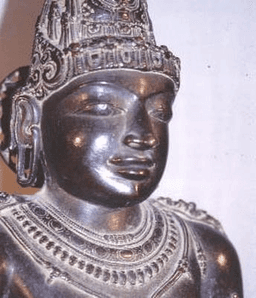
Raja Raja Chola I
Emperor · Medieval
70.0Total
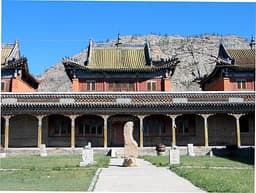
Taspar Qaghan
Emperor · Medieval
53.1Total
Basic Information
Born
947
530
Died
1014
581
Era
Medieval
Medieval
Nationality
India
Gokturk Khaganate
Occupation
Emperor
Emperor
Civilization
Indian
Eastern
Score Comparison
Military (10%)
82.0
47.5
Political (20%)
72.0
68.0
Influence (20%)
65.0
57.2
Legacy (20%)
65.0
48.3
Leadership (15%)
78.0
40.0
Strategy (15%)
68.0
57.5
TOTAL
70.0
53.1
Raja Raja Chola I — Complete Timeline
985 AD
Accession to the Chola ThronePolitical Action
Raja Raja Chola I ascended the throne of the Chola Empire, succeeding his father Parantaka II. He inherited a kingdom in the Tamil region and began a series of military campaigns that would transform the Chola state into a major power.
Chola EmpireSuccessionExpansion
Impact: regional
990 AD
Conquest of the Chera KingdomWar◆ Major
Raja Raja Chola I defeated the Chera king Bhaskara Ravi Varman and annexed the Chera territories in present-day Kerala. This conquest gave the Cholas control over the Malabar Coast and its spice trade.
CheraKeralaSpice Trade
Impact: regional
1000 AD
Administrative Reforms and Land SurveyReform◆ Major
Raja Raja Chola I conducted a comprehensive land survey and reorganized the revenue system. He standardized tax collection and recorded land holdings in inscriptions, which improved administrative efficiency and funded his military and building projects.
Land SurveyRevenue SystemAdministration
Impact: regionalconstructive
1005 AD
Naval Campaign against the Srivijaya EmpireWar◆ Major
Raja Raja Chola I launched a naval expedition against the Srivijaya Empire in Southeast Asia, targeting the Strait of Malacca. The campaign disrupted Srivijaya's trade monopoly and established Chola influence in the region, though full conquest was not achieved.
SrivijayaNaval ExpeditionSoutheast Asia
Impact: regional
1010 AD
Construction of the Brihadeeswarar TempleCultural◆ Major
Raja Raja Chola I commissioned the construction of the Brihadeeswarar Temple in Thanjavur, dedicated to Shiva. The temple, built with granite, features a 66-meter vimana and is a masterpiece of Dravidian architecture, later designated a UNESCO World Heritage site.
Brihadeeswarar TempleThanjavurDravidian Architecture
Impact: regionalconstructive
Taspar Qaghan — Complete Timeline
572 AD
Accession as Khagan of the First Turkic KhaganatePolitical Action◆ Major
Taspar Qaghan succeeded his brother Muqan Qaghan as the fourth ruler of the First Turkic Khaganate. His reign marked the peak of the khaganate's power and territorial extent in Central Asia.
SuccessionTurkic KhaganateCentral Asia
Impact: regional
574 AD
Adoption of Buddhism as state religionCultural◆ Major
Taspar Qaghan converted to Buddhism and declared it the state religion of the Turkic Khaganate. He built monasteries and invited Buddhist monks from China, promoting the spread of Buddhism among the Turkic elite and along the Silk Road.
Religious ConversionBuddhismSilk Road
Impact: regionalprogressive
576 AD
Alliance with the Byzantine Empire against the Sasanian EmpirePolitical Action◆ Major
Taspar Qaghan maintained diplomatic relations with the Byzantine Empire, continuing the alliance initiated by his predecessors against the Sasanian Empire. This alliance facilitated trade and military cooperation between the two empires.
DiplomacyByzantine-Sasanian WarsAlliance
Impact: globalconstructive
581 AD
Death and division of the khaganatePolitical Action
Taspar Qaghan died, leading to a succession crisis that split the First Turkic Khaganate into Eastern and Western halves. His death marked the end of the united khaganate and the beginning of internal conflicts.
Succession CrisisDivisionTurkic Khaganate
Impact: regionaldestructive
Expert Analysis
Origins
Raja Raja Chola I, born as Arulmozhi Varman in 947 CE, was the third son of Parantaka II and Vanavan Mahadevi. He belonged to the Chola dynasty, which had ruled parts of Tamil Nadu for centuries. His early life was marked by military training and exposure to court politics. He ascended the throne in 985 CE after the death of his elder brother Uttama Chola, who had ruled for 15 years. Raja Raja's education included statecraft, warfare, and Tamil literature, shaping his later reforms.
Taspar Qaghan, born around 540 CE, was the fourth son of Bumin Qaghan, founder of the First Turkic Khaganate. He was raised in the nomadic steppe tradition, skilled in horsemanship and archery. After the death of his father, his brother Muqan Qaghan became khagan. Taspar served as a general under Muqan, leading campaigns against the Rouran Khaganate and the Sasanian Empire. He succeeded Muqan in 572 CE, inheriting a vast empire from the Caucasus to Mongolia.
Rise to Power
Raja Raja Chola I's rise was gradual. After ascending the throne, he focused on consolidating the Chola heartland. His first major campaign was against the Pandya kingdom in 990 CE, which he subdued. He then turned against the Chera kingdom, defeating King Bhaskara Ravi Varman in 994 CE and annexing Kerala. The turning point came with his naval expedition against the Srivijaya Empire in 1005 CE, which targeted the Strait of Malacca. This campaign, though not a full conquest, disrupted Srivijaya's trade monopoly and established Chola dominance in Southeast Asian waters.
Taspar Qaghan's rise was smooth due to his brother's successful reign. Muqan Qaghan had expanded the khaganate to its greatest extent, defeating the Hephthalites and extracting tribute from the Sasanians. Taspar inherited this power but faced internal tribal tensions. His accession was uncontested, but he struggled to maintain unity among the Turkic tribes. His diplomatic alliance with the Byzantine Empire, forged through marriage and trade, was a key strategic move that isolated the Sasanians.
Leadership & Governance
Raja Raja Chola I was a centralized ruler who implemented administrative reforms. He conducted a comprehensive land survey in 1001 CE, recording land holdings and standardizing tax collection. This survey, known as the 'Kudavolai' system, allowed for efficient revenue extraction and funded public works. He also reorganized the army, creating a standing force of infantry, cavalry, and elephants. His governance was bureaucratic, with officials appointed based on merit. The Brihadeeswarar Temple, built between 1003 and 1010 CE, served as a symbol of his authority and a hub for economic activity.
Taspar Qaghan ruled through a tribal confederation, relying on clan leaders. He adopted Buddhism in 574 CE, influenced by a Buddhist monk named Jnanagupta from India. He built monasteries and invited monks to translate scriptures, but this alienated the traditional Tengriist aristocracy. His governance lacked institutional depth; the khaganate was held together by personal loyalty. He maintained the alliance with Byzantium but failed to integrate the diverse tribes under a common identity.
Triumph & Tragedy
Raja Raja Chola I's greatest triumph was the construction of the Brihadeeswarar Temple, a masterpiece of Dravidian architecture. The temple's vimana (tower) rises 66 meters, and its construction required 130,000 tons of granite. It remains a UNESCO World Heritage site. His naval campaign against Srivijaya secured Chola control over trade routes, boosting the economy. However, his over-reliance on military expansion strained resources; after his death, the empire faced revolts. His failure to establish a clear succession led to a brief civil war between his sons Rajendra I and Rajadhiraja.
Taspar Qaghan's greatest achievement was the adoption of Buddhism, which later influenced the Uyghur Khaganate and the Mongols. He built the first Buddhist monastery in the steppes at the capital, Ordu-Baliq. However, his death in 581 CE triggered a succession crisis. His chosen heir, his nephew Tardu, faced opposition from his son Ashina Shetu, leading to a civil war that split the khaganate into Eastern and Western halves. This division ended the unified Turkic state and left them vulnerable to Tang China.
Character & Destiny
Raja Raja Chola I was pragmatic and ambitious. He focused on long-term state-building, using religion and architecture to legitimize his rule. His character was disciplined; he personally oversaw temple construction and revenue reforms. However, his military campaigns were costly, and he sometimes overreached, as in the Srivijaya expedition which required immense naval logistics. His destiny was to create a golden age for the Cholas, but his successors struggled to maintain the empire.
Taspar Qaghan was intellectually curious but politically naive. His conversion to Buddhism was sincere, but he underestimated the backlash from Tengriist nobles. He was a capable diplomat, securing Byzantine alliance, but his leadership score of 40.0 reflects his inability to hold the khaganate together. His decision to name a nephew as heir, bypassing his son, showed a lack of political acumen. Historical assessments by Chinese sources describe him as 'weak-willed' and 'overly influenced by monks.'
Legacy
Raja Raja Chola I's legacy is immense. The Brihadeeswarar Temple endures as a masterpiece. His administrative reforms influenced later South Indian kingdoms. The Chola navy's dominance in the Indian Ocean set a precedent for maritime trade. His total score of 70.0 reflects his balanced impact across military (82.0), political (72.0), and cultural spheres. He is remembered as the greatest Chola emperor.
Taspar Qaghan's legacy is more limited. He is known for introducing Buddhism to the Turkic world, which later shaped the Uyghur and Mongol empires. However, his death ended the unified khaganate, and his political score of 68.0 is offset by a low leadership score of 40.0. The division of the khaganate weakened the Turks for centuries. He is often overshadowed by his brother Muqan.
Conclusion
Raja Raja Chola I had a greater impact than Taspar Qaghan. Their total scores (70.0 vs 53.1) reflect this. Raja Raja built a lasting empire with enduring cultural and administrative contributions. Taspar's adoption of Buddhism was significant, but his failure to maintain unity led to the khaganate's collapse. Raja Raja's military, political, and leadership scores are all higher. While Taspar's diplomatic skills were notable, his legacy is fragmented. Raja Raja Chola I is the more consequential figure.
Rankings
🥇
Raja Raja Chola ILeader
Mil: 82.0Pol: 72.0Inf: 65.0
70.0
🥈
Taspar Qaghan
Mil: 47.5Pol: 68.0Inf: 57.2
53.1
+16.9 behind
How This Comparison Works
Algorithm
Each figure is scored on 6 dimensions (0—100 scale) based on structured historical data: Military (10%), Political (20%), Influence (20%), Legacy (20%), Leadership (15%), Strategy (15%). The weighted total produces the final ranking.
Data Sources
Scores are computed from structured sub-indicators in the database. Scale factors adjust for era (Ancient ×0.85, Modern ×1.0) and civilization size (Eastern ×1.05, Other ×0.80) to account for differences in population and military scale.
Maximum 3 Figures
Comparisons are limited to 2—3 figures to ensure readability and statistical meaningfulness.
Error Margins
±5 points per dimension — Sub-scores are derived from historical records with inherent uncertainty. Two figures within 5 points on a dimension should be considered roughly equivalent in that area.
Total Score Accuracy
±3 points overall — The weighted combination of 6 dimensions produces a total score with approximately ±3 points of uncertainty. Differences of less than 3 points are not statistically significant— the figures are effectively tied.
Known Limitations
- Historical records are incomplete and uneven across civilizations
- Figures from oral-tradition societies may be underrepresented
- Occupation labels can misclassify multi-role figures
- Scores measure capability and impact, not moral character
- Quantitative scoring is a comparison tool, not absolute truth
Capability Radar
Military (10%) — Battles & Warfare
Battles
85
55
Win Rate
90
50
Expansion
85
50
Political (20%) — Governance & Reform
Reform
80
45
Diplomacy
75
65
Economy
85
50
Influence (20%) — Cultural & Global Reach
Cultural
85
40
Global
70
45
Legacy (20%) — Historical Impact
Historical
80
50
Longevity
85
40
Leadership (15%) — Power & Stability
Tenure
85
60
Stability
80
55
Strategy (15%) — Tactics & Innovation
Strategy
85
55
Tactics
80
50
Reform
75
40
Similar Comparisons
Comments & Discussion
No comments yet. Be the first to share your thoughts!