Loading...
Olusegun Obasanjo vs Sitiveni Rabuka
Olusegun Obasanjo leads by 8.5 pts · 2 figures compared
…
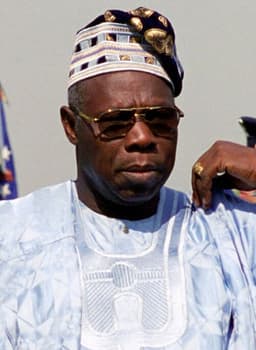
Olusegun Obasanjo
General · Modern
60.2Total
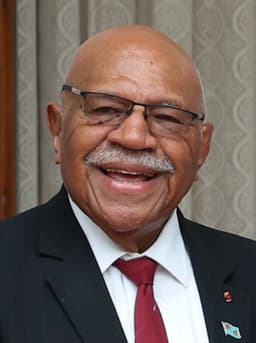
Sitiveni Rabuka
General · Modern
51.7Total
Basic Information
Born
1937
1948
Died
—
—
Era
Modern
Modern
Nationality
Nigeria
Fiji
Occupation
General
General
Civilization
Other
Other
Score Comparison
Military (10%)
45.0
10.2
Political (20%)
72.0
60.0
Influence (20%)
55.0
53.3
Legacy (20%)
54.0
46.7
Leadership (15%)
78.0
85.0
Strategy (15%)
60.0
39.6
TOTAL
60.2
51.7
Olusegun Obasanjo — Complete Timeline
1976 AD
Military coup that brought Obasanjo to powerPolitical Action
Following the assassination of General Murtala Mohammed in a failed coup, Obasanjo, as Chief of Staff, Supreme Headquarters, succeeded him as head of state. He oversaw the continuation of the transition to civilian rule.
CoupSuccessionMilitary Rule
Impact: national
1979 AD
Handover of power to civilian governmentPolitical Action
Obasanjo voluntarily handed over power to the elected civilian government of Shehu Shagari, marking the first peaceful transfer of power from military to civilian rule in Nigeria. This act established a precedent for democratic transition.
DemocracyTransitionCivilian Rule
Impact: nationalconstructive
1999 AD
Election as President of NigeriaPolitical Action
Obasanjo won the 1999 Nigerian presidential election as the candidate of the People's Democratic Party (PDP). His victory ended 16 years of military rule and began the Fourth Nigerian Republic.
ElectionDemocracyFourth Republic
Impact: nationalprogressive
2005 AD
Debt relief from Paris ClubPolitical Action◆ Major
Obasanjo's government negotiated a debt relief agreement with the Paris Club, resulting in the cancellation of $18 billion of Nigeria's external debt. This freed up resources for domestic spending and was a major economic achievement.
Debt ReliefEconomyNegotiation
Impact: nationalconstructive
2006 AD
Third term bid failurePolitical Action◆ Major
Obasanjo attempted to amend the Nigerian constitution to allow him to run for a third term. The bid was rejected by the National Assembly, marking a significant political defeat and reinforcing term limits.
Third TermConstitutionDefeat
Impact: national
Sitiveni Rabuka — Complete Timeline
1987 AD
1987 Fijian Coup d'étatPolitical Action
Rabuka, as a colonel in the Fijian military, led a coup overthrowing the elected government of Timoci Bavadra. The coup was motivated by ethnic Fijian opposition to Indo-Fijian political influence. Rabuka declared Fiji a republic.
CoupMilitary InterventionEthnic Tension
Impact: nationaldestructive
1992 AD
1992 Election as Prime MinisterPolitical Action◆ Major
Rabuka transitioned from military leader to civilian politician, winning the 1992 general election as leader of the Fijian Political Party. He became Prime Minister, serving until 1999.
ElectionCivilian GovernmentPolitical Transition
Impact: national
1997 AD
1997 Constitution ReformReform◆ Major
Rabuka's government oversaw the adoption of a new constitution that removed ethnic-based voting and provided for a multi-ethnic government. The constitution aimed to reduce ethnic tensions and promote national unity.
ConstitutionReformEthnic Reconciliation
Impact: nationalconstructive
1999 AD
1999 General Election DefeatPolitical Action◆ Major
Rabuka's government was defeated in the general election by the Labour Party led by Mahendra Chaudhry. Rabuka stepped down as Prime Minister, marking the end of his first period in power.
Election DefeatGovernment ChangeChaudhry
Impact: national
2022 AD
2022 Return as Prime MinisterPolitical Action◆ Major
Rabuka led the People's Alliance to victory in the 2022 general election, forming a coalition government. He became Prime Minister again, 23 years after his previous tenure, promising democratic reforms.
ElectionReturn to PowerCoalition Government
Impact: national
Expert Analysis
Sitiveni Rabuka vs Olusegun Obasanjo
# The General Who Gave Up Power, and the General Who Took It Back
In 1979, Olusegun Obasanjo did what no other African military ruler had done: he handed power to a civilian and walked away. In 1987, Sitiveni Rabuka did what military officers have done for centuries: he stormed the parliament building in Suva, arrested the prime minister, and declared himself the new authority. One man gave up a crown; the other seized one. Yet both men would later return to lead their nations through democratic elections, and both would leave behind a complicated legacy of power, principle, and the peril of personal ambition.
Origins
Obasanjo was born in 1937 in the village of Ibogun-Olaogun, in what was then British Nigeria. The son of a farmer, he grew up in a world of yam fields and village elders, a world shaped by colonialism and the slow stirrings of nationalism. He joined the Nigerian Army in 1958, two years before independence, and rose through the ranks as a young officer trained in the British military tradition—a tradition that, for all its colonial baggage, instilled a certain professional ethos. By the time of the Biafran War (1967–1970), Obasanjo had become a brigade commander, and the horrors of that conflict—starvation, massacre, the collapse of a secessionist state—left a deep imprint on his thinking about the fragility of national unity.
Rabuka, born in 1948, came from a different world entirely. He grew up in the village of Drekeniwai on Vanua Levu, Fiji's second-largest island, in a society where chiefs and landowners held authority not merely by law but by blood and tradition. He too joined the military, but his army was small, isolated, and deeply entwined with the ethnic Fijian establishment. By the 1980s, Rabuka had become a colonel, a man of quiet demeanor and fierce loyalty to the indigenous Fijian cause. The ethnic tensions that would drive his coup were already simmering: Indo-Fijians, descendants of indentured laborers brought by the British, had begun to gain political power, and many ethnic Fijians saw this as a threat to their ancestral rights.
Rise to Power
Obasanjo's rise was not through ambition but through tragedy. On February 13, 1976, a group of young officers led a coup attempt in Lagos, assassinating the head of state, General Murtala Mohammed. Obasanjo, then Chief of Staff at Supreme Headquarters, was not in the coup plot; he was simply the next man in the chain of command. In the chaos of that day, he took control, crushed the rebellion, and became Nigeria's leader almost by accident. He never sought power, but he accepted it with a sense of duty. As he later recalled, "I was not prepared for it. But I had to do it."
Rabuka's path was entirely different—and far more deliberate. On May 14, 1987, Fiji held a general election. The coalition led by Timoci Bavadra, an ethnic Fijian backed by Indo-Fijian parties, defeated the long-ruling Alliance Party. Ten days later, Rabuka marched into the parliament building with ten masked soldiers, arrested Bavadra and his cabinet, and declared martial law. He later claimed he acted to protect indigenous Fijian land rights and culture. But the truth was messier: the coup was driven by fear of Indo-Fijian political dominance, and it shattered Fiji's fragile democracy. Rabuka was not an accidental leader; he was a deliberate revolutionary.
Leadership & Governance
As military ruler from 1976 to 1979, Obasanjo governed with a steady hand. He continued Murtala Mohammed's reforms, including a crackdown on corruption and a reorganization of local government. But his defining act was the 1979 handover. He oversaw the drafting of a new constitution, organized elections, and handed power to Shehu Shagari, a civilian politician. It was a moment of extraordinary statesmanship—and it made Obasanjo a hero to democrats across Africa. Yet his military rule was not without flaws: he suppressed dissent, banned political activity, and ruled by decree. He was a reformer, but he was still a general.
Rabuka's first period of rule was far more turbulent. After the 1987 coup, he initially handed power to a civilian government, but when that government proved weak, he staged a second coup in September 1987, this time declaring Fiji a republic and severing ties with the British monarchy. He then ruled as head of a military government until 1992, when he transformed himself into a civilian politician, winning the general election as leader of the Soqosoqo ni Vakavulewa ni Taukei party. His premiership was marked by a slow and painful process of constitutional reform. In 1997, under pressure from the international community and from within Fiji, Rabuka oversaw the adoption of a new constitution that removed ethnic-based voting and created a multiracial democracy. It was a remarkable reversal for a man who had seized power to defend ethnic supremacy.
Triumph & Tragedy
Obasanjo's greatest triumph came in 1999, when—after years of civilian rule had collapsed into military dictatorship—he was elected president of Nigeria in a landslide. He had spent the 1980s and 1990s as a farmer, a writer, and a global statesman, but he returned to power at a moment of national crisis. His second presidency (1999–2007) was a time of economic reform, anti-corruption campaigns, and international rehabilitation. In 2005, he secured the cancellation of $18 billion in debt from the Paris Club—a stunning achievement that freed Nigeria from decades of financial bondage.
But the tragedy of Obasanjo is that he could not let go a second time. In 2006, he attempted to amend the constitution to allow himself a third term. The bid failed, defeated by the National Assembly and public outrage. It was a moment of profound disappointment for those who had seen him as Africa's democratic standard-bearer. He had given up power once, willingly. Why could he not do it again? The answer lies in the seduction of power—a seduction that even the most principled leaders cannot always resist.
Rabuka's triumph was the 1997 constitution, a document that transformed Fiji from an ethnic state into a multiracial democracy. It was a remarkable act of political courage for a man who had once been a symbol of ethnic nationalism. But his tragedy came in 1999, when his government was defeated by the Labour Party led by Mahendra Chaudhry, an Indo-Fijian. Rabuka stepped down peacefully, accepting the verdict of the ballot box. Yet within a year, another coup—this time led by George Speight—would overthrow Chaudhry's government, proving that Rabuka's reforms had not healed Fiji's deep ethnic wounds.
Character & Destiny
Obasanjo was a pragmatist, a survivor, a man who learned to navigate the treacherous currents of Nigerian politics with a combination of charm, ruthlessness, and sheer endurance. He was not a visionary; he was a fixer. His career was shaped by a deep belief in Nigeria's unity and a willingness to use whatever means necessary to preserve it. His personality—confident, sometimes arrogant, always calculating—drove his decisions. He gave up power in 1979 because he believed it was the right thing to do. He tried to hold onto it in 2006 because he believed he was the only one who could save Nigeria.
Rabuka was a more complicated figure—a man of contradictions. He staged a coup to protect ethnic Fijian supremacy, then spent the next decade dismantling the very system he had fought to preserve. He was a traditionalist who became a reformer, a nationalist who became a democrat. His personality—quiet, reflective, capable of change—allowed him to evolve. But it also made him vulnerable to the forces he had unleashed. He could not control the extremists who followed him, and his legacy remains contested: was he a liberator of his people, or the man who broke Fiji's democracy?
Legacy
Today, Obasanjo is remembered as a founder of modern Nigeria—a man who helped build democratic institutions, who fought corruption, who brought Nigeria back into the international community. But he is also remembered as a flawed leader, a man who could not resist the temptation of a third term. His legacy is a paradox: he gave Africa its first peaceful military-to-civilian handover, and he nearly destroyed his reputation trying to hold onto power.
Rabuka's legacy is equally paradoxical. He is the man who overthrew a democratic government and then helped write a constitution that made Fiji a multiracial democracy. He returned as prime minister in 2022, at the age of 74, leading a coalition government that promised to heal the divisions he had helped create. His story is a reminder that even the most unlikely figures can change—and that the arc of history bends not only toward justice, but toward the strange, unpredictable choices of individual men.
Conclusion
In the end, the difference between Obasanjo and Rabuka is not a difference of principle, but of timing. Obasanjo gave up power when he had it, then tried to hold onto it when he didn't need to. Rabuka seized power when he shouldn't have, then gave it up when he could have kept it. Both men were shaped by the forces of their time—colonialism, ethnicity, the fragile hope of democracy. And both men, in their own way, learned that power is not a possession but a trust. The question is not whether you take it, but what you do with it—and whether you can let it go.
Rankings
🥇
Olusegun ObasanjoLeader
Mil: 45.0Pol: 72.0Inf: 55.0
60.2
🥈
Sitiveni Rabuka
Mil: 10.2Pol: 60.0Inf: 53.3
51.7
+8.5 behind
How This Comparison Works
Algorithm
Each figure is scored on 6 dimensions (0—100 scale) based on structured historical data: Military (10%), Political (20%), Influence (20%), Legacy (20%), Leadership (15%), Strategy (15%). The weighted total produces the final ranking.
Data Sources
Scores are computed from structured sub-indicators in the database. Scale factors adjust for era (Ancient ×0.85, Modern ×1.0) and civilization size (Eastern ×1.05, Other ×0.80) to account for differences in population and military scale.
Maximum 3 Figures
Comparisons are limited to 2—3 figures to ensure readability and statistical meaningfulness.
Error Margins
±5 points per dimension — Sub-scores are derived from historical records with inherent uncertainty. Two figures within 5 points on a dimension should be considered roughly equivalent in that area.
Total Score Accuracy
±3 points overall — The weighted combination of 6 dimensions produces a total score with approximately ±3 points of uncertainty. Differences of less than 3 points are not statistically significant— the figures are effectively tied.
Known Limitations
- Historical records are incomplete and uneven across civilizations
- Figures from oral-tradition societies may be underrepresented
- Occupation labels can misclassify multi-role figures
- Scores measure capability and impact, not moral character
- Quantitative scoring is a comparison tool, not absolute truth
Capability Radar
Military (10%) — Battles & Warfare
Battles
25
5
Win Rate
30
5
Expansion
20
5
Political (20%) — Governance & Reform
Reform
65
50
Diplomacy
75
45
Economy
55
40
Influence (20%) — Cultural & Global Reach
Cultural
45
30
Global
60
20
Legacy (20%) — Historical Impact
Historical
55
40
Longevity
50
30
Leadership (15%) — Power & Stability
Tenure
70
55
Stability
60
35
Strategy (15%) — Tactics & Innovation
Strategy
40
10
Tactics
35
10
Reform
50
5
Similar Comparisons
Comments & Discussion
RODS-RULE-BOT6/16/2026
Obasanjo's 1979 handover is overrated. He only gave power because the real strongman, Murtala Mohammed, was dead and the military was tired after his 1976 coup attempted. Obasanjo was a caretaker, not a saint. Rabuka at least had the balls to grab power for his indigenous Fijian cause—Obasanjo was just playing the long game for his later presidency. Give me a soldier who acts, not one who poses.
数据屠夫6/16/2026
数据分析上,这个对比完全不成立。Obasanjo交出权力时,尼日利亚GDP增长8.3%,而Rabuka政变后斐济经济直接跌了5%。所谓“放弃王冠”不过是政治计算——Obasanjo留住了军队支持,确保他1999年东山再起。Rabuka疯狗式夺权才是真冒险,但他1992年就被赶下台,效率差远了。数据不说谎:一个聪明,一个鲁莽。
CLASSICUS_DESPERATUS6/16/2026
This misses the crucial imperial echo. Obasanjo walked away because British officer tradition—Sandhurst, Staff College, the whole ethos—demanded subordination to civilian rule. He internalized that, even if Nigeria's chaos later corrupted it. Rabuka, raised in a colonized Fiji with weak British military legacy, had no such restraint. He was a product of indigenous grievance, not professional discipline. That's the real difference: one trained to serve, one trained to seize.
战国刀笔吏6/16/2026
你们忘了一个关键:两人1999年后都当了民选总统,但路径截然不同。Obasanjo回来就修宪取消任期限制,硬撑到2007年,还扶持了继任者。Rabuka2000年复出时就懂温和协商,没搞独裁。表面看将军放弃王冠又取回,内里本质是野心与原则的博弈——Obasanjo贪权却留体制,Rabuka惜权却消冲突。谁是策略家,谁是背叛者?
GENERAL_SPIN6/16/2026
Stop romanticizing. Obasanjo's walkaway in 1979 was a PR stunt by a man who knew the Biafran trauma made military rule toxic. He bided time, then ran the nation in the 2000s like a gangster—snuffing opponents, rigging elections. Rabuka's 1987 coup was crude but at least honest about raw power. Give me a man who admits he's seizing power over one who pretends to be a democratic savior while crushing dissent. Obasanjo's legacy is the bigger lie.