Loading...
Olusegun Obasanjo vs Yitzhak Rabin
Yitzhak Rabin leads by 6.2 pts · 2 figures compared
…
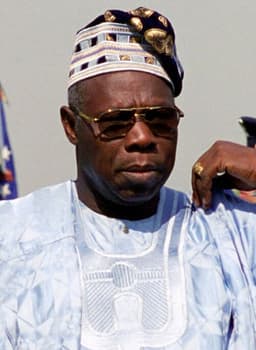
Olusegun Obasanjo
General · Modern
60.2Total
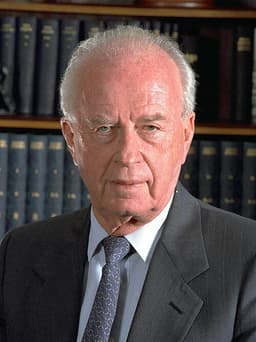
Yitzhak Rabin
General · Modern
66.4Total
Basic Information
Born
1937
1922
Died
—
—
Era
Modern
Modern
Nationality
Nigeria
Israel
Occupation
General
General
Civilization
Other
Middle Eastern
Score Comparison
Military (10%)
45.0
61.7
Political (20%)
72.0
82.0
Influence (20%)
55.0
68.0
Legacy (20%)
54.0
55.0
Leadership (15%)
78.0
78.0
Strategy (15%)
60.0
55.0
TOTAL
60.2
66.4
Olusegun Obasanjo — Complete Timeline
1976 AD
Military coup that brought Obasanjo to powerPolitical Action
Following the assassination of General Murtala Mohammed in a failed coup, Obasanjo, as Chief of Staff, Supreme Headquarters, succeeded him as head of state. He oversaw the continuation of the transition to civilian rule.
CoupSuccessionMilitary Rule
Impact: national
1979 AD
Handover of power to civilian governmentPolitical Action
Obasanjo voluntarily handed over power to the elected civilian government of Shehu Shagari, marking the first peaceful transfer of power from military to civilian rule in Nigeria. This act established a precedent for democratic transition.
DemocracyTransitionCivilian Rule
Impact: nationalconstructive
1999 AD
Election as President of NigeriaPolitical Action
Obasanjo won the 1999 Nigerian presidential election as the candidate of the People's Democratic Party (PDP). His victory ended 16 years of military rule and began the Fourth Nigerian Republic.
ElectionDemocracyFourth Republic
Impact: nationalprogressive
2005 AD
Debt relief from Paris ClubPolitical Action◆ Major
Obasanjo's government negotiated a debt relief agreement with the Paris Club, resulting in the cancellation of $18 billion of Nigeria's external debt. This freed up resources for domestic spending and was a major economic achievement.
Debt ReliefEconomyNegotiation
Impact: nationalconstructive
2006 AD
Third term bid failurePolitical Action◆ Major
Obasanjo attempted to amend the Nigerian constitution to allow him to run for a third term. The bid was rejected by the National Assembly, marking a significant political defeat and reinforcing term limits.
Third TermConstitutionDefeat
Impact: national
Yitzhak Rabin — Complete Timeline
1967 AD
Chief of Staff during the Six-Day WarWar
As Chief of Staff of the Israel Defense Forces, Rabin commanded the Israeli military during the Six-Day War against Egypt, Jordan, and Syria. Israel captured the Sinai Peninsula, Gaza Strip, West Bank, East Jerusalem, and Golan Heights, reshaping the region.
Six-Day WarTerritorial ExpansionMilitary Victory
Impact: global
1993 AD
Signing of the Oslo AccordsPolitical Action
As prime minister, Rabin signed the Oslo Accords with PLO Chairman Yasser Arafat on the White House lawn. The agreement established the Palestinian Authority and set a framework for Palestinian self-governance in the West Bank and Gaza Strip.
Peace ProcessPalestiniansOslo
Impact: globalconstructive
1995 AD
Assassination at Peace RallyPolitical Action
Rabin was assassinated by Israeli extremist Yigal Amir after a peace rally in Tel Aviv. The assassination shocked Israel and the world, derailing the Oslo peace process and leading to a period of political instability.
AssassinationPeace ProcessPolitical Violence
Impact: globaltragic
Expert Analysis
Yitzhak Rabin vs Olusegun Obasanjo
### The General Who Dared to Change
On the evening of November 4, 1995, Yitzhak Rabin stood on a stage in Tel Aviv, singing "The Song of Peace" with a crowd of 100,000 Israelis. Moments later, three gunshots from a right-wing extremist silenced both the song and the man. Across the world, in a very different Africa, another general, Olusegun Obasanjo, had faced his own moment of ultimate decision two decades earlier—and walked away from power. Why did one general die for making peace, while another lived to see his nation transformed? The answer lies not just in the men themselves, but in the storms of history that shaped them.
### Origins
Yitzhak Rabin was born in 1922 in Jerusalem, the son of Jewish immigrants from Eastern Europe. His father was a labor activist, his mother a nurse and politician. From childhood, Rabin was immersed in the struggle for a Jewish homeland—a struggle that demanded sacrifice, discipline, and a willingness to fight. He grew up in a world where survival was the first law, and the enemies of Israel were not abstractions but nations that had sworn to destroy it.
Olusegun Obasanjo, born in 1937 in southwestern Nigeria, came from a very different soil. His father was a farmer; his mother died when he was young. He grew up in a village where the rhythms of the earth dictated life, but also where the shadow of British colonialism loomed. Nigeria was a British creation—a patchwork of ethnic groups forced into a single nation. Obasanjo learned early that power in such a place meant navigating between tribes, religions, and competing ambitions.
Both men were shaped by war, but different wars. Rabin’s Israel was forged in the crucible of 1948, when the new state fought for its very existence. Obasanjo’s Nigeria was torn apart by the Biafran War (1967–1970), a brutal civil conflict that killed over a million people. One man learned to fight for survival; the other learned to fight for unity.
### Rise to Power
Rabin’s rise was meteoric and military. By 1967, at age 45, he was Chief of Staff of the Israel Defense Forces. That year, he commanded the Six-Day War—a lightning campaign that captured the Sinai, the Golan Heights, the West Bank, and East Jerusalem. The victory was stunning, but it planted seeds of tragedy. Israel now ruled over millions of Palestinians, a burden that would haunt Rabin for the rest of his life.
Obasanjo’s path was different. He rose through the ranks of the Nigerian army, but his moment came in 1976, when a coup killed General Murtala Mohammed. As Chief of Staff, Obasanjo could have seized power permanently—many expected him to. Instead, he announced that the military would hand over to a civilian government within three years. In 1979, he did exactly that, becoming the first military ruler in Africa to voluntarily surrender power. It was an act so rare that it made him an international symbol of statesmanship.
### Leadership & Governance
As leaders, both men were pragmatic, not ideological. Rabin was a soldier who became a politician, and he governed with a soldier’s directness. His great achievement as prime minister was the Oslo Accords of 1993, when he shook hands with Yasser Arafat on the White House lawn. “We who have fought against you, the Palestinians,” he said, “we say to you today in a loud and clear voice: Enough of blood and tears.” It was a dramatic reversal for a man who had spent his life fighting the very people he now embraced.
Obasanjo’s governance was equally transformative. When he returned to power as an elected president in 1999, Nigeria was a mess: military dictatorship, corruption, and economic decay. He stabilized the economy, negotiated $18 billion in debt relief from the Paris Club in 2005, and pushed for anti-corruption reforms. But his leadership was not flawless. In 2006, he tried to amend the constitution to allow a third term—a move that many saw as a power grab. The Nigerian Senate rejected it, and Obasanjo stepped down. Unlike Rabin, he lived to see his failure become a lesson in democratic limits.
### Triumph & Tragedy
Rabin’s greatest triumph—the Oslo Accords—was also his tragedy. The peace process was deeply controversial. Jewish settlers called him a traitor; Palestinians saw the accords as a sellout. At a peace rally in Tel Aviv on November 4, 1995, a young Israeli named Yigal Amir shot Rabin three times. The assassin’s bullet was not just a personal tragedy; it was a national one. The peace process collapsed, and Israel spiraled into years of violence.
Obasanjo’s tragedy was less dramatic but no less significant. His third-term bid failed, but it stained his legacy. He had been the general who gave up power; now he was the president who tried to cling to it. Yet he accepted defeat, and Nigeria’s democracy survived. That survival was itself a triumph—a rare thing in a continent where strongmen often die in office.
### Character & Destiny
Rabin was a man of contradictions. He was tough, even cold, but capable of profound moral evolution. The warrior who ordered the conquest of the West Bank became the peacemaker who tried to give it back. His character was shaped by the reality of Israel’s existence: a tiny nation surrounded by enemies, where every decision carried life-or-death weight. That pressure made him cautious, but also brave—brave enough to shake hands with an enemy he had once tried to destroy.
Obasanjo was more a survivor than a visionary. He had the pragmatism of a man who had seen war up close—the Biafran War taught him that unity was everything. He was not a charismatic speaker or a grand thinker, but he was patient and calculating. He knew when to push and when to pull back. His third-term failure showed his limits, but his acceptance of defeat showed his wisdom.
### Legacy
Rabin’s legacy is a question mark. He is remembered as a martyr for peace, but the peace he died for never came. His assassination is a warning: that the path to reconciliation is paved with hatred, and that sometimes the greatest enemies are not across the border, but within your own society. On the anniversary of his death, Israelis light candles and sing his favorite songs. But the occupation continues.
Obasanjo’s legacy is more solid. He is remembered as the man who ended military rule in Nigeria—twice. He stabilized a fragile democracy, paid off debts, and left office peacefully. He is not a saint—his third-term bid tarnished him—but he is a symbol of what is possible in a continent where so much goes wrong. Nigeria’s democracy is flawed, but it exists. That is Obasanjo’s gift.
### Conclusion
Two generals, two nations, two different outcomes. Rabin died because he tried to change his country’s destiny too fast, and the forces of reaction were too strong. Obasanjo lived because he knew when to stop. One gave his life for peace; the other gave his power for democracy. Both understood that the hardest war a soldier can fight is the war against his own side’s fears. In the end, history judges them not by the battles they won, but by the peace they dared to imagine.
Rankings
🥇
Yitzhak RabinLeader
Mil: 61.7Pol: 82.0Inf: 68.0
66.4
🥈
Olusegun Obasanjo
Mil: 45.0Pol: 72.0Inf: 55.0
60.2
+6.2 behind
How This Comparison Works
Algorithm
Each figure is scored on 6 dimensions (0—100 scale) based on structured historical data: Military (10%), Political (20%), Influence (20%), Legacy (20%), Leadership (15%), Strategy (15%). The weighted total produces the final ranking.
Data Sources
Scores are computed from structured sub-indicators in the database. Scale factors adjust for era (Ancient ×0.85, Modern ×1.0) and civilization size (Eastern ×1.05, Other ×0.80) to account for differences in population and military scale.
Maximum 3 Figures
Comparisons are limited to 2—3 figures to ensure readability and statistical meaningfulness.
Error Margins
±5 points per dimension — Sub-scores are derived from historical records with inherent uncertainty. Two figures within 5 points on a dimension should be considered roughly equivalent in that area.
Total Score Accuracy
±3 points overall — The weighted combination of 6 dimensions produces a total score with approximately ±3 points of uncertainty. Differences of less than 3 points are not statistically significant— the figures are effectively tied.
Known Limitations
- Historical records are incomplete and uneven across civilizations
- Figures from oral-tradition societies may be underrepresented
- Occupation labels can misclassify multi-role figures
- Scores measure capability and impact, not moral character
- Quantitative scoring is a comparison tool, not absolute truth
Capability Radar
Military (10%) — Battles & Warfare
Battles
25
65
Win Rate
30
70
Expansion
20
50
Political (20%) — Governance & Reform
Reform
65
65
Diplomacy
75
85
Economy
55
60
Influence (20%) — Cultural & Global Reach
Cultural
45
55
Global
60
70
Legacy (20%) — Historical Impact
Historical
55
75
Longevity
50
60
Leadership (15%) — Power & Stability
Tenure
70
70
Stability
60
40
Strategy (15%) — Tactics & Innovation
Strategy
40
75
Tactics
35
60
Reform
50
55
Similar Comparisons
Comments & Discussion
古籍篡改者6/16/2026
拿拉宾对比奥巴桑乔是典型的西方中心主义。拉宾生于奥斯曼帝国崩溃后的犹太复国运动,他的“敌人”是阿拉伯民族主义;奥巴桑乔面对的是殖民主义撕裂的后遗症——比布须曼人的仇恨更难愈合。拉宾死后以色列右转,而奥巴桑乔的尼日利亚还在石油诅咒里打转。真正的问题不是将军要不要和平,而是谁有资格定义什么叫“和平”——穿军装的还是穿西装的?|zh|Comparing Rabin to Obasanjo is classic Western-centrism. Rabin was born in post-Ottoman Zionist struggle, his “enemy” Arab nationalism; Obasanjo faced
Historian9446/16/2026
Rabin’s tragic flaw wasn’t Oslo but paranoia: he trusted Arafat’s Fatah while ignoring Hamas’s 1994 bus bombings. Compare that to Obasanjo’s cold pragmatism—he handed power to a civilian in 1979, knowing the military would retake it if inept. Rabin died for a vision too fragile for his violent neighborhood. The real lesson: peacemakers need steel spines, not just singing crowds.|en|Rabin’s tragic flaw wasn’t Oslo but paranoia: he trusted Arafat’s Fatah while ignoring Hamas’s 1994 bus bombings. C
Chronicler27176/16/2026
The comparison cherry-picks Obasanjo’s 1979 exit but whitewashes his return as a dictator from 1999-2007, when Nigeria’s oil wealth meant poverty stayed flat. Rabin’s assassination didn’t kill peace—Oslo was doomed by 1996 polls showing Israelis rejecting land swaps 55-45. These “biographies” hide context with emotional framing. Give me raw numbers: Obasanjo left power once, Rabin never lived to try it. That’s not a moral lesson, it’s survivorship bias.|en|The comparison cherry-picks Obasanjo’s