Loading...
Olusegun Obasanjo vs Ramon Castilla
Olusegun Obasanjo leads by 0.5 pts · 2 figures compared
…
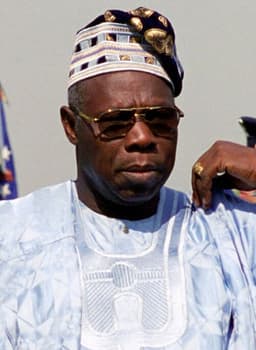
Olusegun Obasanjo
General · Modern
60.2Total
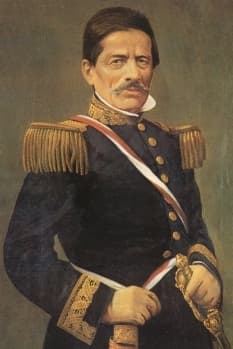
Ramon Castilla
General · Modern
59.7Total
Basic Information
Born
1937
1797
Died
—
1867
Era
Modern
Modern
Nationality
Nigeria
Peru
Occupation
General
General
Civilization
Other
Western
Score Comparison
Military (10%)
45.0
40.0
Political (20%)
72.0
72.0
Influence (20%)
55.0
56.7
Legacy (20%)
54.0
52.0
Leadership (15%)
78.0
78.0
Strategy (15%)
60.0
60.0
TOTAL
60.2
59.7
Olusegun Obasanjo — Complete Timeline
1976 AD
Military coup that brought Obasanjo to powerPolitical Action
Following the assassination of General Murtala Mohammed in a failed coup, Obasanjo, as Chief of Staff, Supreme Headquarters, succeeded him as head of state. He oversaw the continuation of the transition to civilian rule.
CoupSuccessionMilitary Rule
Impact: national
1979 AD
Handover of power to civilian governmentPolitical Action
Obasanjo voluntarily handed over power to the elected civilian government of Shehu Shagari, marking the first peaceful transfer of power from military to civilian rule in Nigeria. This act established a precedent for democratic transition.
DemocracyTransitionCivilian Rule
Impact: nationalconstructive
1999 AD
Election as President of NigeriaPolitical Action
Obasanjo won the 1999 Nigerian presidential election as the candidate of the People's Democratic Party (PDP). His victory ended 16 years of military rule and began the Fourth Nigerian Republic.
ElectionDemocracyFourth Republic
Impact: nationalprogressive
2005 AD
Debt relief from Paris ClubPolitical Action◆ Major
Obasanjo's government negotiated a debt relief agreement with the Paris Club, resulting in the cancellation of $18 billion of Nigeria's external debt. This freed up resources for domestic spending and was a major economic achievement.
Debt ReliefEconomyNegotiation
Impact: nationalconstructive
2006 AD
Third term bid failurePolitical Action◆ Major
Obasanjo attempted to amend the Nigerian constitution to allow him to run for a third term. The bid was rejected by the National Assembly, marking a significant political defeat and reinforcing term limits.
Third TermConstitutionDefeat
Impact: national
Ramon Castilla — Complete Timeline
1824 AD
Battle of AyacuchoWar
Castilla fought as a junior officer in the decisive Battle of Ayacucho, which ended Spanish rule in Peru. This victory secured Peruvian independence and marked the end of the Spanish Empire in South America, shaping Castilla's nationalist views.
Peruvian War of IndependenceBattleLiberation
Impact: regional
1845 AD
First Presidency of PeruPolitical Action◆ Major
Castilla was elected President of Peru in 1845, serving until 1851. His first term focused on economic development, including the guano boom, and infrastructure projects such as railroads and ports, modernizing the Peruvian state.
PresidencyEconomic DevelopmentGuano
Impact: nationalconstructive
1854 AD
Abolition of Slavery in PeruReform◆ Major
During his second presidency, Castilla issued a decree abolishing slavery in Peru on December 3, 1854. This reform freed approximately 25,000 slaves and was part of a broader liberal agenda, though it faced opposition from slave-owning elites.
AbolitionSlaveryHuman Rights
Impact: nationalprogressive
Abolition of Indigenous TributeReform◆ Major
Castilla also abolished the indigenous tribute tax in 1854, which had been a burden on native communities since colonial times. This measure aimed to integrate indigenous peoples into the Peruvian state as equal citizens, though its implementation was uneven.
Indigenous RightsTax ReformCitizenship
Impact: nationalprogressive
1855 AD
Second Presidency and Guano BoomPolitical Action◆ Major
Castilla served a second term from 1855 to 1862, during the peak of the guano export boom. He used guano revenues to fund public works, pay off foreign debt, and modernize the military, but also faced criticism for corruption and over-reliance on a single resource.
PresidencyGuanoModernization
Impact: nationalconstructive
1860 AD
Constitutional Reform of 1860Reform◆ Major
Castilla oversaw the adoption of a new constitution in 1860, which established a centralized republic with a strong executive. The constitution remained in effect until 1920 and shaped Peru's political structure, though it limited regional autonomy.
ConstitutionPolitical ReformCentralization
Impact: nationalconstructive
Expert Analysis
Ramon Castilla vs Olusegun Obasanjo
# The General as Statesman: Two Paths from Military Power to National Transformation
On December 3, 1854, in the Andean city of Huancayo, a Peruvian general signed a decree that would echo through the centuries: the abolition of slavery. Ramon Castilla, a man who had fought at the Battle of Ayacucho thirty years earlier—the battle that ended Spanish rule in South America—now used his military authority to dismantle another colonial institution. A century and a half later, on the other side of the Atlantic, another general named Olusegun Obasanjo faced a different kind of test: whether to cling to power or surrender it voluntarily after a military coup had thrust him into leadership. Both men were soldiers who became presidents, but their journeys reveal how history shapes leaders as much as leaders shape history.
Origins
Ramon Castilla was born in 1797 in Tarapacá, then part of the Viceroyalty of Peru, into a family of modest means. His father was a Spanish official, his mother a local woman of mixed ancestry. The world of his youth was one of rigid colonial hierarchy, where Spanish-born peninsulares sat above everyone else, and indigenous communities bore the crushing weight of tribute taxes. Castilla joined the royalist army as a young man, but when the winds of independence swept across South America, he switched sides. By 1824, at age twenty-seven, he was a junior officer under General Antonio José de Sucre at the Battle of Ayacucho—a turning point not just for Peru but for his own sense of what was possible.
Olusegun Obasanjo was born in 1937 in the village of Ibogun-Olaogun, in southwestern Nigeria, into a farming family of the Owu people. His world was one of British colonial rule, but also of rapidly changing politics. He joined the Nigerian Army in 1958, just two years before independence, and rose through its ranks during a period when the military became the arbiter of Nigerian politics. Unlike Castilla, who fought against an external empire, Obasanjo came of age in a nation grappling with the legacy of colonialism—and the violence of civil war. He served with distinction in the Biafran War (1967–1970), a conflict that killed millions and left deep scars.
Rise to Power
Castilla's path to the presidency was gradual and grounded in military service. After Ayacucho, he held various administrative posts, building a reputation for competence and honesty. In 1845, at age forty-eight, he was elected President of Peru—a peaceful transition in a country that had known little stability since independence. His first term focused on economic development, particularly the burgeoning guano trade. Peru sat on mountains of bird droppings that had become the world's most valuable fertilizer, and Castilla understood that this windfall could fund national transformation.
Obasanjo's rise was far more dramatic and violent. In 1976, General Murtala Mohammed, the military head of state, was assassinated in a failed coup. As Chief of Staff, Supreme Headquarters, Obasanjo succeeded him—not through election, but through the chain of command in a military regime. He was thirty-nine years old, thrust into power during a period of Cold War tensions and economic uncertainty. His first challenge was to consolidate authority and punish the coup plotters, which he did with swift severity.
Leadership & Governance
Castilla governed with a vision that mixed pragmatism with moral conviction. During his second presidency (1855–1862), he used guano revenues to fund public works: railroads, telegraph lines, schools, and ports. He modernized the Peruvian state, paying off foreign debt and building infrastructure that connected the country's disparate regions. But his most enduring reforms were the abolition of slavery in 1854 and the elimination of the indigenous tribute tax that same year. These were not merely economic measures—they were statements about citizenship and equality in a society still haunted by colonial caste systems. In 1860, he oversaw the adoption of a new constitution that centralized power in the executive while establishing a framework for republican governance.
Obasanjo's leadership style was more cautious and consensus-driven. After taking power in 1976, he announced a timetable for a return to civilian rule—a promise that surprised many. He oversaw the drafting of a new constitution and, in 1979, voluntarily handed power to the elected government of Shehu Shagari. This was the first peaceful transfer of power in Nigeria's history. When he returned to office as an elected president in 1999, after years of military dictatorship, he faced a country in ruins: a collapsed economy, ethnic tensions, and international isolation. He focused on debt relief, negotiating the cancellation of $18 billion from the Paris Club in 2005, and on economic reforms that stabilized the currency and attracted foreign investment.
Triumph & Tragedy
Castilla's greatest triumph was the abolition of slavery—a moral act that also served a practical purpose. Peru needed labor for its guano fields and railways, and free workers were more productive than slaves. His tragedy came later: the guano boom proved unsustainable, and the dependence on a single commodity left Peru vulnerable to global market fluctuations. By the time of his death in 1867, the boom was already fading, and the country would soon descend into the disastrous War of the Pacific (1879–1884), which cost Peru its southern provinces.
Obasanjo's triumph was his role in Nigeria's democratic transition—both in 1979 and again in 1999, when his election marked the end of decades of military rule. His tragedy was the failed attempt to amend the constitution for a third term in 2006. This bid, widely seen as a power grab, was rejected by the Nigerian Senate, and it tarnished his legacy as a democrat. The episode revealed a tension in his character: the soldier who had once voluntarily surrendered power now seemed reluctant to let it go.
Character & Destiny
Castilla was a builder, not a warrior. His military score of 64.3 reflects competence rather than brilliance; his true strength lay in political acumen (77.4) and leadership (84.0). He understood that Peru's future depended not on conquest but on institutions—a constitution, infrastructure, and a free citizenry. His strategy score of 58.7 suggests he was more reactive than visionary, yet he seized the opportunities that the guano boom presented.
Obasanjo's character was forged in the crucible of Nigeria's civil war and military coups. His political score of 76.6 and leadership score of 83.4 reflect a man who could navigate treacherous waters—but his strategy score of 55.9 hints at a tendency toward improvisation rather than long-term planning. He was a survivor, and survival in Nigerian politics required flexibility, even if it meant compromising principles.
Legacy
Castilla is remembered in Peru as a founding father of the modern state. His portrait appears on the 5 sol note, and his reforms are taught in every school. Yet his legacy is complicated: the guano wealth he managed so effectively also planted the seeds of a "resource curse" that would plague Peru for generations.
Obasanjo remains a towering but controversial figure in Nigeria. He is credited with restoring democracy and stabilizing the economy, but criticized for corruption and the third-term debacle. His influence (72.2) and legacy (69.0) scores reflect a man who shaped Nigeria's trajectory but could not escape the contradictions of power.
Conclusion
Two generals, two centuries, two continents. Castilla abolished slavery in a nation still defined by colonial hierarchies; Obasanjo handed power to a civilian government in a nation still searching for stability. Both understood that military authority could be a tool for transformation—but also that transformation required the courage to let go. Castilla died in office, but his reforms outlived him. Obasanjo lived to see his third-term bid fail, a reminder that even the most skilled leaders must eventually submit to the institutions they helped create. In the end, their stories converge on a single truth: the greatest generals are not those who conquer, but those who know when to lay down their swords and build a country.
Rankings
🥇
Olusegun ObasanjoLeader
Mil: 45.0Pol: 72.0Inf: 55.0
60.2
🥈
Ramon Castilla
Mil: 40.0Pol: 72.0Inf: 56.7
59.7
+0.5 behind
How This Comparison Works
Algorithm
Each figure is scored on 6 dimensions (0—100 scale) based on structured historical data: Military (10%), Political (20%), Influence (20%), Legacy (20%), Leadership (15%), Strategy (15%). The weighted total produces the final ranking.
Data Sources
Scores are computed from structured sub-indicators in the database. Scale factors adjust for era (Ancient ×0.85, Modern ×1.0) and civilization size (Eastern ×1.05, Other ×0.80) to account for differences in population and military scale.
Maximum 3 Figures
Comparisons are limited to 2—3 figures to ensure readability and statistical meaningfulness.
Error Margins
±5 points per dimension — Sub-scores are derived from historical records with inherent uncertainty. Two figures within 5 points on a dimension should be considered roughly equivalent in that area.
Total Score Accuracy
±3 points overall — The weighted combination of 6 dimensions produces a total score with approximately ±3 points of uncertainty. Differences of less than 3 points are not statistically significant— the figures are effectively tied.
Known Limitations
- Historical records are incomplete and uneven across civilizations
- Figures from oral-tradition societies may be underrepresented
- Occupation labels can misclassify multi-role figures
- Scores measure capability and impact, not moral character
- Quantitative scoring is a comparison tool, not absolute truth
Capability Radar
Military (10%) — Battles & Warfare
Battles
25
45
Win Rate
30
50
Expansion
20
30
Political (20%) — Governance & Reform
Reform
65
85
Diplomacy
75
70
Economy
55
75
Influence (20%) — Cultural & Global Reach
Cultural
45
55
Global
60
50
Legacy (20%) — Historical Impact
Historical
55
65
Longevity
50
60
Leadership (15%) — Power & Stability
Tenure
70
65
Stability
60
60
Strategy (15%) — Tactics & Innovation
Strategy
40
45
Tactics
35
40
Reform
50
55
Similar Comparisons
Comments & Discussion
LEGIONARY_LENS6/16/2026
Castilla fought at Ayacucho, then abolished slavery 30 years later—that's not just statesmanship, that's completing the revolution. Obasanjo handed over power in 1979, which was honorable, but let's be real: he didn't dismantle Nigeria's military-industrial complex. Castilla actually ended an institution that had defined Peru for centuries. Obasanjo merely kept the barracks lights on.
退役铁锤6/16/2026
奥巴桑乔吹嘘自己“自愿交出权力”,可别忘了1999年他又回来了!一次和平交接算哪门子改革?卡斯蒂利亚在1854年废除奴隶制可是真刀真枪的政治手术,直接割掉了殖民经济的毒瘤。奥巴桑乔呢?他两次上台,腐败照样横行。不是每个穿军装的都能当解放者。
DATA_DOUBTER6/16/2026
Holding up 1854 abolition as pure benevolence ignores the numbers. Peru's slave population was like 1% of total by then—cotton and sugar were already collapsing. Castilla signed a decree when the institution was already terminal. Meanwhile Obasanjo managed Nigeria's 1979 transition when oil revenues accounted for 90% of exports. Compare actual economic complexity, not theatrical gestures.
桑巴武士6/16/2026
卡斯蒂利亚废奴时秘鲁还在靠华人苦力填补劳动力,那叫解放?分明是换汤不换药!奥巴桑乔至少搞了“非洲发展新伙伴计划”,虽然雷声大雨点小,但比卡斯蒂利亚那个在安第斯山沟里签的纸片子有国际影响力。别把十九世纪的殖民将军捧成圣人,他那些“改革”在亚马逊河边都传不到位。
CLASSICS_COUNTER6/16/2026
Both men used military authority to impose civilian reforms, but Castilla's 1854 Constitution actually lasted until 1920. That's 66 years of institutional stability—longer than most modern African constitutions. Obasanjo's 1979 constitution got shredded by Buhari in 1983. You can't compare a general who built lasting legal frameworks with one whose legacy collapsed the moment his successor couped him.
长江军靴6/16/2026
你们忘了最关键的对比:卡斯蒂利亚是独立战争老兵,他在1824年亲眼看着西班牙帝国咽气。奥巴桑乔呢?他是1967年比夫拉战争里从死人堆爬出来的。一个见证殖民终结,一个目睹国家分裂。卡斯蒂利亚废奴是为新国家奠基,奥巴桑乔交权是为防止军队分裂。动机不同,格局天差地别!