Loading...
Olusegun Obasanjo vs Plutarco Elias Calles
Olusegun Obasanjo leads by 1.7 pts · 2 figures compared
…
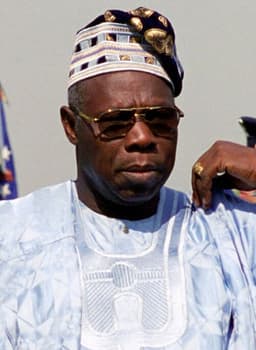
Olusegun Obasanjo
General · Modern
60.2Total
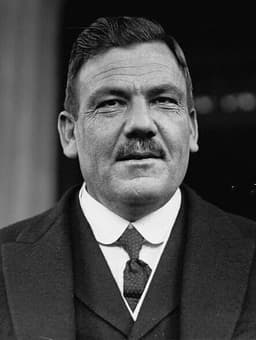
Plutarco Elias Calles
General · Modern
58.5Total
Basic Information
Born
1937
1877
Died
—
1945
Era
Modern
Modern
Nationality
Nigeria
Mexico
Occupation
General
General
Civilization
Other
Western
Score Comparison
Military (10%)
45.0
40.0
Political (20%)
72.0
70.3
Influence (20%)
55.0
68.0
Legacy (20%)
54.0
40.0
Leadership (15%)
78.0
78.0
Strategy (15%)
60.0
52.5
TOTAL
60.2
58.5
Olusegun Obasanjo — Complete Timeline
1976 AD
Military coup that brought Obasanjo to powerPolitical Action
Following the assassination of General Murtala Mohammed in a failed coup, Obasanjo, as Chief of Staff, Supreme Headquarters, succeeded him as head of state. He oversaw the continuation of the transition to civilian rule.
CoupSuccessionMilitary Rule
Impact: national
1979 AD
Handover of power to civilian governmentPolitical Action
Obasanjo voluntarily handed over power to the elected civilian government of Shehu Shagari, marking the first peaceful transfer of power from military to civilian rule in Nigeria. This act established a precedent for democratic transition.
DemocracyTransitionCivilian Rule
Impact: nationalconstructive
1999 AD
Election as President of NigeriaPolitical Action
Obasanjo won the 1999 Nigerian presidential election as the candidate of the People's Democratic Party (PDP). His victory ended 16 years of military rule and began the Fourth Nigerian Republic.
ElectionDemocracyFourth Republic
Impact: nationalprogressive
2005 AD
Debt relief from Paris ClubPolitical Action◆ Major
Obasanjo's government negotiated a debt relief agreement with the Paris Club, resulting in the cancellation of $18 billion of Nigeria's external debt. This freed up resources for domestic spending and was a major economic achievement.
Debt ReliefEconomyNegotiation
Impact: nationalconstructive
2006 AD
Third term bid failurePolitical Action◆ Major
Obasanjo attempted to amend the Nigerian constitution to allow him to run for a third term. The bid was rejected by the National Assembly, marking a significant political defeat and reinforcing term limits.
Third TermConstitutionDefeat
Impact: national
Plutarco Elias Calles — Complete Timeline
1915 AD
Governorship of SonoraPolitical Action
Calles served as Governor of Sonora from 1915 to 1919, implementing radical reforms including land redistribution, anti-clerical laws, and labor rights. His governorship established him as a key figure in the Sonoran dynasty and a proponent of revolutionary change.
GovernorshipSonoraReforms
Impact: regionalconstructive
1924 AD
Presidency of MexicoPolitical Action◆ Major
Calles was elected President of Mexico in 1924, serving until 1928. His administration continued revolutionary reforms, including land reform, labor rights, and secularization, but also faced opposition from the Catholic Church and conservative groups.
PresidencyMexican RevolutionReforms
Impact: nationalconstructive
1926 AD
Cristero WarWar◆ Major
Calles enforced anti-clerical laws, including the Calles Law, which restricted the Catholic Church's role in society. This sparked the Cristero War (1926-1929), a violent rebellion by Catholic peasants against the state, resulting in tens of thousands of deaths.
Cristero WarAnti-clericalismReligious Conflict
Impact: nationaldestructive
1928 AD
MaximatoPolitical Action◆ Major
After his presidency, Calles remained the de facto ruler of Mexico during the Maximato (1928-1934), controlling puppet presidents. He continued to influence policy, but his power waned as President L
MaximatoPolitical ControlCárdenas
Impact: national
1929 AD
Founding of the National Revolutionary Party (PNR)Political Action
Calles founded the National Revolutionary Party (PNR) in 1929, which later became the Institutional Revolutionary Party (PRI). This party dominated Mexican politics for over 70 years, institutionalizing the revolution's legacy and centralizing power.
Political PartyPRIInstitutionalization
Impact: nationalconstructive
Expert Analysis
Plutarco Elias Calles vs Olusegun Obasanjo
# The General and the Party: How Two Military Men Shaped Their Nations’ Fates
On a sweltering July morning in 1926, Plutarco Elías Calles stood before the Mexican Congress and signed into law a decree that would ignite a firestorm across his nation. The Calles Law, as it came to be known, restricted the Catholic Church’s role in Mexican society so severely that within weeks, armed peasants rose in rebellion, beginning the bloody Cristero War that would claim tens of thousands of lives. Half a century later and an ocean away, another general, Olusegun Obasanjo, faced a different kind of challenge. In 1979, he did something almost unprecedented in African military history: he voluntarily handed power to a civilian government, stepping aside with a quiet dignity that seemed almost alien to the continent’s pattern of strongmen clinging to thrones. Why did one man’s iron grip provoke a civil war, while the other’s restraint inspired a democratic transition? The answer lies not merely in their personalities, but in the very different worlds that forged them.
Origins
Calles was born in 1877 in the northern state of Sonora, a frontier region of Mexico where violence and survival were daily companions. His father died when he was young, and he grew up in a world shaped by the long dictatorship of Porfirio Díaz, where the gap between the wealthy elite and the impoverished masses was a chasm. Calles became a schoolteacher before the Mexican Revolution swept him into its currents. He was a product of that revolution’s radical wing—a man who believed that Mexico’s backwardness was rooted in the power of the Catholic Church and the old landed aristocracy. His worldview was forged in the crucible of civil war, where compromise was weakness and reform came at the point of a bayonet.
Obasanjo, born in 1937 in the village of Ibogun-Olaogun, Nigeria, came of age in a different storm. His country was still under British colonial rule, and his early life was defined by the struggle for independence rather than civil war. He joined the Nigerian Army in 1958, just two years before independence, and rose through the ranks during a period when military officers across Africa were seizing power in the name of national unity. But Obasanjo’s Nigeria was a patchwork of ethnic and religious divisions—Hausa-Fulani in the north, Yoruba in the southwest, Igbo in the southeast—that made ruling by force alone a recipe for disintegration. He learned early that survival required negotiation, not just strength.
Rise to Power
Calles’s path to the presidency was a masterclass in political maneuvering within a revolutionary movement. He served as governor of Sonora from 1915 to 1919, where he implemented radical land redistribution and anti-clerical policies that made him a hero to the revolution’s left wing. When President Álvaro Obregón was assassinated in 1928, Calles had already positioned himself as the indispensable man. He was elected president in 1924, but his real power came afterward, during the period known as the Maximato (1928–1934), when he ruled through a succession of puppet presidents while pulling the strings from behind the scenes.
Obasanjo’s rise was more accidental. In 1976, General Murtala Mohammed, Nigeria’s military head of state, was assassinated in a failed coup. As Chief of Staff, Supreme Headquarters, Obasanjo was the highest-ranking surviving officer. He did not seize power; it fell into his lap. His response was telling: he vowed to complete Mohammed’s program of reform and then hand over to civilians. Where Calles saw power as something to be consolidated and extended, Obasanjo saw it as a temporary trust.
Leadership & Governance
Calles governed with the ruthlessness of a revolutionary who believed the ends justified the means. His anti-clerical laws were not merely policy; they were a declaration of war against an institution he saw as the enemy of progress. The Cristero War that followed from 1926 to 1929 was a brutal conflict that killed an estimated 90,000 people. Yet Calles’s most enduring achievement was political, not military. In 1929, he founded the National Revolutionary Party (PNR), which later became the Institutional Revolutionary Party (PRI). This was his masterstroke: a party that could absorb all factions, manage succession, and maintain stability for seven decades. Calles understood that personal rule dies with the ruler; a party can rule forever.
Obasanjo’s governance style was the opposite. During his first stint as military ruler (1976–1979), he focused on rebuilding institutions and preparing for democracy. His voluntary handover in 1979 was a landmark in African history, proving that a military leader could step aside. When he returned as elected president in 1999, after Nigeria’s long nightmare under military dictators like Sani Abacha, he faced a country in ruins. His approach was pragmatic: he negotiated $18 billion in debt relief from the Paris Club in 2005, stabilized the economy, and fought corruption. But his greatest failure was his attempt in 2006 to amend the constitution for a third term—a bid that was rejected by the Senate, revealing that even a democrat could be tempted by the lure of permanence.
Triumph & Tragedy
Calles’s triumph was the creation of the PRI, a political machine that gave Mexico stability for generations. His tragedy was the Cristero War, a conflict that pitted the state against the faithful and left deep scars. He died in 1945, exiled in Los Angeles, a bitter old man who saw his creation outgrow him.
Obasanjo’s triumph was the peaceful transition of 1979, a moment that inspired democrats across Africa. His tragedy was the third-term bid, which tarnished his reputation as a democrat and revealed the limits of his commitment to constitutionalism. He left office in 2007, still alive and still controversial, a figure whose legacy remains contested.
Character & Destiny
Calles was a man of iron will, shaped by a revolution that taught him that power must be absolute to be effective. He believed in the state as the engine of progress and saw opposition as treason. His personality drove him to crush the Church, control the presidency, and build a party that would outlast him. But his rigidity also made him inflexible, unable to see that the very institutions he built could be used against him.
Obasanjo was more adaptable, a product of Nigeria’s ethnic complexity. He learned that power must be shared to be sustainable. His willingness to step down in 1979 was not weakness but wisdom—he understood that a general who clings to power becomes a dictator, and dictators rarely die in bed. Yet his third-term bid showed that even the wisest leaders can be seduced by the belief that only they can save their nation.
Legacy
Calles’s PRI ruled Mexico until 2000, a testament to his political genius. But the party’s eventual decay into corruption and authoritarianism also reflects the flaws in his design. He is remembered as the “Jefe Máximo” (Supreme Chief), a figure both revered and reviled.
Obasanjo’s legacy is more ambiguous. He is celebrated as a democrat who restored civilian rule, but criticized for his authoritarian tendencies and the third-term fiasco. He remains a living symbol of Nigeria’s struggle to reconcile military discipline with democratic freedom.
Conclusion
Two generals, two nations, two very different paths. Calles built a party that ruled for seventy years; Obasanjo built a democracy that has endured, however imperfectly, for decades. One saw power as something to be held; the other, as something to be shared. Their lives remind us that the same military background can produce vastly different outcomes, shaped not by fate but by the choices men make when history calls their name. In the end, Calles’s tragedy was that he trusted only himself; Obasanjo’s, that he sometimes forgot why he had once been trusted by others.
Rankings
🥇
Olusegun ObasanjoLeader
Mil: 45.0Pol: 72.0Inf: 55.0
60.2
🥈
Plutarco Elias Calles
Mil: 40.0Pol: 70.3Inf: 68.0
58.5
+1.7 behind
How This Comparison Works
Algorithm
Each figure is scored on 6 dimensions (0—100 scale) based on structured historical data: Military (10%), Political (20%), Influence (20%), Legacy (20%), Leadership (15%), Strategy (15%). The weighted total produces the final ranking.
Data Sources
Scores are computed from structured sub-indicators in the database. Scale factors adjust for era (Ancient ×0.85, Modern ×1.0) and civilization size (Eastern ×1.05, Other ×0.80) to account for differences in population and military scale.
Maximum 3 Figures
Comparisons are limited to 2—3 figures to ensure readability and statistical meaningfulness.
Error Margins
±5 points per dimension — Sub-scores are derived from historical records with inherent uncertainty. Two figures within 5 points on a dimension should be considered roughly equivalent in that area.
Total Score Accuracy
±3 points overall — The weighted combination of 6 dimensions produces a total score with approximately ±3 points of uncertainty. Differences of less than 3 points are not statistically significant— the figures are effectively tied.
Known Limitations
- Historical records are incomplete and uneven across civilizations
- Figures from oral-tradition societies may be underrepresented
- Occupation labels can misclassify multi-role figures
- Scores measure capability and impact, not moral character
- Quantitative scoring is a comparison tool, not absolute truth
Capability Radar
Military (10%) — Battles & Warfare
Battles
25
45
Win Rate
30
50
Expansion
20
30
Political (20%) — Governance & Reform
Reform
65
85
Diplomacy
75
65
Economy
55
60
Influence (20%) — Cultural & Global Reach
Cultural
45
70
Global
60
60
Legacy (20%) — Historical Impact
Historical
55
75
Longevity
50
70
Leadership (15%) — Power & Stability
Tenure
70
70
Stability
60
55
Strategy (15%) — Tactics & Innovation
Strategy
40
55
Tactics
35
40
Reform
50
60
Similar Comparisons
Comments & Discussion
CristeroCrusher6/16/2026
Calles wasn't just anti-clerical, he was a cultural revolutionary who understood the Church as the last rival to state power. The Cristero War wasn't a religious revolt—it was a political one. Calles knew you can't build a modern secular state while bishops control education and marriage. His 1926 law was brutal but necessary; Mexico's 1930s land reform and education system owe everything to his willingness to break the Church's back. Obasanjo's handover looks nice, but Calles built institutions
数据猎手6/16/2026
说实话,两位都高估了个人意志。Calles的《卡列斯法》引发血腥内战,Obasanjo的交接虽体面,但尼日利亚随后经历六次政变。历史数据告诉我们:军事强人交权不必然巩固民主,宗教打压却不引发动荡的例子多得是。你看印尼苏哈托下台后民主化了,但墨西哥革命制度党直到2000年才输掉选举。因果链太粗糙,变量太多,不能简单归功或归罪于个人。
PraetorianPhilosopher6/16/2026
Obasanjo deserves praise not for stepping down, but for what he did before that. In 1976 as military head of state, he oversaw the creation of seven new states and the move of the capital to Abuja—structural decisions that reshaped Nigerian politics for decades. Calles created the Institutional Revolutionary Party (PNR) in 1929, which gave Mexico 71 years of single-party stability. Both men understood that lasting power isn't personal; it's institutional. Obasanjo just had better timing for the
古典学迷6/16/2026
拿两人对比像是在拿铁砧和羽毛比重量。Calles面对的是后革命时代的墨西哥,国家认同破碎,天主教会控制着灵魂。他用铁腕镇压教会就像苏拉用公敌宣告消灭政敌——残酷但目标明确。Obasanjo在1979年退位像极了辛辛纳图斯弃犁从军又还政于民的故事,但尼日利亚的“民主”不过是个空壳。真正的区别:Calles锻造了一个政党机器,Obasanjo只是暂时修理了独裁机器的轮子。
RevisionistReaper6/16/2026
Everyone romanticizes Obasanjo's 1979 handover, but let's talk about the forced retirements of 200-something senior military officers the week before. That wasn't democratic virtue—that was a purge to eliminate rivals. He made sure no other general could pull a coup while he was handing over. Calles at least was honest about his authoritarianism. Obasanjo wrapped his power consolidation in 'transition rhetoric,' then came back as civilian president in 1999 and tried to change the constitution fo