Loading...
Nicolas Soult vs Sitiveni Rabuka
Nicolas Soult leads by 11.0 pts · 2 figures compared
…
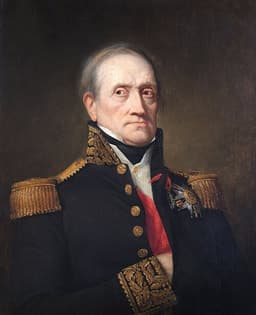
Nicolas Soult
General · Modern
62.7Total
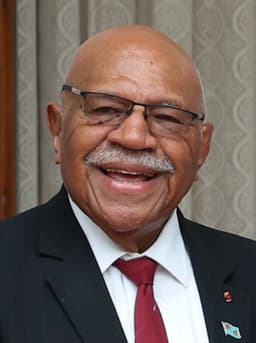
Sitiveni Rabuka
General · Modern
51.7Total
Basic Information
Born
1769
1948
Died
1851
—
Era
Modern
Modern
Nationality
France
Fiji
Occupation
General
General
Civilization
Western
Other
Score Comparison
Military (10%)
74.7
10.2
Political (20%)
55.0
60.0
Influence (20%)
61.0
53.3
Legacy (20%)
54.0
46.7
Leadership (15%)
78.0
85.0
Strategy (15%)
65.4
39.6
TOTAL
62.7
51.7
Nicolas Soult — Complete Timeline
1805 AD
Battle of AusterlitzWar◆ Major
Soult commanded the IV Corps at Austerlitz. He led the assault on the Pratzen Heights, breaking the Allied center and securing the decisive French victory.
Napoleonic WarsBattleCorps Command
Impact: global
1806 AD
Battle of Jena-AuerstedtWar◆ Major
Soult commanded the IV Corps at Jena. His forces pursued the retreating Prussian army, capturing thousands of prisoners and contributing to the collapse of the Prussian state.
Napoleonic WarsBattlePursuit
Impact: regional
1811 AD
Battle of AlbueraWar◆ Major
Soult commanded the French army at Albuera in Spain. His forces fought a bloody battle against the Anglo-Spanish army, resulting in a tactical stalemate but strategic French withdrawal.
Peninsular WarBattleStalemate
Impact: regional
1814 AD
Battle of ToulouseWar◆ Major
Soult commanded the French army at Toulouse against Wellington. The battle occurred after Napoleon's abdication, and Soult surrendered the city, ending the Peninsular War.
Peninsular WarBattleDefeat
Impact: regional
1830 AD
Minister of WarPolitical Action◆ Major
Soult served as Minister of War under King Louis-Philippe. He reorganized the French army, introduced conscription reforms, and prepared for colonial campaigns in Algeria.
MinistryReformsJuly Monarchy
Impact: nationalconstructive
1832 AD
Prime Minister of FrancePolitical Action◆ Major
Soult served as Prime Minister of France under Louis-Philippe. His government focused on maintaining order, suppressing republican uprisings, and consolidating the July Monarchy.
Prime MinisterJuly MonarchyGovernment
Impact: national
Sitiveni Rabuka — Complete Timeline
1987 AD
1987 Fijian Coup d'étatPolitical Action
Rabuka, as a colonel in the Fijian military, led a coup overthrowing the elected government of Timoci Bavadra. The coup was motivated by ethnic Fijian opposition to Indo-Fijian political influence. Rabuka declared Fiji a republic.
CoupMilitary InterventionEthnic Tension
Impact: nationaldestructive
1992 AD
1992 Election as Prime MinisterPolitical Action◆ Major
Rabuka transitioned from military leader to civilian politician, winning the 1992 general election as leader of the Fijian Political Party. He became Prime Minister, serving until 1999.
ElectionCivilian GovernmentPolitical Transition
Impact: national
1997 AD
1997 Constitution ReformReform◆ Major
Rabuka's government oversaw the adoption of a new constitution that removed ethnic-based voting and provided for a multi-ethnic government. The constitution aimed to reduce ethnic tensions and promote national unity.
ConstitutionReformEthnic Reconciliation
Impact: nationalconstructive
1999 AD
1999 General Election DefeatPolitical Action◆ Major
Rabuka's government was defeated in the general election by the Labour Party led by Mahendra Chaudhry. Rabuka stepped down as Prime Minister, marking the end of his first period in power.
Election DefeatGovernment ChangeChaudhry
Impact: national
2022 AD
2022 Return as Prime MinisterPolitical Action◆ Major
Rabuka led the People's Alliance to victory in the 2022 general election, forming a coalition government. He became Prime Minister again, 23 years after his previous tenure, promising democratic reforms.
ElectionReturn to PowerCoalition Government
Impact: national
Expert Analysis
Sitiveni Rabuka vs Nicolas Soult
# The General Who Became Prime Minister: Nicolas Soult and Sitiveni Rabuka
In the winter of 1814, as Napoleon’s empire crumbled around him, Marshal Nicolas Soult faced the Duke of Wellington at the Battle of Toulouse. The French army fought with desperate courage, unaware that Napoleon had already abdicated four days earlier. Nearly two centuries later and half a world away, Colonel Sitiveni Rabuka stormed Fiji’s Parliament House in Suva, overthrowing a democratically elected government in a bloodless coup. One man commanded armies for an emperor; the other commanded a coup for a cause. Both would eventually trade their uniforms for the office of prime minister. How did these two soldiers—separated by time, continent, and the very nature of power—arrive at such similar destinations by such different roads?
Origins
Nicolas Soult was born in 1769 in the small town of Saint-Amans-la-Bastide, in southern France. His father was a notary, a respectable but modest profession in the ancien régime. The French Revolution erupted when Soult was twenty, and like so many ambitious young men of his generation, he found in the revolutionary wars a ladder that the old aristocracy had denied him. He joined the army as a private soldier and rose through the ranks on talent and sheer will. The Revolution had torn down the old world, and Soult was among those who built a new one with their bayonets.
Sitiveni Rabuka was born in 1948 in the village of Drekeniwai, on the island of Vanua Levu in Fiji. His father was a Methodist lay preacher and a farmer. Fiji was then a British colony, a patchwork of indigenous Fijian villages and Indo-Fijian sugarcane plantations. Rabuka grew up in a world of communal obligations, chiefly authority, and the quiet tension between ethnic communities. He attended Queen Victoria School, a prestigious institution for indigenous Fijian boys, and joined the military—a natural path for a young man from the provinces seeking advancement in a newly independent nation.
The difference in their origins is not merely geographic. Soult emerged from a society in revolutionary upheaval, where the old rules had been shattered and a man could remake himself entirely. Rabuka emerged from a society still negotiating the terms of its independence, where tradition and modernity pulled in opposite directions. Soult’s France was forging a new world; Rabuka’s Fiji was trying to hold an old one together.
Rise to Power
Soult’s rise was meteoric and bloody. By 1805, he commanded the IV Corps of Napoleon’s Grande Armée. At the Battle of Austerlitz, he led the assault on the Pratzen Heights, the decisive moment of Napoleon’s greatest victory. Soult’s men broke the Allied center, and the Russian and Austrian armies dissolved. Napoleon rewarded him with the title of Marshal of the Empire. At Jena in 1806, Soult again distinguished himself, pursuing the shattered Prussian army and capturing thousands of prisoners. He was not merely a brave soldier; he was a master of maneuver, a commander who understood that war was a science as much as an art.
Rabuka’s path was quieter until it exploded. In 1987, as a colonel in the Fijian military, he led a coup against the government of Timoci Bavadra, an Indo-Fijian who had won the general election. Rabuka claimed he acted to protect indigenous Fijian interests. The coup was swift, bloodless, and profoundly divisive. It shattered Fiji’s reputation as a model of racial harmony in the Pacific and plunged the country into years of political instability.
The difference in their rise is fundamental. Soult rose within a system—revolutionary, imperial, but a system nonetheless—by proving his worth in battle. Rabuka rose by breaking the system entirely, by imposing military power on a democratic process. Soult’s power came from Napoleon’s trust; Rabuka’s came from the barrel of a gun.
Leadership & Governance
As a military commander, Soult was formidable but not flawless. At the Battle of Albuera in 1811, his forces fought a bloody, indecisive engagement against the Anglo-Spanish army. The battle was a tactical draw, but Soult failed to achieve the decisive victory Napoleon expected. His greatest failure came at the Battle of Toulouse in 1814, where he fought Wellington after Napoleon had already abdicated—a tragic waste of life. Yet Soult was a skilled administrator, and after Napoleon’s fall, he managed to survive the Bourbon restoration, serving in various military and political roles.
When King Louis-Philippe came to power in 1830, Soult became Minister of War. He reorganized the French army, introduced conscription reforms, and modernized the military for a new era. In 1832, he became Prime Minister of France. His government focused on maintaining order and suppressing unrest—a natural instinct for a man who had spent his life imposing order through force. Soult was not a visionary political leader; he was a manager, a stabilizer, a man who kept the machinery running.
Rabuka’s transition from coup leader to prime minister was more fraught. After the 1987 coup, he initially handed power to a civilian government, but when that government proved unstable, he staged a second coup. He then oversaw the drafting of a new constitution that enshrined indigenous Fijian dominance. In 1992, he won the general election and became Prime Minister. His government was marked by ethnic tension and economic difficulties.
Yet Rabuka surprised many. In 1997, his government oversaw a new constitution that removed ethnic-based voting and provided for a multiracial democracy. It was a remarkable reversal—the coup leader who had overthrown a democratically elected government now helped create a more inclusive democracy. Rabuka’s political wisdom lay in his willingness to change, to learn from his mistakes. He lost the 1999 election and stepped down peacefully, a sign that he had accepted the democratic process he once rejected.
Triumph & Tragedy
Soult’s greatest triumph was Austerlitz, where he led the decisive assault that shattered the Allied army. It was a moment of pure military genius, a perfect execution of Napoleon’s plan. His greatest tragedy was Toulouse, where he fought a battle that should never have been fought, a battle that cost lives for no purpose.
Rabuka’s greatest triumph was the 1997 constitution, a document that moved Fiji toward a more just and inclusive society. His greatest tragedy was the 1987 coup itself, an act that set Fiji on a path of instability and ethnic division for decades. The coup defined his legacy, even as he tried to redefine it.
Character & Destiny
Soult was a survivor. He served the Revolution, Napoleon, the Bourbons, and Louis-Philippe. He adapted, compromised, and endured. His character was pragmatic, calculating, and cautious. He was not a visionary like Napoleon or a hero like Murat; he was a professional, a man who did his duty and expected his reward. Destiny, for Soult, was a matter of being in the right place at the right time and having the skills to seize the opportunity.
Rabuka was a man of contradictions. He was a coup leader who became a democrat, a nationalist who embraced multiculturalism, a soldier who learned to be a politician. His character was impulsive, passionate, and capable of growth. He made terrible mistakes, but he also had the courage to admit them and try to fix them. Destiny, for Rabuka, was a series of choices—some good, some bad—that he had to live with.
Legacy
Nicolas Soult is remembered today as a capable marshal of Napoleon’s empire and a competent prime minister of France. His military score of 84.3 reflects his skill on the battlefield, while his political score of 69.3 shows his ability to navigate the treacherous waters of post-Napoleonic politics. He is not a household name like Napoleon or Wellington, but he is respected by historians as a solid, reliable commander and administrator.
Sitiveni Rabuka is a more controversial figure. His military score of 19.9 reflects the fact that he was not a battlefield commander but a coup leader. His political score of 72.0 reflects his successful transition to democratic politics. He is remembered as both the man who broke Fiji’s democracy and the man who helped rebuild it. His legacy is contested, complicated, and still unfolding. In 2022, at the age of 74, he returned as Prime Minister of Fiji, leading a coalition government. The coup leader had become a democrat, again.
Conclusion
Soult and Rabuka are mirror images of a single truth: that soldiers can become statesmen, but the path is never straight. Soult rose through the ranks of a revolutionary empire and ended his career as a constitutional prime minister. Rabuka overthrew a democracy and ended his career as its defender. One man’s journey was shaped by the upheaval of revolution; the other’s by the tensions of a multiethnic society. Both learned that power is not an end in itself but a means to an end—and that the end must be worthy of the means. In the end, they remind us that history is not a straight line but a spiral, and that even the most unlikely figures can find their way back to the center.
Rankings
🥇
Nicolas SoultLeader
Mil: 74.7Pol: 55.0Inf: 61.0
62.7
🥈
Sitiveni Rabuka
Mil: 10.2Pol: 60.0Inf: 53.3
51.7
+11.0 behind
How This Comparison Works
Algorithm
Each figure is scored on 6 dimensions (0—100 scale) based on structured historical data: Military (10%), Political (20%), Influence (20%), Legacy (20%), Leadership (15%), Strategy (15%). The weighted total produces the final ranking.
Data Sources
Scores are computed from structured sub-indicators in the database. Scale factors adjust for era (Ancient ×0.85, Modern ×1.0) and civilization size (Eastern ×1.05, Other ×0.80) to account for differences in population and military scale.
Maximum 3 Figures
Comparisons are limited to 2—3 figures to ensure readability and statistical meaningfulness.
Error Margins
±5 points per dimension — Sub-scores are derived from historical records with inherent uncertainty. Two figures within 5 points on a dimension should be considered roughly equivalent in that area.
Total Score Accuracy
±3 points overall — The weighted combination of 6 dimensions produces a total score with approximately ±3 points of uncertainty. Differences of less than 3 points are not statistically significant— the figures are effectively tied.
Known Limitations
- Historical records are incomplete and uneven across civilizations
- Figures from oral-tradition societies may be underrepresented
- Occupation labels can misclassify multi-role figures
- Scores measure capability and impact, not moral character
- Quantitative scoring is a comparison tool, not absolute truth
Capability Radar
Military (10%) — Battles & Warfare
Battles
75
5
Win Rate
70
5
Expansion
65
5
Political (20%) — Governance & Reform
Reform
55
50
Diplomacy
65
45
Economy
50
40
Influence (20%) — Cultural & Global Reach
Cultural
45
30
Global
50
20
Legacy (20%) — Historical Impact
Historical
55
40
Longevity
50
30
Leadership (15%) — Power & Stability
Tenure
70
55
Stability
55
35
Strategy (15%) — Tactics & Innovation
Strategy
72
10
Tactics
78
10
Reform
60
5
Similar Comparisons
Comments & Discussion
ToulouseButcher6/16/2026
Look, the only thing these two share is a title. Soult was a master of Napoleonic warfare who commanded entire army corps against Wellington's Peninsular veterans. Rabuka? He toppled a government with a few hundred soldiers in a bloodless coup. Comparing Soult’s battlefield genius—his decisive flank at Austerlitz—to Rabuka’s political opportunism insults every soldier who fought at Toulouse. One earned power through blood and steel; the other just walked into a parliament building.
数据冷静家6/16/2026
把两个人放一起比较本身就是数据污染。苏尔特1769年生,参加过60多场战役,从士兵升到元帅再当首相,军衔和政绩都有档案可查。拉布卡1948年生,1987年政变上台,五年后就下台了,后来又回来当首相。时间跨度、影响力完全不是一个量级。别拿“都是军人首相”这种模糊标签来偷换概念,统计学上这叫spurious correlation。
GallicStrategos6/16/2026
You revisionists always miss the key point: Soult’s political career was a direct extension of his military reputation. When he became prime minister under Louis-Philippe, it was because France remembered him as Napoleon’s “Iron Marshal” who held the line at Toulouse even when the war was already lost. Rabuka’s path was the opposite—his coup undermined any claim to legitimate leadership. Soult transitioned from battle commander to statesman; Rabuka went from coup leader to politician. The honor
斐济回声6/16/2026
苏尔特打败仗时还不知道拿破仑退位,这是运气;拉布卡政变时也知道全世界会骂他,这是勇气。作为一个太平洋岛民,我更看重拉布卡后续——他在2000年政变后民族和解中的妥协,承认斐济人必须与印度裔共存。苏尔特从没为他的君主制站队政策道过歉。两位都从武转文,但拉布卡的政治进化比那个法国佬更有人本温度。
ClassicistCritic6/16/2026
Let’s not romanticize. Both were products of their military cultures but diverged in method. Soult, a légionnaire of the Revolution, rose through meritocracy and later legitimized his rule through constitutional channels. Rabuka, a product of British colonial military tradition, explicitly violated his own constitution in 1987. Cicero would call Rabuka a *tyrannos* in disguise; Soult, at least, played by the rules of the Republic when he reached the top. One preserved order; the other broke it t