Loading...
Nicolas Soult vs Yitzhak Rabin
Yitzhak Rabin leads by 3.7 pts · 2 figures compared
…
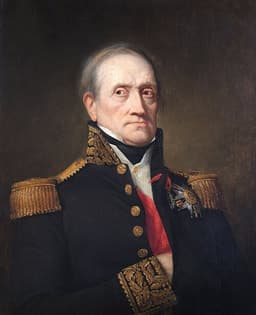
Nicolas Soult
General · Modern
62.7Total
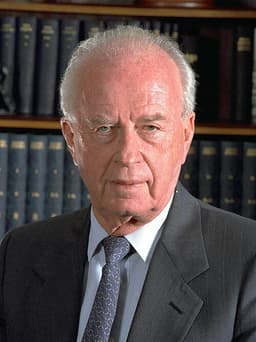
Yitzhak Rabin
General · Modern
66.4Total
Basic Information
Born
1769
1922
Died
1851
—
Era
Modern
Modern
Nationality
France
Israel
Occupation
General
General
Civilization
Western
Middle Eastern
Score Comparison
Military (10%)
74.7
61.7
Political (20%)
55.0
82.0
Influence (20%)
61.0
68.0
Legacy (20%)
54.0
55.0
Leadership (15%)
78.0
78.0
Strategy (15%)
65.4
55.0
TOTAL
62.7
66.4
Nicolas Soult — Complete Timeline
1805 AD
Battle of AusterlitzWar◆ Major
Soult commanded the IV Corps at Austerlitz. He led the assault on the Pratzen Heights, breaking the Allied center and securing the decisive French victory.
Napoleonic WarsBattleCorps Command
Impact: global
1806 AD
Battle of Jena-AuerstedtWar◆ Major
Soult commanded the IV Corps at Jena. His forces pursued the retreating Prussian army, capturing thousands of prisoners and contributing to the collapse of the Prussian state.
Napoleonic WarsBattlePursuit
Impact: regional
1811 AD
Battle of AlbueraWar◆ Major
Soult commanded the French army at Albuera in Spain. His forces fought a bloody battle against the Anglo-Spanish army, resulting in a tactical stalemate but strategic French withdrawal.
Peninsular WarBattleStalemate
Impact: regional
1814 AD
Battle of ToulouseWar◆ Major
Soult commanded the French army at Toulouse against Wellington. The battle occurred after Napoleon's abdication, and Soult surrendered the city, ending the Peninsular War.
Peninsular WarBattleDefeat
Impact: regional
1830 AD
Minister of WarPolitical Action◆ Major
Soult served as Minister of War under King Louis-Philippe. He reorganized the French army, introduced conscription reforms, and prepared for colonial campaigns in Algeria.
MinistryReformsJuly Monarchy
Impact: nationalconstructive
1832 AD
Prime Minister of FrancePolitical Action◆ Major
Soult served as Prime Minister of France under Louis-Philippe. His government focused on maintaining order, suppressing republican uprisings, and consolidating the July Monarchy.
Prime MinisterJuly MonarchyGovernment
Impact: national
Yitzhak Rabin — Complete Timeline
1967 AD
Chief of Staff during the Six-Day WarWar
As Chief of Staff of the Israel Defense Forces, Rabin commanded the Israeli military during the Six-Day War against Egypt, Jordan, and Syria. Israel captured the Sinai Peninsula, Gaza Strip, West Bank, East Jerusalem, and Golan Heights, reshaping the region.
Six-Day WarTerritorial ExpansionMilitary Victory
Impact: global
1993 AD
Signing of the Oslo AccordsPolitical Action
As prime minister, Rabin signed the Oslo Accords with PLO Chairman Yasser Arafat on the White House lawn. The agreement established the Palestinian Authority and set a framework for Palestinian self-governance in the West Bank and Gaza Strip.
Peace ProcessPalestiniansOslo
Impact: globalconstructive
1995 AD
Assassination at Peace RallyPolitical Action
Rabin was assassinated by Israeli extremist Yigal Amir after a peace rally in Tel Aviv. The assassination shocked Israel and the world, derailing the Oslo peace process and leading to a period of political instability.
AssassinationPeace ProcessPolitical Violence
Impact: globaltragic
Expert Analysis
Yitzhak Rabin vs Nicolas Soult
The General Who Reached for Peace, and the Marshal Who Served a Throne
On a balmy November evening in 1995, a crowd of over 100,000 gathered in Tel Aviv’s Kings of Israel Square, singing “The Song of Peace.” Yitzhak Rabin, the seventy-three-year-old Israeli prime minister, had just finished his address, his voice hoarse but resolute. As he walked toward his car, a young Jewish extremist stepped from the shadows and fired two shots. Rabin crumpled, a copy of the peace song’s lyrics, stained with blood, slipping from his pocket. Across the Channel and a century and a half earlier, another general—Nicolas Soult, a Duke of Dalmatia—died in his bed at the age of eighty-two, having served as both a marshal of Napoleon’s empire and a prime minister of a restored monarchy. Two men, both generals, both prime ministers, yet their paths diverged like a river splitting around a stone. Why did one die for peace, while the other died in the quiet comfort of a throne he had once fought against?
Origins
Yitzhak Rabin was born in 1922 in Jerusalem, the son of Russian Jewish immigrants who had fled pogroms. His father, a socialist activist, and his mother, a nurse, instilled in him a fierce commitment to the Zionist project—a dream of a Jewish homeland carved from the chaos of a collapsing Ottoman Empire. Rabin grew up in Tel Aviv, a city of sand dunes and ambition, where the world was young and the enemy was clear: the British Mandate, Arab hostility, and the specter of European anti-Semitism. His was a generation forged in the crucible of survival, where military service was not a choice but a necessity.
Nicolas Soult, born in 1769 in a small village in southern France, came from a world of ancient certainties. His father was a notary, a man of modest means but local respect. The France of Soult’s youth was a kingdom teetering toward revolution, its social hierarchies as rigid as the stone of its cathedrals. Soult did not dream of a new nation; he dreamed of advancement within the old one. He joined the army as a common soldier in 1785, four years before the Bastille fell. For him, the revolution was not an ideal but an opportunity—a ladder that, if climbed carefully, could lead to glory.
Rise to Power
Rabin’s rise was the story of a state being born. He joined the Palmach, the elite strike force of the Jewish underground, in the 1940s, fighting the British and then the Arabs in the 1948 War of Independence. By 1964, he had become Chief of Staff of the Israel Defense Forces, a position of immense responsibility for a country surrounded by enemies. His defining moment came in June 1967, during the Six-Day War. As commander, Rabin oversaw a preemptive strike that destroyed the Egyptian air force on the ground and captured the Sinai, Gaza, the West Bank, and the Golan Heights in six dizzying days. The victory was total, but Rabin emerged from it a changed man. He had seen war’s cost up close, and the intoxicating triumph carried the seed of a painful question: what next?
Soult’s path to power was forged in the fires of the Napoleonic Wars. At the Battle of Austerlitz in 1805, he commanded the IV Corps and executed a masterful assault on the Pratzen Heights, breaking the Allied center and handing Napoleon his greatest victory. The emperor rewarded him with the title of Marshal of the Empire. At Jena in 1806, Soult’s relentless pursuit of the Prussian army captured thousands of prisoners and cemented his reputation as a ruthless, efficient commander. But war in Spain, at Albuera in 1811, was a different matter. There, Soult fought a bloody, indecisive battle against Wellington’s Anglo-Spanish forces—a foreshadowing of the grinding attrition that would eventually break Napoleon. Soult, however, was no ideologue. He served Napoleon faithfully, but when the emperor fell in 1814, Soult quickly switched allegiance to the Bourbon king, Louis XVIII. He fought for Napoleon again during the Hundred Days, then switched back to the monarchy after Waterloo. He was a survivor, not a believer.
Leadership & Governance
As prime minister from 1992 to 1995, Rabin governed with the pragmatism of a general who had grown tired of victories. He froze settlements in the occupied territories, opened secret negotiations with the Palestine Liberation Organization, and on September 13, 1993, shook hands with Yasser Arafat on the White House lawn, signing the Oslo Accords. The agreement was a gamble—a framework for Palestinian self-rule that Rabin hoped would lead to a two-state solution. He faced a storm of opposition: right-wing Israelis called him a traitor, and Palestinian militants launched suicide bombings to derail the process. Rabin’s leadership was a balancing act between hope and security, a tightrope walked with a soldier’s discipline and a politician’s cunning.
Soult, as Prime Minister of France from 1832 to 1834 and again later, was a man of order. Under King Louis-Philippe, the “July Monarchy,” he reorganized the French army, introduced conscription reforms, and suppressed uprisings with a firm hand. His government was conservative, focused on stability after decades of revolution and war. Soult was no reformer; he was a manager, a man who believed that the state’s first duty was to protect property and peace. Where Rabin’s governance was visionary and divisive, Soult’s was practical and unifying—but only because he had no vision beyond the maintenance of power.
Triumph & Tragedy
Rabin’s greatest triumph was the Oslo Accords, a moment when a warrior chose to become a peacemaker. But the tragedy was immediate and personal. On November 4, 1995, a bullet from a fellow Israeli ended his life—and with it, the momentum of the peace process. His assassination was a wound from which Israeli politics has never fully recovered. Soult’s triumph was survival itself. He fought at Austerlitz, Jena, and Toulouse—the latter after Napoleon had already abdicated, a battle fought in ignorance of the war’s end. He served kings and emperors, died in his bed, and left behind a fortune. But his tragedy was the absence of a cause greater than himself. He was a brilliant soldier who fought for no flag but his own advancement.
Character & Destiny
Rabin’s character was shaped by a deep, almost melancholic sense of responsibility. He was not a charismatic speaker; his speeches were halting, his manner gruff. But he had a moral clarity that came from having commanded men in battle and buried too many of them. He once said, “We will not return to the pre-1967 lines, but we will not rule over another people.” That contradiction—the desire for security and the recognition of injustice—drove him toward peace, even when peace was a shot in the dark.
Soult was a man of calculation. He was known for his ambition and his ability to read the political winds. When Napoleon fell, he pledged loyalty to the Bourbons; when Napoleon returned, he rejoined the emperor; when Napoleon fell again, he served the Bourbons once more. He was not a traitor in the moral sense—he was a man who saw history as a game of power, not principle. His destiny was to be a footnote in the story of greater men.
Legacy
Rabin’s legacy is a question mark. He is remembered as a martyr for peace, but the peace he died for remains elusive. His name is etched into the memory of Israelis as a symbol of what might have been—a leader who had the courage to try. Soult’s legacy is quieter. He is remembered by military historians as one of Napoleon’s ablest marshals, and by French schoolchildren as a long-serving minister. But his name does not inspire songs or tears. He left behind a reformed army and a stable government, but no great dream.
Conclusion
Standing in Tel Aviv’s square, now named Rabin Square, one feels the weight of a bullet that changed history. In the quiet of a French château, one imagines Soult’s portrait hanging among other marshals—a face in the crowd. Both men were generals who became prime ministers, but Rabin’s story is one of a man who tried to end the war that made him, while Soult’s is a story of a man who rode the war to its end. The difference lies not in their skills, but in their purposes. Rabin wanted to build a future; Soult wanted to secure a present. In the end, the builder died for his vision, while the survivor simply lived on. History, it seems, remembers the dreamer more than the pragmatist—even when the dream is unfinished.
Rankings
🥇
Yitzhak RabinLeader
Mil: 61.7Pol: 82.0Inf: 68.0
66.4
🥈
Nicolas Soult
Mil: 74.7Pol: 55.0Inf: 61.0
62.7
+3.7 behind
How This Comparison Works
Algorithm
Each figure is scored on 6 dimensions (0—100 scale) based on structured historical data: Military (10%), Political (20%), Influence (20%), Legacy (20%), Leadership (15%), Strategy (15%). The weighted total produces the final ranking.
Data Sources
Scores are computed from structured sub-indicators in the database. Scale factors adjust for era (Ancient ×0.85, Modern ×1.0) and civilization size (Eastern ×1.05, Other ×0.80) to account for differences in population and military scale.
Maximum 3 Figures
Comparisons are limited to 2—3 figures to ensure readability and statistical meaningfulness.
Error Margins
±5 points per dimension — Sub-scores are derived from historical records with inherent uncertainty. Two figures within 5 points on a dimension should be considered roughly equivalent in that area.
Total Score Accuracy
±3 points overall — The weighted combination of 6 dimensions produces a total score with approximately ±3 points of uncertainty. Differences of less than 3 points are not statistically significant— the figures are effectively tied.
Known Limitations
- Historical records are incomplete and uneven across civilizations
- Figures from oral-tradition societies may be underrepresented
- Occupation labels can misclassify multi-role figures
- Scores measure capability and impact, not moral character
- Quantitative scoring is a comparison tool, not absolute truth
Capability Radar
Military (10%) — Battles & Warfare
Battles
75
65
Win Rate
70
70
Expansion
65
50
Political (20%) — Governance & Reform
Reform
55
65
Diplomacy
65
85
Economy
50
60
Influence (20%) — Cultural & Global Reach
Cultural
45
55
Global
50
70
Legacy (20%) — Historical Impact
Historical
55
75
Longevity
50
60
Leadership (15%) — Power & Stability
Tenure
70
70
Stability
55
40
Strategy (15%) — Tactics & Innovation
Strategy
72
75
Tactics
78
60
Reform
60
55
Similar Comparisons
Comments & Discussion
The Waterloo of the Soul6/16/2026
Let’s talk numbers. Rabin oversaw the 1993 Oslo Accords, which reduced Israeli military fatalities from 250+ per year in the Intifada to under 50 by 1995. Soult’s military record? He lost the Battle of Toulouse in 1814, then faked a victory report. Later, as French war minister in 1840, he inflated army budgets by 30%. One general actually measured peace with statistics; the other lied about his defeats. I know whose legacy I’d audit.
数据不会骗人6/16/2026
拉宾1974年当总理,以色列GDP年增长8%,通胀从56%压到22%。索尔特管法国战争部,1840年军费占预算50%,边区兵变还打输。拉宾用经济数据说话:1994年以巴贸易额翻三倍。索尔特只会跪拿破仑或跪国王。一个用数字建和平,一个用数字养虚荣。拉宾是统计表上的英雄,索尔特是预算本的蛀虫。
The Revisionist’s Mirror6/16/2026
We canonize Rabin as a peace martyr, but he ordered the 1948 expulsion of 50,000 Palestinians from Lydda and Ramla. Soult plundered Italy for Napoleon and then governed under the Bourbon restoration—a monarchist selling stolen art to fund his estate. Both were military butchers who switched coats: Rabin from hawk to dove, Soult from revolutionary to royalist. The difference? Rabin’s blood gave him moral absolution; Soult’s comfortable death denied him that luxury.
The Tank Commander Turned Dove6/16/2026
Rabin won the Six-Day War as chief of staff, then made the hardest pivot in history: from conquering Jerusalem to giving back land for peace at Oslo. Soult? He fought at Austerlitz and Waterloo, then smoothly served King Louis XVIII. Rabin’s courage wasn’t on the battlefield—it was in shaking Arafat’s hand, knowing a bullet from his own people might await. Soult never risked his life for reconciliation. That’s the difference between a patriot and a survivor.
铁血与圆滑的背叛者6/16/2026
拉宾是实干家,25岁就指挥哈雷尔旅,1967年闪电战震碎阿拉伯联盟。可他转身签《奥斯陆协议》,赌上性命换和平。索尔特呢?拿破仑垮台他投波旁,百日复辟又投拿破仑,活到82岁寿终正寝。拉宾被犹太极右暗杀,死前口袋还装着《和平之歌》歌词。一个为信仰殉道,一个为官位活命。历史给拉宾悲剧,给索尔特讽刺。