Loading...
Muhammadu Buhari vs Nicolas Soult
Nicolas Soult leads by 11.2 pts · 2 figures compared
…
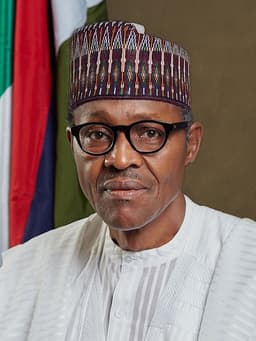
Muhammadu Buhari
General · Modern
51.5Total
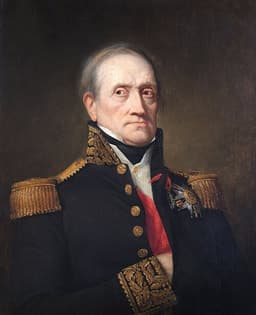
Nicolas Soult
General · Modern
62.7Total
Basic Information
Born
1942
1769
Died
—
1851
Era
Modern
Modern
Nationality
Nigeria
France
Occupation
General
General
Civilization
Other
Western
Score Comparison
Military (10%)
22.6
74.7
Political (20%)
68.0
55.0
Influence (20%)
53.3
61.0
Legacy (20%)
43.3
54.0
Leadership (15%)
72.0
78.0
Strategy (15%)
41.0
65.4
TOTAL
51.5
62.7
Muhammadu Buhari — Complete Timeline
1983 AD
1983 Nigerian coup d'étatPolitical Action
Major General Muhammadu Buhari led a military coup that overthrew the civilian government of President Shehu Shagari. Buhari cited corruption and economic mismanagement as justifications, and he became the head of state.
CoupMilitary RuleCorruption
Impact: nationaldestructive
1984 AD
War Against Indiscipline (WAI)Reform◆ Major
Buhari launched the War Against Indiscipline, a campaign to enforce discipline and order in Nigerian society. It included harsh penalties for minor offenses, such as queue-jumping, and was criticized for human rights abuses.
DisciplineSocial PolicyHuman Rights
Impact: nationaldestructive
1985 AD
Overthrow by Ibrahim BabangidaPolitical Action◆ Major
Buhari was overthrown in a palace coup led by his Chief of Army Staff, Ibrahim Babangida. Babangida cited Buhari's authoritarian style and failure to address the economy as reasons for the coup.
CoupOverthrowBabangida
Impact: national
2015 AD
Anti-corruption campaignReform◆ Major
Buhari launched a high-profile anti-corruption campaign, targeting government officials and recovering stolen assets. The campaign was praised internationally but criticized for being selective and politically motivated.
Anti-CorruptionReformGovernance
Impact: nationalconstructive
Election as President of NigeriaPolitical Action
Buhari won the 2015 Nigerian presidential election, defeating incumbent Goodluck Jonathan. This was the first time an opposition candidate had defeated a sitting president in Nigeria's history, marking a democratic milestone.
ElectionDemocracyOpposition Victory
Impact: nationalprogressive
Nicolas Soult — Complete Timeline
1805 AD
Battle of AusterlitzWar◆ Major
Soult commanded the IV Corps at Austerlitz. He led the assault on the Pratzen Heights, breaking the Allied center and securing the decisive French victory.
Napoleonic WarsBattleCorps Command
Impact: global
1806 AD
Battle of Jena-AuerstedtWar◆ Major
Soult commanded the IV Corps at Jena. His forces pursued the retreating Prussian army, capturing thousands of prisoners and contributing to the collapse of the Prussian state.
Napoleonic WarsBattlePursuit
Impact: regional
1811 AD
Battle of AlbueraWar◆ Major
Soult commanded the French army at Albuera in Spain. His forces fought a bloody battle against the Anglo-Spanish army, resulting in a tactical stalemate but strategic French withdrawal.
Peninsular WarBattleStalemate
Impact: regional
1814 AD
Battle of ToulouseWar◆ Major
Soult commanded the French army at Toulouse against Wellington. The battle occurred after Napoleon's abdication, and Soult surrendered the city, ending the Peninsular War.
Peninsular WarBattleDefeat
Impact: regional
1830 AD
Minister of WarPolitical Action◆ Major
Soult served as Minister of War under King Louis-Philippe. He reorganized the French army, introduced conscription reforms, and prepared for colonial campaigns in Algeria.
MinistryReformsJuly Monarchy
Impact: nationalconstructive
1832 AD
Prime Minister of FrancePolitical Action◆ Major
Soult served as Prime Minister of France under Louis-Philippe. His government focused on maintaining order, suppressing republican uprisings, and consolidating the July Monarchy.
Prime MinisterJuly MonarchyGovernment
Impact: national
Expert Analysis
Muhammadu Buhari vs Nicolas Soult
# The Marshal and the General: Two Paths of Power in France and Nigeria
On a December morning in 1805, Nicolas Soult watched his troops crest the mist-shrouded Pratzen Heights, a moment that would seal Napoleon’s greatest victory at Austerlitz. Nearly two centuries later, in December 1983, Muhammadu Buhari sat in a military headquarters in Lagos, having just toppled an elected government in a bloodless coup. One man rose through the ranks of revolutionary France to become a marshal, then a prime minister. The other seized power in a turbulent African nation, was deposed, and then—against all odds—returned to win a democratic election. Their stories, separated by time and continent, reveal how military men navigate the treacherous waters between battlefield command and political leadership, and why some succeed while others falter.
Origins
Nicolas Soult was born in 1769 in Saint-Amans-la-Bastide, a small town in southern France. His father was a notary, a respectable but modest position. When the French Revolution erupted, Soult was a young soldier in the royal army, but the upheaval offered unprecedented opportunity. The old aristocracy’s officers fled or were executed, and talented commoners like Soult could rise fast. He joined the Revolutionary armies, learning war not from textbooks but from the bloody school of the Pyrenees and Italy.
Muhammadu Buhari was born in 1942 in Daura, a historic city in northern Nigeria. His father was a farmer, and Buhari grew up in a traditional Hausa-Fulani society shaped by Islamic values and British colonial rule. Nigeria gained independence in 1960, when Buhari was eighteen. He joined the Nigerian Army, attending training in Ethiopia, India, and the United Kingdom. His military education was both technical and political: the army was one of the few institutions where ambitious young Nigerians could build careers, and it was increasingly drawn into the chaos of post-independence politics.
The difference in their eras is stark. Soult’s France was forging a new nation out of revolution and conquest; Buhari’s Nigeria was struggling to hold together a fragile federation of over 250 ethnic groups, each suspicious of central power.
Rise to Power
Soult’s rise was meteoric but earned. By 1805, at age thirty-six, he commanded the IV Corps of Napoleon’s Grande Armée, the finest fighting force in Europe. At Austerlitz, he delivered the decisive blow, breaking the Austro-Russian center. In 1806, at Jena-Auerstedt, his corps pursued the shattered Prussian army, capturing thousands. Napoleon made him a Marshal of the Empire, a title that brought wealth, lands, and prestige.
Yet Soult’s military genius had limits. In Spain, the Peninsular War became a quagmire. At the Battle of Albuera in 1811, Soult commanded a French army against a smaller Anglo-Spanish force. The fighting was savage—one British regiment lost over half its men—but Soult failed to achieve a decisive victory. The Spanish campaign drained French resources and exposed Soult’s weakness: he could win battles but not wars.
Buhari’s rise was different. He was not a conqueror but a coup-maker. On December 31, 1983, he led a group of officers who overthrew President Shehu Shagari, citing corruption and economic mismanagement. Buhari’s military score is a mere 20.7, reflecting that he never commanded troops in major combat. His power came from political maneuvering, not battlefield glory.
Leadership & Governance
As ruler, Soult was a reformer. When he became Minister of War in 1830 under King Louis-Philippe, he reorganized the French army, introducing conscription reforms that modernized recruitment. As Prime Minister from 1832, his government focused on maintaining order after the July Revolution, suppressing republican uprisings while stabilizing the economy. Soult governed not as a dictator but as a parliamentary figure, navigating the complex politics of constitutional monarchy.
Buhari’s first rule was harsh. He launched the War Against Indiscipline (WAI) in 1984, a campaign to enforce order through public whippings, forced queuing at bus stops, and imprisonment of petty offenders. The policy had popular support among Nigerians frustrated by chaos, but it also crushed dissent. Buhari jailed journalists, banned unions, and ruled by decree. His authoritarianism alienated even his military colleagues, and in August 1985, his Chief of Army Staff, Ibrahim Babangida, overthrew him in a palace coup. Babangida cited Buhari’s “rigidity” and “insensitivity.”
The contrast is instructive. Soult, despite his military background, adapted to civilian politics. Buhari, a generation later, could not.
Triumph & Tragedy
Soult’s greatest triumph was Austerlitz, where his tactical brilliance broke the Allied center. His greatest tragedy came in 1814 at Toulouse, when he commanded the French army against Wellington. The battle occurred after Napoleon had already abdicated—Soult fought a pointless engagement, losing hundreds of men for a cause already lost. He later served the restored Bourbon monarchy, a pragmatic shift that tarnished his reputation among Bonapartists.
Buhari’s greatest triumph came in 2015, when he won the Nigerian presidency in a democratic election, defeating incumbent Goodluck Jonathan. This was the first time in Nigerian history that an opposition candidate had defeated a sitting president. For a man who had once seized power by force, this return through the ballot box was remarkable. His tragedy is unfolding still: his anti-corruption campaign, launched with great fanfare, has recovered billions of dollars but critics say it targets political opponents. Economic stagnation and insecurity under his watch have eroded his support.
Character & Destiny
Soult was ambitious and adaptable. He served Napoleon, then the Bourbons, then Louis-Philippe, always adjusting to survive. He was called “the King of the Romans” for his love of luxury and titles. His political score of 69.3 reflects a man who understood power’s fluidity.
Buhari is rigid and principled. “I belong to everyone and I belong to no one,” he once said, but his critics call him inflexible. His leadership score of 77.5 is high, reflecting his personal integrity, but his strategy score of 62.4 reveals a weakness for tactics over long-term vision.
Legacy
Soult is remembered as one of Napoleon’s most capable marshals, a man who fought at eighteen major battles and served as prime minister. His legacy score of 67.6 is respectable but not towering—he was overshadowed by Napoleon and Wellington.
Buhari’s legacy is contested. To supporters, he is a reformer who fought corruption and gave Nigeria its first democratic transfer of power. To critics, he is an authoritarian whose first rule brutalized citizens and whose second failed to deliver prosperity. His legacy score of 56.7 reflects this ambiguity.
Conclusion
What drove these two careers apart? The answer lies not in personality alone but in the worlds they inhabited. Soult’s France was forging a nation; military glory was a path to political legitimacy. Buhari’s Nigeria was struggling to survive; military rule was a symptom of state weakness. One man’s adaptability allowed him to thrive in multiple regimes; the other’s rigidity made him a hero to some, a villain to others. Both remind us that generals who become politicians must master not only the battlefield but the ballot box—and that history judges them not by their swords but by the institutions they leave behind.
Rankings
🥇
Nicolas SoultLeader
Mil: 74.7Pol: 55.0Inf: 61.0
62.7
🥈
Muhammadu Buhari
Mil: 22.6Pol: 68.0Inf: 53.3
51.5
+11.2 behind
How This Comparison Works
Algorithm
Each figure is scored on 6 dimensions (0—100 scale) based on structured historical data: Military (10%), Political (20%), Influence (20%), Legacy (20%), Leadership (15%), Strategy (15%). The weighted total produces the final ranking.
Data Sources
Scores are computed from structured sub-indicators in the database. Scale factors adjust for era (Ancient ×0.85, Modern ×1.0) and civilization size (Eastern ×1.05, Other ×0.80) to account for differences in population and military scale.
Maximum 3 Figures
Comparisons are limited to 2—3 figures to ensure readability and statistical meaningfulness.
Error Margins
±5 points per dimension — Sub-scores are derived from historical records with inherent uncertainty. Two figures within 5 points on a dimension should be considered roughly equivalent in that area.
Total Score Accuracy
±3 points overall — The weighted combination of 6 dimensions produces a total score with approximately ±3 points of uncertainty. Differences of less than 3 points are not statistically significant— the figures are effectively tied.
Known Limitations
- Historical records are incomplete and uneven across civilizations
- Figures from oral-tradition societies may be underrepresented
- Occupation labels can misclassify multi-role figures
- Scores measure capability and impact, not moral character
- Quantitative scoring is a comparison tool, not absolute truth
Capability Radar
Military (10%) — Battles & Warfare
Battles
10
75
Win Rate
10
70
Expansion
5
65
Political (20%) — Governance & Reform
Reform
30
55
Diplomacy
25
65
Economy
20
50
Influence (20%) — Cultural & Global Reach
Cultural
25
45
Global
25
50
Legacy (20%) — Historical Impact
Historical
30
55
Longevity
20
50
Leadership (15%) — Power & Stability
Tenure
45
70
Stability
15
55
Strategy (15%) — Tactics & Innovation
Strategy
15
72
Tactics
15
78
Reform
20
60
Similar Comparisons
Comments & Discussion
MarshalSoultStan6/16/2026
Soult was the superior military commander, hands down. The guy orchestrated the decisive flank attack at Austerlitz that crushed the Austro-Russian army, then later won the Battle of Corunna as an independent commander—a masterclass in logistics under pressure. Buhari’s claim to fame? Fighting a counterinsurgency against the Maitatsine sect with scorched-earth tactics that killed thousands of civilians. That’s not generalship, that’s brutality with a medal. Soult earned his marshal’s baton; Buha
战役分析家6/16/2026
拿索尔特跟布哈里比军事智慧,简直侮辱十九世纪的战争艺术。苏尔特在奥斯特里茨突袭普拉岑高地是教科书级别的战场直觉,拿破仑亲口夸他是“欧洲最好的战术家之一”。布哈里呢?1984年他掌权后,油价暴跌就把经济搞崩了,根本没打过一场像样的常规战争。他的对手是腐败和官僚,不是俄国人。论指挥能力,一个在天上,一个在泥里。
DataSkepticDni6/16/2026
Saying they’re “two paths of power” glosses over one basic fact: Soult was frickin’ good at his job, Buhari wasn’t. Soult’s record as chief of staff under Napoleon shows he mastered both strategy and administration. Buhari’s drought policy in 1980s Nigeria alienated farmers, created food shortages, and inflated GDP artificially via oil revenue, not sound governance. One man delivered Austerlitz; the other gave us empty grain silos. Stop romanticizing the failed general.
历史修正者6/16/2026
说苏尔特是“拿破仑的得力干将”就完了?他1808年在西班牙搞的屠杀才是他的本色——维米耶罗战役后纵容士兵烧村抢掠,死了两千多平民。布哈里至少1983年政变后没搞大清洗,就关了些贪官。你们西方史学家永远把欧洲人的残暴包装成“军事天才”,非洲人的铁腕就是“暴政”。苏尔特在葡萄牙种下的仇恨,葡萄牙人记了三百年呢;布哈里呢,顶多是个失败的改革者。
ClassicsSoultFan6/16/2026
Let’s get real: Soult was a republican turned imperialist whose loyalty shifted like a weather vane—he served Napoleon, then Louis XVIII, then Napoleon again during the Hundred Days, and still ended up as War Minister under the Bourbons. That’s not “navigating treacherous waters,” that’s political survival at the expense of principle. Buhari, for all his flaws, stuck to his anti-corruption crusade across three decades, even after being deposed in 1985. Give me consistency over opportunism any da