Loading...
Nicolas Soult vs Ramon Castilla
Nicolas Soult leads by 3.0 pts · 2 figures compared
…
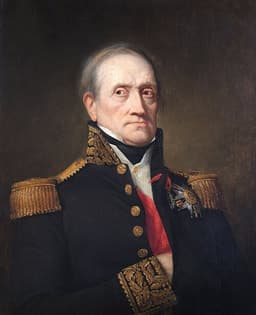
Nicolas Soult
General · Modern
62.7Total
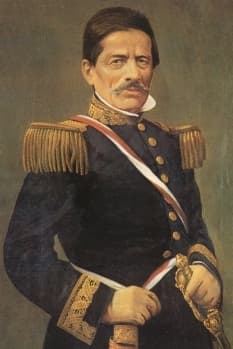
Ramon Castilla
General · Modern
59.7Total
Basic Information
Born
1769
1797
Died
1851
1867
Era
Modern
Modern
Nationality
France
Peru
Occupation
General
General
Civilization
Western
Western
Score Comparison
Military (10%)
74.7
40.0
Political (20%)
55.0
72.0
Influence (20%)
61.0
56.7
Legacy (20%)
54.0
52.0
Leadership (15%)
78.0
78.0
Strategy (15%)
65.4
60.0
TOTAL
62.7
59.7
Nicolas Soult — Complete Timeline
1805 AD
Battle of AusterlitzWar◆ Major
Soult commanded the IV Corps at Austerlitz. He led the assault on the Pratzen Heights, breaking the Allied center and securing the decisive French victory.
Napoleonic WarsBattleCorps Command
Impact: global
1806 AD
Battle of Jena-AuerstedtWar◆ Major
Soult commanded the IV Corps at Jena. His forces pursued the retreating Prussian army, capturing thousands of prisoners and contributing to the collapse of the Prussian state.
Napoleonic WarsBattlePursuit
Impact: regional
1811 AD
Battle of AlbueraWar◆ Major
Soult commanded the French army at Albuera in Spain. His forces fought a bloody battle against the Anglo-Spanish army, resulting in a tactical stalemate but strategic French withdrawal.
Peninsular WarBattleStalemate
Impact: regional
1814 AD
Battle of ToulouseWar◆ Major
Soult commanded the French army at Toulouse against Wellington. The battle occurred after Napoleon's abdication, and Soult surrendered the city, ending the Peninsular War.
Peninsular WarBattleDefeat
Impact: regional
1830 AD
Minister of WarPolitical Action◆ Major
Soult served as Minister of War under King Louis-Philippe. He reorganized the French army, introduced conscription reforms, and prepared for colonial campaigns in Algeria.
MinistryReformsJuly Monarchy
Impact: nationalconstructive
1832 AD
Prime Minister of FrancePolitical Action◆ Major
Soult served as Prime Minister of France under Louis-Philippe. His government focused on maintaining order, suppressing republican uprisings, and consolidating the July Monarchy.
Prime MinisterJuly MonarchyGovernment
Impact: national
Ramon Castilla — Complete Timeline
1824 AD
Battle of AyacuchoWar
Castilla fought as a junior officer in the decisive Battle of Ayacucho, which ended Spanish rule in Peru. This victory secured Peruvian independence and marked the end of the Spanish Empire in South America, shaping Castilla's nationalist views.
Peruvian War of IndependenceBattleLiberation
Impact: regional
1845 AD
First Presidency of PeruPolitical Action◆ Major
Castilla was elected President of Peru in 1845, serving until 1851. His first term focused on economic development, including the guano boom, and infrastructure projects such as railroads and ports, modernizing the Peruvian state.
PresidencyEconomic DevelopmentGuano
Impact: nationalconstructive
1854 AD
Abolition of Slavery in PeruReform◆ Major
During his second presidency, Castilla issued a decree abolishing slavery in Peru on December 3, 1854. This reform freed approximately 25,000 slaves and was part of a broader liberal agenda, though it faced opposition from slave-owning elites.
AbolitionSlaveryHuman Rights
Impact: nationalprogressive
Abolition of Indigenous TributeReform◆ Major
Castilla also abolished the indigenous tribute tax in 1854, which had been a burden on native communities since colonial times. This measure aimed to integrate indigenous peoples into the Peruvian state as equal citizens, though its implementation was uneven.
Indigenous RightsTax ReformCitizenship
Impact: nationalprogressive
1855 AD
Second Presidency and Guano BoomPolitical Action◆ Major
Castilla served a second term from 1855 to 1862, during the peak of the guano export boom. He used guano revenues to fund public works, pay off foreign debt, and modernize the military, but also faced criticism for corruption and over-reliance on a single resource.
PresidencyGuanoModernization
Impact: nationalconstructive
1860 AD
Constitutional Reform of 1860Reform◆ Major
Castilla oversaw the adoption of a new constitution in 1860, which established a centralized republic with a strong executive. The constitution remained in effect until 1920 and shaped Peru's political structure, though it limited regional autonomy.
ConstitutionPolitical ReformCentralization
Impact: nationalconstructive
Expert Analysis
Ramon Castilla vs Nicolas Soult
# The General and the President: Two Paths from the Battlefield
On December 3, 1854, in the Andean city of Huancayo, a fifty-seven-year-old Peruvian general named Ramon Castilla signed a decree that would echo across the Americas. With a single stroke of his pen, he freed every slave in Peru—some twenty-five thousand souls—and abolished the indigenous tribute tax that had weighed on native communities since the days of the Incas. It was an act of extraordinary moral clarity, carried out not from a position of revolutionary fervor but from the pragmatic center of power. Half a world away, on the same day, a French marshal named Nicolas Soult sat in Paris, reflecting on a life spent in the service of empires that had risen and fallen around him. One man had conquered through armies, the other through laws. Both had stood on the same blood-soaked fields of history, but they emerged from them with entirely different destinies.
Origins
Ramon Castilla was born in 1797 in Tarapacá, then part of the Spanish Viceroyalty of Peru, into a family of modest means. His father was a Spanish miner, his mother a local woman of indigenous descent. This mixed heritage would later give him an instinctive understanding of the fractures within Peruvian society. He was a child of the colonial twilight, raised in a world where Spanish authority was absolute but cracking. In contrast, Nicolas Soult was born in 1769 in the French village of Saint-Amans-la-Bastide, the son of a notary. He came of age in the furnace of revolution. The France of his youth was a monarchy in decay, then a republic in chaos, then an empire in conquest. Where Castilla grew up learning the rhythms of a static colonial order, Soult learned the art of survival in a world where regimes changed like seasons.
Rise to Power
Castilla entered history on December 9, 1824, at the Battle of Ayacucho. He was a junior officer in the patriot army, one of thousands who fought that day in the high plains of Peru. The battle was the final, decisive blow against Spanish rule in South America. For Castilla, it was a baptism by fire that would define his career. He emerged not as a celebrated hero but as a competent, reliable soldier—the kind of man who could be trusted in the long, grinding work of building a nation after the war.
Soult’s rise was more dramatic. By 1805, at the Battle of Austerlitz, he was already a marshal of France commanding the IV Corps. On December 2 of that year, he led the assault on the Pratzen Heights, the decisive moment of Napoleon’s greatest victory. His troops broke the Allied center and sealed the fate of the Russian and Austrian armies. Soult was not merely present at history; he helped forge it with his own hands. Where Castilla served in a liberation army, Soult served in a conquering one. The difference was fundamental: one man fought to end an old order, the other to build a new one.
Leadership & Governance
Castilla’s true genius was not military but political. When he became president of Peru in 1845, he inherited a country exhausted by decades of civil war and chaos. His first term focused on economic development, but it was his second term, from 1855 to 1862, that defined his legacy. This was the era of the guano boom—Peru’s sudden, dizzying wealth from bird droppings exported as fertilizer to Europe. Castilla used this windfall with remarkable discipline. He paid off foreign debts, built railroads, modernized the army, and funded public education. More importantly, he understood that wealth without justice was poison. By abolishing slavery and indigenous tribute, he attempted to heal the deepest wounds of colonial society.
Soult’s governance was of a different kind. After Napoleon’s fall, he served as Minister of War under King Louis-Philippe, reorganizing the French army and introducing conscription reforms. In 1832, he became Prime Minister of France. His government focused on maintaining order, suppressing republican uprisings, and stabilizing a country still reeling from revolution and empire. Soult was a fixer, not a reformer. He did not seek to transform French society; he sought to keep it from tearing itself apart. Where Castilla built, Soult conserved.
Triumph & Tragedy
Castilla’s greatest triumph was the abolition decree of 1854. It was not merely a moral act but a strategic one. By freeing the slaves and ending indigenous tribute, he undercut the power of the old landed elite and created a new class of free citizens loyal to the state. His greatest tragedy came later, in the 1860 constitution, which centralized power in the presidency. This would later be used by authoritarian successors to justify dictatorship. Castilla’s reforms were genuine, but they planted seeds that others would harvest for darker purposes.
Soult’s triumphs were on the battlefield. At Jena in 1806, his corps pursued the shattered Prussian army, capturing thousands of prisoners. At Albuera in 1811, he fought one of the bloodiest battles of the Peninsular War, a brutal slugfest that left both sides decimated. His tragedy was that he served a master whose ambition exceeded his own. After Napoleon’s final defeat, Soult was forced to navigate the treacherous waters of the Restoration, serving kings he had once fought against. He ended his career as a servant of a monarchy he had helped destroy—a fate that must have tasted like ash.
Character & Destiny
Castilla was a pragmatist with a conscience. He understood that power without legitimacy is hollow, and legitimacy in Peru required addressing the injustices of the colonial past. His mixed heritage gave him a perspective that pure-blooded creoles lacked. He governed not for glory but for stability, and his reforms were designed to endure.
Soult was a survivor. He served Napoleon, then the Bourbons, then Louis-Philippe, adapting to each regime with the flexibility of a man who had learned that principles are luxuries for those who can afford them. He was a brilliant tactician but a mediocre strategist—a man who could win battles but not wars, who could hold power but not shape it. His legacy is that of a skilled instrument used by greater forces.
Legacy
Castilla is remembered in Peru as the “Liberator of the Slaves” and a founding father of the modern republic. His image appears on the country’s currency, and his reforms are taught in schools as a model of enlightened governance. Soult is remembered, if at all, as one of Napoleon’s marshals—a competent commander in a constellation of genius. His political career is largely forgotten, overshadowed by the titans he served.
Conclusion
The difference between these two men is not a matter of ability but of context and choice. Castilla, a soldier in a liberation army, used power to heal a wounded society. Soult, a marshal in a conquering empire, used power to preserve a wounded order. One built a nation; the other managed a decline. In the end, the question is not who was more skilled but who understood the purpose of power. Castilla understood that power is a tool for justice. Soult understood that power is a tool for survival. History, with its quiet judgment, has placed its weight on the side of the liberator.
Rankings
🥇
Nicolas SoultLeader
Mil: 74.7Pol: 55.0Inf: 61.0
62.7
🥈
Ramon Castilla
Mil: 40.0Pol: 72.0Inf: 56.7
59.7
+3.0 behind
How This Comparison Works
Algorithm
Each figure is scored on 6 dimensions (0—100 scale) based on structured historical data: Military (10%), Political (20%), Influence (20%), Legacy (20%), Leadership (15%), Strategy (15%). The weighted total produces the final ranking.
Data Sources
Scores are computed from structured sub-indicators in the database. Scale factors adjust for era (Ancient ×0.85, Modern ×1.0) and civilization size (Eastern ×1.05, Other ×0.80) to account for differences in population and military scale.
Maximum 3 Figures
Comparisons are limited to 2—3 figures to ensure readability and statistical meaningfulness.
Error Margins
±5 points per dimension — Sub-scores are derived from historical records with inherent uncertainty. Two figures within 5 points on a dimension should be considered roughly equivalent in that area.
Total Score Accuracy
±3 points overall — The weighted combination of 6 dimensions produces a total score with approximately ±3 points of uncertainty. Differences of less than 3 points are not statistically significant— the figures are effectively tied.
Known Limitations
- Historical records are incomplete and uneven across civilizations
- Figures from oral-tradition societies may be underrepresented
- Occupation labels can misclassify multi-role figures
- Scores measure capability and impact, not moral character
- Quantitative scoring is a comparison tool, not absolute truth
Capability Radar
Military (10%) — Battles & Warfare
Battles
75
45
Win Rate
70
50
Expansion
65
30
Political (20%) — Governance & Reform
Reform
55
85
Diplomacy
65
70
Economy
50
75
Influence (20%) — Cultural & Global Reach
Cultural
45
55
Global
50
50
Legacy (20%) — Historical Impact
Historical
55
65
Longevity
50
60
Leadership (15%) — Power & Stability
Tenure
70
65
Stability
55
60
Strategy (15%) — Tactics & Innovation
Strategy
72
45
Tactics
78
40
Reform
60
55
Similar Comparisons
Comments & Discussion
MarshalMax6/16/2026
Soult was the better tactician by far—he outmaneuvered the Spanish repeatedly in the Peninsular War, and at Toulouse in 1814 he held off Wellington's coalition with inferior numbers. Castilla's abolition decree was politically shrewd, but it came during a civil war, after he'd already secured victory. Soult's battlefield decisions had to work under Napoleonic pressure, with no time for noble gestures. Comparing them is like weighing a surgeon against a blacksmith—both skilled, but Soult's trade
自由之光6/16/2026
Castilla的废奴法令才是真正的道德高地,Soult不过是个聪明的机会主义者。他把秘鲁从殖民泥潭里拉出来,用一道政令解放了2.5万奴隶,而Soult在拿破仑倒台后转身就给波旁王朝效忠了。数据不撒谎:Castilla任内秘鲁经济增速远超同期南美,Soult呢?他治下的法国军队在比利牛斯山脉连补给线都保不住。别拿战术花招来比较解放者的智慧。
SpecterOfData6/16/2026
You're both romanticizing. Castilla's "abolition" freed slaves but replaced tribute with a head tax on indigenous communities—that's shifting burdens, not erasing them. Soult's record shows he looted as much as he conquered. In 1812, he stripped Andalusia of art worth millions of francs. Both men were products of their eras, but let's be clear: the comparison is flawed because they operated in different power structures. One commanded battalions, the other brokered elites. Apples and oranges, bu
史海沉钩6/16/2026
标准历史课本太爱造神了。Castilla那个所谓"道德清明"的1854年废奴令,背后是他和自由派结盟对付保守派势力的纯粹权力算计。Soult倒是真金火炼——他当过四次法国战争部长,改革了军队招募制度,比Castilla那些靠个人魅力的临时法令务实得多。别忘了,Castilla最后政变失败被流放,Soult却活到83岁安然离世。数据不是唯一真理,活到最后的才是赢家。
CenturionOfTwoWorlds6/16/2026
Here's the overlooked link: both fought on the same ground at the Battle of Araure in 1813, just different sides. Soult's French army crushed the Venezuelan patriots while Castilla, then a Spanish colonial officer, was likely among the routed allies. One spent his prime crushing rebellion, the other later built the nation that rebelled. That irony is the real story. They share a forgotten battlefield, but their legacies diverged because one adapted to change, the other