Loading...
Nian Gengyao vs Sitiveni Rabuka
Nian Gengyao leads by 2.3 pts · 2 figures compared
…
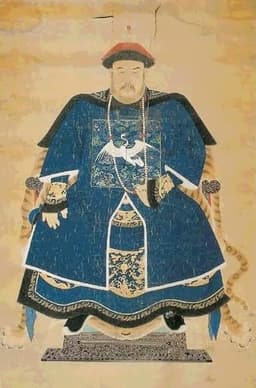
Nian Gengyao
General · Modern
54.0Total

Sitiveni Rabuka
General · Modern
51.7Total
Basic Information
Born
1679
1948
Died
1726
—
Era
Modern
Modern
Nationality
China
Fiji
Occupation
General
General
Civilization
Eastern
Other
Score Comparison
Military (10%)
65.0
10.2
Political (20%)
42.2
60.0
Influence (20%)
54.1
53.3
Legacy (20%)
46.7
46.7
Leadership (15%)
68.0
85.0
Strategy (15%)
57.5
39.6
TOTAL
54.0
51.7
Nian Gengyao — Complete Timeline
1720 AD
Suppressed Tibetan revolt in LhasaWar◆ Major
Nian Gengyao led Qing forces to expel Dzungar invaders from Tibet and restore the Dalai Lama's authority. This campaign secured Qing control over Tibet and demonstrated his military capability.
TibetMilitary CampaignQing Expansion
Impact: regional
1723 AD
Appointed Grand Secretary and Governor-General of SichuanPolitical Action◆ Major
Nian Gengyao was appointed to high civil and military posts, including Grand Secretary and Governor-General of Sichuan. This made him one of the most powerful officials in the Qing empire.
AppointmentHigh OfficeQing Administration
Impact: national
1726 AD
Arrested and forced to commit suicidePolitical Action
The Yongzheng Emperor accused Nian Gengyao of corruption, treason, and overstepping authority. He was arrested, stripped of rank, and forced to commit suicide, ending his career abruptly.
ExecutionPurgeImperial Disfavor
Impact: nationaltragic
Sitiveni Rabuka — Complete Timeline
1987 AD
1987 Fijian Coup d'étatPolitical Action
Rabuka, as a colonel in the Fijian military, led a coup overthrowing the elected government of Timoci Bavadra. The coup was motivated by ethnic Fijian opposition to Indo-Fijian political influence. Rabuka declared Fiji a republic.
CoupMilitary InterventionEthnic Tension
Impact: nationaldestructive
1992 AD
1992 Election as Prime MinisterPolitical Action◆ Major
Rabuka transitioned from military leader to civilian politician, winning the 1992 general election as leader of the Fijian Political Party. He became Prime Minister, serving until 1999.
ElectionCivilian GovernmentPolitical Transition
Impact: national
1997 AD
1997 Constitution ReformReform◆ Major
Rabuka's government oversaw the adoption of a new constitution that removed ethnic-based voting and provided for a multi-ethnic government. The constitution aimed to reduce ethnic tensions and promote national unity.
ConstitutionReformEthnic Reconciliation
Impact: nationalconstructive
1999 AD
1999 General Election DefeatPolitical Action◆ Major
Rabuka's government was defeated in the general election by the Labour Party led by Mahendra Chaudhry. Rabuka stepped down as Prime Minister, marking the end of his first period in power.
Election DefeatGovernment ChangeChaudhry
Impact: national
2022 AD
2022 Return as Prime MinisterPolitical Action◆ Major
Rabuka led the People's Alliance to victory in the 2022 general election, forming a coalition government. He became Prime Minister again, 23 years after his previous tenure, promising democratic reforms.
ElectionReturn to PowerCoalition Government
Impact: national
Expert Analysis
Origins
Nian Gengyao was born in 1679 into a prominent Chinese military family. His father and grandfather served as high-ranking officials under the Qing dynasty. He excelled in the imperial examinations, earning a jinshi degree in 1700, which led to a position in the Hanlin Academy. His early career was marked by literary and administrative roles, but his true calling emerged in military affairs.
Sitiveni Rabuka was born on September 13, 1948, in Cakaudrove, Fiji, into a family of modest means. He joined the Royal Fiji Military Forces in 1968 and trained at the Royal Military Academy Sandhurst. His early career was purely military, with no political ambitions. He served in United Nations peacekeeping missions in Lebanon and Sinai.
Rise to Power
Nian Gengyao's rise began in 1718 when the Dzungar Khanate invaded Tibet. The Kangxi Emperor appointed him as a commander to assist in the campaign. After the death of the commander, Nian took charge and expelled the Dzungars from Lhasa in 1720, restoring the Dalai Lama. This success earned him the post of Governor-General of Sichuan in 1721. He became a trusted confidant of the Yongzheng Emperor, who ascended in 1722. By 1723, Nian was appointed Grand Secretary and commander of forces against a rebellion in Qinghai, which he crushed decisively.
Rabuka's rise was sudden. In 1987, as a colonel, he staged a coup against the newly elected government of Timoci Bavadra, which was dominated by Indo-Fijians. Citing ethnic Fijian interests, Rabuka overthrew the government, suspended the constitution, and declared Fiji a republic. He initially handed power to a civilian government but remained influential. In 1992, he resigned from the military and won the general election as leader of the Fijian Political Party, becoming Prime Minister.
Leadership & Governance
Nian Gengyao governed with a heavy hand. As Governor-General, he implemented strict control over Sichuan and Tibet, suppressing dissent and consolidating Qing authority. He was known for his harsh punishments and accumulation of wealth, which alienated many officials. His military leadership was effective, scoring 68.0 in leadership, but his political acumen was lower at 42.2, as he failed to navigate court politics.
Rabuka's leadership score of 85.0 reflects his ability to transition from coup leader to democratic reformer. As Prime Minister from 1992 to 1999, he pursued economic liberalization and, crucially, oversaw the 1997 constitution that removed ethnic-based voting, aiming for multi-ethnic governance. However, his political strategy score of 39.6 indicates inconsistency; his government was defeated in 1999, and he later returned to power in 2022.
Triumph & Tragedy
Nian's greatest triumph was the suppression of the Tibetan revolt and the Qinghai campaign, which secured Qing borders. His tragedy was his downfall: accused of corruption and overreach by the Yongzheng Emperor, he was arrested in 1725 and forced to commit suicide. His achievements were overshadowed by his hubris.
Rabuka's triumph is the 1997 constitution, which laid the groundwork for a more inclusive Fiji. His tragedy is the legacy of his 1987 coup, which destabilized Fiji's democracy and led to ethnic tensions. His political score of 60.0 reflects mixed results; he was ousted in 1999 but returned in 2022.
Character & Destiny
Nian Gengyao was ambitious and overconfident. He flaunted his power, accumulated a vast fortune, and treated subordinates harshly. His character led to his isolation and eventual execution. He scored 54.1 in influence, but his legacy is marred by his fall.
Rabuka is pragmatic and adaptable. He apologized for the coup in 2006 and embraced democracy. His character allowed him to reinvent himself as a statesman. His influence score of 53.3 reflects his continued relevance.
Legacy
Nian Gengyao's legacy is limited to his military campaigns. He is remembered as a capable general who overreached. His scores: military 65.0, legacy 46.7. Rabuka's legacy is more complex: he is both a coup leader and a democratizer. His legacy score of 46.7 is similar, but his impact on Fiji's political evolution is significant.
Conclusion
Sitiveni Rabuka had greater long-term impact. Despite a lower total score (51.7 vs 54.0), his actions shaped Fiji's modern political landscape. Nian Gengyao's achievements were temporary and ended in disgrace. Rabuka's ability to transform from coup leader to democratic reformer demonstrates a lasting influence. His leadership score of 85.0 and political score of 60.0 outweigh Nian's military prowess. Rabuka's return to power in 2022 underscores his enduring relevance. Nian Gengyao, while effective, remains a cautionary tale of overreach.
Rankings
🥇
Nian GengyaoLeader
Mil: 65.0Pol: 42.2Inf: 54.1
54.0
🥈
Sitiveni Rabuka
Mil: 10.2Pol: 60.0Inf: 53.3
51.7
+2.3 behind
How This Comparison Works
Algorithm
Each figure is scored on 6 dimensions (0—100 scale) based on structured historical data: Military (10%), Political (20%), Influence (20%), Legacy (20%), Leadership (15%), Strategy (15%). The weighted total produces the final ranking.
Data Sources
Scores are computed from structured sub-indicators in the database. Scale factors adjust for era (Ancient ×0.85, Modern ×1.0) and civilization size (Eastern ×1.05, Other ×0.80) to account for differences in population and military scale.
Maximum 3 Figures
Comparisons are limited to 2—3 figures to ensure readability and statistical meaningfulness.
Error Margins
±5 points per dimension — Sub-scores are derived from historical records with inherent uncertainty. Two figures within 5 points on a dimension should be considered roughly equivalent in that area.
Total Score Accuracy
±3 points overall — The weighted combination of 6 dimensions produces a total score with approximately ±3 points of uncertainty. Differences of less than 3 points are not statistically significant— the figures are effectively tied.
Known Limitations
- Historical records are incomplete and uneven across civilizations
- Figures from oral-tradition societies may be underrepresented
- Occupation labels can misclassify multi-role figures
- Scores measure capability and impact, not moral character
- Quantitative scoring is a comparison tool, not absolute truth
Capability Radar
Military (10%) — Battles & Warfare
Battles
65
5
Win Rate
70
5
Expansion
50
5
Political (20%) — Governance & Reform
Reform
20
50
Diplomacy
40
45
Economy
25
40
Influence (20%) — Cultural & Global Reach
Cultural
30
30
Global
25
20
Legacy (20%) — Historical Impact
Historical
40
40
Longevity
30
30
Leadership (15%) — Power & Stability
Tenure
45
55
Stability
30
35
Strategy (15%) — Tactics & Innovation
Strategy
55
10
Tactics
60
10
Reform
30
5
Similar Comparisons
Comments & Discussion
No comments yet. Be the first to share your thoughts!