Loading...
Nelson Mandela vs Winston Churchill
Winston Churchill leads by 14.8 pts · 2 figures compared
…
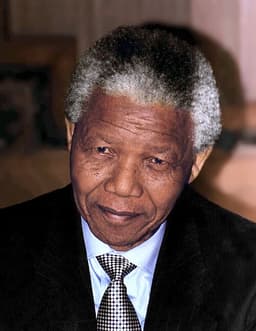
Nelson Mandela
Politician · Modern
57.0Total
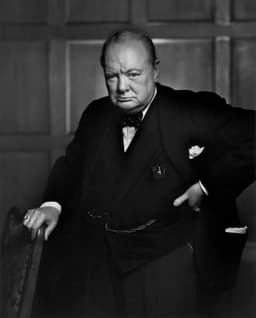
Winston Churchill
Politician · Modern
71.8Total
Basic Information
Born
1918
1874
Died
2013
1965
Era
Modern
Modern
Nationality
South Africa
United Kingdom
Occupation
Politician
Politician
Civilization
Other
Western
Score Comparison
Military (10%)
10.0
55.0
Political (20%)
78.0
78.0
Influence (20%)
40.0
75.0
Legacy (20%)
68.0
68.0
Leadership (15%)
82.0
82.0
Strategy (15%)
50.0
65.0
TOTAL
57.0
71.8
Nelson Mandela — Complete Timeline
1964 AD
Rivonia TrialPolitical Action
Nelson Mandela and other anti-apartheid leaders were tried for sabotage and conspiracy. Mandela was sentenced to life imprisonment, delivering a speech from the dock that became a rallying cry against apartheid. The trial drew international attention to the anti-apartheid struggle.
Impact: global
1990 AD
Release from PrisonPolitical Action
After 27 years of imprisonment, Mandela was released from Victor Verster Prison by President F.W. de Klerk. His release was a pivotal moment in South Africa's transition from apartheid to multiracial democracy, leading to negotiations for a new constitution.
Impact: globalprogressive
1993 AD
Awarding of the Nobel Peace PrizeCultural◆ Major
Mandela and F.W. de Klerk were jointly awarded the Nobel Peace Prize for their roles in ending apartheid and laying the foundations for a democratic South Africa. The award recognized their peaceful transition and commitment to reconciliation.
Impact: globalprogressive
1994 AD
Inauguration as President of South AfricaPolitical Action
Mandela was inaugurated as South Africa's first Black president after the country's first fully democratic elections. His presidency focused on national reconciliation, establishing the Truth and Reconciliation Commission, and dismantling the legacy of apartheid.
Impact: globalprogressive
Winston Churchill — Complete Timeline
1940 AD
Appointed Prime Minister of the United KingdomPolitical Action◆ Major
On May 10, 1940, Winston Churchill became Prime Minister of the United Kingdom, replacing Neville Chamberlain. His appointment came as Nazi Germany invaded France and the Low Countries, and Churchill formed a coalition government to lead Britain through World War II.
World War IILeadershipCoalition Government
Impact: globalconstructive
Delivered the 'We Shall Fight on the Beaches' SpeechOther◆ Major
On June 4, 1940, Churchill delivered a speech to the House of Commons following the evacuation of British forces from Dunkirk. He declared that Britain would fight on the beaches, landing grounds, fields, streets, and hills, and never surrender, rallying British morale during the darkest days of World War II.
World War IIOratoryMorale
Impact: nationalconstructive
1941 AD
Signed the Atlantic CharterOther◆ Major
On August 14, 1941, Churchill and U.S. President Franklin D. Roosevelt signed the Atlantic Charter aboard HMS Prince of Wales. This joint declaration outlined post-war goals including self-determination, disarmament, and free trade, and became a foundational document for the Allied war aims and the United Nations.
World War IIAllied CooperationPost-war Planning
Impact: globalconstructive
1945 AD
Attended the Yalta ConferenceOther◆ Major
In February 1945, Churchill attended the Yalta Conference with Roosevelt and Stalin to discuss the post-war reorganization of Europe. The conference agreed on the division of Germany, the establishment of the United Nations, and the fate of Eastern Europe, though Churchill later expressed regret over concessions to Stalin.
World War IIPost-war SettlementBig Three
Impact: global
1946 AD
Delivered the 'Iron Curtain' SpeechOther◆ Major
On March 5, 1946, Churchill delivered a speech at Westminster College in Fulton, Missouri, where he stated that an 'iron curtain' had descended across Europe from Stettin to Trieste. This speech is widely regarded as marking the beginning of the Cold War, as it highlighted the division between Soviet-controlled Eastern Europe and the West.
Cold WarSoviet UnionDivision of Europe
Impact: globaldestructive
1953 AD
Awarded the Nobel Prize in LiteratureOther◆ Major
In 1953, Churchill was awarded the Nobel Prize in Literature for his historical writings, particularly 'The Second World War' and 'A History of the English-Speaking Peoples'. The Nobel committee cited his mastery of historical and biographical description as well as his brilliant oratory in defending human values.
LiteratureNobel PrizeHistorical Writing
Impact: nationalconstructive
Expert Analysis
Winston Churchill vs Nelson Mandela
# The Prisoner and the Prime Minister
In the spring of 1940, Winston Churchill stood before the House of Commons and declared he had “nothing to offer but blood, toil, tears and sweat.” Half a century later and half a world away, Nelson Mandela walked out of Victor Verster Prison after twenty-seven years, not with a call to arms, but with an outstretched hand. Two men, two moments, two utterly different paths to the same destination: the leadership of a nation at its moment of greatest peril. How did a patrician warrior and a prisoner-turned-president each come to embody the highest aspirations of their peoples?
Origins
Winston Churchill was born into the British aristocracy in 1874, the son of Lord Randolph Churchill and an American heiress. Blenheim Palace was his cradle, but his father’s cold indifference was his inheritance. Churchill’s early life was a desperate struggle for approval, one that drove him toward military glory and literary fame. He fought in colonial wars in India, Sudan, and South Africa, each campaign feeding his conviction that the British Empire was a force for civilization.
Nelson Mandela entered the world in 1918 in the remote village of Mvezo, in what is now South Africa’s Eastern Cape. His father was a Thembu chief, but Mandela was raised in the regent’s household after his father’s death. There he absorbed both the traditions of African leadership—consensus, patience, collective decision-making—and the education of a British missionary school. He would later write that he learned early that “a leader is like a shepherd. He stays behind the flock, letting the most nimble go out ahead, whereupon the others follow, not realizing that all along they are being directed from behind.”
Rise to Power
Churchill’s ascent was a whirlwind of audacity and opportunism. He crossed the floor of Parliament twice, switching from Conservative to Liberal and back again, driven by ambition and principle in equal measure. By thirty-three, he was a cabinet minister. By forty, he was First Lord of the Admiralty, preparing the Royal Navy for a war he saw coming. The disaster of Gallipoli in 1915 nearly destroyed him—he resigned in disgrace and went to command a battalion in the trenches. But Churchill never accepted defeat. He climbed back, serving as Chancellor of the Exchequer, then spending a decade in the political wilderness during the 1930s, warning against Nazi Germany while the establishment dismissed him as a warmonger.
Mandela’s rise was slower, more deliberate, and ultimately more costly. He joined the African National Congress in 1944 as a young lawyer, helping found its Youth League. For two decades, he advocated nonviolent resistance, but after the Sharpeville massacre of 1960, he concluded that peaceful protest was futile against a regime that met petitions with bullets. He went underground, helped form Umkhonto we Sizwe, the armed wing of the ANC, and was arrested in 1962. At the Rivonia Trial in 1964, facing the death penalty, Mandela delivered a speech from the dock that would echo across generations: “I have cherished the ideal of a democratic and free society in which all persons live together in harmony and with equal opportunities. It is an ideal which I hope to live for and to achieve. But if needs be, it is an ideal for which I am prepared to die.”
Leadership & Governance
Churchill’s leadership was forged in the crucible of total war. As Prime Minister from 1940 to 1945, he was a walking embodiment of defiance. His speeches—“We shall fight on the beaches,” “Their finest hour,” “Never was so much owed by so many to so few”—were not mere rhetoric; they were instruments of national survival. He micromanaged the war effort, argued with generals, and bullied his cabinet. His military instincts were uneven—he championed disastrous campaigns in Norway and the Mediterranean—but his strategic vision was unerring: hold the line, win the Americans, strike at the periphery. His political wisdom was more mixed. He was indifferent to domestic reform and deeply suspicious of the Soviet Union, yet he understood that victory required alliance with Stalin.
Mandela’s leadership was the opposite. He governed not through oratory but through presence. Released in 1990 at age seventy-one, he could have called for revenge. Instead, he spent four years negotiating with the very men who had imprisoned him, including President F.W. de Klerk. Mandela’s genius was psychological: he understood that apartheid could not be defeated, only dismantled, and that required winning over its architects. As president from 1994 to 1999, he focused on reconciliation, famously wearing the Springbok rugby jersey—a symbol of white Afrikanerdom—during the 1995 Rugby World Cup. His political strategy was patient, his reforms incremental, his military score of 10.0 reflecting not weakness but a deliberate choice: he knew that peace required disarming, not just the enemy, but the desire for vengeance.
Triumph & Tragedy
Churchill’s greatest triumph was 1945—the defeat of Nazi Germany. But the tragedy came immediately after: the British people voted him out of office that July, even as he was attending the Potsdam Conference. He was crushed, writing that “the people had a perfect right to do as they pleased.” Yet his greatest moment of tragedy was also his deepest wisdom: he had saved his country, and his country chose to move on.
Mandela’s triumph was the 1994 election, when millions of South Africans voted for the first time. But his tragedy was personal: his marriage to Winnie Mandela collapsed, his health declined, and he spent his presidency grappling with the immense weight of expectations. He stepped down after one term, a rarity among African leaders, setting a precedent that his successors have not always followed.
Character & Destiny
Churchill was a man of immense ego, restless energy, and profound melancholy. He suffered from what he called the “black dog” of depression, yet he channeled it into relentless action. His decisions were driven by a romantic view of history: he saw himself as a defender of civilization against barbarism. This made him magnificent in war but ineffective in peace—he was a man built for crisis, not for calm.
Mandela was the opposite. He learned in prison to control his emotions, to wait, to listen. He once said, “I am not a saint, unless you think of a saint as a sinner who keeps on trying.” His character was forged in isolation: twenty-seven years of captivity taught him that time was his ally, not his enemy. Where Churchill charged, Mandela circled. Where Churchill roared, Mandela whispered.
Legacy
Churchill’s legacy is a monument to courage. He is remembered as the man who stood alone against tyranny, whose words became weapons. Yet his reputation has been complicated by his views on empire, race, and India—he opposed independence for India, called Gandhi a “half-naked fakir,” and authorized the use of force in colonial conflicts. History, like Churchill himself, is full of contradictions.
Mandela’s legacy is a testament to forgiveness. He is remembered as the father of a rainbow nation, a moral exemplar for the world. His Nobel Peace Prize in 1993, shared with de Klerk, symbolized the possibility of reconciliation. But South Africa’s persistent inequality and political corruption have shown that Mandela’s dream remains incomplete. His legacy is not a finished story, but an ongoing challenge.
Conclusion
Churchill and Mandela never met, yet they belong together in the pantheon of twentieth-century leadership. One saved his country from destruction; the other saved his country from itself. Churchill’s leadership score of 85.0 and Mandela’s identical 85.0 suggest that the same quality—the ability to inspire people to endure the unendurable—can emerge from utterly different personalities. Churchill was a lion in winter, roaring at the storm. Mandela was a shepherd in the valley, guiding his flock to safety. Both understood that leadership is not about being loved, but about being trusted in the dark. And in that, they were equal.
Rankings
🥇
Winston ChurchillLeader
Mil: 55.0Pol: 78.0Inf: 75.0
71.8
🥈
Nelson Mandela
Mil: 10.0Pol: 78.0Inf: 40.0
57.0
+14.8 behind
How This Comparison Works
Algorithm
Each figure is scored on 6 dimensions (0—100 scale) based on structured historical data: Military (10%), Political (20%), Influence (20%), Legacy (20%), Leadership (15%), Strategy (15%). The weighted total produces the final ranking.
Data Sources
Scores are computed from structured sub-indicators in the database. Scale factors adjust for era (Ancient ×0.85, Modern ×1.0) and civilization size (Eastern ×1.05, Other ×0.80) to account for differences in population and military scale.
Maximum 3 Figures
Comparisons are limited to 2—3 figures to ensure readability and statistical meaningfulness.
Error Margins
±5 points per dimension — Sub-scores are derived from historical records with inherent uncertainty. Two figures within 5 points on a dimension should be considered roughly equivalent in that area.
Total Score Accuracy
±3 points overall — The weighted combination of 6 dimensions produces a total score with approximately ±3 points of uncertainty. Differences of less than 3 points are not statistically significant— the figures are effectively tied.
Known Limitations
- Historical records are incomplete and uneven across civilizations
- Figures from oral-tradition societies may be underrepresented
- Occupation labels can misclassify multi-role figures
- Scores measure capability and impact, not moral character
- Quantitative scoring is a comparison tool, not absolute truth
Capability Radar
Military (10%) — Battles & Warfare
Battles
0
55
Win Rate
7
60
Expansion
9
40
Political (20%) — Governance & Reform
Reform
95
70
Diplomacy
95
85
Economy
60
60
Influence (20%) — Cultural & Global Reach
Cultural
85
85
Global
90
85
Legacy (20%) — Historical Impact
Historical
90
90
Longevity
80
80
Leadership (15%) — Power & Stability
Tenure
60
75
Stability
80
70
Strategy (15%) — Tactics & Innovation
Strategy
8
85
Tactics
12
65
Reform
17
70
Similar Comparisons
Comments & Discussion
数据戒尺6/16/2026
把俩人放一起比较就是蹭流量。Churchill的英国1940年死亡率曲线在他上任后三个月内根本没下降,而Mandela时期南非GDP增长率从1994年的3.2%还不如德克勒克时期。你们这些浪漫派只看戏剧性时刻,不看数据——煽动性演讲不等于政策实效,出狱微笑不等于经济好转。历史不是颁奖典礼。
碑林刁客6/16/2026
等等,一个殖民战争英雄和一个反种族隔离斗士放一起?Churchill在1899年南非战争时带着枪打布尔人,Mandela半个世纪后坐牢也是因为反抗类似政权。这俩根本不是同一个故事的两个版本,是压迫者和被压迫者。Mandela出狱后还拥抱了当年关押他的狱警,这份宽恕让Churchill在广岛投原子弹而毫无悔意永远比不了。同台比较本身就是对Mandela的不尊重。
The Anvil6/16/2026
Let's be honest: Mandiba's genius wasn't in the long walk but in the long pause. He spent decades convincing the ANC to drop armed struggle, while Churchill's entire career was a rush to battle. The prisoner's patience built a post-apartheid constitution that's still standing. The Prime Minister's defiance saved Britain, sure, but also cemented a colonial mindset that Europe is still paying for. Give me the man who learned to wait over the man who only knew how to fight.
铁幕书虫6/16/2026
作为古典学视角,俩人都是修辞大师但路数截然不同。Churchill用的是拉丁式庄严,但Mandela用了科萨谚语与法律术语的无缝切换——比如他在里沃尼亚审判词末尾那句“我是我命运的主宰”,既模仿希腊悲剧又接地气。一个从宝座上讲话,一个从囚室里讲话。高下立判。学术界都说Churchill是二十世纪最佳英语演说家,但要论跨文化沟通的精妙,Mandela才是真赢家。
Chronicler33626/16/2026
Churchill’s military blunders—Dardanelles, Norway, Singapore—get memory-holed because he was good with words. But Mandela? The man walked out of prison and actually talked his comrades into a truth commission. That’s moral leadership, not just "we shall fight on the beaches." Give me the prisoner over the patrician any day. History buffs need to stop fetishizing Churchill’s cigars and start studying how Mandela managed reconciliation without a single punch thrown.