Loading...
Nelson Mandela vs Otto von Bismarck
Otto von Bismarck leads by 8.8 pts · 2 figures compared
…
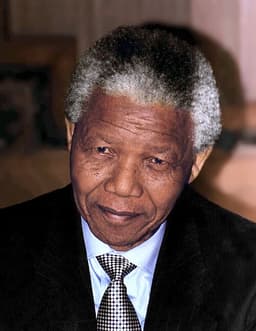
Nelson Mandela
Politician · Modern
57.0Total
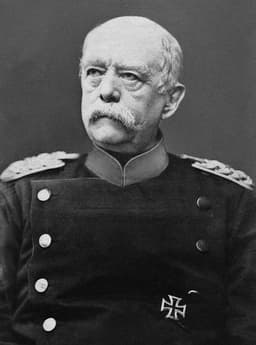
Otto von Bismarck
Politician · Modern
65.8Total
Basic Information
Born
1918
1815
Died
2013
1898
Era
Modern
Modern
Nationality
South Africa
Germany
Occupation
Politician
Politician
Civilization
Other
Western
Score Comparison
Military (10%)
10.0
55.0
Political (20%)
78.0
85.0
Influence (20%)
40.0
82.0
Legacy (20%)
68.0
40.0
Leadership (15%)
82.0
80.0
Strategy (15%)
50.0
50.0
TOTAL
57.0
65.8
Nelson Mandela — Complete Timeline
1964 AD
Rivonia TrialPolitical Action
Nelson Mandela and other anti-apartheid leaders were tried for sabotage and conspiracy. Mandela was sentenced to life imprisonment, delivering a speech from the dock that became a rallying cry against apartheid. The trial drew international attention to the anti-apartheid struggle.
Impact: global
1990 AD
Release from PrisonPolitical Action
After 27 years of imprisonment, Mandela was released from Victor Verster Prison by President F.W. de Klerk. His release was a pivotal moment in South Africa's transition from apartheid to multiracial democracy, leading to negotiations for a new constitution.
Impact: globalprogressive
1993 AD
Awarding of the Nobel Peace PrizeCultural◆ Major
Mandela and F.W. de Klerk were jointly awarded the Nobel Peace Prize for their roles in ending apartheid and laying the foundations for a democratic South Africa. The award recognized their peaceful transition and commitment to reconciliation.
Impact: globalprogressive
1994 AD
Inauguration as President of South AfricaPolitical Action
Mandela was inaugurated as South Africa's first Black president after the country's first fully democratic elections. His presidency focused on national reconciliation, establishing the Truth and Reconciliation Commission, and dismantling the legacy of apartheid.
Impact: globalprogressive
Otto von Bismarck — Complete Timeline
1870 AD
Franco-Prussian WarWar
Bismarck provoked France into declaring war by editing the Ems Dispatch to appear insulting. The resulting conflict saw Prussia and its allies decisively defeat France, leading to the fall of Napoleon III, the capture of Paris, and the annexation of Alsace-Lorraine.
WarProvocationAnnexation
Impact: globaldestructive
1871 AD
Unification of Germany ProclaimedPolitical Action
Following the Franco-Prussian War, Bismarck orchestrated the proclamation of the German Empire in the Hall of Mirrors at Versailles. King Wilhelm I of Prussia was declared German Emperor, uniting the German states under Prussian leadership and establishing the Second Reich.
UnificationGerman EmpireNationalism
Impact: globalconstructive
1878 AD
Enactment of the Anti-Socialist LawsPolitical Action◆ Major
After two assassination attempts on Kaiser Wilhelm I, Bismarck pushed through laws banning socialist organizations, publications, and meetings. The laws remained in force until 1890, suppressing the Social Democratic Party while Bismarck simultaneously introduced welfare reforms to undercut its appeal.
RepressionSocialismWelfare State
Impact: nationaldestructive
Congress of BerlinPolitical Action◆ Major
Bismarck hosted the Congress of Berlin to revise the Treaty of San Stefano and resolve the Eastern Crisis. He acted as 'honest broker,' reducing Russian gains, granting independence to Romania, Serbia, and Montenegro, and placing Bosnia-Herzegovina under Austro-Hungarian administration.
DiplomacyBalkansBalance of Power
Impact: global
1883 AD
Establishment of the Welfare StateReform◆ Major
Bismarck introduced the Health Insurance Bill (1883), Accident Insurance Bill (1884), and Old Age and Disability Insurance Bill (1889). These laws created the first modern welfare state, providing workers with social security and aiming to reduce support for socialist movements.
Social ReformWelfareInsurance
Impact: globalprogressive
1890 AD
Dismissal as ChancellorPolitical Action◆ Major
Emperor Wilhelm II forced Bismarck to resign due to policy disagreements, particularly over anti-socialist laws and foreign policy. Bismarck's departure marked the end of an era, leading to a more aggressive German foreign policy and the eventual unraveling of his alliance system.
ResignationWilhelm IIPolicy Shift
Impact: global
Expert Analysis
Otto von Bismarck vs Nelson Mandela
# The Iron Chancellor and the Prisoner President
On a cold January morning in 1871, Otto von Bismarck stood in the Hall of Mirrors at Versailles, watching as German princes proclaimed Wilhelm I Emperor of a unified Germany. France lay defeated, the German Empire was born, and Bismarck had achieved what generations of German nationalists could not. Exactly 123 years later, on a warm May day in 1994, Nelson Mandela stood before the Union Buildings in Pretoria, taking the oath as South Africa’s first Black president. Apartheid was dead, a rainbow nation was born, and Mandela had achieved what generations of anti-apartheid activists could not. Two men, two unifications, two utterly different paths. What drove them to such divergent outcomes?
Origins
Otto von Bismarck was born in 1815 into the Junker aristocracy of Prussia, a class defined by its land, its military tradition, and its deep suspicion of democracy. His father was a country squire; his mother came from a bourgeois family that valued education. Bismarck himself was a wild youth—a duelist, a drinker, a man who once rode a horse into his neighbor’s dining room for sport. But beneath the bravado lay a calculating mind. He entered politics not out of idealism but out of ambition, serving as Prussia’s ambassador to Russia and France before being summoned to power in 1862.
Nelson Mandela was born in 1918 in the rural village of Mvezo, in the Eastern Cape of South Africa. His father was a Thembu chief, his mother a devout Christian. Mandela grew up listening to the stories of his ancestors’ wars against colonial invaders, and he absorbed the values of consultation, consensus, and collective leadership that defined Thembu tradition. He studied law at the University of Fort Hare, where he encountered the radical ideas of African nationalism. Where Bismarck was shaped by the rigid hierarchies of Prussian militarism, Mandela was shaped by the dual consciousness of a colonized people: proud of their heritage, yet forced to navigate a world that denied their humanity.
Rise to Power
Bismarck’s rise was a masterclass in opportunism. In 1862, King Wilhelm I of Prussia was locked in a constitutional crisis with parliament over military reform. The liberal majority refused to fund the army. Desperate, the king appointed Bismarck as minister president. Bismarck promptly told parliament that “the great questions of the day will not be decided by speeches and majority resolutions—but by blood and iron.” He then governed without a budget, collecting taxes illegally, and daring the liberals to stop him. They did not.
He engineered three wars in a decade: against Denmark in 1864, Austria in 1866, and France in 1870. Each war was carefully calculated. The Danish war won him nationalist support. The Austrian war expelled Austria from German affairs. And the Franco-Prussian War—provoked by Bismarck’s editing of the Ems Dispatch to make it appear that the Prussian king had insulted the French ambassador—united the southern German states under Prussian leadership. By 1871, Bismarck was chancellor of a unified Germany, the most powerful man in Europe.
Mandela’s rise was a study in patience and sacrifice. He joined the African National Congress in 1944, initially advocating nonviolent resistance. But after the Sharpeville massacre of 1960, when police killed 69 unarmed protesters, Mandela helped found Umkhonto we Sizwe, the armed wing of the ANC. He went underground, traveled abroad for military training, and was captured in 1962. At the Rivonia Trial in 1964, facing the death penalty, Mandela declared from the dock: “I have fought against white domination, and I have fought against black domination. I have cherished the ideal of a democratic and free society… It is an ideal which I hope to live for and to achieve. But if needs be, it is an ideal for which I am prepared to die.” He was sentenced to life imprisonment.
Leadership & Governance
Bismarck ruled through fear and calculation. After unification, he spent two decades preserving what he had built. He waged a “Kulturkampf” against the Catholic Church, then abandoned it when it proved counterproductive. He passed the Anti-Socialist Laws in 1878, banning socialist organizations while simultaneously stealing their policies: he introduced health insurance in 1883, accident insurance in 1884, and old-age pensions in 1889—creating the world’s first welfare state to undercut socialist appeal. He hosted the Congress of Berlin in 1878, positioning Germany as the “honest broker” of Europe. His foreign policy was a web of alliances designed to isolate France and keep the peace. He was a conservative revolutionary who used reform to prevent revolution.
Mandela governed through reconciliation and symbolism. After his release from prison in 1990, he negotiated with the same government that had imprisoned him. He shared the Nobel Peace Prize in 1993 with F.W. de Klerk, the man who had released him. As president from 1994 to 1999, he did not seek revenge. He invited his former jailers to his inauguration. He wore the jersey of the Springboks, the rugby team that had been a symbol of apartheid, during the 1995 Rugby World Cup. He established the Truth and Reconciliation Commission, not to punish but to heal. Where Bismarck divided to rule, Mandela united to heal.
Triumph & Tragedy
Bismarck’s greatest triumph was unification itself—the creation of a German Empire that dominated Europe. His greatest tragedy came in 1890, when the young Emperor Wilhelm II forced him to resign. Bismarck had built a system that depended on his own genius; without him, it unraveled. He spent his final years writing bitter memoirs, watching from his estate as the new emperor steered Germany toward the catastrophe of World War I.
Mandela’s greatest triumph was the peaceful transition to democracy in 1994—a miracle in a country many predicted would descend into civil war. His greatest tragedy was the 27 years he lost in prison, watching his children grow up through letters, unable to attend his mother’s funeral. Yet he emerged without bitterness. As he wrote in his autobiography, “As I walked out the door toward the gate that would lead to my freedom, I knew if I didn't leave my bitterness and hatred behind, I'd still be in prison.”
Character & Destiny
Bismarck was a man of iron will and cold calculation. He once said, “A statesman cannot create anything himself. He must wait and listen until he hears the steps of God sounding through events, then leap up and grasp the hem of His garment.” This was not piety but pragmatism: he believed in seizing the moment, not creating it. His personality—arrogant, manipulative, ruthless—shaped a Germany that was powerful but brittle, unified but divided within.
Mandela was a man of immense self-discipline and strategic patience. He once said, “The brave man is not he who does not feel afraid, but he who conquers that fear.” His personality—calm, dignified, magnanimous—shaped a South Africa that was fragile but hopeful, wounded but healing. Where Bismarck’s legacy was a nation forged in war, Mandela’s was a nation forged in forgiveness.
Legacy
Bismarck is remembered as the architect of German unity and the father of the welfare state. But his legacy is ambiguous. He unified Germany through war, and that militarism helped lead to two world wars. He created social insurance, but also a tradition of authoritarian governance. His score of 88 in political acumen reflects his brilliance, but his 55 in military strategy reminds us that he was a politician who used war, not a general who fought it.
Mandela is remembered as the father of a new South Africa and a global icon of reconciliation. His legacy is more straightforward: he proved that liberation could be achieved without vengeance, that democracy could be built on truth. His score of 85 in leadership reflects his moral authority, his 80 in influence his global reach. But his 10 in military reminds us that he was a reluctant warrior, a man who turned to arms only when all else failed, and abandoned them the moment negotiation became possible.
Conclusion
Bismarck and Mandela faced similar challenges: how to unify divided peoples, how to build a new nation on the ruins of the old. Bismarck chose blood and iron; Mandela chose dialogue and forgiveness. One built an empire that lasted forty-seven years; the other built a democracy that endures today. The difference lies not in their intelligence or ambition—both were supremely gifted—but in their moral imagination. Bismarck saw politics as a chessboard where pieces were moved by force. Mandela saw politics as a conversation where enemies could become partners. In the end, the prisoner who forgave his captors may have taught us more about power than the chancellor who conquered his neighbors.
Rankings
🥇
Otto von BismarckLeader
Mil: 55.0Pol: 85.0Inf: 82.0
65.8
🥈
Nelson Mandela
Mil: 10.0Pol: 78.0Inf: 40.0
57.0
+8.8 behind
How This Comparison Works
Algorithm
Each figure is scored on 6 dimensions (0—100 scale) based on structured historical data: Military (10%), Political (20%), Influence (20%), Legacy (20%), Leadership (15%), Strategy (15%). The weighted total produces the final ranking.
Data Sources
Scores are computed from structured sub-indicators in the database. Scale factors adjust for era (Ancient ×0.85, Modern ×1.0) and civilization size (Eastern ×1.05, Other ×0.80) to account for differences in population and military scale.
Maximum 3 Figures
Comparisons are limited to 2—3 figures to ensure readability and statistical meaningfulness.
Error Margins
±5 points per dimension — Sub-scores are derived from historical records with inherent uncertainty. Two figures within 5 points on a dimension should be considered roughly equivalent in that area.
Total Score Accuracy
±3 points overall — The weighted combination of 6 dimensions produces a total score with approximately ±3 points of uncertainty. Differences of less than 3 points are not statistically significant— the figures are effectively tied.
Known Limitations
- Historical records are incomplete and uneven across civilizations
- Figures from oral-tradition societies may be underrepresented
- Occupation labels can misclassify multi-role figures
- Scores measure capability and impact, not moral character
- Quantitative scoring is a comparison tool, not absolute truth
Capability Radar
Military (10%) — Battles & Warfare
Battles
0
60
Win Rate
7
70
Expansion
9
80
Political (20%) — Governance & Reform
Reform
95
90
Diplomacy
95
95
Economy
60
80
Influence (20%) — Cultural & Global Reach
Cultural
85
65
Global
90
75
Legacy (20%) — Historical Impact
Historical
90
85
Longevity
80
70
Leadership (15%) — Power & Stability
Tenure
60
85
Stability
80
70
Strategy (15%) — Tactics & Innovation
Strategy
8
85
Tactics
12
55
Reform
17
75
Similar Comparisons
Comments & Discussion
理想主义的囚徒6/16/2026
拿权力交换和平也算成就?曼德拉1990年出狱后放弃武装斗争,结果南非黑人的贫困率从1994年的31%降到2012年才到26%——二十年就降了五个点。俾斯麦虽用铁血,但1871年颁的帝国宪法给了普选权,哪怕受限于君主制。曼德拉的彩虹童话,底层黑人等了几十年还没见到彩虹尽头。
PrussianPrecision6/16/2026
Comparing Bismarck to Mandela is like comparing a scalpel to a suture. Bismarck unified Germany through "blood and iron"—three calculated wars against Denmark, Austria, and France—leaving a legacy of militarism that fueled two world wars. Mandela, after 27 years in prison, chose reconciliation over revenge, dismantling apartheid through the Truth and Reconciliation Commission. One built a nation on corpses; the other on forgiveness. That’s not a difference in method—it’s a difference in soul.
血铁魔怔人6/16/2026
正经历史爱好者眼里,俾斯麦靠的是战争投机,曼德拉靠的是道德高地?笑死。俾斯麦在1871年普法战争后割走阿尔萨斯-洛林,埋下法德世仇的种子;曼德拉1994年上台后直接留用白人官僚德克勒克当副总统,连土地改革都慢得像蜗牛。一个种下仇恨,一个纵容旧势力,都是政治算计,别吹谁更干净。
StatsOverFeelings6/16/2026
The data says it clearly: Bismarck’s Germany saw GDP per capita rise 50% between 1871-1890, while Mandela’s South Africa managed only 1.2% annual growth from 1994-1999. Bismarck crushed socialism with welfare reforms (health insurance in 1883!), Mandela let unions run wild. One built a stable autarky, the other a struggling democracy. Emotional narratives don’t change the numbers.
古典学摆渡人6/16/2026
从亚里士多德的政体分类看,曼德拉是“民主制”的化身,俾斯麦是“贵族制”的巅峰。但别忽略共同点:两人都是现实政治的顶级操盘手。俾斯麦玩的是《伯罗奔尼撒战争史》里那种权力平衡——1878年柏林会议调解巴尔干;曼德拉则像柏拉图笔下的哲人王,用道德权威压住黑白对立。路径不同,但都服从一个法则:政治是可能性的艺术。
IronAndRainbow6/16/2026
Stop romanticizing. Bismarck’s unification was a Prussian coup: he rewrote the Ems Telegram to provoke France into war, then bullied the southern German states into joining. Mandela’s was a prisoner’s gamble: he negotiated from a cell while his comrades kept the struggle going. One used deception and artillery; the other used dignity