Loading...
Abraham Lincoln vs Otto von Bismarck
Abraham Lincoln leads by 11.7 pts · 2 figures compared
…
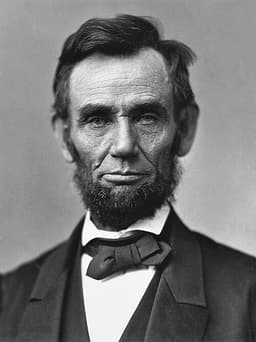
Abraham Lincoln
Politician · Modern
77.5Total
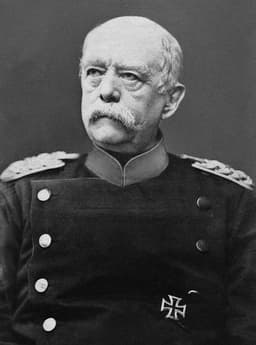
Otto von Bismarck
Politician · Modern
65.8Total
Basic Information
Born
1809
1815
Died
1865
1898
Era
Modern
Modern
Nationality
United States
Germany
Occupation
Politician
Politician
Civilization
Western
Western
Score Comparison
Military (10%)
50.0
55.0
Political (20%)
88.0
85.0
Influence (20%)
80.0
82.0
Legacy (20%)
82.0
40.0
Leadership (15%)
85.0
80.0
Strategy (15%)
60.0
50.0
TOTAL
77.5
65.8
Abraham Lincoln — Complete Timeline
1861 AD
Suspension of Habeas CorpusPolitical Action◆ Major
Lincoln suspended the writ of habeas corpus in parts of the Union, allowing the military to arrest and detain suspected Confederate sympathizers without trial. This action was controversial and challenged civil liberties during wartime.
Habeas CorpusCivil LibertiesCivil War
Impact: nationaldestructive
1862 AD
Signing of the Homestead ActPolitical Action◆ Major
Lincoln signed the Homestead Act, granting 160 acres of public land to settlers for a small fee. This encouraged westward expansion and agricultural development, but also displaced Native American tribes.
Homestead ActWestward ExpansionLand Policy
Impact: nationalconstructive
1863 AD
Emancipation ProclamationPolitical Action
Lincoln issued the Emancipation Proclamation, declaring slaves in Confederate states free. This shifted the Civil War's focus to ending slavery and allowed African Americans to join the Union Army.
EmancipationCivil WarSlavery
Impact: globalprogressive
Gettysburg AddressCultural◆ Major
Lincoln delivered the Gettysburg Address at the dedication of the Soldiers' National Cemetery. The speech redefined the Civil War as a struggle for national unity and equality, and became one of the most famous speeches in US history.
Gettysburg AddressCivil WarOratory
Impact: nationalconstructive
1865 AD
Assassination by John Wilkes BoothOther
Lincoln was shot by John Wilkes Booth at Ford's Theatre in Washington, D.C., and died the next day. His assassination occurred just days after the Civil War ended, plunging the nation into mourning and affecting Reconstruction.
AssassinationCivil WarReconstruction
Impact: nationaltragic
Otto von Bismarck — Complete Timeline
1870 AD
Franco-Prussian WarWar
Bismarck provoked France into declaring war by editing the Ems Dispatch to appear insulting. The resulting conflict saw Prussia and its allies decisively defeat France, leading to the fall of Napoleon III, the capture of Paris, and the annexation of Alsace-Lorraine.
WarProvocationAnnexation
Impact: globaldestructive
1871 AD
Unification of Germany ProclaimedPolitical Action
Following the Franco-Prussian War, Bismarck orchestrated the proclamation of the German Empire in the Hall of Mirrors at Versailles. King Wilhelm I of Prussia was declared German Emperor, uniting the German states under Prussian leadership and establishing the Second Reich.
UnificationGerman EmpireNationalism
Impact: globalconstructive
1878 AD
Enactment of the Anti-Socialist LawsPolitical Action◆ Major
After two assassination attempts on Kaiser Wilhelm I, Bismarck pushed through laws banning socialist organizations, publications, and meetings. The laws remained in force until 1890, suppressing the Social Democratic Party while Bismarck simultaneously introduced welfare reforms to undercut its appeal.
RepressionSocialismWelfare State
Impact: nationaldestructive
Congress of BerlinPolitical Action◆ Major
Bismarck hosted the Congress of Berlin to revise the Treaty of San Stefano and resolve the Eastern Crisis. He acted as 'honest broker,' reducing Russian gains, granting independence to Romania, Serbia, and Montenegro, and placing Bosnia-Herzegovina under Austro-Hungarian administration.
DiplomacyBalkansBalance of Power
Impact: global
1883 AD
Establishment of the Welfare StateReform◆ Major
Bismarck introduced the Health Insurance Bill (1883), Accident Insurance Bill (1884), and Old Age and Disability Insurance Bill (1889). These laws created the first modern welfare state, providing workers with social security and aiming to reduce support for socialist movements.
Social ReformWelfareInsurance
Impact: globalprogressive
1890 AD
Dismissal as ChancellorPolitical Action◆ Major
Emperor Wilhelm II forced Bismarck to resign due to policy disagreements, particularly over anti-socialist laws and foreign policy. Bismarck's departure marked the end of an era, leading to a more aggressive German foreign policy and the eventual unraveling of his alliance system.
ResignationWilhelm IIPolicy Shift
Impact: global
Expert Analysis
Abraham Lincoln vs Otto von Bismarck
### The Iron Chancellor and the Great Emancipator
On a spring evening in 1865, a single pistol shot in a Washington theater ended the life of Abraham Lincoln, plunging a nation still raw from civil war into mourning. Just five years later, in the gilded Hall of Mirrors at Versailles, Otto von Bismarck stood by as Prussian kings were crowned emperors of a newly forged German nation, a triumph of calculated statecraft and military might. Both men were titans of the 19th century, architects of nations, and masters of political power. Yet their paths—one toward unity through “blood and iron,” the other toward a “new birth of freedom”—could not have been more different. What drove these two giants, and why did their legacies diverge so sharply?
#### Origins
Bismarck was born in 1815 into the Junker aristocracy of Prussia, a caste of landowning nobles steeped in military tradition and conservative values. His youth was marked by a restless, rebellious spirit—he drank, dueled, and nearly bankrupted his estate before turning to politics. The revolutions of 1848, which swept across Europe, terrified him; he saw democracy as a mob’s folly. His era was one of competing German states, with Prussia and Austria vying for dominance. Bismarck’s worldview was forged in this crucible: power, not principle, would decide the future.
Lincoln, born in 1809 in a log cabin in Kentucky, came from the opposite end of the social spectrum. His family was poor, his education patchwork, but his ambition was boundless. He taught himself law and rose through the rough-and-tumble politics of the American frontier. The United States he entered was a young, sprawling democracy, already fractured by the slavery question. Lincoln’s moral compass, honed by self-study of the Declaration of Independence, pointed toward union and human freedom. Where Bismarck saw a world to be mastered, Lincoln saw a nation to be preserved.
#### Rise to Power
Bismarck’s ascent was a masterclass in opportunism. Appointed Minister President of Prussia in 1862, he famously declared that the great questions of the day would be decided not by speeches and majority resolutions—“that was the mistake of 1848 and 1849”—but by “blood and iron.” He maneuvered Prussia into three swift wars: against Denmark (1864), Austria (1866), and France (1870). Each conflict was carefully engineered. The Ems Dispatch of 1870, a telegram Bismarck edited to make it seem insulting to the French ambassador, provoked Napoleon III into declaring war. It was a stroke of political genius, turning France into the aggressor and rallying the German states behind Prussia.
Lincoln’s rise was more conventional, though no less dramatic. He lost a Senate race in 1858 but gained national fame through debates with Stephen Douglas. In 1860, he won the presidency as a Republican on a platform of stopping slavery’s expansion. His election triggered the secession of Southern states. By the time he took office in March 1861, seven states had already formed the Confederacy. Lincoln’s path to power was not one of manipulation but of moral clarity—and a nation’s fracture.
#### Leadership & Governance
As a ruler, Bismarck was a realist of the highest order. He governed through a mix of repression and reform. In 1878, after two assassination attempts on Kaiser Wilhelm I, he pushed through the Anti-Socialist Laws, banning socialist organizations while simultaneously stealing their thunder by creating the modern welfare state. Between 1883 and 1889, he introduced health, accident, and old-age insurance—the world’s first comprehensive social safety net. His goal was not compassion but control: to bind workers to the state and undercut revolutionary fervor. His foreign policy was equally calculating. At the Congress of Berlin in 1878, he styled himself the “honest broker,” balancing European powers to preserve peace and Prussian dominance.
Lincoln’s leadership was forged in fire. The Civil War, which began in 1861, tested every fiber of his presidency. He suspended habeas corpus to suppress dissent, a controversial act that expanded executive power. But his greatest stroke was the Emancipation Proclamation of 1863, which declared slaves in rebel states free. It was a military necessity—depriving the South of labor—and a moral revolution. Lincoln then signed the Homestead Act, giving 160 acres of public land to settlers, spurring westward expansion. His governance was a tightrope walk between preserving the Union and ending slavery, all while managing a fractious cabinet and a war-weary public.
#### Triumph & Tragedy
Bismarck’s greatest triumph was the unification of Germany in 1871, proclaimed in the Hall of Mirrors at Versailles. It was the culmination of his life’s work. But his tragedy came later. In 1890, the young, impulsive Kaiser Wilhelm II forced him to resign. Bismarck had built a state that depended on his own genius; without him, the delicate balance of European alliances he had crafted began to unravel, eventually leading to World War I.
Lincoln’s triumph was the Union’s survival. In November 1863, at Gettysburg, he redefined the war’s purpose in 272 words, calling for a “new birth of freedom.” His tragedy was immediate: on April 14, 1865, days after the Confederate surrender, he was assassinated by John Wilkes Booth. He did not live to see Reconstruction or to guide the peace he had won.
#### Character & Destiny
Bismarck was cynical, calculating, and supremely confident. “Politics is the art of the possible,” he said. His personality shaped a destiny of cold, efficient power. Lincoln was melancholic, introspective, and deeply humane. “With malice toward none, with charity for all,” he urged. His character bent history toward justice, even at the cost of his own life.
#### Legacy
Bismarck left behind a unified Germany and the welfare state, but also a militaristic culture that would lead to catastrophe. His legacy is ambiguous: admired for his statecraft, condemned for his cynicism. Lincoln left behind a preserved Union and the abolition of slavery. His legacy is sacred: the Great Emancipator, the martyred president, the voice of American ideals.
#### Conclusion
Bismarck and Lincoln were both architects of nations, but they built with different materials. One used iron and calculation; the used law and moral conviction. Their lives remind us that power can be wielded for unity or for freedom—and that the choices leaders make echo long after they are gone. One died in bed, dismissed by a king. The other died in a theater, mourned by a people. Both changed the world forever.
Rankings
🥇
Abraham LincolnLeader
Mil: 50.0Pol: 88.0Inf: 80.0
77.5
🥈
Otto von Bismarck
Mil: 55.0Pol: 85.0Inf: 82.0
65.8
+11.7 behind
How This Comparison Works
Algorithm
Each figure is scored on 6 dimensions (0—100 scale) based on structured historical data: Military (10%), Political (20%), Influence (20%), Legacy (20%), Leadership (15%), Strategy (15%). The weighted total produces the final ranking.
Data Sources
Scores are computed from structured sub-indicators in the database. Scale factors adjust for era (Ancient ×0.85, Modern ×1.0) and civilization size (Eastern ×1.05, Other ×0.80) to account for differences in population and military scale.
Maximum 3 Figures
Comparisons are limited to 2—3 figures to ensure readability and statistical meaningfulness.
Error Margins
±5 points per dimension — Sub-scores are derived from historical records with inherent uncertainty. Two figures within 5 points on a dimension should be considered roughly equivalent in that area.
Total Score Accuracy
±3 points overall — The weighted combination of 6 dimensions produces a total score with approximately ±3 points of uncertainty. Differences of less than 3 points are not statistically significant— the figures are effectively tied.
Known Limitations
- Historical records are incomplete and uneven across civilizations
- Figures from oral-tradition societies may be underrepresented
- Occupation labels can misclassify multi-role figures
- Scores measure capability and impact, not moral character
- Quantitative scoring is a comparison tool, not absolute truth
Capability Radar
Military (10%) — Battles & Warfare
Battles
15
60
Win Rate
20
70
Expansion
0
80
Political (20%) — Governance & Reform
Reform
95
90
Diplomacy
80
95
Economy
70
80
Influence (20%) — Cultural & Global Reach
Cultural
85
65
Global
85
75
Legacy (20%) — Historical Impact
Historical
95
85
Longevity
90
70
Leadership (15%) — Power & Stability
Tenure
65
85
Stability
55
70
Strategy (15%) — Tactics & Innovation
Strategy
55
85
Tactics
10
55
Reform
60
75
Similar Comparisons
Comments & Discussion
IronChancellor6/16/2026
Bismarck was the ultimate pragmatist who built a nation with steel and strategy, while Lincoln was a moral crusader who nearly tore one apart over ideals. Bismarck’s unification of Germany through three calculated wars—Schleswig-Holstein, Austria, and France—created a powerhouse in 18 years without a single internal war. Lincoln’s Emancipation Proclamation, a war measure that freed no slaves initially, shows his genius was in timing, not principle. Give me the realist any day.
铁血史官6/16/2026
林肯的“葛底斯堡演说”不过是一纸漂亮辞藻,掩盖了他对宪法第五修正案的践踏——未经正当程序就剥夺了南方的财产权。而俾斯麦的“铁血政策”至少诚实:他用三次精确战争统一德国,1866年对奥地利仅七周就定局,伤亡抵不上葛底斯堡战役三天的人数。林肯是悲情烈士,俾斯麦是冷血建筑师,我选后者。
DataSkeptic6/16/2026
Historians love moralizing, but let's look at the numbers. Lincoln presided over a war that killed 2% of the U.S. population—over 600,000 Americans—and his post-war Reconstruction was a disaster that left systemic racism for 100 years. Bismarck, meanwhile, unified Germany with far fewer casualties: the Franco-Prussian War cost about 150,000 German lives, a fraction of Lincoln's carnage. If we're measuring by successful nation-building outcomes, Bismarck wins hands-down.
古典学究6/16/2026
拿林肯和俾斯麦比,就像拿柏拉图比马基雅维利。林肯是超越时代的道德哲人,他以宪法为框架推动第十四修正案,赋予非裔公民权,这在1868年是空前创举。而俾斯麦不过是旧欧洲的最后一匹铁马,1871年的德意志帝国本质上仍是普鲁士军国主义的扩张,没留下普选权或现代民权。林肯塑造了未来,俾斯麦巩固了旧秩序。
HistoryBuff6/16/2026
You're all missing the intangible: legacy. Lincoln's Second Inaugural Address, with its “malice toward none,” turned a brutal war into a national redemption story, and the 13th Amendment ended slavery forever. Bismarck's welfare state—old-age pensions, health insurance in the 1880s—was visionary but tactical, aimed at stealing socialist thunder. One inspired Martin Luther King Jr.; the other inspired Otto von Bismarck's own pragmatic heirs. Soul versus system—I'll take soul.