Loading...
George Washington vs Otto von Bismarck
George Washington leads by 11.0 pts · 2 figures compared
…
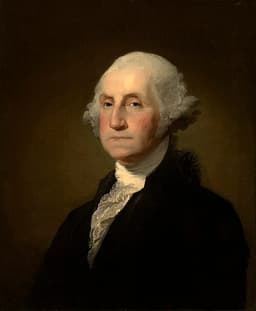
George Washington
Politician · Modern
76.8Total
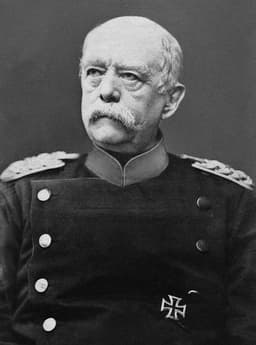
Otto von Bismarck
Politician · Modern
65.8Total
Basic Information
Born
1732
1815
Died
1799
1898
Era
Modern
Modern
Nationality
United States
Germany
Occupation
Politician
Politician
Civilization
Western
Western
Score Comparison
Military (10%)
75.0
55.0
Political (20%)
82.0
85.0
Influence (20%)
75.0
82.0
Legacy (20%)
80.0
40.0
Leadership (15%)
85.0
80.0
Strategy (15%)
55.0
50.0
TOTAL
76.8
65.8
George Washington — Complete Timeline
1775 AD
Appointed Commander-in-Chief of the Continental ArmyOther◆ Major
The Second Continental Congress appointed Washington as commander-in-chief of the Continental Army on June 15, 1775. He accepted the position without pay, taking command of the forces besieging Boston at the start of the American Revolutionary War.
American RevolutionMilitary Leadership
Impact: national
1776 AD
Crossed the Delaware RiverOther◆ Major
On the night of December 25-26, 1776, Washington led 2,400 troops across the ice-choked Delaware River. The surprise attack on Hessian forces at Trenton resulted in a decisive American victory, capturing nearly 1,000 prisoners and reviving Patriot morale after a series of defeats.
American RevolutionBattleTurning Point
Impact: nationalconstructive
1787 AD
Presided over the Constitutional ConventionPolitical Action◆ Major
Washington served as president of the Constitutional Convention in Philadelphia from May to September 1787. His presence lent legitimacy to the proceedings, and he formally signed the final draft of the U.S. Constitution, though he contributed little to the debates.
ConstitutionFounding Father
Impact: national
1789 AD
Inaugurated as First President of the United StatesPolitical Action◆ Major
Washington was unanimously elected by the Electoral College and inaugurated on April 30, 1789, at Federal Hall in New York City. He established numerous executive branch precedents, including the cabinet system, the inaugural address, and the title 'Mr. President'.
PresidencyFounding Father
Impact: national
1793 AD
Issued the Proclamation of NeutralityOther◆ Major
Washington issued the Proclamation of Neutrality on April 22, 1793, declaring the United States neutral in the conflict between France and Great Britain. This decision established the precedent of American isolationism and avoided entanglement in European wars.
Foreign PolicyNeutrality
Impact: national
1796 AD
Delivered the Farewell AddressOther◆ Major
Washington published his Farewell Address on September 19, 1796, announcing his decision not to seek a third term. The address warned against political factionalism, permanent foreign alliances, and the influence of the military in government, shaping American political culture.
PresidencyLegacy
Impact: national
Otto von Bismarck — Complete Timeline
1870 AD
Franco-Prussian WarWar
Bismarck provoked France into declaring war by editing the Ems Dispatch to appear insulting. The resulting conflict saw Prussia and its allies decisively defeat France, leading to the fall of Napoleon III, the capture of Paris, and the annexation of Alsace-Lorraine.
WarProvocationAnnexation
Impact: globaldestructive
1871 AD
Unification of Germany ProclaimedPolitical Action
Following the Franco-Prussian War, Bismarck orchestrated the proclamation of the German Empire in the Hall of Mirrors at Versailles. King Wilhelm I of Prussia was declared German Emperor, uniting the German states under Prussian leadership and establishing the Second Reich.
UnificationGerman EmpireNationalism
Impact: globalconstructive
1878 AD
Enactment of the Anti-Socialist LawsPolitical Action◆ Major
After two assassination attempts on Kaiser Wilhelm I, Bismarck pushed through laws banning socialist organizations, publications, and meetings. The laws remained in force until 1890, suppressing the Social Democratic Party while Bismarck simultaneously introduced welfare reforms to undercut its appeal.
RepressionSocialismWelfare State
Impact: nationaldestructive
Congress of BerlinPolitical Action◆ Major
Bismarck hosted the Congress of Berlin to revise the Treaty of San Stefano and resolve the Eastern Crisis. He acted as 'honest broker,' reducing Russian gains, granting independence to Romania, Serbia, and Montenegro, and placing Bosnia-Herzegovina under Austro-Hungarian administration.
DiplomacyBalkansBalance of Power
Impact: global
1883 AD
Establishment of the Welfare StateReform◆ Major
Bismarck introduced the Health Insurance Bill (1883), Accident Insurance Bill (1884), and Old Age and Disability Insurance Bill (1889). These laws created the first modern welfare state, providing workers with social security and aiming to reduce support for socialist movements.
Social ReformWelfareInsurance
Impact: globalprogressive
1890 AD
Dismissal as ChancellorPolitical Action◆ Major
Emperor Wilhelm II forced Bismarck to resign due to policy disagreements, particularly over anti-socialist laws and foreign policy. Bismarck's departure marked the end of an era, leading to a more aggressive German foreign policy and the eventual unraveling of his alliance system.
ResignationWilhelm IIPolicy Shift
Impact: global
Expert Analysis
George Washington vs Otto von Bismarck
### The Reluctant Republican and the Iron Chancellor
On a crisp autumn morning in 1789, a tall, reserved Virginian stood before a crowd in New York City, his hand resting on a Bible. He did not want to be there. George Washington, hero of the Revolution, had accepted the presidency as a duty, not a prize. Across the Atlantic, a century later, a stocky Prussian with a walrus mustache and a taste for cigars surveyed a map of Europe. He *did* want to be there—and he had engineered the wars and the alliances to make it happen. Otto von Bismarck was a man who craved power; Washington was a man who feared it. One built a nation by stepping back; the other by stepping forward. This is the story of two founders, two philosophies, and two very different destinies.
### Origins: The Planter and the Junker
Washington was born in 1732 into the Virginia gentry, a world of tobacco plantations and landed privilege, but not the highest echelons of British aristocracy. His formal education was sparse; he learned surveying, riding, and the hard code of honor that governed colonial life. The American frontier shaped him: a place of vast, empty spaces where a man’s worth was measured by his land and his word. He grew up in an era of imperial neglect, when the British Crown was a distant, often irritating parent. His was a world of local autonomy, where a man could rise through competence and character.
Bismarck, born in 1815, was a Junker—a member of the Prussian landowning aristocracy. Unlike Washington’s frontier, Bismarck’s world was one of rigid hierarchy, military discipline, and a deep, almost mystical loyalty to the Prussian king. He was educated, cynical, and worldly, studying law at Göttingen and serving as a diplomat. The revolutions of 1848—which swept across Europe and briefly threatened the Prussian monarchy—terrified him. He saw liberal democracy as chaos, not liberty. Where Washington inherited a suspicion of centralized power, Bismarck inherited a suspicion of the people.
### Rise to Power: From the Wilderness to the Chancellery
Washington’s path to leadership was forged in failure. As a young officer in the French and Indian War, he made catastrophic mistakes, once surrendering Fort Necessity after a disastrous skirmish. He learned from humiliation. When the Continental Congress needed a commander in 1775, he was chosen not for brilliance but for character—a man who could hold an army together through eight years of freezing winters, mutinies, and defeats. His rise was slow, painful, and earned.
Bismarck’s rise was calculated and swift. He became Minister President of Prussia in 1862, at a moment of constitutional crisis. The parliament refused to fund military reforms; Bismarck simply collected the taxes anyway, ignoring the law. He then engineered three short, decisive wars—against Denmark (1864), Austria (1866), and France (1870)—each one meticulously provoked. The climax came in 1870, when he edited the Ems Dispatch to make it seem that the Prussian king had insulted a French ambassador. France declared war, and Bismarck got his victory. He did not rise through suffering; he rose through manipulation.
### Leadership & Governance: The Architect and the Engineer
Washington’s leadership was defined by restraint. As president, he established norms: a cabinet of advisors, a two-term limit, a policy of neutrality in foreign wars. He crushed the Whiskey Rebellion with a show of force, then pardoned the rebels. He believed the executive should be strong but limited—a republican king in everything but name. His military score of 70 reflects a commander who lost more battles than he won but never lost the war. His political score of 80 shows a man who understood that power, in a democracy, must be voluntarily surrendered.
Bismarck’s leadership was defined by control. As chancellor, he created a modern, unified Germany, but he did so through a web of alliances, secret treaties, and domestic repression. He passed the Anti-Socialist Laws in 1878 to crush his political enemies, then simultaneously introduced the world’s first welfare state—health insurance (1883), accident insurance (1884), and old-age pensions (1889)—to steal their thunder. He was a brilliant political engineer, scoring 88 in politics, but his methods were cynical. He believed in "blood and iron," not ballots and debate.
### Triumph & Tragedy: The Farewell and the Fall
Washington’s greatest moment was his resignation. In 1783, after the Revolutionary War, he voluntarily gave up his commission to the Continental Congress, an act that shocked Europe. King George III reportedly said that if Washington did that, "he will be the greatest man in the world." His tragedy was the same: he spent his final years watching the young republic he founded descend into partisan rancor, warning against "the baneful effects of the spirit of party" in his Farewell Address.
Bismarck’s greatest triumph was the unification of Germany in 1871, proclaimed in the Hall of Mirrors at Versailles—a deliberate humiliation of France. His tragedy came in 1890, when the young, arrogant Emperor Wilhelm II forced him to resign. Bismarck had built a machine that could only run with him at the controls. Once he was gone, the alliances he crafted unraveled, the welfare state he created grew beyond his control, and Germany lurched toward the catastrophe of World War I. He died in 1898, bitter and isolated, predicting the disaster to come.
### Character & Destiny: The Reluctant Leader and the Iron Will
Washington’s character was defined by duty and distance. He was aloof, formal, and deeply aware of his symbolic role. He owned slaves but privately expressed unease with the institution; he freed them in his will. He was a man of the Enlightenment, believing in reason and virtue, but he was also a product of his time, with all its contradictions. His destiny was to embody a new kind of leader: one who holds power lightly.
Bismarck’s character was defined by will and pragmatism. He was ruthless, charming, and deeply cynical. He famously said, "Laws are like sausages—it is better not to see them being made." He believed only in power, and he wielded it without sentiment. His destiny was to create a nation that would outgrow him, a machine that would run without a governor.
### Legacy: The Monument and the Shadow
Washington’s legacy is a nation built on a set of ideas—republicanism, federalism, the peaceful transfer of power. His face is on the dollar bill and the quarter, and his name adorns a capital city. But his true legacy is the example he set: a leader who could have been a king and chose to be a citizen.
Bismarck’s legacy is a unified Germany, but it is a complicated one. He created the welfare state, which still shapes modern Europe, but he also created a culture of militarism and authoritarianism that would lead to two world wars. He is remembered as the Iron Chancellor, a master of realpolitik, but also as a warning: that nations built on blood and iron may not endure in peace.
### Conclusion
One man built a nation by letting go; the other built a nation by holding on. Washington’s America was a fragile experiment in freedom; Bismarck’s Germany was a powerful engine of order. Both succeeded, but their success was measured in different currencies. Washington gave his country a soul; Bismarck gave his a backbone. In the end, the soul outlasted the backbone—but the backbone, for a time, changed the world. The question their lives pose is as old as politics itself: Is the purpose of a leader to empower the people, or to control them? The answer, perhaps, is that both are necessary—but the balance must be struck with care.
Rankings
🥇
George WashingtonLeader
Mil: 75.0Pol: 82.0Inf: 75.0
76.8
🥈
Otto von Bismarck
Mil: 55.0Pol: 85.0Inf: 82.0
65.8
+11.0 behind
How This Comparison Works
Algorithm
Each figure is scored on 6 dimensions (0—100 scale) based on structured historical data: Military (10%), Political (20%), Influence (20%), Legacy (20%), Leadership (15%), Strategy (15%). The weighted total produces the final ranking.
Data Sources
Scores are computed from structured sub-indicators in the database. Scale factors adjust for era (Ancient ×0.85, Modern ×1.0) and civilization size (Eastern ×1.05, Other ×0.80) to account for differences in population and military scale.
Maximum 3 Figures
Comparisons are limited to 2—3 figures to ensure readability and statistical meaningfulness.
Error Margins
±5 points per dimension — Sub-scores are derived from historical records with inherent uncertainty. Two figures within 5 points on a dimension should be considered roughly equivalent in that area.
Total Score Accuracy
±3 points overall — The weighted combination of 6 dimensions produces a total score with approximately ±3 points of uncertainty. Differences of less than 3 points are not statistically significant— the figures are effectively tied.
Known Limitations
- Historical records are incomplete and uneven across civilizations
- Figures from oral-tradition societies may be underrepresented
- Occupation labels can misclassify multi-role figures
- Scores measure capability and impact, not moral character
- Quantitative scoring is a comparison tool, not absolute truth
Capability Radar
Military (10%) — Battles & Warfare
Battles
75
60
Win Rate
70
70
Expansion
60
80
Political (20%) — Governance & Reform
Reform
90
90
Diplomacy
85
95
Economy
65
80
Influence (20%) — Cultural & Global Reach
Cultural
85
65
Global
85
75
Legacy (20%) — Historical Impact
Historical
95
85
Longevity
90
70
Leadership (15%) — Power & Stability
Tenure
70
85
Stability
85
70
Strategy (15%) — Tactics & Innovation
Strategy
80
85
Tactics
65
55
Reform
85
75
Similar Comparisons
Comments & Discussion
No comments yet. Be the first to share your thoughts!