Loading...
Abd el-Krim vs Muhammad ibn Abd al-Karim al-Khattabi
Abd el-Krim leads by 20.1 pts · 2 figures compared
…
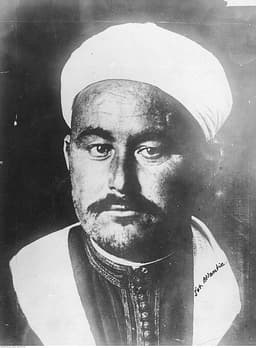
Abd el-Krim
Revolutionary · Modern
61.8Total
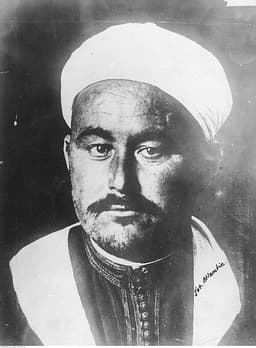
Muhammad ibn Abd al-Karim al-Khattabi
Revolutionary · Modern
41.7Total
Basic Information
Born
1882
1854
Died
1963
1927
Era
Modern
Modern
Nationality
Morocco
Sudan
Occupation
Revolutionary
Revolutionary
Civilization
Middle Eastern
Other
Score Comparison
Military (10%)
75.0
47.5
Political (20%)
72.0
25.0
Influence (20%)
59.0
52.5
Legacy (20%)
50.0
40.0
Leadership (15%)
72.0
41.5
Strategy (15%)
55.0
38.3
TOTAL
61.8
41.7
Abd el-Krim — Complete Timeline
1921 AD
Battle of AnnualWar
Abd el-Krim's Riffian forces decisively defeated a Spanish army at Annual in Spanish Morocco. The Spanish suffered thousands of casualties and lost vast amounts of equipment. This victory established Abd el-Krim as a major military leader and led to the proclamation of the Rif Republic.
Rif WarSpanish ColonialismBattle
Impact: regional
1923 AD
Proclamation of the Rif RepublicPolitical Action◆ Major
Abd el-Krim formally proclaimed the independent Rif Republic in northern Morocco. He established a government and administrative system, challenging Spanish and French colonial rule. The republic was not internationally recognized but functioned as a de facto state.
Rif RepublicIndependenceAnti-Colonialism
Impact: regionalconstructive
1925 AD
Rif War against FranceWar◆ Major
Abd el-Krim's forces attacked French positions in Morocco, expanding the conflict beyond Spanish territory. The French responded with a massive military campaign, using superior firepower and chemical weapons. This led to the eventual defeat of the Rif Republic.
Rif WarFrench ColonialismChemical Weapons
Impact: regional
1926 AD
Surrender and Exile to RéunionWar◆ Major
After a prolonged campaign, Abd el-Krim surrendered to French forces. He was exiled to the island of R
Rif WarExileDefeat
Impact: regionaltragic
1947 AD
Release and Move to EgyptPolitical Action
Abd el-Krim was released by the French and allowed to move to Egypt. He settled in Cairo, where he continued to advocate for North African independence and became a symbolic figure for anti-colonial movements.
ExileAnti-ColonialismSymbol
Impact: regionalconstructive
Muhammad ibn Abd al-Karim al-Khattabi — Complete Timeline
1884 AD
Command at the Battle of El TebWar◆ Major
Muhammad ibn Abd al-Karim al-Khattabi led Mahdist forces at the Battle of El Teb against a British relief column. Although the Mahdists were defeated, the battle demonstrated their ability to challenge British military power in Sudan.
Mahdist WarBattle of El TebBritish Relief
Impact: regional
Participation in the Siege of KhartoumWar◆ Major
Al-Khattabi commanded Mahdist forces during the siege of Khartoum. His troops played a key role in the final assault that captured the city and killed General Gordon, contributing to the Mahdist victory.
Siege of KhartoumMahdist WarGordon's Death
Impact: regional
1899 AD
Capture by British ForcesWar◆ Major
Following the fall of the Mahdist state, al-Khattabi was captured by British forces. He was taken prisoner and later exiled, ending his military career and role in the Mahdist movement.
CaptureExileMahdist Defeat
Impact: regionaltragic
Expert Analysis
Muhammad ibn Abd al-Karim al-Khattabi vs Abd el-Krim
# The Two Revolutions of Abd el-Krim
On a July morning in 1921, the sun rose over the parched hills of Spanish Morocco to reveal a scene that would echo across the colonial world. Thousands of Spanish soldiers, fleeing in terror, abandoned their rifles, their artillery, even their general’s dress sword. Behind them, a small band of Berber tribesmen pressed forward, their leader a former judge and journalist named Abd el-Krim. The Battle of Annual was not merely a defeat—it was an annihilation. The Spanish lost some 13,000 men, and the myth of European invincibility in North Africa shattered overnight. Yet this victory, as stunning as it was, would lead to a fate very different from that of another man who bore the same name, a Sudanese commander who had fought under the Mahdi decades earlier. Why did one Abd el-Krim build a republic while the other vanished into captivity? The answer lies not in their names, but in the worlds they inherited.
Origins
Abd el-Krim was born in 1882 into a family of learned Berber judges in the Rif Mountains of northern Morocco. His father, a respected religious scholar, ensured his son received both traditional Islamic education and modern Spanish schooling. This dual upbringing—fluent in Arabic, Berber, and Spanish, steeped in both the Quran and European law—gave him a rare ability to navigate two civilizations. He worked as a journalist and later as a judge in Spanish-occupied Melilla, witnessing firsthand the corruption and brutality of colonial rule.
Muhammad ibn Abd al-Karim al-Khattabi, born in 1854 in the Sudanese region of Dongola, came from a different world entirely. Sudan in the late nineteenth century was a cauldron of religious fervor and anti-colonial rage. The Mahdi, Muhammad Ahmad, had proclaimed himself the guided one, and thousands flocked to his banner to overthrow Egyptian-Turkish rule. Al-Khattabi, a devout and capable soldier, joined this movement early. His world was one of prophecy and holy war, not of newspapers and law courts.
Rise to Power
Abd el-Krim’s path to power was gradual and calculated. After the Spanish imprisoned him in 1917 for criticizing their administration, he escaped to the Rif and began uniting fractious tribes under a single cause. The 1921 Battle of Annual was his masterstroke—a guerrilla victory that stunned the world. But rather than simply raid and retreat, he immediately proclaimed the independent Rif Republic in 1923, complete with a cabinet, a treasury, and a postal system. He was building a state.
Al-Khattabi’s rise was swifter and more violent. Commanding Mahdist forces at the Battle of El Teb in 1884, he faced a British relief column under Sir Gerald Graham. Though his forces were driven back, he regrouped to participate in the epic Siege of Khartoum that same year. When the Mahdi’s army finally breached the city walls and killed General Gordon, al-Khattabi was there. He was a commander of men, not a builder of institutions.
Leadership & Governance
Here the two figures diverge most sharply. Abd el-Krim governed. His Rif Republic introduced modern taxation, established schools, and even attempted to create a standing army. He understood that victory on the battlefield meant nothing without administration. He wrote letters to European powers, seeking recognition. He negotiated, maneuvered, and waited. His political score of 75.6 reflects this statesmanlike patience.
Al-Khattabi, by contrast, was a warrior in a theocratic movement. The Mahdist state was built on religious ecstasy and personal loyalty to the Mahdi, not on bureaucratic structures. When the Mahdi died in 1885, the state began to crumble. Al-Khattabi had no political philosophy beyond holy war. His leadership score of 75.4 suggests genuine command ability, but it was command without vision—a sword without a hand to guide it.
Triumph & Tragedy
Abd el-Krim’s greatest triumph was Annual. His greatest tragedy came in 1925, when he attacked French positions, expanding his war beyond Spanish Morocco. The French response was overwhelming—hundreds of thousands of troops, poison gas, and a combined Franco-Spanish offensive. In 1926, surrounded and outgunned, he surrendered. He was exiled to the remote island of Réunion, where he spent twenty-one years in silence.
Al-Khattabi’s triumph was the fall of Khartoum in 1885. His tragedy was the fall of the Mahdist state itself. After the British reconquest of Sudan, he was captured in 1899 and exiled to Egypt, a forgotten prisoner in a forgotten war.
Character & Destiny
Abd el-Krim was a pragmatist. He knew when to fight and when to wait. Released in 1947, he moved to Egypt and became a symbol of anti-colonial resistance, inspiring figures like Ho Chi Minh and Che Guevara. He died in 1963, still advocating for a free Maghreb.
Al-Khattabi was a true believer. He fought for a religious kingdom that was already dying. After his capture, he faded into obscurity, dying in 1927 with no republic, no legacy, only the memory of battles long lost.
Legacy
Abd el-Krim is remembered as the father of modern Moroccan nationalism, a man who proved that Africans could defeat European armies and build states. His legacy score of 66.8 understates his influence on later liberation movements.
Al-Khattabi is a footnote—a name in military histories, a commander without a cause. His legacy score of 52.3 reflects a life that burned bright but left no foundation.
Conclusion
Two men, one name, two fates. Abd el-Krim built a republic; al-Khattabi fought for a kingdom. One understood that revolution requires institutions; the other believed that faith alone would suffice. In the end, the difference between victory and defeat, between legacy and oblivion, was not courage or intelligence—it was the ability to imagine a world beyond the battlefield. The Rif Republic fell, but its idea survived. The Mahdist state fell, and with it, the memory of its commanders. That is the difference between a leader and a soldier.
Rankings
🥇
Abd el-KrimLeader
Mil: 75.0Pol: 72.0Inf: 59.0
61.8
🥈
Muhammad ibn Abd al-Karim al-Khattabi
Mil: 47.5Pol: 25.0Inf: 52.5
41.7
+20.1 behind
How This Comparison Works
Algorithm
Each figure is scored on 6 dimensions (0—100 scale) based on structured historical data: Military (10%), Political (20%), Influence (20%), Legacy (20%), Leadership (15%), Strategy (15%). The weighted total produces the final ranking.
Data Sources
Scores are computed from structured sub-indicators in the database. Scale factors adjust for era (Ancient ×0.85, Modern ×1.0) and civilization size (Eastern ×1.05, Other ×0.80) to account for differences in population and military scale.
Maximum 3 Figures
Comparisons are limited to 2—3 figures to ensure readability and statistical meaningfulness.
Error Margins
±5 points per dimension — Sub-scores are derived from historical records with inherent uncertainty. Two figures within 5 points on a dimension should be considered roughly equivalent in that area.
Total Score Accuracy
±3 points overall — The weighted combination of 6 dimensions produces a total score with approximately ±3 points of uncertainty. Differences of less than 3 points are not statistically significant— the figures are effectively tied.
Known Limitations
- Historical records are incomplete and uneven across civilizations
- Figures from oral-tradition societies may be underrepresented
- Occupation labels can misclassify multi-role figures
- Scores measure capability and impact, not moral character
- Quantitative scoring is a comparison tool, not absolute truth
Capability Radar
Military (10%) — Battles & Warfare
Battles
75
35
Win Rate
70
30
Expansion
60
25
Political (20%) — Governance & Reform
Reform
70
15
Diplomacy
65
15
Economy
50
10
Influence (20%) — Cultural & Global Reach
Cultural
60
15
Global
55
10
Legacy (20%) — Historical Impact
Historical
70
20
Longevity
55
10
Leadership (15%) — Power & Stability
Tenure
55
20
Stability
45
10
Strategy (15%) — Tactics & Innovation
Strategy
80
35
Tactics
85
40
Reform
65
20
Similar Comparisons
Muhammad ibn Abd al-Karim al-Khattabi vs Bal Gangadhar TilakMuhammad ibn Abd al-Karim al-Khattabi vs Theobald Wolfe ToneMuhammad ibn Abd al-Karim al-Khattabi vs Bhagat SinghMuhammad ibn Abd al-Karim al-Khattabi vs Li ZichengMuhammad ibn Abd al-Karim al-Khattabi vs Shamil BasayevMuhammad ibn Abd al-Karim al-Khattabi vs Miguel Hidalgo
Comments & Discussion
No comments yet. Be the first to share your thoughts!