Loading...
Li Zicheng vs Muhammad ibn Abd al-Karim al-Khattabi
Li Zicheng leads by 1.8 pts · 2 figures compared
…
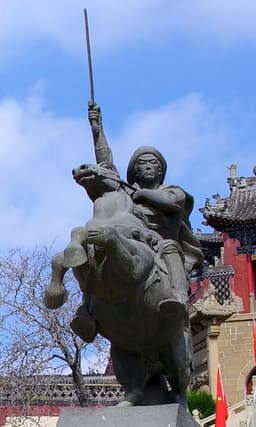
Li Zicheng
Revolutionary · Modern
43.5Total
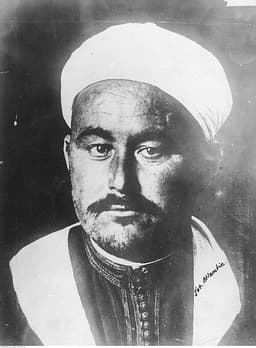
Muhammad ibn Abd al-Karim al-Khattabi
Revolutionary · Modern
41.7Total
Basic Information
Born
1606
1854
Died
1645
1927
Era
Modern
Modern
Nationality
China
Sudan
Occupation
Revolutionary
Revolutionary
Civilization
Eastern
Other
Score Comparison
Military (10%)
50.0
47.5
Political (20%)
27.9
25.0
Influence (20%)
52.5
52.5
Legacy (20%)
44.2
40.0
Leadership (15%)
39.0
41.5
Strategy (15%)
43.3
38.3
TOTAL
43.5
41.7
Li Zicheng — Complete Timeline
1644 AD
Captured Beijing and Ended the Ming DynastyWar
Li Zicheng led his rebel army to capture Beijing. The Chongzhen Emperor committed suicide, ending the Ming dynasty. Li Zicheng proclaimed the Shun dynasty and briefly ruled from the Forbidden City before being defeated by Qing forces.
Ming-Qing TransitionRebellionBeijing
Impact: globaldestructive
Defeated at the Battle of Shanhai PassWar◆ Major
Li Zicheng's army was defeated by the combined forces of Wu Sangui and the Manchus at the Battle of Shanhai Pass. The defeat forced him to abandon Beijing and retreat westward, effectively ending his control over northern China.
Ming-Qing TransitionBattleDefeat
Impact: globaltragic
Proclaimed the Shun DynastyPolitical Action◆ Major
After capturing Beijing, Li Zicheng formally proclaimed the establishment of the Shun dynasty in Xi'an. He adopted the title of emperor and began implementing his own administrative policies, though his rule was short-lived.
Shun DynastyProclamationRebellion
Impact: nationalconstructive
1645 AD
Killed in Jiugong MountainWar◆ Major
Li Zicheng was killed by a local militia while fleeing through Jiugong Mountain in Hubei province. His death marked the end of the Shun dynasty and the collapse of his rebellion, though some accounts claim he survived and became a monk.
Shun DynastyDeathRebellion
Impact: nationaltragic
Muhammad ibn Abd al-Karim al-Khattabi — Complete Timeline
1884 AD
Command at the Battle of El TebWar◆ Major
Muhammad ibn Abd al-Karim al-Khattabi led Mahdist forces at the Battle of El Teb against a British relief column. Although the Mahdists were defeated, the battle demonstrated their ability to challenge British military power in Sudan.
Mahdist WarBattle of El TebBritish Relief
Impact: regional
Participation in the Siege of KhartoumWar◆ Major
Al-Khattabi commanded Mahdist forces during the siege of Khartoum. His troops played a key role in the final assault that captured the city and killed General Gordon, contributing to the Mahdist victory.
Siege of KhartoumMahdist WarGordon's Death
Impact: regional
1899 AD
Capture by British ForcesWar◆ Major
Following the fall of the Mahdist state, al-Khattabi was captured by British forces. He was taken prisoner and later exiled, ending his military career and role in the Mahdist movement.
CaptureExileMahdist Defeat
Impact: regionaltragic
Expert Analysis
Muhammad ibn Abd al-Karim al-Khattabi vs Li Zicheng
# The Rebel's Fate: Li Zicheng and Muhammad al-Khattabi
In the spring of 1644, Li Zicheng’s peasant army poured through the gates of Beijing like a flood through a broken dam. The Chongzhen Emperor, last of the Ming dynasty, walked to the Coal Hill behind the Forbidden City, wrote a final edict blaming his officials for the disaster, and hanged himself from a locust tree. The rebel had won. Yet within weeks, Li Zicheng would be fleeing for his life, his dynasty nothing but a name stamped on a few proclamations. Half a world away and two centuries later, another rebel commander, Muhammad ibn Abd al-Karim al-Khattabi, stood on the banks of the Nile, watching the smoke rise from Khartoum after a siege that had humiliated the British Empire. He too would taste victory, then defeat—but his end would be different, his legacy more complex. What drove these two men, both revolutionaries against crumbling orders, to such divergent fates?
Origins
Li Zicheng was born in 1606 to a poor farming family in Shaanxi province, a region ravaged by drought, locusts, and the brutal tax demands of a Ming state desperate to fund its wars. He worked as a postal courier, a job that exposed him to the misery of the countryside and the corruption of local officials. When the government abolished the postal system to save money, Li was thrown into the ranks of the dispossessed. He joined a rebel band, and his natural charisma and physical courage quickly elevated him.
Muhammad al-Khattabi, born in 1854 in the Sudan, came from a different world—one of tribal loyalties, Islamic scholarship, and resentment against Egyptian and British rule. His family were religious leaders, and he was educated in the Quran and the traditions of the Mahdi, the prophesied redeemer of Islam. When Muhammad Ahmad declared himself the Mahdi in 1881, al-Khattabi found his calling. His background was not one of peasant desperation but of religious conviction and political ambition.
The difference in their origins is crucial. Li Zicheng fought for survival and vengeance against a system that had crushed him. Al-Khattabi fought for a sacred cause, a vision of a purified Islamic state. One was a rebel of necessity; the other, a rebel of faith.
Rise to Power
Li Zicheng’s ascent was slow and bloody. For years, he wandered the Chinese countryside with his ragged army, surviving ambushes, betrayals, and starvation. He earned the nickname "Dashing King" for his swift movements and his policy of dividing the spoils among his followers. By 1643, he controlled much of northern China, and in 1644, he marched on Beijing. The Ming capital fell without a major battle—the city’s defenders were demoralized, and the emperor’s own generals had abandoned him. On April 25, 1644, Li entered the Forbidden City and proclaimed the Shun dynasty.
Al-Khattabi’s rise was more disciplined. He commanded at the Battle of El Teb in 1884, where his Mahdist forces fought a British relief column to a standstill. Though the battle was a tactical defeat, it demonstrated his skill. Later that year, he participated in the Siege of Khartoum, where his troops played a key role in the final assault that killed General Charles Gordon. The Mahdi’s victory electrified the Islamic world. But when the Mahdi died in 1885, al-Khattabi served under his successor, the Khalifa, and fought to defend the Mahdist state against the encroaching British and Egyptians.
Li Zicheng’s rise was a torrent; al-Khattabi’s was a slow burn. One rode the chaos of a dying dynasty; the other, the tide of a religious revival.
Leadership & Governance
Li Zicheng proved a poor ruler. He had no experience in administration, no vision beyond conquest. His soldiers looted Beijing, alienating the very people who might have supported him. He tried to win over Ming officials with promises of amnesty, but his rough manners and the chaos of his army made him seem a usurper. His political score of 40.3 reflects this failure. He was a man who could take a city but could not govern one.
Al-Khattabi, by contrast, was a skilled commander and a respected leader. His leadership score of 75.4 suggests a man who could inspire loyalty and manage men. He was not just a warrior but a strategist, as his 63.7 strategy score indicates. He understood the importance of logistics, alliances, and morale. However, his political score of 60.7, while higher than Li’s, was still modest—he was a soldier, not a statesman.
The difference in their governance reflects their backgrounds. Li Zicheng had no model for rule; he was a destroyer, not a builder. Al-Khattabi had the Mahdi’s example and a religious framework that gave his rule structure and legitimacy.
Triumph & Tragedy
Li Zicheng’s greatest moment was his capture of Beijing—the end of a dynasty that had ruled for nearly three centuries. But it was a hollow triumph. Within weeks, he faced a new enemy: Wu Sangui, the Ming general who controlled the strategic Shanhai Pass. Wu allied with the Manchus, and in May 1644, at the Battle of Shanhai Pass, Li’s army was crushed. He fled back to Beijing, looted the palace, and set it ablaze. In 1645, while fleeing through Jiugong Mountain in Hubei, he was killed by a local militia. His death was ignominious, his dynasty extinct.
Al-Khattabi’s triumph was the Siege of Khartoum, where his forces broke the British and killed Gordon. But the Mahdist state could not survive the British Empire’s full might. In 1898, at the Battle of Omdurman, the Anglo-Egyptian army massacred the Mahdists. Al-Khattabi was captured in 1899 and taken prisoner. He died in exile in 1927, a forgotten figure.
Li Zicheng’s tragedy was his own incompetence; he destroyed his victory. Al-Khattabi’s tragedy was the weight of an empire; he fought a war he could not win.
Character & Destiny
Li Zicheng was a man of impulsive courage and poor judgment. He trusted too easily, then lashed out in rage. He was generous to his followers but blind to the needs of the state. His character was forged in the desperate world of peasant rebellion, where survival meant moving fast and breaking things. He had no time for the slow work of building.
Al-Khattabi was more patient, more disciplined. He was a man of faith, and that faith gave him a long view. He knew that the Mahdist state might fall, but he believed in the righteousness of the cause. He fought with dignity, even in defeat.
Their characters shaped their fates. Li Zicheng’s recklessness cost him his life and his legacy. Al-Khattabi’s steadiness earned him respect, even in captivity.
Legacy
Li Zicheng’s legacy is mixed. In China, he is remembered as a peasant hero who overthrew a corrupt dynasty, but also as a failed ruler whose short reign opened the door to the Manchu conquest. His influence score of 74.3 reflects his impact on Chinese history, but his legacy score of 62.0 is tempered by his failure.
Al-Khattabi is less known today, but among the Sudanese, he is a symbol of resistance. His influence score of 69.2 and legacy score of 52.3 reflect his role in the anti-colonial struggle. He is a footnote in British history but a chapter in Sudanese memory.
Conclusion
One man died in a muddy hillside, hunted by peasants. The other died in exile, a prisoner of empire. Both were rebels who rose against the established order, but their fates were shaped by their characters, their causes, and their times. Li Zicheng was a man of the moment, a force of nature that burned bright and fast. Al-Khattabi was a man of faith, a steady flame that flickered but never died. In the end, the difference between them is the difference between a rebellion and a revolution—the first destroys, the second endures.
Rankings
🥇
Li ZichengLeader
Mil: 50.0Pol: 27.9Inf: 52.5
43.5
🥈
Muhammad ibn Abd al-Karim al-Khattabi
Mil: 47.5Pol: 25.0Inf: 52.5
41.7
+1.8 behind
How This Comparison Works
Algorithm
Each figure is scored on 6 dimensions (0—100 scale) based on structured historical data: Military (10%), Political (20%), Influence (20%), Legacy (20%), Leadership (15%), Strategy (15%). The weighted total produces the final ranking.
Data Sources
Scores are computed from structured sub-indicators in the database. Scale factors adjust for era (Ancient ×0.85, Modern ×1.0) and civilization size (Eastern ×1.05, Other ×0.80) to account for differences in population and military scale.
Maximum 3 Figures
Comparisons are limited to 2—3 figures to ensure readability and statistical meaningfulness.
Error Margins
±5 points per dimension — Sub-scores are derived from historical records with inherent uncertainty. Two figures within 5 points on a dimension should be considered roughly equivalent in that area.
Total Score Accuracy
±3 points overall — The weighted combination of 6 dimensions produces a total score with approximately ±3 points of uncertainty. Differences of less than 3 points are not statistically significant— the figures are effectively tied.
Known Limitations
- Historical records are incomplete and uneven across civilizations
- Figures from oral-tradition societies may be underrepresented
- Occupation labels can misclassify multi-role figures
- Scores measure capability and impact, not moral character
- Quantitative scoring is a comparison tool, not absolute truth
Capability Radar
Military (10%) — Battles & Warfare
Battles
55
35
Win Rate
60
30
Expansion
65
25
Political (20%) — Governance & Reform
Reform
15
15
Diplomacy
20
15
Economy
10
10
Influence (20%) — Cultural & Global Reach
Cultural
40
15
Global
35
10
Legacy (20%) — Historical Impact
Historical
55
20
Longevity
30
10
Leadership (15%) — Power & Stability
Tenure
20
20
Stability
5
10
Strategy (15%) — Tactics & Innovation
Strategy
55
35
Tactics
50
40
Reform
30
20
Similar Comparisons
Muhammad ibn Abd al-Karim al-Khattabi vs Abd el-KrimMuhammad ibn Abd al-Karim al-Khattabi vs Bal Gangadhar TilakMuhammad ibn Abd al-Karim al-Khattabi vs Theobald Wolfe ToneMuhammad ibn Abd al-Karim al-Khattabi vs Bhagat SinghMuhammad ibn Abd al-Karim al-Khattabi vs Shamil BasayevMuhammad ibn Abd al-Karim al-Khattabi vs Miguel Hidalgo
Comments & Discussion
No comments yet. Be the first to share your thoughts!