Loading...
Bal Gangadhar Tilak vs Muhammad ibn Abd al-Karim al-Khattabi
Bal Gangadhar Tilak leads by 11.2 pts · 2 figures compared
…
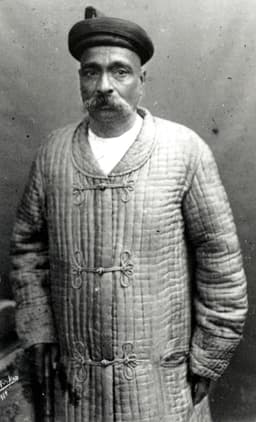
Bal Gangadhar Tilak
Revolutionary · Modern
52.9Total
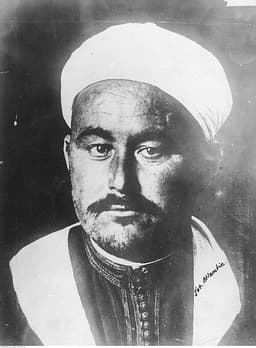
Muhammad ibn Abd al-Karim al-Khattabi
Revolutionary · Modern
41.7Total
Basic Information
Born
1856
1854
Died
1920
1927
Era
Modern
Modern
Nationality
India
Sudan
Occupation
Revolutionary
Revolutionary
Civilization
Indian
Other
Score Comparison
Military (10%)
50.0
47.5
Political (20%)
48.0
25.0
Influence (20%)
58.3
52.5
Legacy (20%)
56.0
40.0
Leadership (15%)
50.7
41.5
Strategy (15%)
45.0
38.3
TOTAL
52.9
41.7
Bal Gangadhar Tilak — Complete Timeline
1881 AD
Launch of the Maratha and Kesari NewspapersCultural◆ Major
Tilak founded the Marathi-language newspaper 'Kesari' and the English-language 'Maratha' to spread nationalist ideas. These newspapers became influential platforms for criticizing British rule and mobilizing public opinion.
MediaNationalism
Impact: nationalconstructive
1897 AD
Imprisonment for SeditionPolitical Action◆ Major
Tilak was arrested and sentenced to 18 months imprisonment for sedition after publishing articles critical of British rule. His imprisonment increased his popularity and made him a martyr for the nationalist cause.
ImprisonmentSedition
Impact: national
1905 AD
Introduction of Swadeshi MovementPolitical Action◆ Major
Bal Gangadhar Tilak promoted the Swadeshi movement, advocating for the boycott of British goods and the use of Indian-made products. This movement gained widespread support and became a key part of the Indian independence struggle.
NationalismEconomic Boycott
Impact: nationalconstructive
1908 AD
Lucky Ali TrialPolitical Action◆ Major
Tilak was tried and sentenced to six years in Mandalay prison for sedition after defending the use of violence against British officials. His trial and imprisonment further galvanized the Indian independence movement.
TrialImprisonment
Impact: national
1916 AD
Formation of the Home Rule LeaguePolitical Action◆ Major
Tilak founded the Indian Home Rule League in 1916, demanding self-government for India within the British Empire. The movement gained mass support and pressured the British government to consider political reforms.
Political MovementSelf-Government
Impact: nationalconstructive
Muhammad ibn Abd al-Karim al-Khattabi — Complete Timeline
1884 AD
Command at the Battle of El TebWar◆ Major
Muhammad ibn Abd al-Karim al-Khattabi led Mahdist forces at the Battle of El Teb against a British relief column. Although the Mahdists were defeated, the battle demonstrated their ability to challenge British military power in Sudan.
Mahdist WarBattle of El TebBritish Relief
Impact: regional
Participation in the Siege of KhartoumWar◆ Major
Al-Khattabi commanded Mahdist forces during the siege of Khartoum. His troops played a key role in the final assault that captured the city and killed General Gordon, contributing to the Mahdist victory.
Siege of KhartoumMahdist WarGordon's Death
Impact: regional
1899 AD
Capture by British ForcesWar◆ Major
Following the fall of the Mahdist state, al-Khattabi was captured by British forces. He was taken prisoner and later exiled, ending his military career and role in the Mahdist movement.
CaptureExileMahdist Defeat
Impact: regionaltragic
Expert Analysis
Muhammad ibn Abd al-Karim al-Khattabi vs Bal Gangadhar Tilak
### The Firebrand and the Faithful: Two Paths of Resistance
In the summer of 1908, a courtroom in Bombay fell silent as a 52-year-old scholar in a white dhoti and turban calmly declared, “I maintain that every act of violence is justifiable if it is committed for the sake of the country.” Bal Gangadhar Tilak, already known as the “father of Indian unrest,” was being sentenced to six years in a distant Burmese prison. Half a world away and a quarter-century earlier, another man—Muhammad ibn Abd al-Karim al-Khattabi—had stood on a dusty battlefield in Sudan, his sword raised as Mahdist warriors charged British Maxim guns. Both men sought to expel a foreign empire. Both would spend their final years in captivity. Yet their stories diverged so sharply that they illuminate the very nature of resistance, leadership, and fate.
### Origins
Tilak was born in 1856 into a Chitpavan Brahmin family in Ratnagiri, a coastal town in western India. His father was a schoolteacher and government official; his mother died when he was young. The world of his youth was one of colonial subjugation, but also of intellectual ferment. Educated in law and mathematics, Tilak was a product of the English education system he would later condemn. He saw early that the British had not only conquered India militarily but had also colonized its mind. This insight would shape everything he did.
Al-Khattabi, born two years earlier in 1854, came from a different mold. He was a Sudanese Arab, likely from a religious family, and his world was one of prophetic expectation. The Sudan of his youth was a land ravaged by Ottoman-Egyptian exploitation and slave raids, where the British presence was an ominous shadow. In 1881, when a holy man named Muhammad Ahmad declared himself the Mahdi—the guided one of Islamic prophecy—al-Khattabi answered the call. His resistance was not a lawyer’s argument but a soldier’s jihad.
The difference in their origins was crucial. Tilak’s India was a civilization of ancient texts and modern courts; al-Khattabi’s Sudan was a frontier of faith and fire. One man would use newspapers; the other, spears.
### Rise to Power
Tilak’s rise was a masterclass in political mobilization. In 1881, he launched two newspapers: *Kesari* (in Marathi) and *Maratha* (in English). Through them, he turned ideas into weapons. He did not merely criticize the British; he redefined Indian identity, fusing Hindu festivals like Ganesh Chaturthi with nationalist sentiment. His first imprisonment in 1897 for sedition—after he defended the assassination of a British official—made him a martyr. Each jail term only amplified his voice.
Al-Khattabi’s path was starker. He rose through the ranks of the Mahdist army by sheer courage. At the Battle of El Teb in 1884, he led a desperate charge against a British relief column commanded by General Sir Gerald Graham. The Mahdists were slaughtered by rifle and artillery fire, but al-Khattabi survived, learning a bitter lesson about the power of modern weaponry. His greatest moment came later that year during the Siege of Khartoum, where he commanded troops in the final assault that killed General Charles Gordon. For a few years, the Mahdist state was a reality. But in 1898, at Omdurman, the British returned with machine guns. Al-Khattabi was captured in 1899 and exiled.
The difference in their trajectories is stark. Tilak’s power grew with each setback; al-Khattabi’s was extinguished by defeat.
### Leadership & Governance
Tilak was a political architect. His 1905 Swadeshi movement—boycotting British goods and reviving Indian industries—was not just economic protest; it was a blueprint for self-reliance. In 1916, he founded the Indian Home Rule League, demanding self-government within the Empire. He was a pragmatist who knew when to ally with moderates and when to push for extremism. His leadership was intellectual, strategic, and deeply rooted in Indian culture.
Al-Khattabi was a military commander. His leadership was tested in the chaos of battle, not the calm of committee rooms. He inspired loyalty through personal bravery and religious conviction. But he lacked Tilak’s tools: no newspapers, no legal system, no network of institutions. The Mahdist state was a theocracy, not a democracy. When it fell, al-Khattabi had no fallback.
Where Tilak built movements, al-Khattabi led armies. One governed through persuasion; the other through faith and fear.
### Triumph & Tragedy
Tilak’s greatest triumph was the Home Rule League, which laid the groundwork for Gandhi’s later campaigns. His tragedy was that he never saw independence—he died in 1920, a quarter-century before freedom came. Yet his legacy was secure: he had transformed Indian nationalism from an elite debate into a mass movement.
Al-Khattabi’s triumph was the fall of Khartoum in 1885, a victory that electrified the Islamic world. His tragedy was total. Captured in 1899, he was exiled to Egypt, where he died in 1927, forgotten by all but a few. The Mahdist state crumbled; its dreams of a purified Islamic society vanished under British rule.
One man’s tragedy was a stepping stone; the other’s was an ending.
### Character & Destiny
Tilak was relentless, fearless, and cunning. He once said, “Swaraj is my birthright, and I shall have it.” His character was that of a builder—he constructed institutions, ideas, and a national consciousness. His destiny was to be the father of Indian unrest, a title he wore with pride.
Al-Khattabi was a warrior of faith. He believed he was fighting a holy war. But his character was that of a soldier, not a statesman. His destiny was to be a footnote in the British imperial narrative, a rebel crushed by superior force.
Their personalities shaped their fates. Tilak’s intellectual flexibility allowed him to adapt; al-Khattabi’s rigidity made him a martyr.
### Legacy
Tilak is remembered as a founding father of modern India. His scores—Political 76.0, Leadership 72.0, Legacy 68.1—reflect a man who shaped a nation. Streets, universities, and statues bear his name.
Al-Khattabi’s legacy is more ambiguous. His scores—Military 43.2, Political 60.7, Legacy 52.3—show a commander who fought bravely but lost. He is remembered in Sudan as a symbol of resistance, but his story is less known.
### Conclusion
Standing at the edge of their stories, one sees two kinds of courage. Tilak’s was the courage of the courtroom, the newspaper, the long march of political change. Al-Khattabi’s was the courage of the battlefield, the final charge, the last stand. Both were revolutionaries; both were prisoners. But Tilak’s prison became a pulpit, while al-Khattabi’s became a tomb. The difference was not in their hearts but in their worlds. Tilak lived in an age of rising nationalism, where ideas could conquer empires. Al-Khattabi lived in an age of fading faith, where bullets outnumbered prayers. Their lives remind us that resistance is not just about will—it is about the tools, the times, and the terrible luck of history.
Rankings
🥇
Bal Gangadhar TilakLeader
Mil: 50.0Pol: 48.0Inf: 58.3
52.9
🥈
Muhammad ibn Abd al-Karim al-Khattabi
Mil: 47.5Pol: 25.0Inf: 52.5
41.7
+11.2 behind
How This Comparison Works
Algorithm
Each figure is scored on 6 dimensions (0—100 scale) based on structured historical data: Military (10%), Political (20%), Influence (20%), Legacy (20%), Leadership (15%), Strategy (15%). The weighted total produces the final ranking.
Data Sources
Scores are computed from structured sub-indicators in the database. Scale factors adjust for era (Ancient ×0.85, Modern ×1.0) and civilization size (Eastern ×1.05, Other ×0.80) to account for differences in population and military scale.
Maximum 3 Figures
Comparisons are limited to 2—3 figures to ensure readability and statistical meaningfulness.
Error Margins
±5 points per dimension — Sub-scores are derived from historical records with inherent uncertainty. Two figures within 5 points on a dimension should be considered roughly equivalent in that area.
Total Score Accuracy
±3 points overall — The weighted combination of 6 dimensions produces a total score with approximately ±3 points of uncertainty. Differences of less than 3 points are not statistically significant— the figures are effectively tied.
Known Limitations
- Historical records are incomplete and uneven across civilizations
- Figures from oral-tradition societies may be underrepresented
- Occupation labels can misclassify multi-role figures
- Scores measure capability and impact, not moral character
- Quantitative scoring is a comparison tool, not absolute truth
Capability Radar
Military (10%) — Battles & Warfare
Battles
23
35
Win Rate
30
30
Expansion
30
25
Political (20%) — Governance & Reform
Reform
70
15
Diplomacy
60
15
Economy
20
10
Influence (20%) — Cultural & Global Reach
Cultural
65
15
Global
55
10
Legacy (20%) — Historical Impact
Historical
70
20
Longevity
60
10
Leadership (15%) — Power & Stability
Tenure
30
20
Stability
40
10
Strategy (15%) — Tactics & Innovation
Strategy
37
35
Tactics
39
40
Reform
43
20
Similar Comparisons
Muhammad ibn Abd al-Karim al-Khattabi vs Abd el-KrimMuhammad ibn Abd al-Karim al-Khattabi vs Theobald Wolfe ToneMuhammad ibn Abd al-Karim al-Khattabi vs Bhagat SinghMuhammad ibn Abd al-Karim al-Khattabi vs Li ZichengMuhammad ibn Abd al-Karim al-Khattabi vs Shamil BasayevMuhammad ibn Abd al-Karim al-Khattabi vs Miguel Hidalgo
Comments & Discussion
No comments yet. Be the first to share your thoughts!